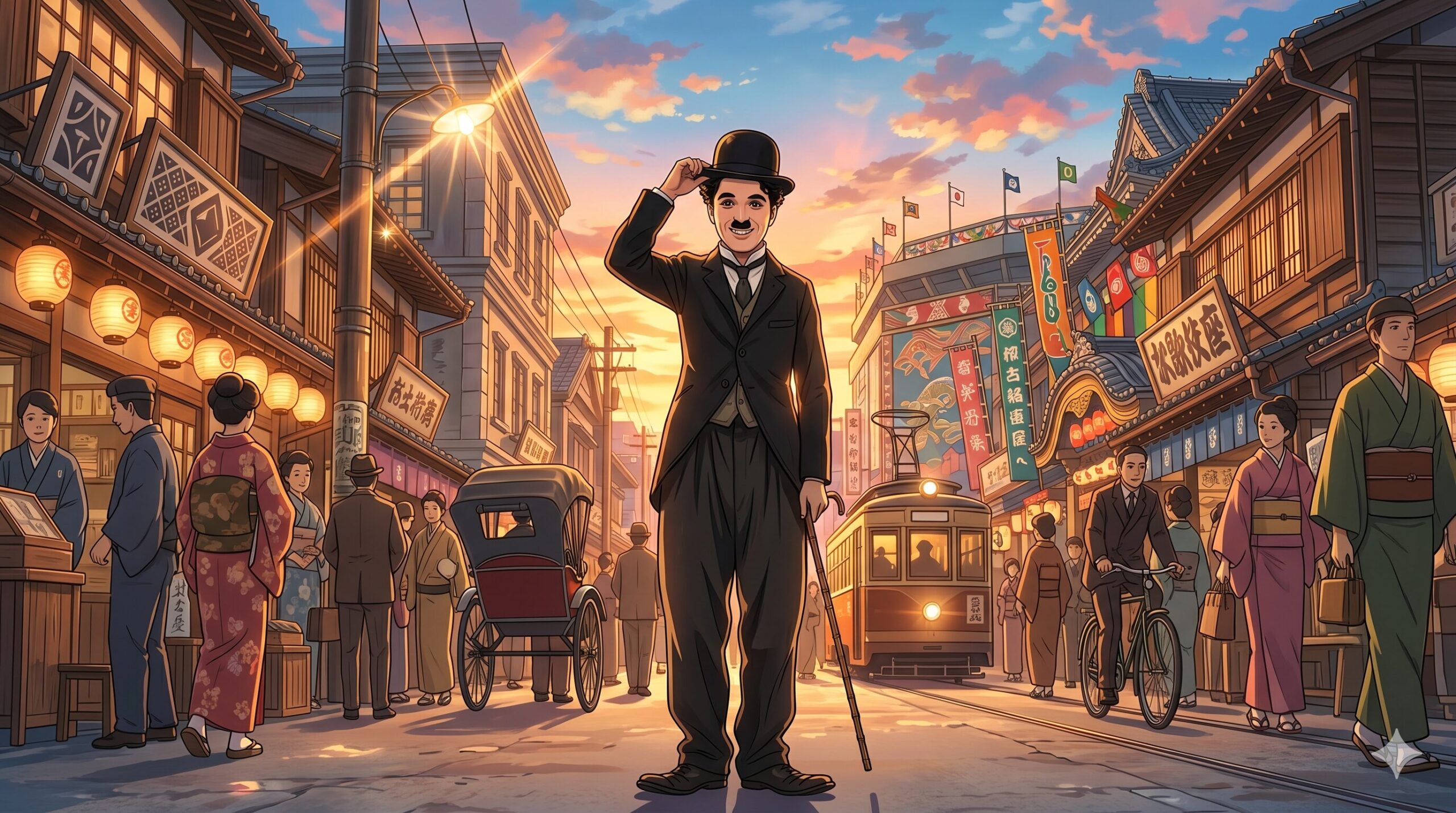
May 13, 1932. This is the day Charles Chaplin, the King of Comedy who brought laughter to the world, first stepped onto Japanese soil. Waiting for him as he disembarked at the Port of Kobe was an enthusiastic, roaring crowd. However, did you know that behind this glamorous visit, a terrifying assassination plot was unfolding that targeted his very life? In this article, we will delve deep into Chaplin’s first visit to Japan—a story stranger than fiction—and explore its intersection with Japanese culture and history of the era.
A Japanophile Chaplin and an Enthusiastic Nation
Chaplin’s love for Japan began long before he ever visited the country. Through his personal secretary, Toraichi Kono, Chaplin developed a profound interest in Japanese culture, cuisine, and art. He was particularly fond of tempura, affectionately calling it “Tempura” and loving it for the rest of his life.
When he arrived on May 13, the entire nation of Japan boiled over with excitement at the arrival of this global superstar. Newspapers reported his every move daily, and people rushed out just to catch a glimpse of the “Tramp” they had only ever seen on the silver screen. This frenzy is significant evidence of how deeply 1930s Japan craved and embraced Western modern culture and mass entertainment.
A Turning Point in History: The May 15 Incident and a Miraculous Escape
However, while Chaplin was reveling in welcome banquets in Tokyo, a tragedy that would shake the course of Japanese history was about to occur. Just two days after his arrival, on May 15, the “May 15 Incident” broke out. Young naval officers stormed the Prime Minister’s official residence and assassinated the then-Prime Minister, Tsuyoshi Inukai.
Shockingly, Chaplin’s name was also on the assassins’ hit list. They had concocted a fanatical plan: “If we assassinate Chaplin, a globally beloved figure, we can provoke a war with the United States.” Had he visited the Prime Minister’s residence that day as originally scheduled, history would have taken a completely different path.
So, why was Chaplin able to escape this fate? The reason is that he was watching “Sumo.” On the day of the incident, Chaplin was at Meiji Shrine watching a grand sumo tournament with Prime Minister Inukai’s son, Takeru Inukai. His curiosity about Japan’s traditional national sport literally saved his life.
The Duality of Japanese Culture and Chaplin’s Perspective
From this historical event, we can decipher the intense “duality” embedded in 1930s Japanese society. On one side, there was a modern mass society that loved Chaplin’s films and was crazy about Western entertainment. On the other side lurked a dark shadow of rising nationalism, attempting to alter the nation’s course through violence.
Despite his life being targeted, Chaplin’s love for Japan never wavered. He subsequently enjoyed Kabuki theater and was deeply moved by the beauty of Japanese traditions. He must have observed with a sharp eye both the “light” of Japan’s rich culture and the “shadow” of rising militarism. The fact that a Western pop icon was saved by traditional Japanese culture (Sumo), only to immediately witness the violent political struggles of modern Japan (the assassination), stands as an ironic intersection of culture and history.
External and Internal Links
- Internal Link: Read other articles in the “Today’s Special Day” Series
- External Link: Wikipedia – May 15 Incident
Conclusion: The Butterfly Effect of History
If Chaplin had not gone to watch Sumo that day and had instead visited the Prime Minister’s residence… The history of Japan, the United States, and the entire world of cinema might have been drastically altered. A single decision, or mere curiosity, can derail not only an individual’s fate but the very gears of history. Knowing this fact, how do you feel about the “coincidences” in history? Have you ever experienced a trivial choice leading to a massive consequence in your own life? Please let us know your thoughts.
喜劇王と暗殺の危機:1932年5月13日、チャップリン初来日に隠された日本の光と影
1932年(昭和7年)5月13日。世界中を笑いの渦に巻き込んだ喜劇王、チャールズ・チャップリンが初めて日本の土を踏んだ日です。神戸港に降り立った彼を待っていたのは、群衆の熱狂的な歓迎でした。しかし、この華やかな訪問の裏側で、彼の命を狙う恐ろしい暗殺計画が進行していたことをご存知でしょうか。今回は、映画よりも数奇な運命を辿ったチャップリンの初来日と、当時の日本文化・歴史の交差点について深く掘り下げていきます。
親日家チャップリンと熱狂する日本
チャップリンの日本に対する愛情は、来日するずっと前から始まっていました。彼の身の回りの世話をしていた秘書、高野虎市を通じて、チャップリンは日本の文化、食事、芸術に深い興味を抱いていました。特に天ぷらには目がなく、「テンプラ」と呼んで生涯愛し続けたと言われています。
5月13日の来日時、日本中がこの世界的大スターの到着に沸き立ちました。新聞は連日彼の一挙手一投足を報じ、人々はスクリーンの中でしか見られなかった「放浪者」の姿を一目見ようと殺到しました。この熱狂は、1930年代の日本が西洋のモダン文化や大衆娯楽をいかに渇望し、受け入れていたかを示す重要な証拠です。
歴史の転換点:五・一五事件と奇跡の回避
しかし、チャップリンが東京で歓迎の宴に酔いしれていたその裏で、日本の歴史を揺るがす悲劇が起ころうとしていました。彼が来日したわずか2日後の5月15日、「五・一五事件」が勃発します。海軍の青年将校らが首相官邸を襲撃し、当時の内閣総理大臣・犬養毅を暗殺したのです。
驚くべきことに、暗殺者たちの標的リストにはチャップリンの名前も含まれていました。彼らは「世界的な人気者であるチャップリンを暗殺すれば、アメリカとの間に戦争を起こすことができる」という、狂気じみた計画を企てていたのです。もしこの日、彼が予定通りに首相官邸を訪問していれば、歴史は全く異なる方向へ進んでいたでしょう。
では、なぜチャップリンは難を逃れることができたのでしょうか。その理由は、彼が「相撲」を観戦していたからです。事件当日、チャップリンは犬養首相の息子である犬養健と共に、明治神宮で大相撲を観戦していました。日本の伝統国技である相撲への好奇心が、文字通り彼の命を救うことになったのです。
日本文化の二面性とチャップリンの視点
この歴史的事件から、私たちは1930年代の日本社会が抱えていた強烈な「二面性」を読み解くことができます。一方には、チャップリンの映画を愛し、西洋のエンターテインメントに熱狂するモダンな大衆社会がありました。そしてもう一方には、国家主義が台頭し、暴力によって国家の針路を変えようとする暗い影が潜んでいたのです。
命を狙われたにもかかわらず、チャップリンの日本への愛が揺らぐことはありませんでした。彼はその後も歌舞伎を鑑賞し、日本の伝統美に感銘を受けました。彼は日本の「光」である豊かな文化と、「影」である軍国主義の台頭を、鋭い観察眼で見つめていたに違いありません。西洋のポップアイコンである彼が、日本の伝統文化(相撲)によって命を救われ、その直後に近代日本の暴力的な政治闘争(暗殺)を目の当たりにしたという事実は、文化と歴史の皮肉な交錯と言えるでしょう。
外部リンク・内部リンク
- 内部リンク:今日は何の日シリーズの他の記事を読む
- 外部リンク:Wikipedia – 五・一五事件
最後に:歴史のバタフライ・エフェクト
もしあの日、チャップリンが相撲観戦に行かず、首相官邸に赴いていたら。日米の歴史、そして世界の映画史は大きく変わっていたかもしれません。一つの決断、あるいは単なる好奇心が、個人の命運だけでなく歴史の歯車をも狂わせる。この事実を知った時、あなたは歴史の「偶然」についてどう感じますか? あなた自身の人生においても、些細な選択が大きな結果をもたらした経験はありませんか? ぜひ、あなたの考えを聞かせてください。

コメント