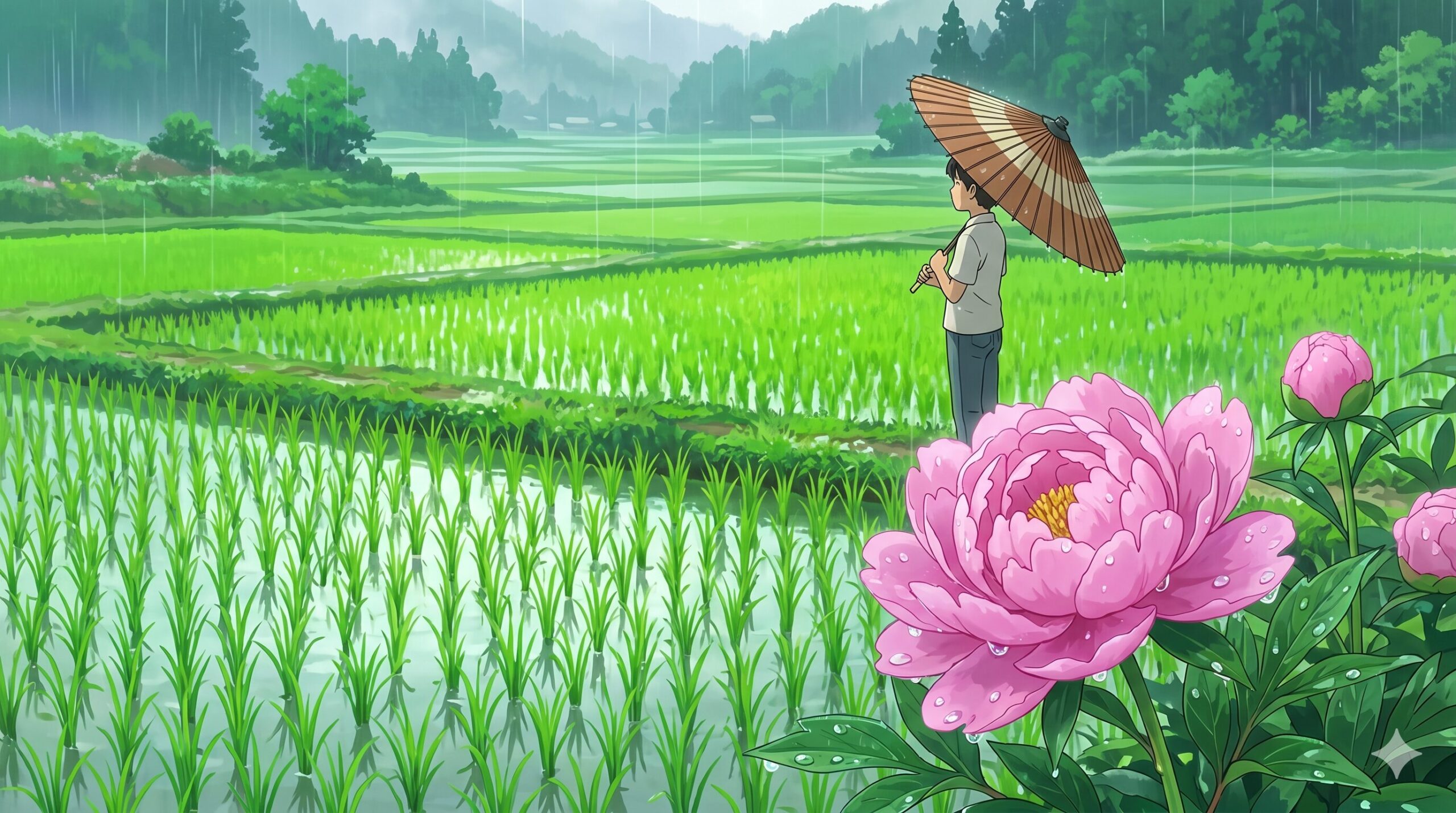
- What is Kokuu?: The Rain That Moistens the Hundred Grains
- Japanese Spirituality and Kokuu: The Culture of Loving Rain and its Deep Ties to Agriculture
- A Question for You: Are You Listening to Nature’s Signs?
- Reference Links & Related Articles
- 穀雨とは何か?:生命の目覚めを促す「百穀を潤す雨」
- 日本の精神性と穀雨:雨を愛でる文化と稲作の深い結びつき
- あなたへ問いかけ:自然のサインに耳を澄ましていますか?
- 参考リンク・関連記事
What is Kokuu?: The Rain That Moistens the Hundred Grains
April 20th marks the beginning of “Kokuu” (穀雨), the 6th of the 24 solar terms (Nijushi-sekki) in the traditional Japanese calendar. It covers a period of about 15 days, starting when the sun reaches exactly 30 degrees of celestial longitude, and ending just before the start of summer (Rikka, around May 5th).
The term Kokuu literally translates to “Grain Rain.” It originates from an ancient Chinese proverb meaning “Spring rains fall and bring life to the hundred grains.” This is the time when the long, harsh winter is completely over. The soft spring sunlight and warm, gentle rains give abundant life force to the seeds and young leaves sown in the fields. In Japan, farmers begin their earnest preparations for rice planting during this exact period. The unpredictable spring weather starts to stabilize, and the sun’s rays grow stronger day by day.
Furthermore, during the period of Kokuu, there are 72 micro-seasons (Shichijuni-ko) that express the changes in Japan’s climate and nature in even finer detail. The first micro-season is “Reeds start to grow.” The second is “Frost stops and rice seedlings grow,” indicating that the danger of frost has passed, allowing agricultural life to thrive. The final micro-season is “Peonies bloom,” where the gorgeous peony, known as the “King of Flowers,” blossoms in full glory. Kokuu is a crucial turning point where every element of the natural world simultaneously stores energy for the opening act of summer.
Japanese Spirituality and Kokuu: The Culture of Loving Rain and its Deep Ties to Agriculture
In many parts of the world, rain is often viewed negatively as something “gloomy” or something that “ruins plans.” However, in Japanese culture, the rain that falls during Kokuu is called “Jiu” (merciful rain) and has been deeply loved as a gift from the heavens.
In fact, the Japanese language has over 400 different words to describe rain. “Harusame” is the quiet rain of spring; “Saikau” is the rain that urges flowers to bloom; and “Zuiu” is the auspicious rain falling during this specific Kokuu period. These words are a profound manifestation of the delicate sensibility of the Japanese people, who have coexisted with nature for millennia. Japan’s fundamental culture was built entirely upon “rice farming.” Abundant spring rain was an absolute prerequisite for filling the paddies with water and growing rice. Therefore, Kokuu was never just a meteorological phenomenon; it was a sacred blessing essential for the survival of the nation and its people.
Moreover, this period holds a highly special meaning in Japanese tea culture. Near the end of Kokuu comes “Hachiju-hachiya” (the 88th night from the beginning of spring). Legend has it that drinking the first flush of green tea (Shincha) picked on this specific day grants a long life free from illness for the entire year. The tea leaves, having stored nutrients throughout the winter and sprouted under the blessing of the Grain Rain, concentrate Japan’s ancient gratitude toward nature. The traditional Japanese aesthetic of “Wabi-Sabi” is also deeply rooted in observing these subtle transitions of nature and finding beauty in the vibrant, rain-soaked greenery.
A Question for You: Are You Listening to Nature’s Signs?
In the modern society we live in, surrounded by smartphones and digital devices, it is incredibly easy to lose sight of the changing seasons. However, the day of Kokuu teaches us the profound importance of taking a moment to stop and feel the blessings of nature.
How do you feel the arrival of spring and the awakening of life in your country or region? If it is raining today where you are, please listen to the sound of the rain hitting your umbrella and imagine the powerful energy of the plants absorbing that water. The next time it rains, will you call it “gloomy weather”? Or will you enjoy it as a “blessed rain”? Please share your thoughts and the unique signs of spring from your home country in the comments section below.
Reference Links & Related Articles
- Internal Link: Read more from the “What’s Today’s Special Day” Series
- External Link: National Astronomical Observatory of Japan (NAOJ) – Ephemeris Details
- External Link: Japan National Tourism Organization (JNTO) – Nature in Japan
4月20日「穀雨(こくう)」:日本の大地と魂を潤す、恵みの春雨
穀雨とは何か?:生命の目覚めを促す「百穀を潤す雨」
4月20日は、日本古来の暦である二十四節気(にじゅうしせっき)の第6番目、「穀雨(こくう)」の始まりの日です。太陽黄経が30度に達するこの日から、立夏(5月5日頃)の前日までの約15日間を指します。
穀雨という言葉は、「春雨降りて百穀を生化す(春の雨が降って、すべての穀物を成長させる)」という古代中国の言葉に由来しています。長く厳しかった冬が完全に終わりを告げ、春の柔らかな日差しと暖かな雨が、田畑に蒔かれた種や若葉に豊かな生命力を与える時期です。日本では、この時期に合わせて農家が本格的な田植えの準備を始めます。変わりやすい春の天気もこの頃から安定し始め、日差しは日増しに力強くなっていきます。
また、穀雨の期間には、日本の気候や自然の変化をより細かく表現した七十二候(しちじゅうにこう)が存在します。初候は「葭始生(あしはじめてしょうず)」で水辺の植物が芽吹き始め、次候は「霜止出苗(しもやんでなえいづる)」で霜の心配がなくなり稲の苗が力強く育ち、末候は「牡丹華(ぼたんきはなさく)」で「百花の王」と呼ばれる牡丹が絢爛豪華に咲き誇ります。穀雨は、自然界のすべての要素が夏の幕開けに向けて一斉にエネルギーを蓄える、極めて重要なターニングポイントなのです。
日本の精神性と穀雨:雨を愛でる文化と稲作の深い結びつき
海外では、雨は「憂鬱なもの」「予定を狂わせるもの」とネガティブに捉えられることが少なくありません。しかし、日本の文化において、穀雨の時期に降る雨は「慈雨(じう)」と呼ばれ、天からの贈り物として深く愛されてきました。
日本には、雨を表現する言葉が400種類以上存在します。春に静かに降る「春雨(はるさめ)」、植物の成長を促す「催花雨(さいかう)」、そしてこの穀雨の時期に降る「瑞雨(ずいう)」。これらはすべて、自然と共生してきた日本人の細やかな感性の表れです。日本の根本的な文化は「稲作(米作り)」によって形成されています。水田に水を張り、稲を育てるためには、春の豊かな雨が絶対条件でした。つまり、穀雨は単なる気象現象ではなく、国家の存続と人々の命を繋ぐ神聖な恵みそのものだったのです。
さらに、この時期は日本茶の文化においても特別な意味を持ちます。穀雨の終わり頃には「八十八夜(はちじゅうはちや)」が訪れます。立春から数えて88日目にあたるこの日に摘まれた新茶(一番茶)を飲むと、一年間無病息災で長生きできるという言い伝えがあります。冬の間にたっぷりと栄養を蓄え、穀雨の恵みを受けて芽吹いた茶葉には、日本古来の自然への感謝が凝縮されているのです。日本の美意識である「わび・さび」も、こうした自然の繊細な移ろいと、雨に濡れた緑の美しさを見出す心から生まれています。
あなたへ問いかけ:自然のサインに耳を澄ましていますか?
私たちが生きる現代社会は、スマートフォンやデジタルデバイスに囲まれ、季節の移ろいを見失いがちです。しかし、穀雨という日は、私たちに「立ち止まり、自然の恵みを感じる時間」の重要性を教えてくれます。
あなたの住む国や地域では、春の訪れや生命の芽吹きをどのような形で感じますか?もし今日、雨が降っているのなら、傘に当たる雨音に耳を傾け、植物が水を吸い上げる力強いエネルギーを想像してみてください。次に雨が降ったとき、あなたはそれを「憂鬱な天気」と呼びますか?それとも「恵みの雨」として楽しみますか?ぜひ、あなたの考えや、あなたの国ならではの春の兆しについて、コメント欄で教えてください。
参考リンク・関連記事
- 内部リンク:今日は何の日シリーズをもっと読む
- 外部リンク:国立天文台 暦計算室(日本の暦と二十四節気の詳細データ)
- 外部リンク:日本政府観光局(JNTO)- 日本の自然と四季


コメント