Japan has a vast array of traditional folktales that have been passed down through generations. These are not merely children’s fairy tales; they are books of philosophy that condense the wisdom of our ancestors, a deep reverence for life, and the importance of coexisting with nature. Today, we introduce a heartwarming folktale from Shizuoka Prefecture titled “The Mouse’s Prophecy” (Nezumi no Yogen). This story teaches us how tiny, often overlooked lives can bring about massive miracles.
The Story of “The Mouse’s Prophecy”
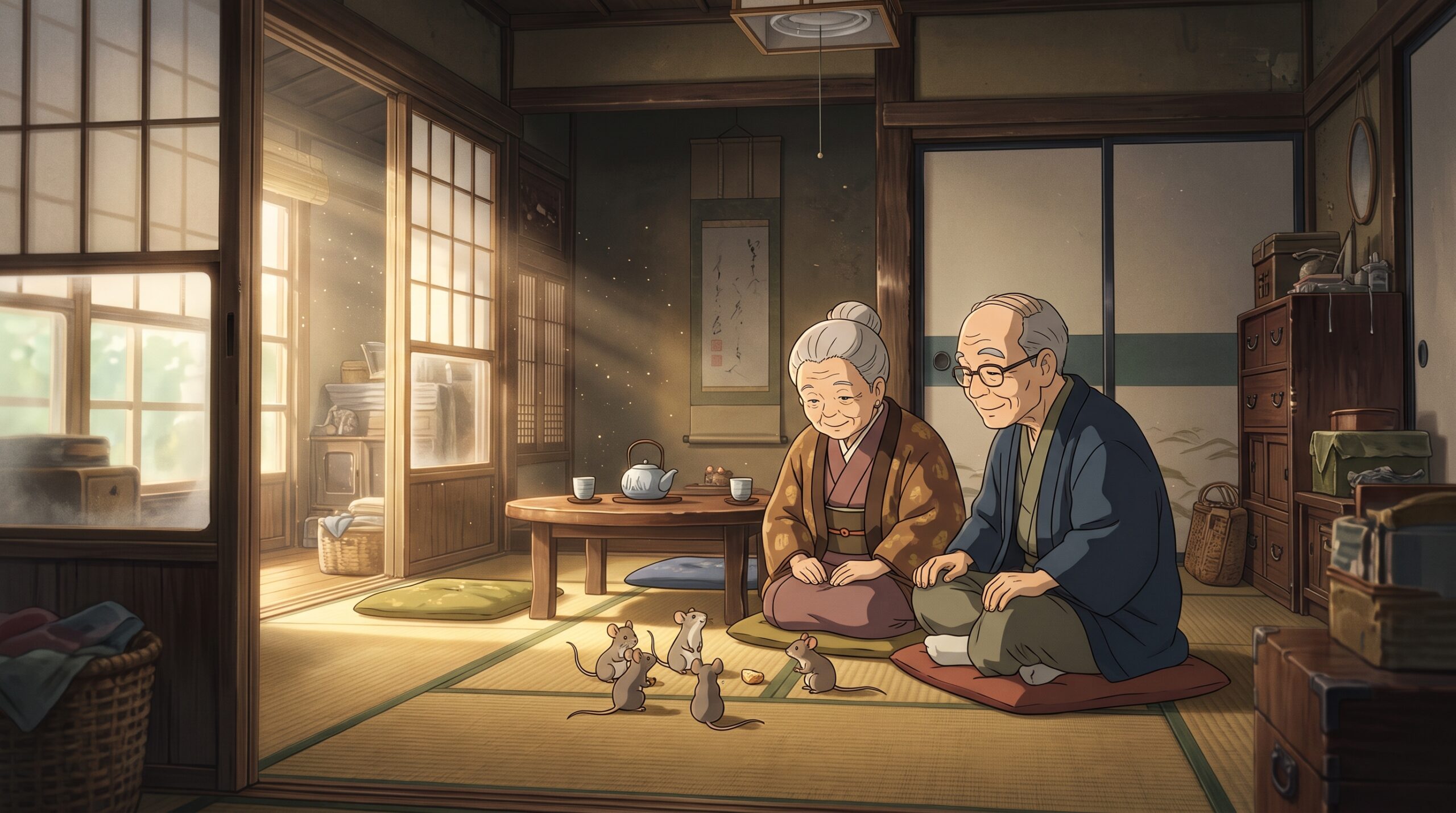
Once upon a time, on the outskirts of a small village, there lived a kind-hearted old man and an old woman. For some reason, their old house was home to an incredibly large number of mice. The mice would run across the ceiling and sometimes chew on the food.
The old woman despised the mice from the bottom of her heart, as they made a mess of the house, and she constantly complained about them. However, the compassionate old man never seemed to mind and always defended the creatures, saying:
“Mice have lives just like we do. We must not take a life without reason. Besides, there may come a day when they will be of some use to us.”
One year, the old man fell severely ill and became bedridden. Even the village doctor could not find a way to cure him. In an attempt to cheer up her weakening husband, the old woman went into the dark storehouse to prepare his favorite dish, red bean porridge (azuki-gayu).
While there, she heard the faint whispering voices of the mice coming from the depths of the storehouse.
“The old man’s illness is really severe. But you know, ‘Yunohana’ (hot spring mineral deposits) is the absolute best cure for that disease.”
“Yes, indeed. If he only had Yunohana, he would recover in no time.”
Astonished by what she heard, and clinging to any shred of hope, the old woman rushed to a nearby hot spring region and obtained the Yunohana. When she gave it to the old man, a miraculous thing happened—his illness rapidly disappeared, and he completely regained his health. The old man expressed his deepest gratitude to the tiny creatures, saying, “It is all thanks to the mice. I am truly grateful.”
Some time passed. One day, the old woman noticed that the usually noisy mice were eerily quiet. Curious, she quietly checked on them and found the mice holding a serious meeting about leaving the house.
“Tonight, a terrifying wildfire will break out on this mountain. At this rate, the entire village will burn to ashes. We have no choice but to flee.”
“If only the ‘Nobidome no mizo’ (firebreak ditch) surrounding the village were just a little bit wider, the village could be saved. But the humans probably won’t make it in time.”
The old woman’s face turned pale. She immediately ran to the old man and relayed the mice’s prophecy. Without a single second of doubt, the old man rushed through the village, rallying all the villagers to desperately widen the firebreak ditch together.
Covered in mud, the villagers finished widening the ditch and fell into a deep sleep from exhaustion. Then, at dawn, just as the mice had prophesied, a fierce wind blew, and a terrifying mountain wildfire erupted. The roaring flames rapidly approached the village, but in the nick of time, the widened firebreak ditch perfectly stopped the fire from spreading. The village miraculously escaped destruction.
Deeply reflecting on how the mice she once hated had saved the lives of the entire village, the old woman asked her husband to carve a wooden “Nezumi Daikoku” (a statue of the deity Daikokuten with a mouse). The old man gladly carved a magnificent statue. From that day forward, every house in the village carefully enshrined a Nezumi Daikoku, and it is said that the very first house to do so was that of the kind old man and woman.
In-Depth Analysis of “The Mouse’s Prophecy”
This story possesses a profound philosophy that goes far beyond a simple “animal returning a favor” narrative. The key point is the contrasting values between the old man and the old woman.
The old woman holds a highly practical and rational perspective, trying to eliminate the mice as “pests that threaten human life.” In contrast, the old man possesses a spiritual and universal love, believing that “every life has value and meaning.” It was the old man’s unconditional kindness that ultimately triggered the salvation of not only his own life but the entire village.
Interestingly, the mice did not use magic to directly save the humans. They simply discussed “solutions” (Yunohana and the firebreak ditch). It was the humans who listened, believed the prophecy, and took physical action. The story emphasizes the importance of human agency—listening to the quiet voices of nature and actively carving out one’s own destiny.
Connecting the Tale to Japanese Culture
1. Belief in Daikokuten and the Mouse
The “Nezumi Daikoku” that appears at the end of the story is a crucial element in the syncretism of Japanese Shinto and Buddhism. In Japan, the divine messenger (Tsukai) of “Daikokuten”—the deity of wealth, agriculture, and prosperity—is the mouse. Because mice are prolific breeders, they symbolize prosperity. This folktale vividly illustrates the traditional Japanese animistic belief that elevates mice, often treated as pests, to the status of “divine messengers.”
2. Yunohana and Natural Remedies
The “Yunohana” that cured the old man’s illness is the crystallized mineral deposits of hot springs. In Japan, a volcanic nation, hot springs have been used since ancient times for medical treatment in a practice known as “Toji” (hot spring therapy). Yunohana, packed with the earth’s natural energy, is a direct blessing from nature, showing how Japanese people have historically relied on nature’s power for healing.
3. Community Power and the Spirit of “Yui”
The scene where all the villagers work together to widen the firebreak ditch to protect their homes represents the spirit of mutual aid known as “Yui” in Japanese rural society. In a country prone to natural disasters like earthquakes, typhoons, and fires, the culture of uniting as an entire community rather than relying on individual strength is deeply rooted. This story serves to pass down the critical importance of a community’s cooperative system to future generations.
To Our Readers
In our busy modern lives, do we not sometimes act like the old woman, quickly trying to eliminate anything that is “inconvenient” to us? If you were in the old woman’s shoes, would you have been able to believe the words of the very mice that bothered you and take immediate action?
The old man’s attitude of respecting tiny lives throws an important message of “coexistence with all things” to us living in the modern world. After reading this story, how do you want to interact with nature and the small lives around you? We would love to hear your thoughts.
- External Source (JP): Manga Nippon Mukashibanashi Database – The Mouse’s Prophecy
- Read more Japanese Folktales: Japanese Folktale Series (kiri53.com)
ねずみの予言:小さな命が紡ぐ日本の奇跡と共生の物語
日本には、古くから語り継がれる数多くの昔話が存在します。それらは単なる子供向けの童話ではなく、大自然との共生、生命への深い畏敬の念、そして先人たちの知恵が凝縮された哲学の書です。今回は、静岡県に伝わる心温まる昔話「ねずみの予言」をご紹介します。この物語は、取るに足らないと思われがちな小さな命が、いかにして大きな奇跡を起こすのかを私たちに教えてくれます。
昔話「ねずみの予言」のストーリー
昔々、ある小さな村のはずれに、心優しいおじいさんとおばあさんがひっそりと暮らしていました。二人の住む古い家には、なぜか大変多くのねずみが住み着いていました。ねずみたちは天井裏を走り回り、時には食糧をかじってしまいます。
おばあさんは、家を荒らすねずみたちを心底忌々しく思い、日々文句を言っていました。しかし、慈愛に満ちたおじいさんは全く気にかける様子がなく、いつもこう言ってねずみたちを庇っていました。
「ねずみとて、私たちと同じように命があるものだ。むやみに命を奪ってはいけない。それに、いつかは何かの役に立つ日が来るかもしれないよ」
そんなある年のこと、おじいさんは重い病にかかり、床に伏せってしまいました。村の医者に診せても、一向に回復の兆しは見えません。すっかり弱ってしまったおじいさんを元気づけようと、おばあさんは好物の小豆粥(あずきがゆ)を作ろうと暗い蔵へ入りました。
すると、蔵の奥からねずみたちがひそひそと話し合う声が聞こえてきたのです。
「おじいさんの病気は本当に重いな。だが、あの病には『湯の花(温泉の成分が固まったもの)』が一番効くのになあ」
「そうだそうだ、湯の花さえあれば、おじいさんはすぐに元気になるのに」
それを聞いたおばあさんは大変驚き、藁にも縋る思いで急いで温泉地へ向かい、湯の花を手に入れました。おばあさんがその湯の花をおじいさんに与えると、不思議なことに病はみるみるうちに快方に向かい、おじいさんはすっかり元の元気な姿を取り戻しました。おじいさんは「ねずみたちのおかげだ、本当にありがたい」と、小さな命に向けて深く感謝を捧げました。
それからしばらく経ったある日のこと。おばあさんは、いつもなら騒がしいねずみたちが、今日はやけに静かであることに気が付きました。不思議に思ってそっと様子をうかがうと、ねずみたちは深刻な顔をして家を出ていく相談をしていたのです。
「今夜、この山で恐ろしい山火事が起きる。このままでは村は全焼してしまう。逃げるしかない」
「村を取り囲んでいる『野火止めの溝(山火事の延焼を防ぐための溝)』が、もう少しだけ広ければ村は助かるのに。人間たちは間に合わないだろう」
これを聞いたおばあさんの顔色が変わりました。すぐにおじいさんの元へ走り、ねずみたちの予言を伝えました。おじいさんは一瞬たりとも疑うことなく、すぐに村中を駆け回り、村人たちを総動員して野火止めの溝を必死に広げる作業に取り掛かりました。
泥だらけになりながら溝を広げ終えた村人たちは、疲れ果てて深い眠りにつきました。そしてその明け方、ねずみの予言通り、強烈な風と共に恐ろしい山火事が発生したのです。炎はあっという間に村へ迫りましたが、間一髪で広げておいた野火止めの溝が見事に炎を食い止め、村は奇跡的に難を逃れることができました。
おばあさんは、かつて忌み嫌っていたねずみたちに村の命を救われたことを深く反省し、おじいさんに「ねずみ大黒」の木彫りを作ってほしいと頼みました。おじいさんは快く、見事なねずみ大黒を作り上げました。それ以来、この村ではどの家でもねずみ大黒を大切に祀るようになり、その最初の家こそが、あの心優しいおじいさんとおばあさんの家だったということです。
昔話「ねずみの予言」の深い考察
この物語は、単なる「動物の恩返し」という枠に留まらない深い哲理を持っています。最大のポイントは、対照的な価値観を持つおじいさんとおばあさんの存在です。
おばあさんは「人間の生活を脅かす害獣」としてねずみを排除しようとする、極めて現実的で合理的な視点の持ち主です。対して、おじいさんは「すべての命には価値があり、意味がある」というスピリチュアルで普遍的な愛の視点を持っています。このおじいさんの無償の優しさが、結果として自らの命だけでなく、村全体の命を救う引き金となりました。
また、興味深いのは、ねずみが直接魔法を使って人間を助けたわけではない点です。ねずみたちはただ「解決策(湯の花や野火止めの溝)」を語り合っていただけであり、それを聞き逃さず、信じて行動に移したのは人間自身でした。自然の小さな声(予言)に耳を傾け、自らの手で運命を切り開く人間の行動力の大切さも同時に説かれています。
この物語から読み解く日本文化との関連性
1. 大黒天とねずみの信仰
物語の結末に登場する「ねずみ大黒」は、日本の神道および仏教の習合において極めて重要な要素です。日本では、五穀豊穣や財運を司る神「大黒天(だいこくてん)」の使い(神使)が「ねずみ」であるとされています。ねずみは多産であることから繁栄の象徴とされ、この昔話は、害獣として扱われがちなねずみを「神の使い」へと昇華させる日本の伝統的なアニミズム信仰を如実に表しています。
2. 湯の花と自然療法
おじいさんの病を治した「湯の花」は、温泉の成分が結晶化したものです。火山大国である日本において、温泉は古くから「湯治(とうじ)」として医療行為の一環に用いられてきました。大自然のエネルギーが凝縮された湯の花は、自然界からの恵みそのものであり、日本人がいかに自然の力を借りて病を癒してきたかが分かります。
3. 共同体の力と「結(ゆい)」の精神
山火事から村を守るため、村人たちが総出で「野火止めの溝」を広げるシーンは、日本の農村社会における「結(ゆい)」と呼ばれる相互扶助の精神を表しています。自然災害(地震、台風、火災)が多い日本では、個人の力ではなく、コミュニティ全体で団結して脅威に立ち向かう文化が根付いています。この物語は、村落共同体の協力体制がいかに重要であるかを後世に伝える役割も果たしています。
読者の皆様へ
私たちは現代の忙しい生活の中で、おばあさんのように「自分にとって都合の悪いもの」をすぐに排除しようとしていないでしょうか。もしあなたがおばあさんの立場だったら、自分を困らせるねずみたちの言葉を信じて、すぐに行動に移すことができたでしょうか?
小さな命を尊ぶおじいさんの姿勢は、現代を生きる私たちに「万物との共生」という大切なメッセージを投げかけています。この物語を読んで、あなたは自然や周囲の小さな命とどう向き合っていきたいと感じましたか?ぜひ、あなたの考えを教えてください。
- 外部参考資料:まんが日本昔ばなし〜データベース〜 ねずみの予言
- 日本の昔話をもっと読む:Japanese Folktale Series (kiri53.com)
コメント