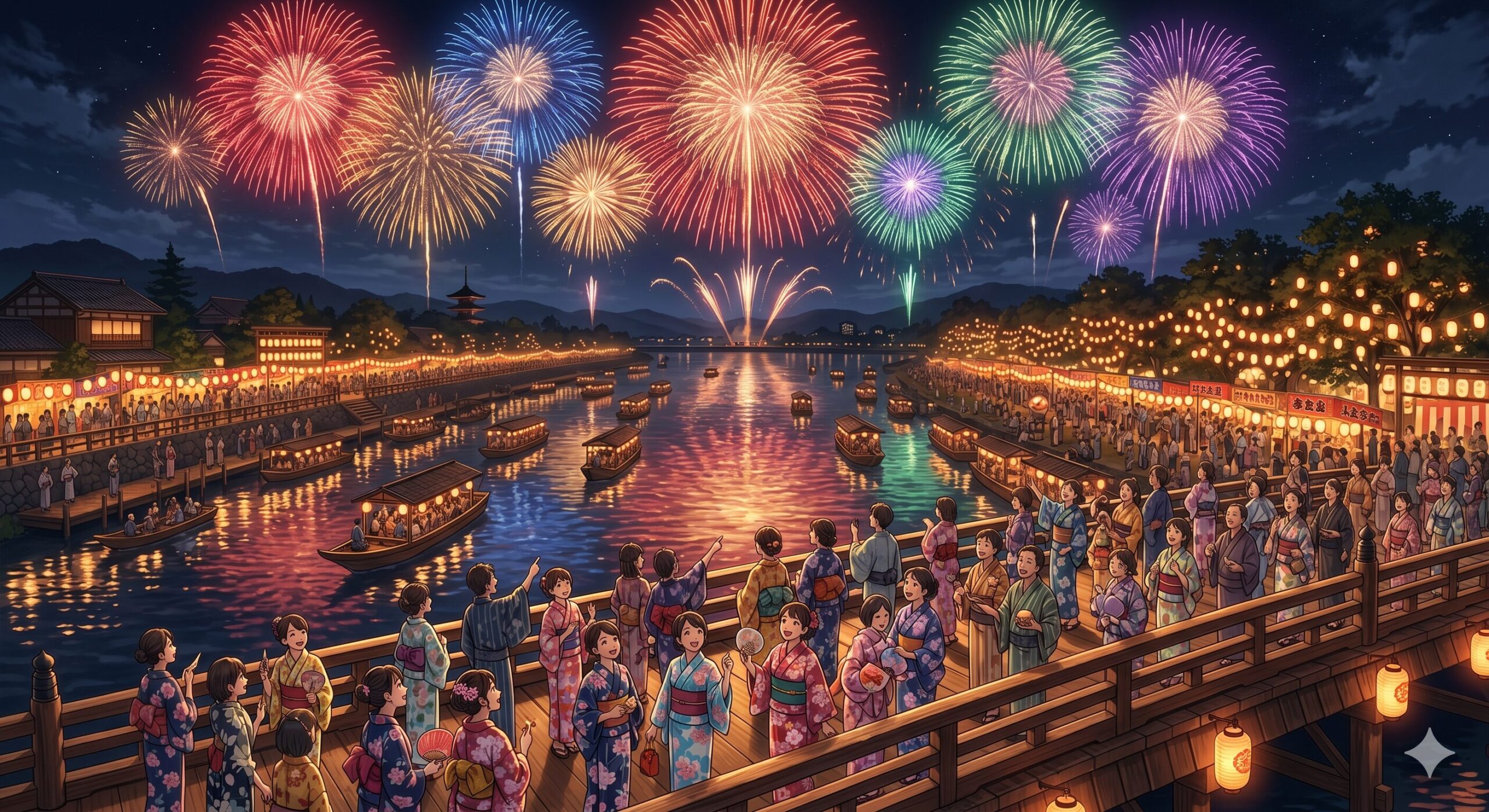
May 28th is designated as “Fireworks Day” (Hanabi no Hi) in Japan. Today, the gorgeous art of light decorating the night sky fascinates people all over the world as a staple of summer. However, the historical origins and cultural significance of Japanese fireworks extend far beyond mere “celebration” or “entertainment.” Unraveling the story of this day reveals the Japanese view of life and death, as well as a profound respect for nature.
1733: Light of Prayer and Requiem on the Sumida River
The origin of Japanese fireworks festivals, and the reason May 28th was chosen, traces back to the Suijin Festival (Water God Festival) held on the Sumida River on May 28, 1733 (lunar calendar), during the mid-Edo period. The previous year, in 1732, Japan was struck by an unprecedented disaster known as the “Kyōhō Famine.” In addition to severe crop failures due to unseasonable weather, epidemics such as cholera raged, resulting in massive casualties across the country.
To comfort the souls of the victims and pray for the eradication of the plague, the 8th Tokugawa Shogun, Tokugawa Yoshimune, held the Suijin Festival to coincide with the opening of the Sumida River. The approximately 20 fireworks launched as an offering of consolation marked the beginning of the current “Sumida River Fireworks Festival” and the dawn of large-scale fireworks displays in Japan.
Decoding Japanese Fireworks Culture Through “Requiem”
In many Western countries and other parts of the world, fireworks are generally launched to celebrate “festivals” or “victories,” such as New Year’s Eve or Independence Day. However, deeply engraved at the root of Japanese fireworks is the spirit of “Chinkon” (requiem) and “Irei” (consoling the spirits of the deceased).
The fact that fireworks festivals are held all over Japan to coincide with the Obon period (a traditional Japanese event honoring ancestral spirits) is because they serve the purpose of welcoming and seeing off the spirits. The Japanese find spiritual purification and ephemerality in the sight of fireworks shooting high into the night sky, emitting a momentary dazzling light, and then quietly fading away. This sense that “it is beautiful precisely because it is fleeting” is directly linked to “Mono no aware” (the pathos of things), a unique Japanese aesthetic sense identical to admiring the falling cherry blossoms.
Gunpowder shells, crafted with the utmost dedication by artisans (Hanabishi), disappear in just a few seconds. The aesthetic of pouring everything into that momentary brilliance is the driving force that has elevated Japanese fireworks to the pinnacle of global art. Furthermore, the traditional shouts of “Tamaya!” and “Kagiya!” from the audience are a tradition of praising the actual trade names of Edo-period pyrotechnicians, demonstrating a deep respect for the craftsmen.
Looking Up at the Night Sky, What Do You Feel?
Behind the spectacular fireworks festivals we enjoy today lie the prayers of our ancestors, who mourned the loss of lives and strongly wished for a peaceful everyday life. By understanding this historical background, the large fireworks blooming in the night sky will surely resonate even more deeply in your heart.
After reading this article, how do you feel about the differences between fireworks in your country and those in Japan? Japanese summer is about looking up at fireworks not just as lights of celebration, but as lights of prayer. If you ever have the opportunity to visit Japan, please put on a traditional Yukata, stand by the riverside lined with food stalls, and experience this momentary beauty for yourself. Who would you want to be with, and what wish would you make while looking up at Japanese fireworks?
Reference Links & Related Articles
- External Link: Sumida River Fireworks Festival Official Website
- Internal Link: Read more from the “What’s Today’s Special Day?” Series
5月28日は「花火の日」:夜空に咲く祈りの華と日本文化の深層
5月28日は、日本において「花火の日」に制定されています。夜空を彩る絢爛豪華な光の芸術は、現在では夏の風物詩として世界中の人々を魅了しています。しかし、日本の花火が持つ歴史的な起源と文化的意義は、単なる「お祝い」や「エンターテインメント」の枠に収まりません。この日を紐解くことで、日本人の死生観や自然への敬意が見えてきます。
1733年、隅田川での祈りと鎮魂の光
日本の花火大会の原点であり、「花火の日」の由来となったのは、江戸時代中期の1733年(享保18年)5月28日(旧暦)に隅田川で行われた水神祭です。この前年である1732年、日本は「享保の大飢饉」という未曾有の災厄に見舞われました。天候不順による深刻な農作物の不作に加え、コレラなどの疫病が猛威を振るい、全国で多数の死者が出ました。
当時の江戸幕府第8代将軍・徳川吉宗は、犠牲となった人々の魂を慰め、同時に悪病退散を祈願するため、隅田川の川開きに合わせて「水神祭」を執り行いました。その際、慰霊の意を込めて打ち上げられた約20発の花火が、現在の「隅田川花火大会」の起源であり、日本における大規模な花火大会の始まりとされています。
「鎮魂」から読み解く日本の花火文化
欧米をはじめとする世界の多くの国々では、花火は新年や独立記念日などの「祝祭」や「勝利」を祝うために打ち上げられるのが一般的です。しかし、日本の花火の根底には「鎮魂(ちんこん)」と「慰霊」の精神が深く刻まれています。
お盆の時期(祖先の霊を祀る日本の伝統的な行事)に合わせて全国各地で花火大会が開催されるのも、迎え火や送り火としての意味合いが含まれているからです。夜空に高く打ち上がり、一瞬のまばゆい光を放った後、静かに消え去る花火の姿に、日本人は魂の浄化と儚さを見出しました。この「儚いからこそ美しい」という感覚は、桜の散り際を愛でる心情と同じく、日本特有の美意識である「もののあはれ」に直結しています。
職人(花火師)たちが精魂込めて作り上げた火薬玉が、わずか数秒で消滅する。その一瞬の輝きに全力を注ぐ美学こそが、日本の花火を世界最高峰の芸術へと押し上げた原動力です。また、「たまやー」「かぎやー」という観客の掛け声も、江戸時代に実在した花火師の屋号を称賛する伝統であり、職人への深い敬意を表しています。
夜空を見上げて、あなたは何を想いますか?
現在、私たちが楽しんでいる華やかな花火大会の裏側には、人々の命を悼み、平穏な日常を強く願った先人たちの祈りが込められています。この歴史的背景を知ることで、夜空に咲く大輪の花火は、より一層深く、心に響くものになるはずです。
この記事を読んで、あなたの国の花火と日本の花火の違いについてどう感じましたか?祝祭の光として楽しむだけでなく、祈りの光として花火を見上げる日本の夏。もし日本を訪れる機会があれば、ぜひ伝統的な浴衣を着て、屋台の並ぶ川辺で、その一瞬の美しさを体感してみてください。あなたは誰と一緒に、どんな願いを込めて、日本の花火を見上げたいですか?
参考リンク・関連記事
- 外部リンク:隅田川花火大会 公式サイト
- 内部リンク:今日は何の日シリーズをもっと読む


コメント