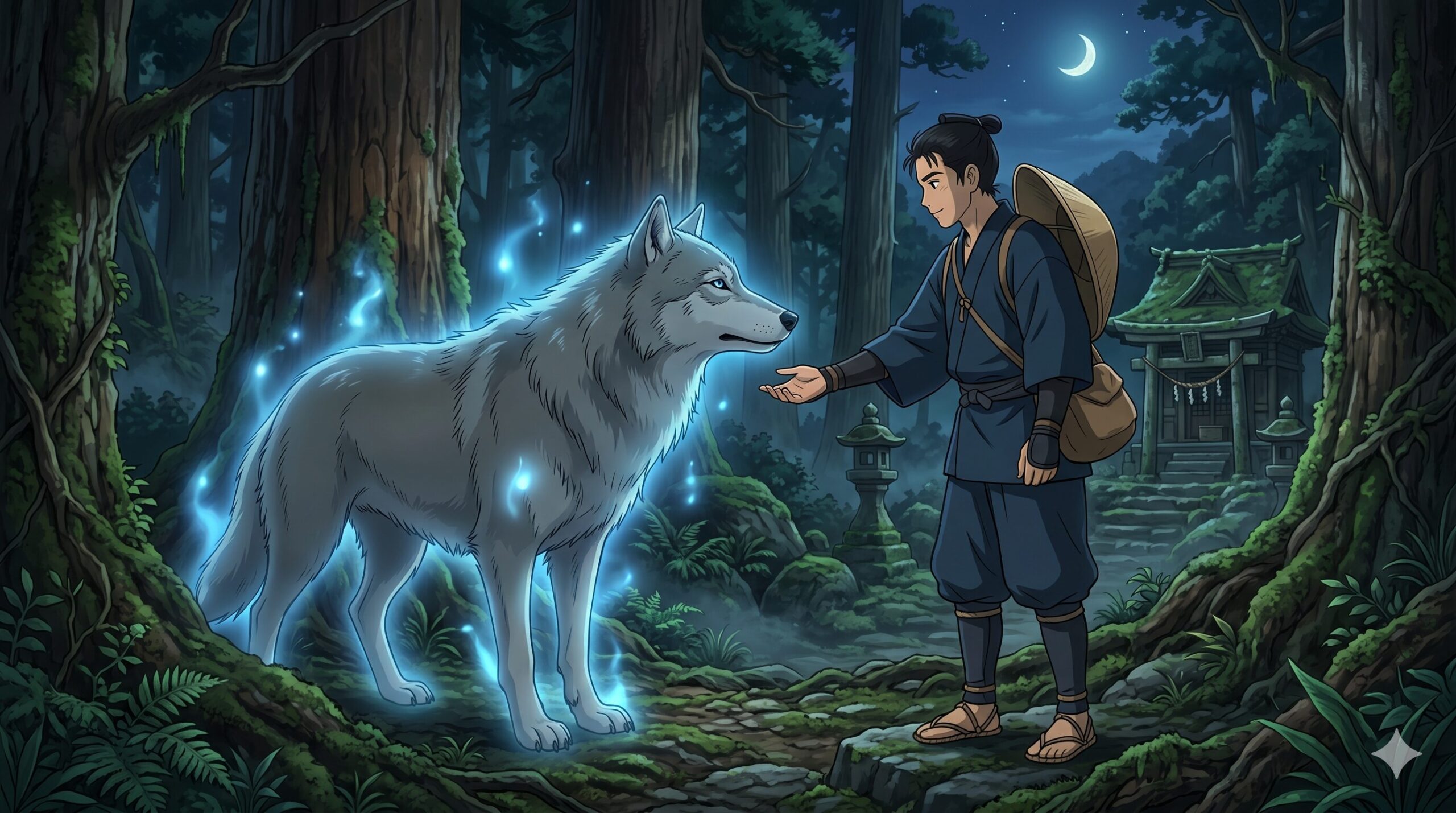
In Japan’s abundant nature, it has been believed since ancient times that gods dwell within all things. In Western fairy tales, the wolf is often depicted as a terrifying villain, but in Japanese folklore, the wolf is an entirely different entity. Today, through the heartwarming Japanese folktale “Kaemon Yama no Kami” (Kaemon and the Mountain God) passed down in Shiroishi City, Miyagi Prefecture, we will introduce a beautiful story of the bond between humans, nature, and the mountain gods.
1. The Story: Kaemon and the Mountain God
Once upon a time, in a village called Nakanome in Shiroishi, Miyagi Prefecture, located in the Tohoku region of Japan, there lived a “Jomochi” (mail carrier) named Kaemon. His job was to transport important letters and parcels from village to village.
Kaemon was an exceptionally serious and honest man. Whether in a blinding snowstorm or under the blazing summer sun, he never abandoned his duties. Dressed in traditional traveling gear consisting of Tekko (hand covers) and Kyahan (leggings), he constantly walked across steep mountains to the distant towns of Yamagata and Yonezawa. Because of his dedication, the villagers deeply trusted and loved him, affectionately calling him “Kaemon, Kaemon.”
One evening at dusk, Kaemon was walking alone along the dark and heavily wooded pass of Mount Obara. After the sun set, this mountain pass became pitch black and was known as a dangerous place frequented by bandits and wild beasts. Just as he approached a large ancient tree where he used to play as a child, it happened.
“Swish, swish…”
A strange sound of something scratching against the ground echoed from the bushes. When Kaemon stopped, a pair of sharp eyes emerged from the darkness. A massive Japanese wolf stepped out onto the path.
A chilling fear rushed down Kaemon’s spine. If he turned his back to run, the wolf would surely pounce, and he would lose his life. “What will happen to my elderly parents waiting at home? I won’t be able to deliver these important parcels,” he thought, frozen in place.
However, upon closer inspection, the wolf’s behavior was peculiar. It showed no signs of attacking. Instead, it was frantically pawing at its own mouth, looking at Kaemon with pleading eyes. Kaemon’s intuition kicked in. “Could it be that something is stuck in its throat, and it’s suffering?”
Suppressing his terror, Kaemon slowly approached the wild beast and gently reached out his hand. As if trusting the postman, the wolf opened its massive jaws wide right in front of him. Peering inside, Kaemon saw a large, sharp animal bone deeply pierced into the back of the wolf’s throat. Plunging his hand deep into the dangerous jaws, Kaemon pulled the bone out with all his might.
Freed from the pain, the wolf let out a loud, joyful howl towards the heavens, stared deeply into Kaemon’s face in gratitude, and happily ran off into the depths of the dark forest.
The true miracle began after that day. Whenever Kaemon was late returning home, or whenever there were rumors of bandits roaming the mountain pass, that very same wolf would mysteriously appear from the shadows. It would walk silently beside Kaemon, escorting him safely all the way to his home. Thanks to the wolf’s protection, Kaemon never encountered any danger, and he always delivered his parcels safely. His reputation grew immensely, and his business prospered like never before.
Kaemon was deeply moved. “This wolf is no ordinary beast. It must be a divine messenger of the Mountain God. Just as I was protected, I must ensure that all the other travelers crossing this pass are protected by the Mountain God as well.”
Using his own wealth, Kaemon built a magnificent stone shrine at the summit of the mountain to worship the Mountain God. That shrine, known as “Kaemon Yama no Kami,” still stands quietly at the top of the mountain in Shiroishi City today, continuing to watch over the safety of all travelers.
2. Story Analysis: The Meaning of the Wolf’s Gratitude
The greatest charm of this tale lies in its beautiful depiction of “Ongaeshi” (the repayment of kindness), a traditional Japanese moral concept. Kaemon disregarded his own life’s danger to save a suffering life right in front of him. Though the wolf cannot speak, it spends its life repaying that debt through its actions.
What is also highly noteworthy is Kaemon’s final action. Having gained the wolf’s protection, he became very successful and could have easily kept all the benefits to himself. However, he wished for the “safety of others” and built a shrine for the god. This demonstrates an incredibly high spirit of altruism, returning personal happiness back to the whole society. Kaemon repaid the wolf’s kindness by expressing his ultimate gratitude to the divine.
3. Connection to Japanese Culture: Awe for Nature and the “Great God”
The Japanese archipelago was once home to an endemic species known as the Honshu Wolf (now considered extinct). Since ancient times, “Mountain Worship” (the belief that gods reside in mountains) has taken root in Japan. The wolf was revered either as a divine messenger of the Mountain God or as the Mountain God itself.
In Japanese, the word for wolf is “Okami” (狼), which is a homophone for “Great God” (大神). Because wolves hunted the pests that destroyed crops, they were seen as benevolent creatures. They are worshiped at Shinto shrines across Japan as “Okuchi no Magami,” a sacred protector against fire and theft.
In Western tales like Little Red Riding Hood or The Three Little Pigs, the wolf is characterized as evil and man-eating. However, in Japan’s “Kaemon Yama no Kami,” there is a clear philosophy of “coexistence with nature.” It teaches that if humans treat nature with respect and compassion, nature will, in turn, grant blessings and protection. This is the very essence of Shinto animism, the belief that a spiritual soul resides within all things in the universe.
4. What Would You Do?
If you were to encounter a wild wolf in a dark, dangerous forest at night, what would you do? Would you run away in sheer terror? Or would you have the courage, like Kaemon, to notice its pain and reach out a helping hand?
The natural world can sometimes be a threat, but if we face it with respect and empathy, unexpected and beautiful bonds may form. After reading this story, we invite you to reflect on what you felt, and consider the relationship between animals and humans in your own country’s folklore.
Reference Links & Related Information
・Reference Webpage (Japanese):
Manga Nippon Mukashibanashi Database (Kaemon Yama no Kami)
・Read more Japanese Folktales here:
Japanese Folktale Series
日本の深い森に潜む神秘:オオカミと人間の絆を描く「嘉右衛門山の神」
日本の豊かな自然の中には、古くから神々が宿ると信じられてきました。西洋の童話では「恐ろしい悪者」として描かれがちなオオカミですが、日本の民間伝承においてオオカミは全く異なる存在です。今回は、宮城県白石市に伝わる心温まる日本昔話「嘉右衛門山の神(かえもんやまのかみ)」を通じて、人間と自然、そして山の神との美しい絆の物語をご紹介します。
① 昔話のストーリー:嘉右衛門山の神
昔々、日本の東北地方にある宮城県白石の中ノ目という村に、嘉右衛門(かえもん)という名の「状持ち(じょうもち)」がいました。状持ちとは、現代でいう郵便配達員のことです。村から村へ、大切な手紙や荷物を運ぶのが彼の仕事でした。
嘉右衛門は、並外れて真面目で、とても正直な男でした。吹雪の日も、照りつける夏の日も、決して仕事を投げ出すことはありません。手甲(てっこう)と脚絆(きゃはん)という昔ながらの旅装束に身を包み、険しい山を越えて遠く山形県や米沢の街まで歩き続けました。そのため、村の人々からは「かえもん、かえもん」と絶大な信頼を寄せられ、深く親しまれていました。
ある日の夕暮れ時のことです。嘉右衛門は、鬱蒼と木々が茂る小原山の峠道を一人で歩いていました。日が沈むと、この峠道は真っ暗になり、盗賊や野獣が出る物騒な場所でした。嘉右衛門が子どもの頃によく遊んでいた大きな木の下まで差し掛かったその時です。
「シュッシュッ……」
草むらから、何かを地面に擦り付けるような異様な音が聞こえてきました。嘉右衛門が足を止めると、暗闇の中から鋭い眼光が浮かび上がりました。現れたのは、一匹の巨大な日本のオオカミでした。
背筋が凍るような恐怖が嘉右衛門を襲いました。背を向けて逃げれば、一瞬で背後から襲いかかられて命はないでしょう。「家に残している年老いた両親はどうなるのか。預かっている大切な荷物を届けることができなくなってしまう」と、彼はその場に立ちすくみました。
しかし、よく見てみるとオオカミの様子が変です。飛びかかってくる気配はなく、しきりに前足で自分の口の中を引っ掻き、苦しそうに嘉右衛門に向かって何かを必死に訴えかけているのです。嘉右衛門は直感しました。「もしかして、喉に何かが引っかかって苦しんでいるのではないか?」
恐怖心を押し殺し、嘉右衛門はゆっくりとオオカミに近づき、そっと手を差し出しました。すると、オオカミは嘉右衛門を信頼したかのように、彼の目の前で大きく口を開けました。覗き込むと、喉の奥深くに鋭く大きな動物の骨が突き刺さっていました。嘉右衛門は手を口の奥まで入れ、力一杯その骨を引き抜いてやりました。
骨が取れたオオカミは、ほっとしたように一声大きく天に向かって吠えると、嘉右衛門の顔をじっと見つめ、嬉しそうに森の奥深くへと走り去っていきました。
不思議な出来事はそれから起こりました。嘉右衛門の帰りが夜遅くなってしまった時や、峠に山賊が出没するという噂がある時、必ずあの時のオオカミがふらりと現れ、嘉右衛門のそばを歩いて家まで送り届けてくれるようになったのです。オオカミの護衛のおかげで、嘉右衛門は一度も危ない目に遭うことなく、確実に荷物を届けることができました。彼の信用はさらに高まり、仕事はますます大繁盛しました。
嘉右衛門は深く感謝しました。「このオオカミは、ただの獣ではない。山の神様の使いに違いない。私が守ってもらえたように、この峠を歩く他の多くの人々も、山の神様に守ってもらえるようにしよう」
彼は私財を投げ打ち、山の頂上に立派な石の祠(ほこら)を建てて、山の神を祀りました。その祠は「嘉右衛門山の神」として、今もなお白石市の山頂にひっそりと残り、道行く人々の安全を見守り続けています。
② 昔話の考察:オオカミの恩返しが意味するもの
この物語の最大の魅力は、「恩返し(Ongaeshi)」という日本の伝統的な道徳観念が美しく描かれている点です。嘉右衛門は自身の命の危険を顧みず、目の前で苦しんでいる命を助けました。オオカミは言葉を話せませんが、その行動で生涯にわたって恩を返し続けます。
また、注目すべきは嘉右衛門の行動の結末です。彼はオオカミの加護を得て仕事で成功し、自分だけが利益を得て終わることもできました。しかし彼は「自分以外の他者の安全」を願い、神のための祠を建てました。これは、個人の幸福を社会全体の幸福へと還元する、非常に高い利他の精神を示しています。オオカミの恩返しに、嘉右衛門もまた神への感謝という形で恩を返したのです。
③ 日本文化との関連:自然への畏敬と「大口真神」
日本列島には、かつて「ニホンオオカミ」という固有種が生息していました(現在は絶滅したとされています)。古来より、日本では山には神が宿るとされる「山岳信仰」が根付いており、オオカミは山の神の使い、あるいは山の神そのものとして敬われていました。
日本語でオオカミは「狼」と書きますが、同時に「大神(偉大なる神)」と同音です。害獣から農作物を守ってくれる益獣として、また火災や盗難から人々を守る「大口真神(おおくちのまがみ)」として、日本各地の神社で信仰の対象となっています。
西洋の赤ずきんちゃんや3匹の子豚において、オオカミは人間を食べる邪悪な存在として描かれます。しかし、日本の「嘉右衛門山の神」では、人間が自然に敬意を払い、慈悲の心を持って接すれば、自然もまた人間に恩恵と加護を与えてくれるという「自然との共生」の哲学が明確に示されています。これは、すべての万物に魂が宿ると考える神道(アニミズム)の精神そのものです。
④ あなたならどうしますか?
暗く危険な夜の森で、もしもあなたが一匹の野生のオオカミに出会ったらどうしますか? 恐怖のあまり逃げ出してしまうでしょうか。それとも、嘉右衛門のように相手の痛みに気づき、手を差し伸べる勇気を持てるでしょうか。
自然界は時に脅威となりますが、私たちが敬意と思いやりを持って向き合えば、思いがけない絆が生まれるかもしれません。この物語を読んで、あなたが感じたこと、あるいはあなた自身の国における動物と人間の関係について、ぜひ考えてみてください。
参考リンク・関連情報
・参考ウェブサイト:
まんが日本昔ばなし〜データベース〜(嘉右衛門山の神)
・その他の日本昔話はこちら:
Japanese Folktale Series

コメント