- Introduction: The Birth of a World Heritage Site
- Historical Context: Sakanoue no Tamuramaro, the Greatest Samurai
- The Untold Story: A Wife’s Illness, Deer Blood, and the Monk at the Waterfall
- Decoding Japanese Culture: The Fusion of Bushido and Buddhism
- What Would You Do?
- はじめに:世界遺産・清水寺が産声を上げた日
- 歴史的背景:最強の武将、坂上田村麻呂
- 知られざるストーリー:妻への愛、鹿の血、そして音羽の滝での出会い
- 日本文化からの読み解き:武士道と仏教の融合、「清水の舞台」の真意
- あなたならどうしますか?
Introduction: The Birth of a World Heritage Site
August 17th marks a monumental milestone in Japanese history and culture. On this day in the year 798 (July 2, 17th year of the Enryaku era), Kyoto’s most iconic World Heritage site, Kiyomizu-dera Temple, was established by the legendary military commander, Sakanoue no Tamuramaro.
While millions of visitors from around the globe flock to see the spectacular wooden “Stage of Kiyomizu” hanging over the cliff edge and drink from the wish-granting Otowa Waterfall, very few know the dramatic human story behind its foundation. Today, we unravel the emotional tale where a seasoned general’s deep love intersects with the boundless compassion of Buddhism.
Historical Context: Sakanoue no Tamuramaro, the Greatest Samurai
The time is the early Heian period. Japan was in the midst of fierce battles against the “Emishi,” a group of people with a distinct culture living in the northern Tohoku region. Sakanoue no Tamuramaro was appointed by the Emperor as the “Sei-i Taishogun” (Commander-in-Chief of the Expeditionary Force against the Barbarians), making him the most powerful military figure in Japan at the time.
He was not merely a ruthless warrior. He went down in history as a man of extraordinary bravery and profound mercy, famously pleading with the Imperial Court to spare the life of the defeated Emishi leader, Aterui. Why would such a battlefield hero build a temple symbolizing absolute peace deep in the mountains of Kyoto?
The Untold Story: A Wife’s Illness, Deer Blood, and the Monk at the Waterfall
The founding of Kiyomizu-dera is deeply rooted in Tamuramaro’s profound love for his wife, Takako.
At one point, Takako fell severely ill while pregnant. According to the folk medicine of the time, the fresh blood of a deer was believed to be a miraculous cure for a sick pregnant woman. Desperate to save his beloved wife, Tamuramaro grabbed his bow and arrows and ventured deep into Mount Otowa in eastern Kyoto to hunt a deer.
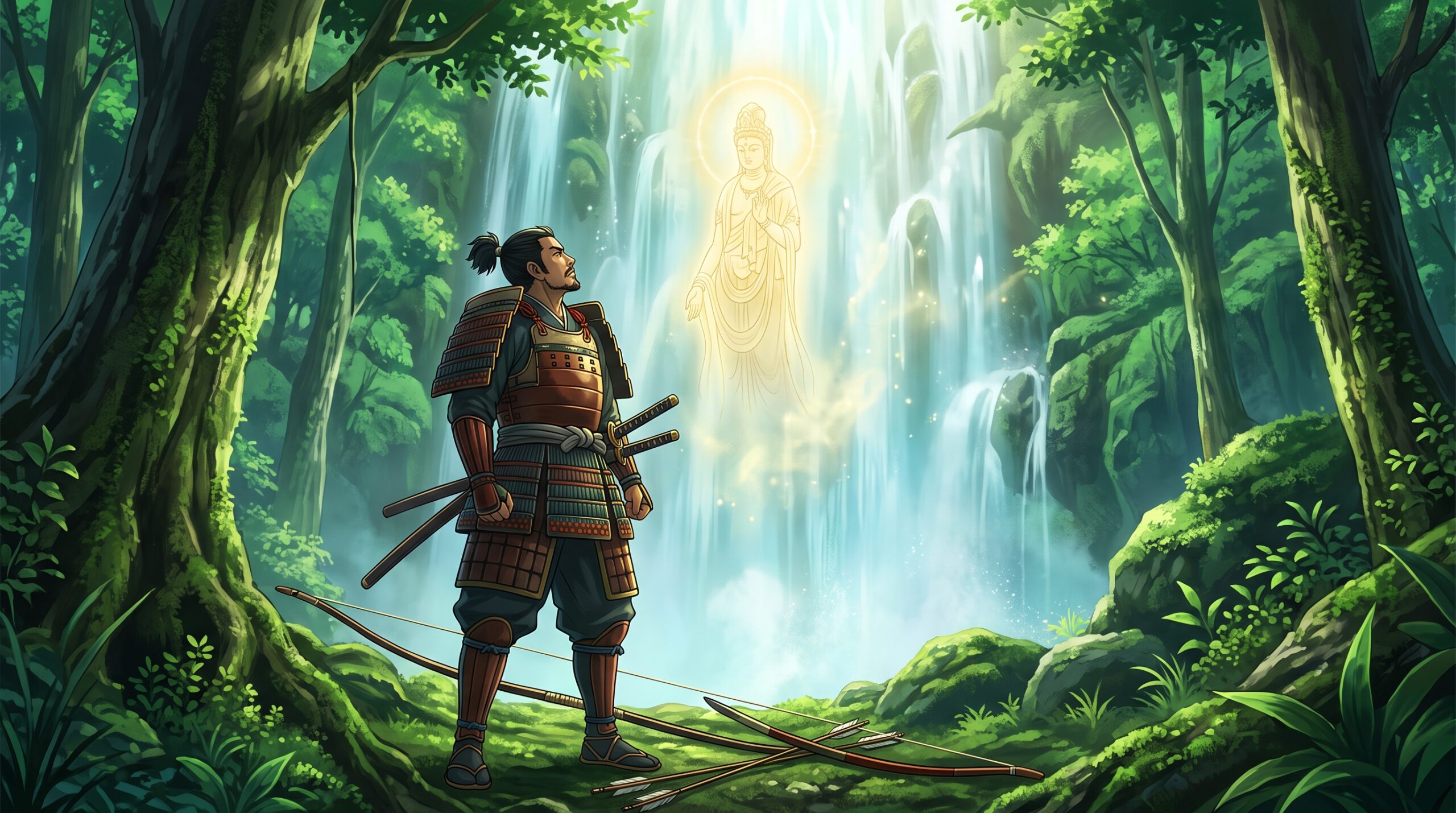
In the dense forest, he discovered a pure waterfall (the current Otowa Waterfall) and met an elderly monk named Enchin, who was fervently praying to the Senju Kannon (the Thousand-Armed Bodhisattva of Compassion). When Tamuramaro explained his mission to hunt a deer, Enchin spoke to him quietly but with overwhelming spiritual force:
“To take a life is the gravest sin against the compassion of Kannon. You must not take one life in an attempt to save another.”
These words struck the great general—a man who had taken countless lives on the battlefield—like a lightning bolt. Deeply realizing the spiritual ignorance of his actions, Tamuramaro immediately broke his bow and threw it away. He returned home and shared Enchin’s teachings with his wife. Takako resonated deeply with the message. Together, they dismantled their own private residence, moved it to Mount Otowa, and rebuilt it as a magnificent temple dedicated to Kannon. This became the genesis of “Kiyomizu-dera,” the Temple of Pure Water.
Decoding Japanese Culture: The Fusion of Bushido and Buddhism
What we decode from this story is the profound fusion of Japan’s foundational concept of “Kegare” (spiritual impurity) and the absolute salvation of Buddhism. Taking lives in battle was considered a spiritual impurity even back then. The fact that the strongest general laid down his weapons and bowed to a monk preaching the sanctity of life shows that Japanese warriors were not bloodthirsty fighters, but individuals seeking spiritual salvation and high ethical standards.
Furthermore, Japan has a famous idiom: “To jump off the stage of Kiyomizu.” It means “to take a leap of faith” or make a bold, life-risking decision. During the Edo period, a radical faith actually existed where people literally jumped off the 13-meter-high wooden stage, believing that if they survived, Kannon would grant their deepest wish. Kiyomizu-dera is not just a tourist spot; it is the spiritual backbone of the Japanese people, continually absorbing the desperate prayers of humanity.
What Would You Do?
If your loved one were dying, would you resort to ethically questionable means (like hunting the deer), or would you trust in a higher spiritual path?
When you visit Kyoto and stand on the spectacular wooden stage of Kiyomizu towering above the trees, remember the inner conflict of the general who threw down his weapons here centuries ago. Is there a challenge in your life right now that requires you to “take a leap of faith off the stage of Kiyomizu”? Let me know your thoughts in the comments!
Reference Links
- Kiyomizu-dera Temple Official Website (External Link)
- Explore more “What’s Today’s Special Day?” stories (Internal Link)
8月17日:京都・清水寺の誕生と、一人の無骨な将軍の改心
はじめに:世界遺産・清水寺が産声を上げた日
8月17日。この日は、日本の歴史と文化において極めて重要なマイルストーンとなる日です。798年(延暦17年7月2日)、京都を代表する世界遺産であり、年間数百万人が訪れる「清水寺」が、一人の偉大な武将・坂上田村麻呂(さかのうえのたむらまろ)によって建立されました。
断崖に建つ壮大な木造建築「清水の舞台」や、願いを叶える「音羽の滝」は世界的に有名ですが、この寺院がどのような経緯で建てられたのか、その背後にある人間ドラマを知る人は多くありません。今日は、壮絶な戦いを生き抜いた将軍の深い愛と、仏教の慈悲が交差する感動的なストーリーを紐解きます。
歴史的背景:最強の武将、坂上田村麻呂
時は平安時代初期。当時の日本は、東北地方に住む独自の文化を持つ人々「蝦夷(えみし)」との激しい戦いの真っ只中にありました。坂上田村麻呂は、天皇から「征夷大将軍(蝦夷を征伐する最高司令官)」に任命された、当時の日本において最強の武将です。
彼は単なる冷酷な戦士ではなく、敵の指導者である阿弖流為(アテルイ)の命を救おうと朝廷に嘆願するなど、優れた武勇と深い情けを併せ持つ人物として歴史に名を残しています。そんな彼が、なぜ京都の山奥に平和の象徴である寺院を建てることになったのでしょうか。
知られざるストーリー:妻への愛、鹿の血、そして音羽の滝での出会い
清水寺の建立には、田村麻呂の妻・高子(たかこ)への深い愛情が関わっています。
ある時、高子が妊娠中に重い病に倒れました。当時の民間療法では、新鮮な鹿の血が妊婦の病に効くと信じられていました。愛する妻を救いたい一心で、田村麻呂は弓矢を手に取り、鹿を求めて京都の東山、音羽山へと足を踏み入れます。
深い森の中で清水が湧き出る滝(現在の音羽の滝)を見つけた彼は、そこで一人の老僧、延鎮(えんちん)と出会います。延鎮は滝のそばで千手観音に祈りを捧げていました。鹿を狩りに来たと告げた田村麻呂に対し、延鎮は静かに、しかし力強く説きました。
「命を奪うこと(殺生)は、観音菩薩の慈悲に反する最も重い罪です。一つの命を救うために、別の命を奪ってはなりません。」
戦場において多くの命を奪ってきた将軍の胸に、その言葉は雷のように響きました。己の行為の愚かさを深く悟った田村麻呂は、直ちに弓を折り捨てます。そして家に帰り、妻に延鎮の教えを伝えました。妻の高子もこれに深く共感し、二人は自分たちの私邸(あるいは仏堂)を解体して音羽山に移築し、観音菩薩を祀る立派な寺院を建立しました。これが、清らかな水が湧き出る寺、「清水寺」の始まりです。
日本文化からの読み解き:武士道と仏教の融合、「清水の舞台」の真意
この物語から読み解けるのは、日本の基層文化にある「穢れ(けがれ)」の思想と、それをも浄化する「仏教の絶対的な慈悲」の融合です。戦場での殺戮は、当時の社会においても魂の穢れとされていました。最強の将軍が武器を捨て、命の尊さを説く僧侶にひざまずいたという事実は、日本の武士たちが単なる戦闘狂ではなく、精神的な救済と高い倫理観を求めていたことを示しています。
また、日本には「清水の舞台から飛び降りる(To jump off the stage of Kiyomizu)」ということわざがあります。これは「命がけで、思い切った決断をする」という意味です。江戸時代には、観音菩薩に命を預けて実際に舞台から飛び降り、助かれば願いが叶うという過激な信仰が実在しました。清水寺は単なる観光地ではなく、極限状態にある人々の「切実な祈り」を受け止め続けてきた、日本人の精神的な支柱なのです。
あなたならどうしますか?
愛する人を救うためなら、あなたは倫理に反する手段(鹿の狩猟)を選びますか?それとも、全く別の次元の救い(観音菩薩への祈り)を信じますか?
もしあなたが京都を訪れ、木々の上にそびえ立つ清水の舞台に立ったとき、はるか昔にこの地で武器を捨てた一人の将軍の葛藤を思い出してください。あなたには今、「清水の舞台から飛び降りる」ほどの覚悟を持って挑戦したいことはありますか?ぜひ、あなたの考えを聞かせてください。

コメント