- What is August 15th, the Day for Mourning of War Dead and Praying for Peace?
- A Miracle Born of One Japanese Man’s Passion: The Story of the UN Peace Bell
- Decoding Japanese Culture from the End of WWII Day: “Obon” and the Spirit of Harmony
- To Us Living Today: What Does “Peace” Mean to You?
- 8月15日「終戦の日(戦没者を追悼し平和を祈念する日)」とは?
- 一人の日本人の熱意が生んだ奇跡:国連「平和の鐘」の物語
- 終戦の日から読み解く日本文化:「お盆」と和の精神
- 現代を生きる私たちへ:あなたにとって「平和」とは?
What is August 15th, the Day for Mourning of War Dead and Praying for Peace?
Every year on August 15th, Japan is enveloped in deep prayer and silence. At noon on this day in 1945, Emperor Showa’s “Jewel Voice Broadcast” (Gyokuon-hoso) was played over the radio, informing the Japanese people of the end of World War II. Amidst burnt-out cities, countless lost lives, and extreme exhaustion, the broadcast signaled the end of a turbulent era and the beginning of an entirely new age of peace.
Today, Japan designates this day as the “Day for Mourning of War Dead and Praying for Peace”. An annual National Memorial Ceremony is hosted by the government at the Nippon Budokan in Tokyo. At the exact stroke of noon, a one-minute moment of silence is observed nationwide. As sirens echo through the streets, people stop, close their eyes, and renew their strong resolve never to repeat the tragedy of war. This day is not just a page in history; it is the origin of the pacifism that forms the foundation of modern Japan.
A Miracle Born of One Japanese Man’s Passion: The Story of the UN Peace Bell
To deeply understand August 15th, we must look at an iconic story that illustrates how post-war Japanese people elevated their desire for peace into global action. Did you know there is a “Japanese Peace Bell” at the United Nations Headquarters in New York, gifted by the people of Japan?
This bell was born from the immense passion of one man, Chiyoji Nakagawa, a former Japanese soldier. Having experienced the cruelty of war firsthand, he resolved to cast a peace bell from coins collected from all over the world and present it to the UN. He wrote letters to representatives of various countries and, transcending former enemy lines, collected coins and medals from people in over 60 nations, including a donation from the Pope.
Completed in 1954, the bell is inscribed with the words “Long Live Absolute World Peace.” Metals from countries that once fought each other were melted together into a single bell using traditional Japanese casting techniques, reborn as a symbol of peace. The sentiment embodied in Japan’s End of WWII Day connects to a prayer for the peace of all humanity, transcending borders just like the ring of this bell.
Decoding Japanese Culture from the End of WWII Day: “Obon” and the Spirit of Harmony
The reason August 15th is so deeply etched into the hearts of the Japanese people is not just due to historical facts. This period perfectly coincides with the traditional Japanese custom of “Obon.” Obon is a time when the spirits of deceased ancestors are believed to return to their families once a year.
Since ancient times, Japanese people have cherished the culture of “Chinkon” (requiem)—respectfully welcoming, memorializing, and sending off the souls of the dead. In the intense summer heat of mid-August, people return to their hometowns, clean graves, and light welcome fires. This deep spirituality of honoring ancestors perfectly intertwines with the day dedicated to mourning all those who lost their lives in the war.
Overcoming individual sorrow and anger to gently console the souls of all the dead and wish for future harmony (the spirit of Wa). This is the true essence of the End of WWII Day when viewed through the cultural lens of Obon.
To Us Living Today: What Does “Peace” Mean to You?
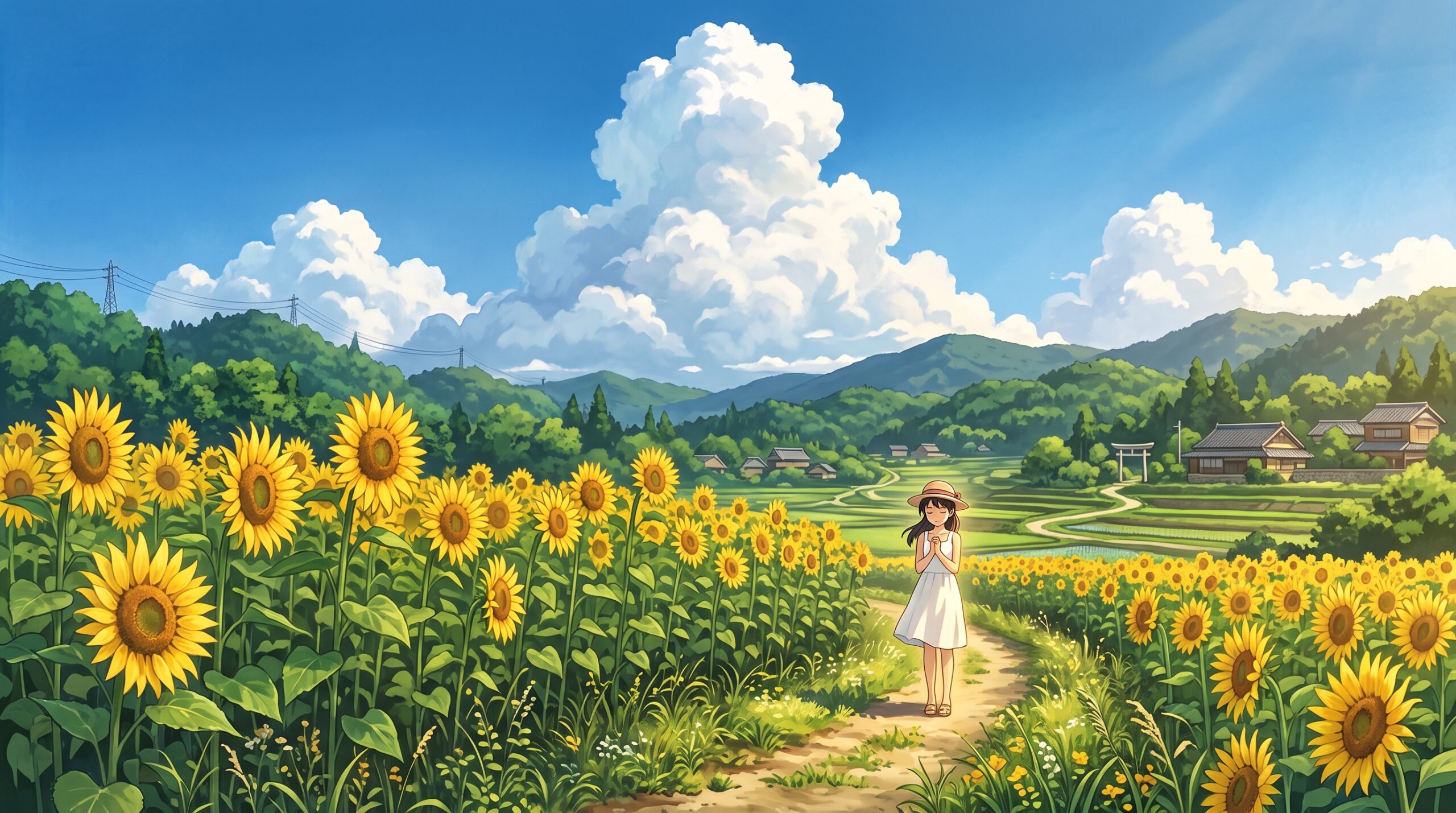
Many years have passed since 1945, and the generation that directly experienced the war is fading. However, the custom of observing a moment of silence at noon nationwide and the culture of loving peace are firmly passed down to the younger generations. Whenever we look up at the towering cumulonimbus clouds in the blue summer sky or the strongly blooming sunflowers, we are reminded of the preciousness of the “ordinary days” we so easily take for granted.
Having explored Japanese history and culture through this article, we would like to ask you: How does your country remember past tragedies and connect them to peace? And what does the “peace” you wish to protect look like to you? Let today be an opportunity to talk about peace with the people close to you.
Reference Links
- Read more from the What’s Today’s Special Day Series
- National Memorial Ceremony for the War Dead (Ministry of Health, Labour and Welfare, Japan)
8月15日は何の日?終戦の日から読み解く日本の平和への祈りと「平和の鐘」の物語
8月15日「終戦の日(戦没者を追悼し平和を祈念する日)」とは?
毎年8月15日、日本は深い祈りと静寂に包まれます。1945年のこの日、正午に昭和天皇による「玉音放送」がラジオで流れ、日本の国民は第二次世界大戦の終結を知りました。焼け野原となった街、失われた数多くの命、そして極限の疲労の中で、日本の人々が耳にしたその放送は、激動の時代の終わりと、全く新しい「平和な時代」への始まりを告げるものでした。
現在、日本ではこの日を「戦没者を追悼し平和を祈念する日」と定めています。毎年、東京の日本武道館では政府主催の「全国戦没者追悼式」が執り行われ、正午の時報とともに日本全国で一分間の黙とうが捧げられます。サイレンが鳴り響く中、人々は立ち止まり、目を閉じ、二度と戦争の悲劇を繰り返さないという強い決意を新たにします。この日は、単なる歴史の1ページではなく、現在の日本の基盤となっている「平和主義」の原点です。
一人の日本人の熱意が生んだ奇跡:国連「平和の鐘」の物語
8月15日を深く理解するために、戦後の日本人がいかにして平和への願いを世界規模の行動へと昇華させたかを示す、一つの象徴的な物語を紹介します。ニューヨークの国連本部に、日本の人々から贈られた「平和の鐘(Japanese Peace Bell)」があることをご存知でしょうか。
この鐘は、元日本兵であった中川千代治という一人の男性の途方もない情熱から生まれました。戦争の残酷さを身をもって体験した彼は、「世界中から集めた硬貨で平和の鐘を鋳造し、国連に贈ろう」と決意します。彼は世界各国の代表に手紙を書き、敵味方の枠を越えて60カ国以上の人々から硬貨やメダルを集めました。ローマ教皇庁からの寄付も含まれていました。
1954年に完成したこの鐘には「世界絶対平和萬歳」という文字が刻まれています。かつて戦火を交えた国々の金属が、日本の伝統的な鋳造技術によって一つの鐘に溶け合い、平和の象徴として生まれ変わったのです。日本の「終戦の日」に込められた想いは、この鐘の音のように、国境を越えて人類全体の平和を願う祈りへとつながっています。
終戦の日から読み解く日本文化:「お盆」と和の精神
8月15日が日本人の心にこれほど深く刻まれている理由は、歴史的な事実だけではありません。この時期は、日本の伝統的な行事である「お盆」と重なっています。お盆とは、年に一度、亡くなった祖先たちの魂が家族のもとへ帰ってくると信じられている期間です。
日本人は古来より、死者の魂を丁重に迎え入れ、供養し、また送り出すという「鎮魂(ちんこん)」の文化を大切にしてきました。8月中旬の厳しい夏の暑さの中、人々は故郷に帰り、お墓を掃除し、迎え火を焚きます。この先祖を想う深い精神性が、戦争で犠牲になったすべての人々を悼む「終戦の日」と見事に結びついているのです。
個人の悲しみや怒りを乗り越え、死者全体の魂を穏やかに慰め、未来の調和(和の精神)を願う。これこそが、お盆という日本文化のレンズを通して見る「終戦の日」の真の姿です。
現代を生きる私たちへ:あなたにとって「平和」とは?
1945年から長い年月が経過し、戦争を直接知る世代は少なくなりました。しかし、日本全国で正午に捧げられる黙とうの習慣や、平和を愛する文化は、今の若い世代にも確実に受け継がれています。夏の青空に湧き上がる入道雲や、力強く咲くひまわりを見るたび、私たちは当たり前のように享受している「日常」の尊さを思い出します。
この記事を通じて、日本の歴史と文化に触れたあなたに問いかけたいと思います。あなたの国では、過去の悲劇をどのように記憶し、平和へと繋げていますか? そして、あなた自身にとって、守るべき「平和」とは一体どのような形をしていますか? 今日という日をきっかけに、ぜひあなたの身近な人と平和について語り合ってみてください。

コメント