- Introduction: The Sweet and Mysterious World of Japanese Folktales
- The Tale of “Ankoromochi Kozo”
- Deep Dive: Why “Ankoromochi”?
- Cultural Connection: Omotenashi and Everyday Faith
- To Our Readers: What Would You Do?
- Reference Links
- はじめに:甘くて不思議な日本の昔話
- 「あんころもちこぞう」の物語
- 物語の深い考察:なぜ「あんころもち」なのか?
- 日本文化とのつながり:おもてなしと信仰
- 読者の皆様へ:あなたならどうしますか?
- 参考リンク
Introduction: The Sweet and Mysterious World of Japanese Folktales
Within Japan’s rich nature and ancient history, countless folktales breathe life into the culture. These stories are not merely entertainment for children. They are mirrors reflecting traditional Japanese values, a deep reverence for nature, and the spiritual beliefs rooted in daily life. Today, we introduce “Ankoromochi Kozo” (The Ankoromochi Boy), a slightly mysterious and heartwarming story where a sweet traditional confection takes center stage. Through this tale, let’s explore the profound depths of Japanese culture together.
The Tale of “Ankoromochi Kozo”
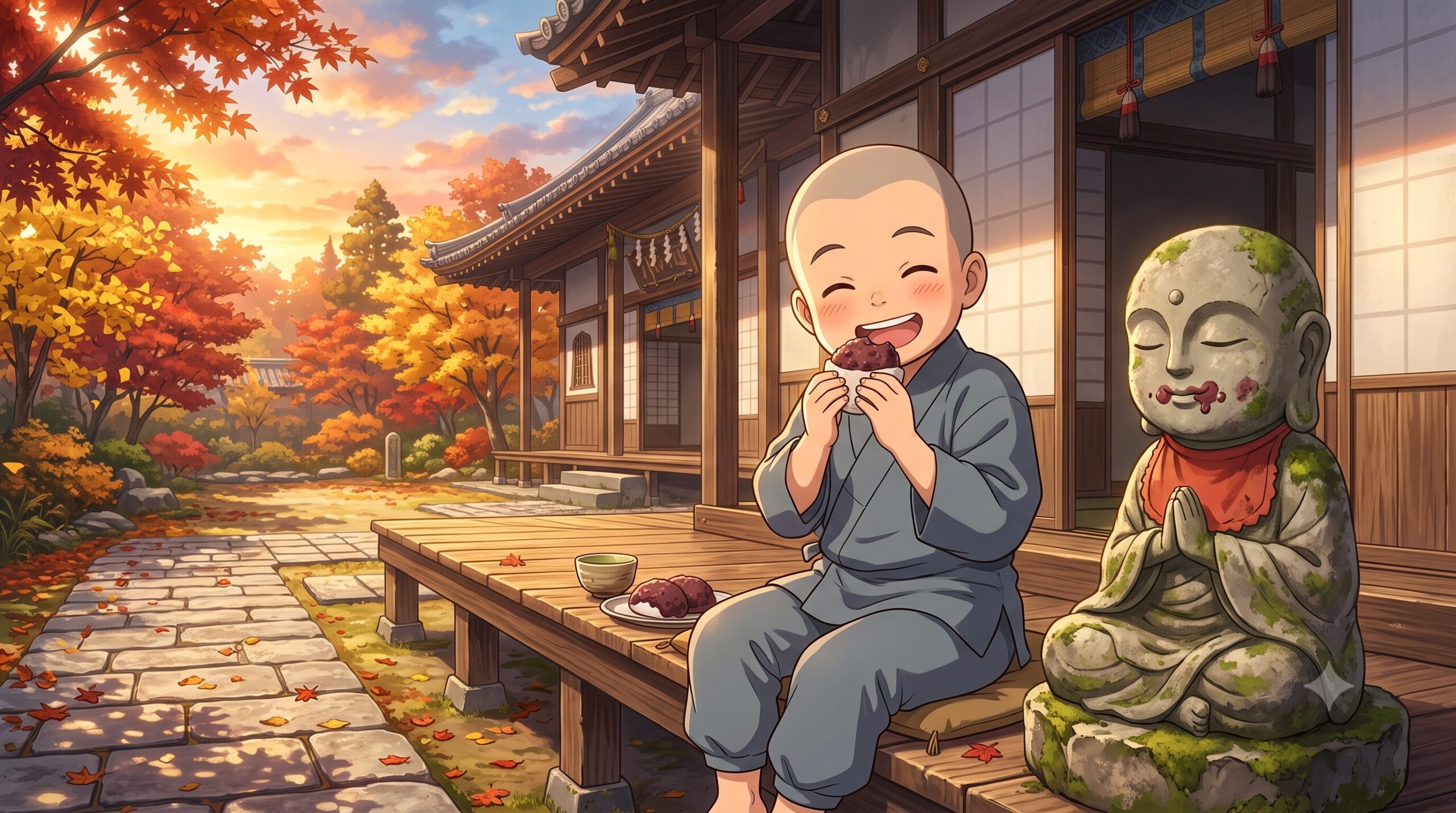
Once upon a time, in a temple nestled deep in a mountain village, there lived an old head monk and a young apprentice monk known as a “Kozo”. This boy was renowned in the village as a hard worker, but he had one major weakness: he absolutely loved “Ankoromochi” (a traditional Japanese sweet made of soft rice cakes covered in sweet red bean paste).
One autumn day, the villagers brought a mountain of handmade ankoromochi to the temple as an offering. The glossy color of the red beans and the sweet aroma filled the temple hall. The head monk said, “Let us offer these to the Buddha tomorrow morning, and then we will all share them,” and he placed the tray of mochi in the cupboard.
However, when midnight came, the boy could not sleep, his mind consumed by the sweet scent of the ankoromochi. “Just one bite…” he muttered as he got up and secretly opened the cupboard. Once he took a bite, it was so delicious he couldn’t stop. Two, three… before he knew it, the boy had eaten every single piece of ankoromochi on the large tray all by himself.
Coming to his senses, the boy turned pale. How furious the head monk would be tomorrow morning! After desperately thinking of an excuse, the boy came up with a “brilliant” idea. He took the leftover red bean paste and smeared it generously around the mouth of the Buddha statue enshrined in the main hall.
The next morning, finding the cupboard empty, the head monk was furious. “Who ate our precious offerings?!” The boy immediately replied, “Master, I do not know. The Buddha must have come down during the night and eaten them. Look at his face!”
When the head monk went to the main hall, sure enough, there was red bean paste smeared all over the Buddha’s mouth. But the wise monk instantly saw through the boy’s lie. He smiled quietly, boiled some water, and gently wiped the Buddha’s face while saying, “Oh, Buddha, the ankoromochi must have been incredibly delicious. But it is not good to keep them all to yourself. Next time, please share some with the little monk as well.”
Realizing that the master was gently admonishing him through the Buddha instead of scolding him directly, the boy felt deeply ashamed. Crying, he apologized to the head monk. From that day on, he never told a lie and devoted himself even more to his training to become a respectable monk.
Deep Dive: Why “Ankoromochi”?
The “ankoromochi” in this story is not just a sweet treat. In Japanese folklore, rice cakes (mochi) and red beans (azuki) hold significant meaning. Since ancient times, Japanese people have believed that the red color of azuki beans has the power to ward off evil spirits, illness, and disaster. Furthermore, mochi is considered the most sacred offering to deities and Buddhas. Therefore, ankoromochi is a “special food combining sacred power and protection from evil.” Perhaps the boy couldn’t resist the temptation not just out of appetite, but because of its mystical allure.
Moreover, while this story conveys the universal lesson that “lies will eventually be exposed,” it highlights the “tolerance” of the head monk. Instead of yelling, he used humor and wisdom to make the boy realize his own mistake. This approach is highly valued in traditional Japanese education and human relationships.
Cultural Connection: Omotenashi and Everyday Faith
The core of Japanese culture deciphered from this story is how “deities and Buddhas” blend naturally into everyday life. Unlike the absolute concept of God in the West, Japanese Buddhas and Kami (the eight million gods based on animism) are much closer and more approachable to humans.
The fact that the boy came up with the excuse “the Buddha ate it” proves that Japanese people view statues not merely as wood or stone carvings, but as familiar presences with souls. And the scene where the monk speaks to the Buddha while wiping its face beautifully expresses that the Japanese spirit of “Omotenashi” (hospitality/mindfulness) is directed not only toward living humans but also toward deities and nature. The Japanese spirituality of saving face and valuing “Wa” (harmony) is perfectly condensed into this short tale.
To Our Readers: What Would You Do?
Can you sympathize, even a little, with the boy who succumbed to sweet temptation? If you were in his shoes, would you have been able to apologize honestly to the master? Or would you have thought of a cleverer excuse?
And if you were the head monk, what words would you have spoken to the lying boy? This story teaches us the “beauty of forgiveness.” Please share your thoughts in the comments, and let us know if you have a similar folktale in your country!
Reference Links
- Read more from the Japanese Folktale Series (Internal Category)
- About “Anko” (Red Bean Paste) – The Soul of Japanese Sweets (Wikipedia)
魅惑の日本昔話:「あんころもちこぞう」が教える日本の心と文化
はじめに:甘くて不思議な日本の昔話
日本の豊かな自然と古い歴史の中には、数え切れないほどの「昔話(Folktales)」が息づいています。それらの物語は、単なる子供向けのエンターテイメントではありません。日本の伝統的な価値観、自然への畏敬の念、そして日常生活に根付く信仰心を深く映し出す鏡なのです。今回は、そんな日本の昔話の中から、甘い和菓子が鍵となる少し不思議で心温まる物語、「あんころもちこぞう」をご紹介します。この物語を通して、日本の文化の奥深さを一緒に探求していきましょう。
「あんころもちこぞう」の物語
むかしむかし、ある山深い村に、お寺の和尚さんと、まだ幼い小僧(見習いの若い僧)が住んでいました。この小僧は、村でも評判の働き者でしたが、たった一つだけ大きな弱点がありました。それは「あんころもち(柔らかいお餅を、甘く煮た小豆の餡で包んだ日本の伝統的なお菓子)」が大好きでたまらないということでした。
ある秋の日のこと。村人からお寺へ、山ほどの手作りのあんころもちがお供えとして届けられました。艶やかな小豆の色と、甘い香りがお寺のお堂いっぱいに広がります。和尚さんは「明日の朝、仏様にお供えしてからみんなで頂こう」と言い、あんころもちをお盆に乗せて戸棚にしまいました。
しかし、夜中になると、小僧はあんころもちの甘い香りが気になって眠れません。「一口だけなら……」と起き上がり、こっそり戸棚を開けてしまいました。一つ食べると、そのあまりの美味しさに手が止まらなくなってしまいます。二つ、三つと食べるうちに、なんと小僧は大きなお盆に乗っていたあんころもちを、一人で全て平らげてしまったのです。
我に返った小僧は青ざめました。明日の朝、和尚さんにどんなに叱られることでしょう。どう言い訳をしようかと考えた末、小僧は名案(?)を思いつきました。本堂に祀られている仏像(お地蔵様)の口の周りに、残っていたあんこをたっぷりと塗りつけたのです。
翌朝、戸棚が空になっているのを発見した和尚さんは激怒しました。「誰じゃ、大切なお供え物を食べたのは!」小僧はすかさず「和尚様、私は知りません。きっと夜中に仏様が降りてきて召し上がったに違いありません。ほら、お顔を見てください」と言いました。
和尚さんが本堂へ行くと、確かに仏像の口の周りにはあんこがべっとりと付いています。しかし、和尚さんはすぐに小僧の嘘を見抜きました。和尚さんは静かに微笑むと、お湯を沸かし、仏像の顔を丁寧に拭きながらこう言いました。「仏様、あんころもちはさぞ美味しかったことでしょう。しかし、独り占めはいけませんね。次は小僧にも分けてあげてくださいよ。」
和尚さんが自分を直接叱るのではなく、仏様を通して優しく諭したことに、小僧は深く恥じ入りました。小僧は泣きながら和尚さんに謝罪し、それ以来、決して嘘をつかず、立派な僧になるために一層修行に励んだということです。
物語の深い考察:なぜ「あんころもち」なのか?
この物語に登場する「あんころもち」は、単なるお菓子ではありません。日本の昔話において、お餅や小豆は非常に重要な意味を持っています。古来より、日本では小豆の赤い色には邪気を払い、病気や災いを避ける力(魔除け)があると信じられてきました。また、お餅は神仏への最も神聖なお供え物です。つまり、あんころもちとは「神聖な力と魔除けの力が合わさった、特別な食べ物」なのです。小僧がその誘惑に勝てなかったのは、単なる食欲だけでなく、それが持つ特別な魅力のせいだったのかもしれません。
また、この物語は「嘘はいずれバレる」という普遍的な教訓を含みつつも、和尚さんの「寛容さ」に焦点が当てられています。頭ごなしに怒鳴るのではなく、ユーモアと知恵を持って相手に自らの過ちを気づかせる。これは、日本の伝統的な教育や人間関係において、非常に重んじられてきたアプローチです。
日本文化とのつながり:おもてなしと信仰
この物語から読み解ける日本文化の核心は、日常生活の中に「神仏」がごく自然に溶け込んでいる点です。西洋の絶対的な神の概念とは異なり、日本の仏様や神様(アニミズムに基づく八百万の神々)は、もっと人間に近く、親しみやすい存在です。
小僧が「仏様が食べた」という言い訳を思いついたのも、日本人が仏像を単なる木や石の彫刻ではなく、魂を持った身近な存在として捉えている証拠です。そして和尚さんが仏像の口を拭きながら話しかけるシーンは、日本の「おもてなし」の精神が、生きている人間だけでなく、神仏や自然に対しても向けられていることを美しく表現しています。相手の顔を立て、和(調和)を尊ぶ日本の精神性が、この短い物語に凝縮されているのです。
読者の皆様へ:あなたならどうしますか?
甘い誘惑に負けてしまった小僧の気持ち、あなたにも少しは理解できるのではないでしょうか?もしあなたがこの小僧の立場だったら、和尚さんに正直に謝ることができたでしょうか?それとも、もっと巧妙な言い訳を考えたでしょうか?
また、あなたが和尚さんだったら、嘘をついた小僧に対してどのような言葉をかけますか?この物語は、私たちに「許すことの美しさ」を教えてくれます。ぜひ、あなたの考えや、あなたの国に似たような昔話があれば、コメント欄で教えてください。

コメント