The history of Japan is not merely a timeline of events; it is a fascinating, mysterious, and deeply moving narrative of resilience, cultural continuity, and profound spiritual unity. For over 2,600 years, the Japanese archipelago has been guided by an unbroken imperial lineage. At the very heart of this ancient national polity—known as the “Kokutai”—lies a beautiful and unique philosophy: the Emperor views the citizens not as subjects to be ruled, but as “Ohmitakara” (大御宝), his great and precious treasures. This profound, familial bond between the Emperor and the people has weathered centuries of change, but it was never tested more severely, nor demonstrated more powerfully, than during the reign of Emperor Showa, the 124th Emperor of Japan.
- The Dawn of Showa: A Radiant Peace Overshadowed by Global Turmoil
- The Historic Encounter: A Stunned General MacArthur
- Walking Among the Ashes: The Zenkoku Angya (Nationwide Tours)
- From Ruins to an Economic Miracle
- The Gentle Marine Biologist
- A Legacy of Radiant Peace
- External References
- 昭和の幕開け:世界的な激動の影に隠れた平和への願い
- 歴史的会見:驚愕したマッカーサー元帥
- 灰燼の中を歩む:全国行脚
- 廃墟から経済の奇跡へ
- 心優しき海洋生物学者
- 平和への願いの遺産
- 参考URL(外部リンク)
The Dawn of Showa: A Radiant Peace Overshadowed by Global Turmoil
Born on April 29, 1901, and ascending to the Chrysanthemum Throne in 1926, Emperor Showa—known internationally by his personal name, Hirohito—presided over an era named “Showa,” which translates to “Radiant Peace.” Yet, the first two decades of his reign were engulfed in the darkest and most turbulent periods of modern human history. The world was gripped by the Great Depression, rising political radicalization, and the devastating march toward global conflict.
As the Greater East Asia War (World War II) raged, the Japanese nation faced unprecedented trials. Cities were reduced to ashes, and millions of lives were lost or forever altered. The very existence of Japan’s 2,600-year history hung by a fragile thread. It was in this darkest hour that the traditional bond of “Ohmitakara” became a beacon of survival. On August 15, 1945, in a broadcast that shocked the world and his nation, Emperor Showa took the unprecedented step of speaking directly to his people over the radio. In the historic Gyokuon-hoso (Jewel Voice Broadcast), he announced the acceptance of the Potsdam Declaration, urging his beloved citizens to “endure the unendurable and suffer the insufferable.” By intervening to stop the bloodshed, he prioritized the survival of his “Ohmitakara” over the continuation of a lost war.
The Historic Encounter: A Stunned General MacArthur
Following the surrender, Japan was occupied by Allied Forces under the command of General Douglas MacArthur, the Supreme Commander for the Allied Powers (SCAP). The nation was starving, devastated, and uncertain of its future. In the West, there were loud calls for the Emperor to be tried as a war criminal. MacArthur himself, having dealt with defeated leaders across the globe, harbored a cynical expectation of how the Japanese monarch would behave.
On September 27, 1945, an event occurred that completely shattered MacArthur’s preconceptions and forever altered the trajectory of modern Japan. Emperor Showa, dressed in formal morning attire, traveled to the United States Embassy in Tokyo to meet with the General. The contrast was stark: the towering, relaxed American General in an open-collared uniform standing beside the dignified, slight figure of the Emperor.
MacArthur expected the Emperor to plead for his own life, his throne, and his wealth—as so many defeated monarchs had done before him. Instead, Emperor Showa stood firmly before the General and delivered a statement that moved MacArthur to his core. According to MacArthur’s own memoirs, the Emperor said, “I come to you, General MacArthur, to offer myself to the judgment of the powers you represent as the one to bear sole responsibility for every political and military decision made and action taken by my people in the conduct of war.”
The Emperor did not ask for clemency for himself. He asked MacArthur for help to feed his starving citizens. He offered his own life in exchange for the salvation of his “Ohmitakara.” MacArthur was profoundly moved by this ultimate act of self-sacrifice and regal dignity. He realized immediately that he was not dealing with a tyrant, but with the spiritual father of a nation. This single meeting forged a bond of mutual respect that became the cornerstone of Japan’s peaceful reconstruction. MacArthur later ensured that the imperial institution was preserved, recognizing it as the vital unifying force of the Japanese people.
Walking Among the Ashes: The Zenkoku Angya (Nationwide Tours)
If the meeting with MacArthur secured the political survival of Japan, what happened next secured the spiritual revival of the nation. In the bitter aftermath of the war, Japan was a landscape of charred ruins and broken dreams. The people were suffering from malnutrition, loss, and deep despair. Realizing the intense pain of his citizens, Emperor Showa made a decision that would redefine the modern imperial role: he would go to the people.
Beginning in February 1946 and continuing relentlessly until 1954, Emperor Showa embarked on the “Zenkoku Angya”—a grueling series of nationwide tours to personally comfort the citizens. He traveled approximately 33,000 kilometers, visiting every single prefecture in Japan, with the sole exception of Okinawa, which remained under US military administration (a painful reality he regretted until the end of his life).
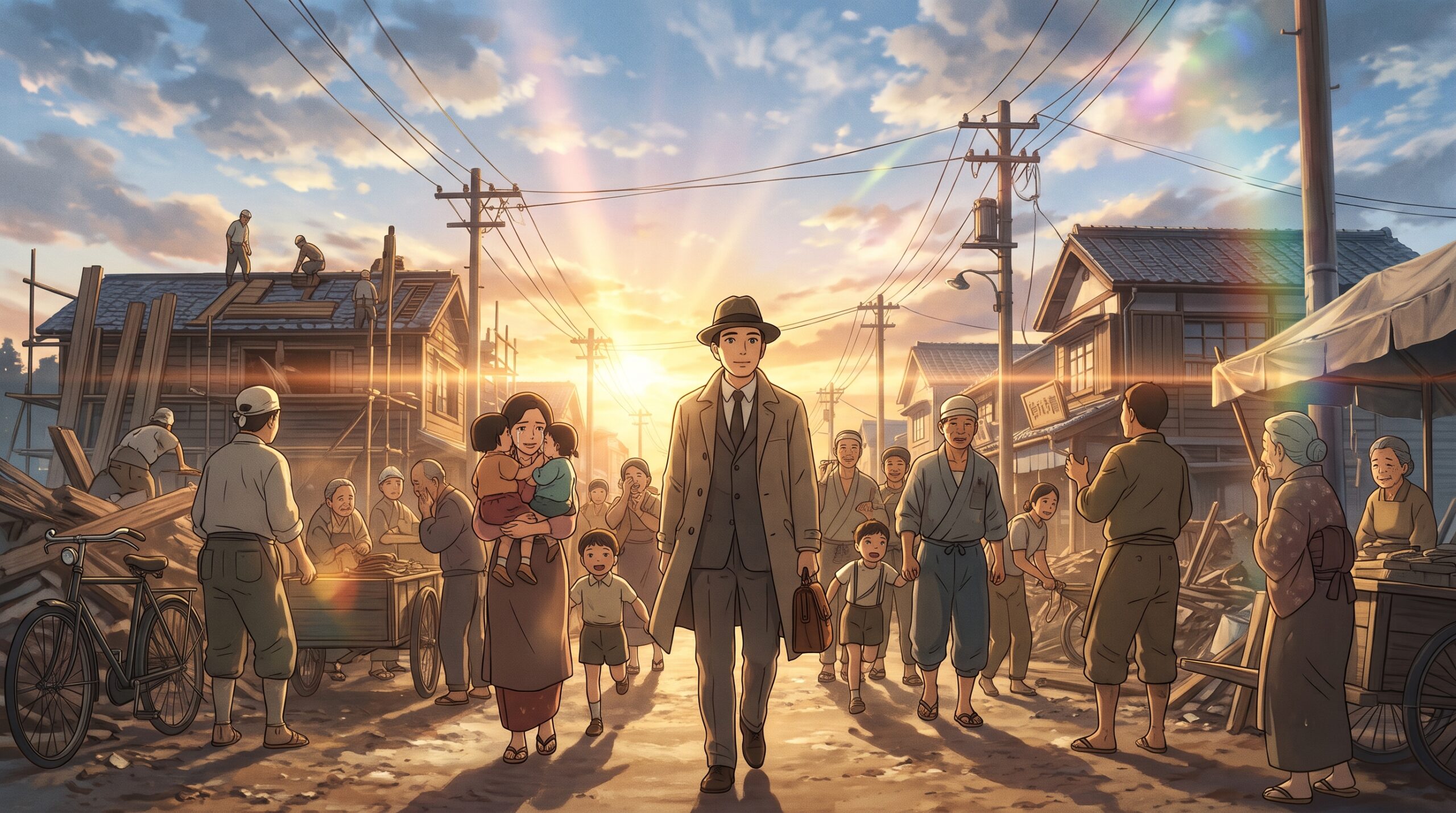
Shedding the distant, divine aura of the pre-war era, the Emperor walked through the rubble wearing a simple, slightly worn Western suit and his trademark fedora hat. He descended into the dark, sweltering shafts of coal mines in Kyushu to thank the miners. He visited makeshift orphanages, comforting children who had lost their parents to the firebombs. He stood in repatriation centers, welcoming back exhausted soldiers and civilians returning from overseas. He waded into massive crowds of commoners, entirely unshielded, speaking directly to farmers, factory workers, and mothers.
His gentle, earnest catchphrase, “Ah, so” (Ah, is that so?), spoken as he listened intently to the struggles of his people, became a symbol of his deep empathy. The reaction of the Japanese public was nothing short of miraculous. Despite having lost a devastating war fought in his name, the people did not harbor resentment. Instead, millions flocked to see him, waving handmade paper flags, weeping tears of joy, and finding renewed strength in his presence. The sight of their Emperor walking through the ashes alongside them reignited the ancient, unbreakable bond of “Ohmitakara.” He was sharing their suffering, and in doing so, he gave them the courage to rebuild.
From Ruins to an Economic Miracle
The spiritual unity fostered by the Emperor’s post-war tours laid the psychological foundation for what would become known as the Japanese Economic Miracle. United by a shared sense of purpose and the knowledge that their history and culture had survived the flames of war, the Japanese people worked tirelessly to rebuild their nation.
By the late 1960s, a nation that had been completely decimated just two decades prior had risen to become the world’s second-largest economy. Emperor Showa lived to witness this miraculous transformation. He proudly opened the 1964 Tokyo Olympics and the 1970 Osaka World Expo, welcoming the world to a peaceful, technologically advanced, and vibrant Japan. The nation had not only survived; it had thrived, proving the resilience of a culture deeply rooted in harmony, duty, and mutual respect.
The Gentle Marine Biologist
Beyond his monumental duties as the symbol of the state, Emperor Showa possessed a quiet, scholarly passion that reflected his deep appreciation for the mysteries of the natural world. He was a dedicated and highly respected marine biologist. Spending countless hours in his laboratory at the Imperial Palace and at a marine biological research station in Hayama, he specialized in the study of hydrozoans (a class of small, predatory marine animals).
He published numerous scientific papers and discovered several new species. This meticulous, quiet pursuit of knowledge stood in stark contrast to the turbulent political events of his era. It showcased a man of profound intellectual curiosity who found peace and wonder in the smallest, most intricate details of life, reflecting the traditional Japanese reverence for nature.
A Legacy of Radiant Peace
When Emperor Showa passed away on January 7, 1989, it marked the end of the longest reign in Japanese history—62 turbulent, transformative years. His life was a mirror reflecting the entire 20th century of Japan: from the heights of military expansion to the depths of absolute destruction, and finally, to the miraculous rebirth as a peaceful, democratic economic powerhouse.
For international observers, the history of Japan is often viewed through the lens of samurai, geisha, and modern technology. However, the true essence of Japan’s endurance lies in its 2,600-year-old Kokutai. Emperor Showa embodied this enduring spirit. By stepping forward to take ultimate responsibility before General MacArthur, and by dedicating his post-war life to walking through the ashes to comfort his “Ohmitakara,” he ensured that the ancient, beautiful continuity of Japan not only survived the fires of war but emerged stronger, more compassionate, and forever bonded to the hearts of its people.
External References
- The Imperial Household Agency: Emperor Showa
- Encyclopædia Britannica: Hirohito (Emperor Showa)
- The Government of Japan – Official Website
永遠の絆:昭和天皇、マッカーサー元帥、そして2600年の遺産の再生
日本の歴史は単なる出来事の年表ではありません。それは、回復力、文化の連続性、そして深い精神的統合による、魅力的で、神秘的で、深く感動的な物語です。2600年以上にわたり、日本列島は万世一系の皇室によって導かれてきました。この古くからの国体(こくたい)の中心には、美しく独自の哲学が存在します。天皇は国民を支配されるべき臣民としてではなく、「大御宝(おおみたから)」、すなわち偉大で尊い宝物として見ているのです。天皇と国民の間のこの深く家族的な絆は、何世紀もの変化を乗り越えてきましたが、第124代天皇である昭和天皇の治世ほど、それが厳しく試され、また力強く証明された時代はありませんでした。
昭和の幕開け:世界的な激動の影に隠れた平和への願い
1901年4月29日に誕生し、1926年に皇位を継承した昭和天皇は、「平和への願い」を意味する「昭和」という時代を統治しました。しかし、その治世の最初の20年間は、近代人類史上最も暗く、最も激動の時代に飲み込まれました。世界は世界恐慌、政治の急進化、そして破壊的な世界大戦への歩みに捕らわれていました。
大東亜戦争(第二次世界大戦)が激化する中、日本という国家はかつてない試練に直面しました。都市は灰燼に帰し、何百万もの命が失われ、あるいは永遠に変わってしまいました。日本の2600年の歴史の存続そのものが、細い糸にぶら下がっている状態でした。この最も暗い時代に、「大御宝」という伝統的な絆が生き残るための道標となりました。1945年8月15日、世界と国家に衝撃を与えた放送の中で、昭和天皇はラジオを通じて直接国民に語りかけるという前例のない行動をとりました。歴史的な玉音放送において、天皇はポツダム宣言の受諾を発表し、愛する国民に「耐え難きを耐え、忍び難きを忍び」と呼びかけました。流血を止めるために介入することで、天皇は失われた戦争の継続よりも、「大御宝」の生存を優先したのです。
歴史的会見:驚愕したマッカーサー元帥
降伏後、日本は連合国軍最高司令官ダグラス・マッカーサー元帥の指揮下にある連合国軍に占領されました。国家は飢え、荒廃し、未来への不安に包まれていました。欧米では、天皇を戦犯として裁くべきだという声が大きく上がっていました。マッカーサー自身も、世界中で敗戦国の指導者と対峙してきた経験から、日本の君主がどのように振る舞うかについてシニカルな予想を抱いていました。
1945年9月27日、マッカーサーの先入観を完全に打ち砕き、近代日本の軌跡を永遠に変える出来事が起こりました。モーニングコートの正装を身にまとった昭和天皇が、元帥と会見するために東京のアメリカ大使館に赴いたのです。その対比は強烈でした。開襟の略装姿でリラックスした長身のアメリカの将軍と、その横に立つ威厳ある小柄な天皇の姿です。
マッカーサーは、過去の多くの敗戦国の君主がそうであったように、天皇が自身の命、玉座、そして財産の保全を懇願するだろうと予想していました。しかし、昭和天皇は将軍の前に毅然と立ち、マッカーサーの心を底から動かす声明を述べました。マッカーサー自身の回顧録によれば、天皇は次のように述べました。「私は、国民が戦争遂行にあたって行ったすべての政治的および軍事的な決定と行動について、全責任を負う者として、あなたが代表する諸国の裁きに身を委ねるためにあなたのもとへ参りました。」
天皇は自分自身の命乞いはしませんでした。天皇は飢えに苦しむ国民を救うための助けをマッカーサーに求めたのです。「大御宝」の救済と引き換えに、自らの命を差し出したのです。マッカーサーは、この究極の自己犠牲と王者の威厳に深く感動しました。彼は、自分が暴君と対峙しているのではなく、国家の精神的な父親と対峙しているのだと即座に理解しました。このたった一度の会見が、日本の平和的復興の礎となる相互尊重の絆を築いたのです。後にマッカーサーは、皇室が日本国民の重要な統合力であることを認識し、皇室制度の存続を確実なものとしました。
灰燼の中を歩む:全国行脚
マッカーサーとの会見が日本の政治的存続を確実にしたとすれば、その後に起こったことは国家の精神的復興を確実にするものでした。戦後の過酷な状況の中で、日本は黒焦げの廃墟と打ち砕かれた夢の景色でした。人々は栄養失調、喪失感、そして深い絶望に苦しんでいました。国民の激しい痛みを感じ取った天皇は、現代の皇室の役割を再定義する決断を下しました。それは、国民のもとへ自ら足を運ぶことでした。
1946年2月に始まり1954年まで休むことなく続けられた「全国行脚」において、昭和天皇は国民を直接慰問するために過酷な全国巡回に乗り出しました。天皇は約3万3000キロメートルを旅し、アメリカの軍政下にあった沖縄(この痛ましい現実を、天皇は生涯の最後まで悔やんでおられました)を除く、日本のすべての都道府県を訪問しました。
戦前の遠く離れた神聖なオーラを脱ぎ捨て、天皇は少し着古した質素なスーツとトレードマークの中折れ帽をかぶり、瓦礫の中を歩きました。九州の炭鉱の暗く蒸し暑い坑道に降りて鉱夫たちに感謝を伝えました。仮設の孤児院を訪れ、焼夷弾で親を失った子供たちを慰めました。引揚者収容所に立ち、海外から帰還した疲弊した兵士や民間人を出迎えました。天皇は無防備な状態で庶民の大群衆の中に入り込み、農民、工場労働者、母親たちに直接語りかけました。
国民の苦労に熱心に耳を傾けながら発せられた、穏やかで誠実な「ああ、そう」という言葉は、天皇の深い共感の象徴となりました。日本国民の反応は奇跡としか言いようのないものでした。天皇の名の下に行われた壊滅的な戦争に敗れたにもかかわらず、人々は恨みを抱きませんでした。それどころか、何百万人もの人々が天皇を見るために集まり、手作りの紙の日の丸を振り、喜びの涙を流し、天皇の存在に新たな力を得たのです。彼らと共に灰燼の中を歩む天皇の姿は、「大御宝」という古くからの決して壊れることのない絆を再び燃え上がらせました。天皇は国民の苦しみを分かち合い、そうすることで国民に復興への勇気を与えたのです。
廃墟から経済の奇跡へ
天皇の戦後の巡回によって育まれた精神的な団結は、「日本の経済の奇跡」として知られるようになるものの心理的な基盤を築きました。共通の目的意識と、自分たちの歴史と文化が戦争の炎を生き延びたという認識によって結ばれた日本国民は、国家を再建するためにたゆまぬ努力をしました。
1960年代後半までに、わずか20年前に完全に打ち砕かれた国家は、世界第2位の経済大国にまで成長しました。昭和天皇は、この奇跡的な変貌を目の当たりにしました。天皇は誇りを持って1964年の東京オリンピックと1970年の大阪万博を開会し、平和で技術的に進歩した活気ある日本に世界を迎え入れました。日本は単に生き残っただけでなく、大きく繁栄し、調和、義務、そして相互尊重に深く根ざした文化の回復力を証明したのです。
心優しき海洋生物学者
国家の象徴としての記念碑的な義務を超えて、昭和天皇は自然界の神秘に対する深い敬意を反映した、静かで学術的な情熱を持っていました。天皇は献身的で高く評価される海洋生物学者でした。皇居内の生物学御研究所や葉山のしおさい博物館(海洋生物研究施設)で数え切れないほどの時間を過ごし、ヒドロ虫類(小型の捕食性海洋動物の一綱)の研究を専門とされていました。
天皇は数多くの科学論文を発表し、いくつかの新種を発見しました。この綿密で静かな知識の探求は、その時代の激動の政治的出来事とは対照的でした。それは、生命の最も小さく複雑な細部に平和と驚異を見出し、日本の伝統的な自然への畏敬の念を体現する、深い知的好奇心を持つ人物であることを示していました。
平和への願いの遺産
1989年1月7日に昭和天皇が崩御されたとき、それは日本の歴史上最も長い治世である、激動と変革の62年間の終わりを意味しました。その生涯は、日本の20世紀全体を映し出す鏡でした。軍事拡大の頂点から絶対的な破壊のどん底へ、そして最後に、平和で民主的な経済大国としての奇跡的な復活へ。
海外の観察者にとって、日本の歴史はしばしば侍、芸者、そして現代技術のレンズを通して見られます。しかし、日本の忍耐の真の本質は、その2600年の歴史を持つ「国体」にあります。昭和天皇はこの永続する精神を体現しました。マッカーサー元帥の前で究極の責任を取るために前へ踏み出し、戦後の生涯を「大御宝」を慰めるために灰燼の中を歩むことに捧げることで、天皇は日本の古く美しい連続性が戦争の炎を生き延びるだけでなく、より強く、より思いやりのあるものとして、国民の心に永遠に結びつくことを確実にしたのです。
コメント