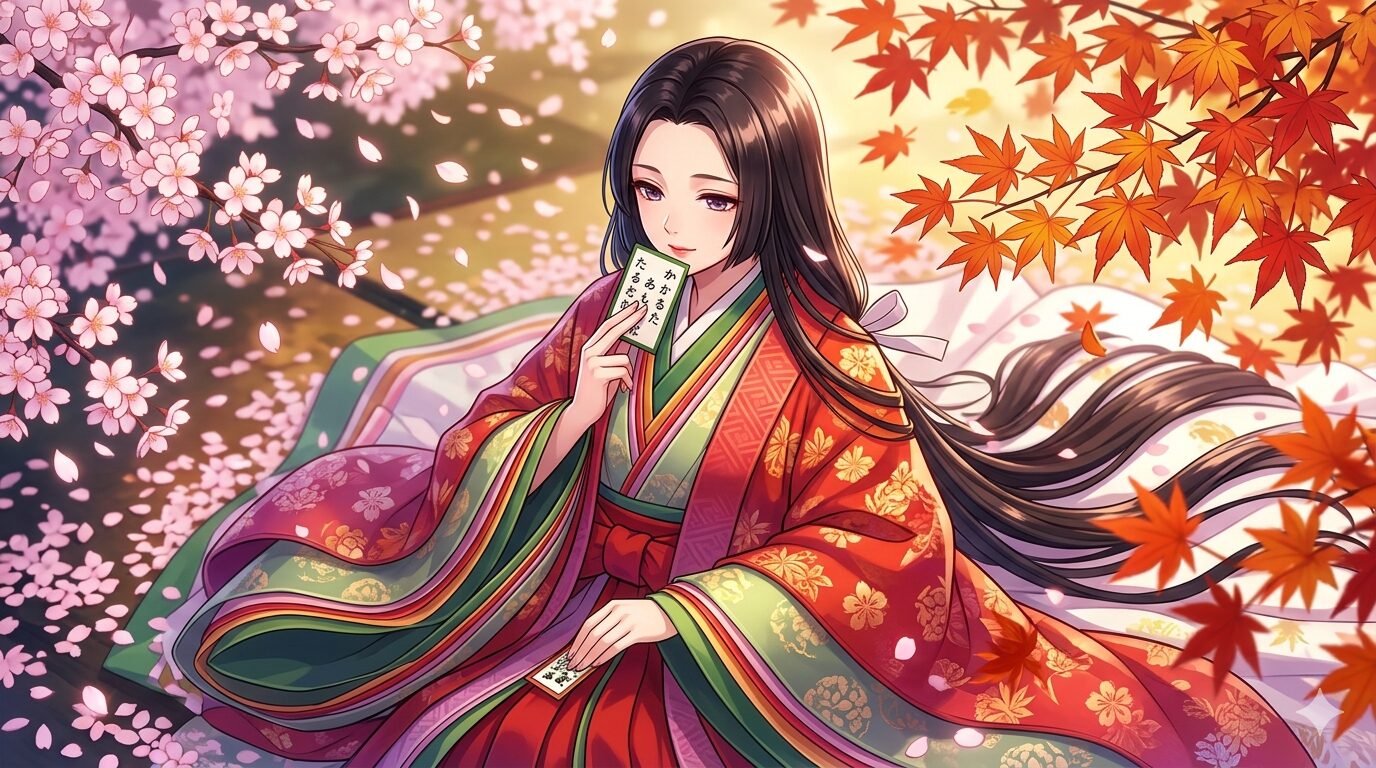
Japan possesses an art of words that has been passed down since ancient times. Every year, May 27 is designated as “Hyakunin Isshu Day” (One Hundred Poets, One Poem Each Day), a crucial anniversary for deeply understanding classical Japanese literature and aesthetics. This day is not merely a record of the past, but rather it teaches us the essence of Japanese culture that continues to pulse vibrantly in modern pop culture and sports.
What is Hyakunin Isshu Day? Its Historical Background
On May 27, 1235 (Bunryaku 2), Fujiwara no Teika, an outstanding poet and scholar of the Kamakura period, completed the “Ogura Hyakunin Isshu”. This is the origin of Hyakunin Isshu Day. Teika was requested by his close friend, Utsunomiya Yoritsuna, to create decorative colored paper (shikishi) to adorn the sliding doors of his villa on Mount Ogura in Kyoto. In response, Teika carefully selected 100 exceptional poets who were active over a 600-year period from the Asuka period to the early Kamakura period. He then chose exactly one Waka poem (a traditional Japanese poem consisting of 31 syllables in a 5-7-5-7-7 pattern) from each poet to compile this masterpiece.
The 100 selected poems include works by emperors, aristocrats, monks, and many brilliant female poets. The real emotions of the people of that time—the joy and sorrow of romance, the changing of the four seasons, and the awe of nature—are vividly depicted.
“Mono no Aware” and Japanese Culture Embedded in 31 Syllables
To decipher the Hyakunin Isshu is to directly understand “Mono no aware,” an aesthetic sensibility unique to Japan. The profound empathy and beauty found in things that are not eternal—such as the transience of falling cherry blossoms, the loneliness felt in the autumn twilight, or the heartbreak of an unrequited love—are all condensed into just 31 syllables.
For example, Ono no Komachi’s poem, “The flowers withered, Their color faded away, While meaninglessly, I spent my days in the world, And the long rains were falling,” is a masterpiece that overlaps the fading cherry blossoms with her own aging beauty. While Western poetry often describes the world through lengthy epics, Japanese Waka strips words down to the absolute limit, possessing a “beauty of empty space” where the landscape is completed by the reader’s imagination. This is the core spirit of Japanese culture, which also resonates with modern minimalism and Zen philosophy.
From Classics to Modern Sports: The Evolution of “Kyogi Karuta”
Entering the Edo period, Hyakunin Isshu was mass-produced using woodblock printing technology and explosively spread among the common people as a card game called “Karuta”. This game, where the upper phrase (the first 5-7-5) is read aloud and players instantly snatch the card with the lower phrase (the remaining 7-7), became an indispensable traditional event during the Japanese New Year.
Furthermore, in modern times, Hyakunin Isshu has evolved into an intense mind sport called “Kyogi Karuta” (Competitive Karuta). Competitors memorize all 100 poems and, the moment they distinguish the very first syllable (kimari-ji) uttered by the reader, they strike the cards away in a world measured in 0.1 seconds. Because of its intensity, it is also called “martial arts on tatami mats.” In recent years, influenced by the mega-hit manga and anime “Chihayafuru,” which features competitive karuta, there has been a rapid increase in young people not only in Japan but also overseas starting to play. The fact that the elegant culture of Heian period aristocrats is driving modern youth wild 800 years later demonstrates the overwhelming universality and flexibility of Japanese culture.
To Our Readers
How do you feel about the fact that ancient Japanese people, in an era without smartphones or the internet, tried to convey their intense passions and deep sorrows by entrusting them to just 31 syllables? If you were to express your current honest emotions or the beautiful scenery in front of you in a short poem, what words would you choose? Please try to put the “landscape” in your heart into words.
Reference Links
- External Link: Ogura Hyakunin Isshu (Wikipedia)
- External Link: All Japan Karuta Association (Official)
- Internal Link: Read more from the “What’s Today’s Special Day?” Series
5月27日は「百人一首の日」:平安の雅と現代の熱狂をつなぐ日本文化の結晶
日本には、古代から受け継がれる言葉の芸術があります。毎年5月27日は「百人一首の日」に制定されており、日本の古典文学と美意識を深く知る上で極めて重要な記念日です。この日は、単なる過去の記録ではなく、現代のポップカルチャーやスポーツにまで脈々と息づく日本文化の真髄を私たちに教えてくれます。
百人一首の日とは?その歴史的背景
1235年(文暦2年)の5月27日、鎌倉時代の傑出した歌人であり学者でもあった藤原定家(ふじわらのていか)が、「小倉百人一首(おぐらひゃくにんいっしゅ)」を完成させました。これが「百人一首の日」の由来です。定家は、親友である宇都宮頼綱から、京都の小倉山にある別荘の障子を装飾するための色紙の作成を依頼されました。そこで定家は、飛鳥時代から鎌倉時代初期に至るまでの約600年間に活躍した100人の優れた歌人を厳選し、彼らの和歌(5・7・5・7・7の31文字からなる日本の伝統的な詩)を一人一首ずつ選び出してまとめたのです。
選ばれた100首の中には、天皇、貴族、僧侶、そして多くの女性歌人たちの作品が含まれています。恋愛の喜びや悲しみ、四季の移ろい、自然への畏敬の念など、当時の人々のリアルな感情が鮮やかに描き出されています。
31文字に込められた「もののあわれ」と日本文化
百人一首を読み解くことは、日本特有の美意識である「もののあわれ(Mono no aware)」を理解することに直結します。桜が散る儚さや、秋の夕暮れに感じる寂寥感、決して叶わぬ恋の切なさなど、永遠ではないものに対して抱く深い共感と美しさを見出す心が、わずか31文字の中に凝縮されています。
例えば、小野小町(おののこまち)の「花の色は 移りにけりな いたづらに わが身世にふる ながめせしまに」という歌は、色あせていく桜の花と、美しかった自分の容姿が老いていく様を重ね合わせた傑作です。西洋の詩が長大な叙事詩で世界を描写するのに対し、日本の和歌は極限まで言葉を削ぎ落とし、読み手の想像力によって風景を完成させる「余白の美」を持っています。これは現代のミニマリズムや禅(Zen)の思想にも通じる、日本文化の根幹をなす精神です。
古典から現代のスポーツへ:「競技かるた」という進化
百人一首は、江戸時代に入ると木版画の技術によって大量生産され、「かるた(Karuta)」というカードゲームとして庶民の間に爆発的に普及しました。上の句(最初の5・7・5)が読み上げられ、下の句(残りの7・7)が書かれた札を瞬時に取るこの遊びは、日本の正月には欠かせない伝統行事となりました。
さらに現代において、百人一首は「競技かるた」という激しいマインドスポーツへと進化を遂げています。競技者は100首すべてを暗記し、読み手が発する最初の1文字(決まり字)を聞き分けた瞬間に、0.1秒の世界で札を弾き飛ばします。その激しさから「畳の上の格闘技」とも呼ばれています。近年では、競技かるたを題材にした大ヒット漫画・アニメ「ちはやふる」の影響により、日本国内だけでなく海外でも競技かるたを始める若者が急増しています。平安時代の貴族の優雅な文化が、800年の時を超えて現代の若者たちを熱狂させている事実は、日本文化の持つ圧倒的な普遍性と柔軟性を示しています。
読者の皆様へ
古代の日本人が、スマートフォンもインターネットもない時代に、自らの激しい情熱や深い悲しみをわずか31文字に託して伝えようとした事実に、あなたはどう感じますか?もし、あなたが今の自分の素直な感情や、目の前にある美しい景色を短い詩で表現するとしたら、どんな言葉を選びますか?ぜひ、あなたの心の中にある「情景」を言葉にしてみてください。
参考リンク
- 外部参考リンク:小倉百人一首 (Wikipedia)
- 外部参考リンク:全日本かるた協会 (Official)
- 内部リンク:今日は何の日シリーズをもっと読む
コメント