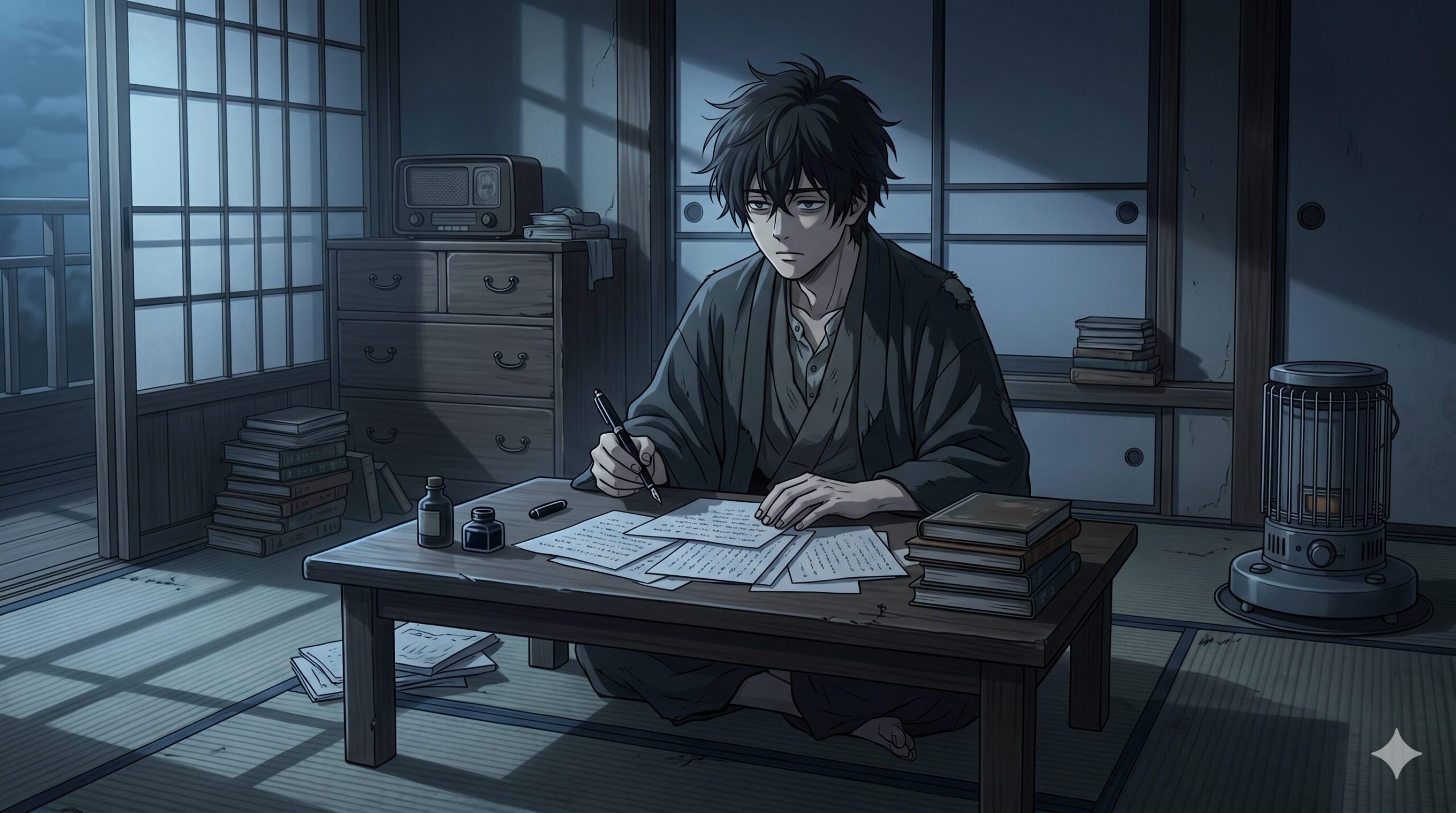
On May 12, 1948, an event eternally engraved in the history of Japanese literature occurred. Osamu Dazai, the leading author of the Buraiha (Decadent School), finished writing his undisputed masterpiece and final novel, “No Longer Human” (Ningen Shikkaku). Born just three years after the end of World War II, this story emerged during a period of massive paradigm shifts, when Japanese society was oscillating between total exhaustion and the search for new hope.
The Cry of the Soul: “No Longer Human” and Its Historical Context
“No Longer Human” is written in the form of notebooks kept by the protagonist, Yozo Oba. From a young age, Yozo is completely incapable of understanding the emotions of others or the rules of society. To blend in, he adopts the survival mechanism of playing the “clown.” However, this mask of deception gradually peels away as he drowns himself in alcohol, drugs, and turbulent relationships with women, ultimately branding himself as “disqualified from being human.”
Merely a month after completing this manuscript, on June 13, 1948, Osamu Dazai took his own life in the Tamagawa Canal. Because of this, the novel is widely read as Dazai’s “spiritual autobiography” or “suicide note,” heavily reflecting his own tragic life. In post-war Japan, where old authorities had collapsed and people had lost their sense of identity, Dazai’s depiction of absolute self-denial and raw isolation struck a profound chord in the hearts of the youth.
“Honne” and “Tatemae”: Decoding Yozo’s Tragedy Through Japanese Culture
Why does this work continue to garner overwhelming empathy from readers not only in modern Japan but across the globe? It is because it portrays the extreme dichotomy of “Honne” (true feelings) and “Tatemae” (the social facade), a concept that flows deep within the foundations of Japanese culture.
In Japanese society, there is an ancient saying: “Harmony is the greatest of virtues.” This demands that individuals do not disrupt the harmony of the group. Consequently, people learn the art of hiding their true emotions (Honne) to play the role expected of them by society (Tatemae). Yozo Oba’s strategy of becoming a “clown” was the ultimate manifestation of Tatemae. By making others laugh and pretending to be harmless, he desperately tried to avoid attack and rejection.
However, Yozo’s tragedy lies in the fact that, by trying to execute this Tatemae perfectly, he completely lost any outlet for his Honne. Within Japan’s unique “shame culture”—where societal reputation and the judgment of others dictate behavior—revealing his true self was nothing short of terrifying. “No Longer Human” beautifully and ruthlessly depicts the suffocation of an individual unable to adapt to a society with intense peer pressure, and the inevitable collapse that follows.
Even in modern society, where the rise of social media forces us to be hyper-aware of our “public selves,” it can be said that we all harbor a little bit of Yozo Oba in our hearts. This novel acts as a mirror, highlighting the shadows of Japanese culture while reflecting the universal loneliness of the human condition.
Are You Aware of the “Clown” Inside You?
“No Longer Human” is the legacy Osamu Dazai left behind at the cost of his life. It is not merely a dark story; it is a quiet companion for anyone who suffers from the pain of living a lie.
Are you hiding your true self right now, playing the “clown” for someone else’s sake? Have you ever felt like you were losing yourself just to meet society’s rules or the expectations of those around you? If you are feeling suffocated right now, stop for a moment and listen to your own “Honne.”
How did reading this article make you feel about the way you live your life? I invite you to face the true thoughts hidden deep within your heart.
[Reference & Related Links]
- Internal Link: Read more from the “What’s Today’s Special Day?” Series
- External Link (Aozora Bunko / Read the original Japanese text for free): Osamu Dazai – “No Longer Human”
1948年5月12日:太宰治が『人間失格』を脱稿した日
1948年(昭和23年)5月12日、日本文学史に永遠に刻まれるひとつの出来事が起きました。無頼派を代表する作家・太宰治が、自身の最高傑作であり遺作ともなる小説『人間失格』を書き上げたのです。第二次世界大戦の敗戦からわずか3年、価値観が大きく転換し、社会全体が虚脱状態と新たな希望の間で揺れ動いていた時代に、この物語は産声を上げました。
『人間失格』という魂の叫びと歴史的背景
『人間失格』は、主人公・大庭葉蔵の手記という形式で綴られています。幼い頃から他者の感情や社会のルールが理解できず、周囲に溶け込むために「道化」を演じ続ける葉蔵。しかし、その偽りの仮面は徐々に剥がれ落ち、酒、薬物、そして女性関係へと溺れ、最終的には「人間失格」という絶望的な烙印を自らに押すことになります。
太宰治自身がこの作品を脱稿した約1ヶ月後の6月13日、玉川上水で自らの命を絶ちました。そのため、この作品は太宰の「精神的自叙伝」あるいは「遺書」として読まれることが多く、彼の人生そのものが色濃く投影されています。敗戦後の日本において、旧来の権威が崩壊し、人々が自己のアイデンティティを見失う中、太宰の描く徹底的な自己否定と剥き出しの孤独は、当時の若者たちの心に深く突き刺さりました。
「本音」と「建前」:日本文化から読み解く大庭葉蔵の悲劇
この作品が時代を超え、現代の日本、さらには世界中の読者から圧倒的な共感を集め続けているのはなぜでしょうか。それは、日本文化の根底に流れる「本音(本当の気持ち)」と「建前(社会的な顔)」という二面性の極致を描いているからです。
日本の社会では、古くから「和をもって尊しとなす」という言葉があるように、集団の調和を乱さないことが強く求められます。その中で人々は、自分の真実の感情(本音)を隠し、社会から期待される役割(建前)を演じる術を身につけます。大庭葉蔵が取った「道化」という生存戦略は、まさにこの「建前」の究極の形でした。彼は周囲を笑わせ、無害な存在を装うことで、他者からの攻撃や拒絶を回避しようとしたのです。
しかし、葉蔵の悲劇は、その「建前」を完璧に演じようとするあまり、「本音」の行き場を完全に失ってしまったことにあります。日本特有の「恥の文化」(世間体を気にし、他者からの評価を基準とする文化)の中で、本当の自分を見せることは恐怖以外の何物でもありませんでした。『人間失格』は、同調圧力が強い社会において、それに適応できない個人の息苦しさと、その果てにある崩壊を、これ以上ないほど残酷に、そして美しく描き出しています。
現代社会においても、SNSの普及により「見られる自分」を過剰に意識せざるを得ない私たちは、誰もが心のどこかに大庭葉蔵を飼っていると言えるでしょう。この作品は、日本文化の影の部分を浮き彫りにしながら、人間の普遍的な孤独を映し出す鏡なのです。
あなたの中の「道化」に気づいていますか?
太宰治が命を削って残した『人間失格』。この作品は、単なる暗い物語ではなく、自分を偽って生きることの苦しさを抱えるすべての人への、静かな寄り添いでもあります。
あなたは今、本当の自分を隠して、誰かのために「道化」を演じてはいませんか? 社会のルールや周囲の期待に応えるために、自分自身を失いそうになった経験はないでしょうか。もし今、あなたが息苦しさを感じているのなら、一度立ち止まり、自分自身の「本音」に耳を傾けてみてください。
この記事を読んで、あなたは自分の生き方についてどう感じましたか? ぜひ、あなたの心の中にある思いと向き合ってみてください。
【参考・関連リンク】
- 内部リンク:今日は何の日シリーズをもっと読む
- 外部リンク(青空文庫 / 日本語の原文が無料で読めます):太宰治『人間失格』
コメント