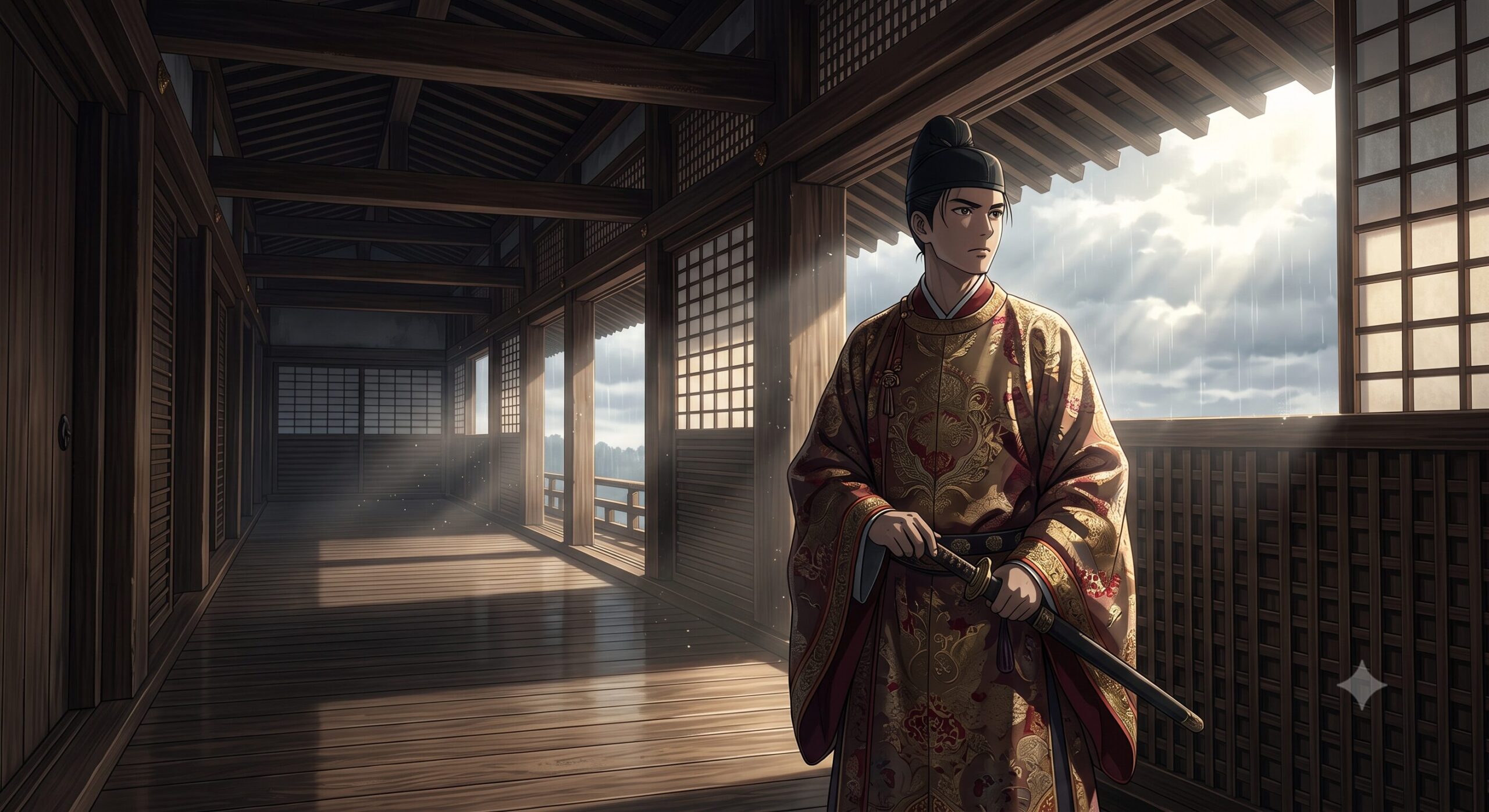
In the long tapestry of Japanese history, only a handful of events have managed to completely upend the foundation of the state. The “Isshi Incident,” which occurred on July 10, 645 (the first year of the Taika era), is arguably the most prominent among them. This day marks a massive historical turning point where Japan’s political system dramatically shifted from a coalition of powerful clans to a highly centralized imperial state led by the Emperor.
The Dominance of the Soga Clan and Rising Discontent
From the late 6th century through the early 7th century, the Japanese imperial court was completely dominated by a powerful clan known as the Soga. During the era of Soga no Emishi and his son, Soga no Iruka, their power eclipsed even that of the Emperor. They built their own palatial estates, manipulated state affairs at will, and systematically purged imperial family members who dared to oppose them.
A quiet but resolute anger had been building within the court against the Soga clan’s dictatorial behavior. At the center of this discontent were Prince Naka no Oe (who would later become Emperor Tenji) and Nakatomi no Kamatari (later known as Fujiwara no Kamatari), a member of a clan that oversaw Shinto rituals. They shared a grand vision: to strip the Soga of their power, restore authority to the Emperor, and establish a powerful centralized state modeled after the formidable Tang Dynasty in China.
Tragedy at Asuka Itabuki Palace: The Day of the Assassination
Destiny arrived on July 10, 645. The stage was the Asuka Itabuki Palace, located in present-day Nara Prefecture. On this day, a diplomatic ceremony known as the “Tribute of the Three Han States” was being held to receive envoys from the Korean Peninsula. Amidst the solemn atmosphere, Soga no Iruka was in attendance.
Prince Naka no Oe and Nakatomi no Kamatari had chosen the climax of this very ceremony to execute their assassination plot. To lower his guard, they managed to have Iruka remove his sword before the ritual began. As the ceremony proceeded and the official memorials were being read aloud, Prince Naka no Oe and his conspirators suddenly ambushed Iruka. Caught completely off guard, Iruka was assassinated on the spot without a chance to defend himself. This was the moment the most famous coup d’état in ancient Japanese history succeeded.
Decoding the Incident: Its Impact on Japanese Culture and Statehood
Paving the Way for the Taika Reforms
The Isshi Incident was not merely a political assassination; it was the trigger for the “Taika Reforms,” the first large-scale political overhaul in Japanese history. With the main branch of the Soga clan destroyed, Prince Naka no Oe immediately established a new government and proclaimed “Taika,” Japan’s first official era name.
A series of systems that would become the prototype for modern Japanese administration were established, such as the “Kochi Komin” system (all land and people were declared property of the state), the creation of family registries, and a new taxation system. Had the Isshi Incident not occurred, Japan’s development into a unified state ruled by law would have been significantly delayed, potentially leaving it vulnerable to the turbulent geopolitics of ancient Asia.
The Birth of the “Fujiwara Clan” and a Millennium of Influence
Another monumental impact this incident had on Japanese culture was the rise of the Fujiwara clan. For his vital role in the coup, Nakatomi no Kamatari was granted the prestigious surname “Fujiwara” by the Emperor shortly before his death. This marked the genesis of the Fujiwara family, who would dominate the apex of Japanese court aristocracy throughout the Heian period, acting as the primary patrons of poetry, literature, and Japan’s unique “Kokufu” culture.
When you read about the glamorous Heian aristocratic culture depicted in works like “The Tale of Genji” or “The Pillow Book,” you can trace its roots back to the sword swung by Kamatari in Asuka on July 10, 645. A single assassination determined the lineage of Japanese aristocratic culture and politics for over a thousand years.
Standing at the Crossroads of History
On this day in 645, Prince Naka no Oe and Nakatomi no Kamatari risked their lives and made the decision to alter the shape of their nation. While their actions appear as a violent coup through a modern lens, historians evaluate it as an unavoidable transformation for Japan to maintain its independence and mature as a state in the international climate of the time.
Now, I have a question for you, the reader. If you had lived as a noble in this era with a heart deeply concerned for your country, what actions would you have taken against an overwhelming authoritarian power? Furthermore, what is the most dramatic event in your own country’s history that, much like the Isshi Incident, determined the fate of the nation in a single day? Take a moment to reflect on these turning points in human history.
Related Links
- External Reference: Wikipedia: Isshi Incident
- Internal Link: Check out more articles in the “What’s Today’s Special Day?” Series here
645年7月10日:日本の運命を変えた流血のクーデター「乙巳の変」
日本の歴史において、国家の形そのものを根底から覆すような出来事は数えるほどしかありません。645年(大化元年)7月10日に発生した「乙巳の変(いっしのへん)」は、まさにその代表格と言えるでしょう。この日は、古代日本の政治体制が氏族中心の豪族連合から、天皇を中心とした中央集権国家へと劇的な転換を遂げた、歴史の大きな分岐点です。
権華を極めた蘇我氏と、募る不満
6世紀末から7世紀前半にかけて、日本の朝廷では「蘇我氏(そがうじ)」という強大な豪族が絶対的な権力を握っていました。特に蘇我蝦夷(えみし)と、その子である蘇我入鹿(いるか)の時代には、天皇をも凌ぐほどの権勢を誇っていました。彼らは独自の宮殿を構え、国政を意のままに操り、自らに反発する皇族を次々と排斥していきました。
このような蘇我氏の独裁的な振る舞いに対し、朝廷内には静かな、しかし確かな怒りが蓄積されていました。その不満の中心にいたのが、中大兄皇子(なかのおおえのおうじ、後の天智天皇)と、神事を司る一族の出身であった中臣鎌足(なかとみのかまたり、後の藤原鎌足)です。彼らは、天皇に権力を取り戻し、当時強大な力を持っていた唐(中国)に倣った強力な中央集権国家を樹立するという壮大なビジョンを共有していました。
飛鳥板蓋宮の惨劇:暗殺決行の日
運命の645年7月10日。舞台は、現在の奈良県に位置する飛鳥板蓋宮(あすかいたぶきのみや)です。この日、宮中では朝鮮半島の三国(高句麗・百済・新羅)からの使者を迎える儀式「三韓の調(さんかんのちょう)」が執り行われていました。厳粛な空気が流れる中、蘇我入鹿もこの儀式に参列していました。
中大兄皇子と中臣鎌足は、この儀式の最中を暗殺の決行の時と定めていました。入鹿の警戒を解くため、入鹿が帯びていた剣を儀式の前に外させることに成功します。そして儀式が進行し、上表文が読み上げられている最中、中大兄皇子らが突如として入鹿に斬りかかりました。不意を突かれた入鹿は反撃の隙も与えられず、その場で暗殺されました。日本古代史において、最も有名なクーデターが成功した瞬間です。
乙巳の変から読み解く、日本文化と国家の形成
大化の改新への道筋
乙巳の変は、単なる権力闘争や暗殺事件ではありません。これは、その後に続く「大化の改新(たいかのかいしん)」という、日本史上初の大規模な政治改革の引き金となりました。蘇我氏本家が滅亡したことで、中大兄皇子らは即座に新政府を樹立し、「大化」という日本初の元号を制定します。
土地や人民を国家の所有とする「公地公民制」や、戸籍の作成、新たな税制の導入など、現代の日本の行政システムの原型とも言える制度が次々と打ち立てられました。乙巳の変がなければ、日本が統一された法治国家として成長する時期は大幅に遅れ、アジアの情勢に飲み込まれていた可能性すらあります。
「藤原氏」の誕生と千年の影響力
この事件が日本文化に与えたもう一つの巨大な影響は、「藤原氏」の台頭です。クーデターの立役者である中臣鎌足は、その功績により死の直前に「藤原」の姓を賜りました。これが、その後平安時代を通じて日本の宮廷貴族の頂点に君臨し、和歌や文学、国風文化(日本独自の文化)の発展をパトロンとして支えた藤原一族の始まりです。
「源氏物語」や「枕草子」に描かれる華やかな平安貴族の文化も、ルーツを辿れば、この645年7月10日の飛鳥の地で鎌足が振るった剣に行き着くのです。一つの暗殺事件が、千年以上にわたる日本の貴族文化と政治の系譜を決定づけました。
歴史の転換点に立つということ
645年のこの日、中大兄皇子と中臣鎌足は、自らの命を懸けて国の形を変える決断を下しました。彼らの行動は、現代の価値観から見れば暴力的なクーデターですが、当時の国際情勢の中で日本が独立を保ち、国家として成長するためには不可避の変革だったと評価されています。
さて、この記事を読んでくださったあなたに問いかけます。もしあなたがこの時代に生きる貴族であり、国を憂う心を持っていたとしたら、強大な権力に立ち向かうためにどのような行動を起こしたでしょうか?また、あなたの国の歴史において、この「乙巳の変」のように、一日で国家の運命を決定づけたドラマチックな出来事は何ですか?ぜひ、歴史の転換点に思いを馳せてみてください。
関連リンク
- 外部参考リンク:奈良県観光公式サイト(飛鳥地方の歴史探訪)
- 内部リンク:今日の記念日・出来事シリーズ一覧はこちら

コメント