- Introduction: A Mysterious Tale from Koshikishima, Kagoshima
- 1. The Story: “The Dream of Hachimando”
- 2. Analysis of the Folktale: The Cruelty and Salvation of a Dream Ending
- 3. Connection to Japanese Culture: Impermanence and Syncretism
- 4. A Question for the Reader: How Would You Live?
- はじめに:鹿児島県甑島に伝わる不思議な物語
- ①昔話のストーリー:「八幡堂の夢」
- ②昔話の考察:夢オチがもたらす残酷さと救済
- ③日本文化との関連:無常観と神仏習合の世界
- ④読者への問いかけ:あなたならどう生きますか?
Introduction: A Mysterious Tale from Koshikishima, Kagoshima
Within Japan’s rich folklore, there are numerous stories that sharply penetrate human psychology, desires, and the transience of life. “The Dream of Hachimando” (Hachimando no Yume), a fascinating folktale passed down in the Koshikishima region of Kagoshima Prefecture, is one such story. Through the bizarre shared dream experience of two impoverished men, we are confronted with the fundamental question: “What is true happiness?” Let us deeply analyze this story, which strongly reflects traditional Japanese spirituality and religious views.
This article is brought to you as part of our Japanese Folktale Series. For the source and detailed data of the story, please refer to the Manga Nippon Mukashibanashi Database: The Dream of Hachimando.
1. The Story: “The Dream of Hachimando”
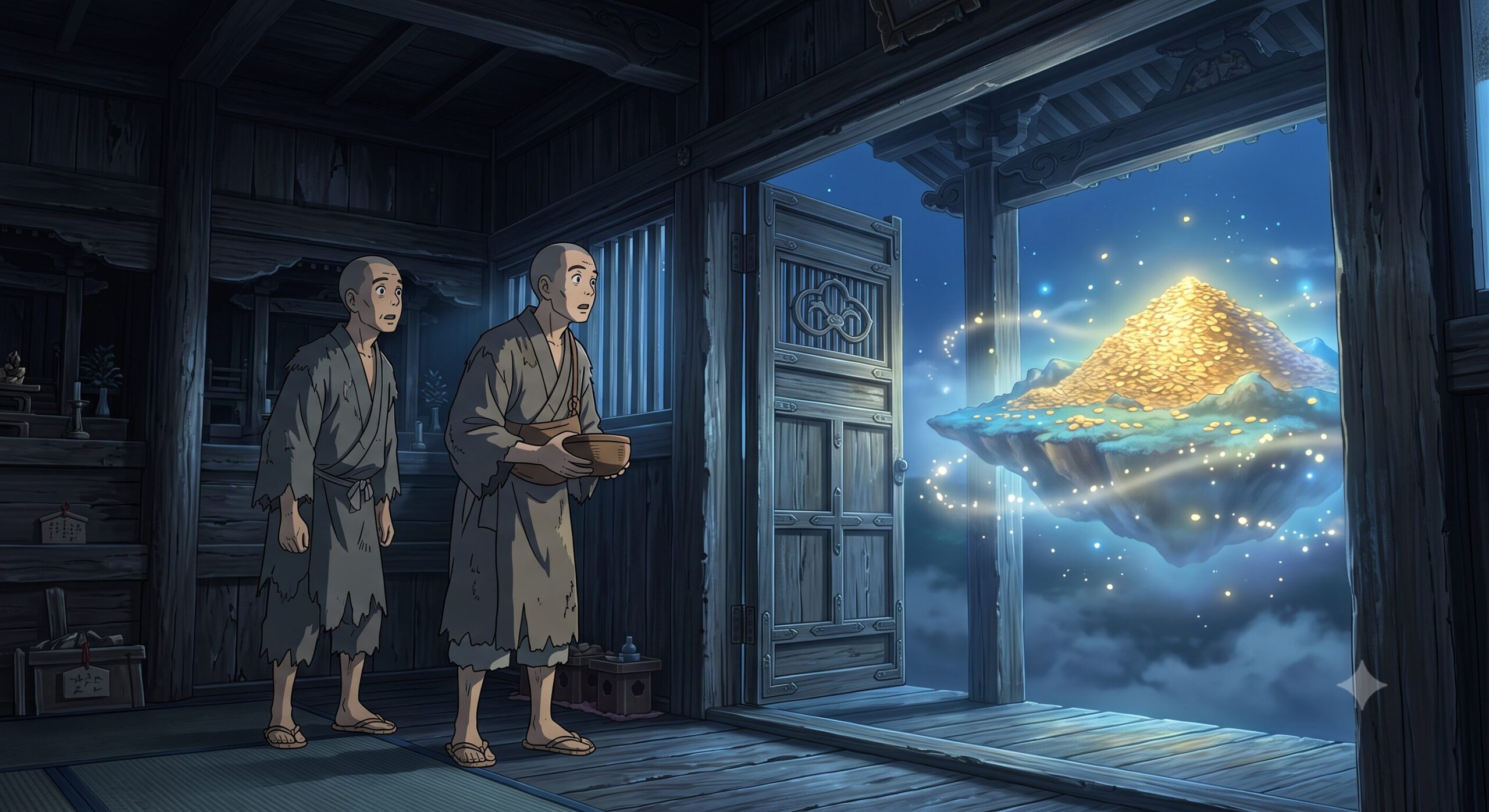
Once upon a time, in a certain village, there were two “Kanjin-san” (wandering beggar-monks who lived on alms) named Sonoichi and Sonoji. The two were incredibly close friends, bound by a bond so strong that they would always share even a single small bowl of rice.
One cold, rainy night, they sought shelter from the storm by sleeping in a Hachimando (a shrine/temple dedicated to the deity Hachiman) on the outskirts of the village. As the night deepened, Sonoichi woke up due to the biting cold. Trying to distract himself, he stepped outside the hall and walked down the dark path. He eventually reached a port by the sea, where many men were about to set sail on a large ship. Sonoichi begged to be taken aboard, and the ship arrived at a massive construction site on an island. Sonoichi worked frantically alongside the other laborers. One day, while digging in the dirt, he found a large white stone. When he moved the stone, he discovered an old pot underneath. To his amazement, it was packed with dazzling gold coins. Thanks to this gold, Sonoichi became a very wealthy man overnight.
Meanwhile, Sonoji, who had been left in the temple, woke up in the morning. Seeing his partner gone, Sonoji followed Sonoichi’s path to the port, boarded a similar ship, and crossed to the island. While working there as a laborer, he heard a rumor about a “Kanjin who had become incredibly rich.” Convinced that it must be Sonoichi, Sonoji went to visit him. After rejoicing in their unexpected reunion on the strange island, Sonoji learned the story of the pot of gold. Rushing to the mountain, Sonoji dug in the earth exactly as instructed and, sure enough, found his own pot of gold. Now a wealthy man himself, Sonoji built a magnificent house right next to Sonoichi’s mansion, and the two enjoyed a luxurious, cheerful life every day.
One day, as this dream-like life continued, Sonoji suddenly suggested, “Why don’t we remember our old, poor days and try sleeping outside for once?” Sonoichi agreed, and they laid a single futon (Japanese bedding) in the garden, lying down together just like in the old days. However, as the night grew late and the air turned freezing cold, they began to pull and fight over the single futon. “It’s cold, give it to me!” “No, I need it!” As they tugged violently, the futon suddenly tore clean in half with a loud rip.
At that exact moment, they both jolted awake. Sitting up and looking around, they realized they were not in the garden of a mansion, but inside the old, shabby Hachimando. Crossing to the island, becoming rich, building grand houses—everything had been a “dream” they had simultaneously shared. They were still the exact same miserable beggar-monks as before.
Unable to accept reality, Sonoji began to cry loudly, wailing, “I want to go back to the dream! I want that life back!” But Sonoichi quietly shook his head and gently comforted Sonoji, saying, “The dream is over. We have no choice but to live in reality.” Thus, the two Kanjin-san continued their lives as poor beggars, leaning on each other forever after.
2. Analysis of the Folktale: The Cruelty and Salvation of a Dream Ending
“The Dream of Hachimando” utilizes the “it was all a dream” narrative structure, but it contains a profound philosophy that goes far beyond a simple comedy or fictional trope.
The most notable point is the supernatural phenomenon that “the two shared the exact same dream and lived on the same timeline within it.” Psychologically speaking, their intense unconscious desire to escape their harsh reality (cold, hunger, poverty) resonated with each other, using the sacred space of the Hachimando as a medium to create a collective hallucination (a shared dream). The “pot of gold coins” they obtained in the dream symbolizes the “material stability” they lacked most in the real world.
However, at the climax of the story, they voluntarily decide to “sleep outside to remember the past.” This reveals the truth that no matter how materially rich humans become, they can never completely escape their roots or essence (in their case, their identity as poor Kanjin). The act of fighting over and tearing the single futon exposes the “attachment” and “egoism” brought about by wealth. When they were poor, they could share a single bowl of rice; once they became rich, they could not concede a single blanket. This ironic contrast acted as the trigger that shattered the dream.
Finally, Sonoichi accepts reality, stating, “The dream is over.” This attitude represents the Buddhist concept of “resignation” (seeing the truth clearly and abandoning earthly attachments). By severing their attachment to wealth and knowing how to be satisfied with enough, they were able to regain their original bond. While it may seem like a cruel ending, it can be considered a “dream of salvation” granted by the deity Hachiman, as it prevented their spiritual downfall.
3. Connection to Japanese Culture: Impermanence and Syncretism
This folktale strongly reflects Japan’s unique spiritual culture. Here, we explain three crucial cultural backgrounds for our overseas readers.
1. The Spirit of Shogyo Mujo (Impermanence)
At the root of Japanese Buddhist philosophy is the concept of “Shogyo Mujo”—the idea that all things and phenomena are constantly changing and nothing lasts forever. The way the immense wealth gained in the dream vanishes in an instant perfectly embodies this sense of impermanence. As seen in Japanese classic literature like “The Tale of the Heike,” Japanese people have historically found beauty and sorrow (mono no aware) in the fact that prosperity does not last. This story conveys the fragility of material wealth without being overly preachy.
2. The Existence of Kanjin
The protagonists are “Kanjin-san,” a term that originally referred to monks who collected donations to build or repair temples and shrines. Over time, it also came to refer to wandering people living halfway like beggars. Although they were at the very bottom of society, they were sometimes treated as liminal beings (tricksters) bridging the gap between deities/Buddhas and the secular world. They experience these mystical events precisely because they were special existences outside the secular hierarchy.
3. Hachiman Worship and Shinbutsu Shugo (Syncretism)
The setting, “Hachimando,” is vital for understanding Japanese history. Hachiman is one of the most widely worshipped deities in Japan, but is also called “Hachiman Daibosatsu” (Great Bodhisattva Hachiman). This represents “Shinbutsu Shugo” (the syncretism of Shinto and Buddhism), where Japan’s indigenous polytheistic religion fused with imported Buddhism. Sleeping in a sacred hall, touching divine power, and traveling to the otherworld (the island in the dream) beautifully illustrates this uniquely Japanese religious view where animism and Buddhism intermingle.
4. A Question for the Reader: How Would You Live?
Although “The Dream of Hachimando” was created centuries ago, it poses a sharp question to us living in modern capitalist societies. The happiness of sharing even in poverty versus the loneliness of conflict born from wealth. The two men experienced the latter in a dream before returning to the real world.
Now, what do you think after reading this story?
If you were Sonoji and realized everything was a dream, would you continue to cry over your lost wealth? Or would you, like Sonoichi, firmly accept reality and walk forward?
In your life, which has more true value: a “bowl of rice” that you share with someone, or a “blanket” that you want to monopolize all to yourself?
Please share your thoughts with us.
八幡堂の夢(The Dream of Hachimando):日本昔話が教える幸福と現実の境界線
はじめに:鹿児島県甑島に伝わる不思議な物語
日本の豊かな民間伝承の中には、人間の心理や欲望、そして人生の儚さを鋭く突いた物語が数多く存在します。今回ご紹介する「八幡堂の夢(はちまんどうのゆめ)」は、鹿児島県の甑島(こしきしま)地方に伝わる非常に興味深い昔話です。貧しい二人の男が経験した奇妙な夢の共有体験を通じて、私たちは「本当の幸福とは何か」という根源的な問いを突きつけられます。日本の伝統的な精神性や宗教観が色濃く反映されたこの物語を、深く読み解いていきましょう。
本記事は、日本の昔話シリーズ(Japanese Folktale Series)の一環としてお届けします。物語の出典や詳細なデータについては、まんが日本昔ばなしデータベース「八幡堂の夢」をご参照ください。
①昔話のストーリー:「八幡堂の夢」
昔々、ある村に「そのいち」と「そのじ」という二人の勧進さん(かんじんさん:お布施をもらって歩く乞食坊主)がいました。二人は大変仲が良く、たった一碗のわずかなご飯であっても、必ず分け合って食べるほどの絆で結ばれていました。
ある冷たい雨の降る夜のこと、二人は雨風をしのぐため、村外れにある八幡堂(はちまんどう:八幡神を祀るお堂)に泊まることになりました。夜が更けていく中、そのいちはあまりの寒さに目を覚ましました。寒さを紛らわそうとお堂の外へ出たそのいちは、夜道をどんどん歩いていきました。すると、海辺の船着き場にたどり着き、そこではたくさんの男たちが大きな船に乗って出航しようとしていました。そのいちが頼み込んで船に乗せてもらうと、船はある島の巨大な工事現場に到着しました。そのいちは他の人足(労働者)たちに混じって無我夢中で働きました。そんなある日、土を掘っていると大きな白い石を見つけます。その石をどかしてみると、下から古い壷が出てきました。中にはなんと、まばゆいばかりの金貨がぎっしりと詰まっていたのです。この金によって、そのいちは一躍大金持ちになりました。
一方、お堂に残されていたそのじも、朝になって目を覚ましました。相棒の姿が見えないため、そのじはそのいちを追って船着き場へ行き、同じように船に乗って島へ渡りました。そこで人足として働いているうちに、「大金持ちになった勧進さんがいる」という噂を耳にします。「それはきっと、そのいちさんに違いない」と確信したそのじは、そのいちを訪ねていきました。見知らぬ島での思わぬ再会を喜び合った後、そのじはそのいちから金貨の壷の話を聞き出します。そのじも慌てて山へ向かい、教えられた通りに土を掘ってみると、やはり金の入った壷を見つけ出しました。大金持ちになったそのじは、そのいちの豪邸のすぐ隣に立派な家を建て、二人は毎日贅沢で陽気な暮らしを謳歌しました。
そんな夢のような生活が続いたある日のこと、そのじがふと言い出しました。「昔の貧しかった頃を思い出して、たまには外で寝てみようじゃないか」。そのいちもこれに賛同し、二人は庭先に一枚の布団を敷いて、昔のように並んで一緒に寝ることにしました。しかし、夜が更けて冷え込んでくると、二人は一枚しかない布団を互いに引っ張り合い、奪い合いを始めました。「寒い、こっちによこせ!」「いや、俺が被るんだ!」と激しく引き合った結果、とうとう布団はビリッと真っ二つに破けてしまいました。
その瞬間、二人はハッと目を覚ましました。起き上がって周りを見渡すと、そこは豪邸の庭先ではなく、古ぼけた八幡堂の中でした。島へ渡ったことも、大金持ちになったことも、立派な家を建てたことも、すべては二人が同時に見ていた「夢」だったのです。二人の姿は、元通りのみすぼらしい勧進さんのままでした。
そのじは現実を受け入れきれず、「夢に戻りたい、あの生活に戻りたい」と声を上げて泣き出しました。しかし、そのいちは静かに首を振り、「夢はもう終わりだ。現実を生きるしかないんだ」とそのじを優しく宥めました。こうして二人の勧進さんは、その後もいつまでも、貧しくも寄り添いながら勧進さんを続けたということです。
②昔話の考察:夢オチがもたらす残酷さと救済
「八幡堂の夢」は、いわゆる「夢オチ(結末がすべて夢だったと判明する手法)」の構造を持っていますが、単なる喜劇や作り話の枠に収まらない深い哲学を含んでいます。
最も注目すべき点は、「二人が全く同じ夢を共有し、夢の中で同じ時間軸を生きていた」という超常的な現象です。心理学的に考察すれば、過酷な現実(寒さ、飢え、貧困)から逃避したいという二人の強烈な無意識が共鳴し合い、八幡堂という神聖な空間を媒介にして集団幻覚(共有夢)を生み出したと解釈できます。夢の中で二人が手にした「金貨の入った壺」は、彼らが現実世界で最も欠乏している「物質的な安定」の象徴です。
しかし、物語のクライマックスにおいて、二人は自ら「昔を思い出して外で寝る」という行動に出ます。これは、人間がいかに物質的に豊かになろうとも、自身のルーツや本質(彼らの場合は貧しい勧進さんとしてのアイデンティティ)から完全に逃れることはできないという真理を表しています。そして、一枚の布団を奪い合って破いてしまう行為は、富がもたらす「執着」と「エゴイズム」の露呈です。貧しい頃は一碗の飯を分け合えた二人が、豊かになった途端に一枚の布団を譲り合えなくなった。この皮肉な対比が、夢を崩壊させる引き金(トリガー)となりました。
最後にそのいちは「夢は終わりだ」と現実を受け入れます。この態度は、仏教的な「諦観(真理を明らかに見極め、執着を捨てること)」の表れです。富への執着を断ち切り、足るを知ることで、彼らは再び元の絆を取り戻すことができたのです。一見残酷な結末に見えますが、精神的な堕落を未然に防いだという点では、八幡神が与えた「救済の夢」だったと考察することができます。
③日本文化との関連:無常観と神仏習合の世界
この昔話には、日本独自の精神文化が色濃く反映されています。海外の読者に向けて、特に重要な3つの文化的背景を解説します。
1. 諸行無常(Impermanence)の精神
日本の仏教思想の根底には「諸行無常(すべての事物や現象は常に変化し、永遠に続くものはない)」という概念があります。夢の中で得た莫大な富が一瞬にして消え去る様は、まさにこの無常観を体現しています。日本の古典文学である『平家物語』にも見られるように、日本人は古来より、栄華が長く続かないことに美しさや哀愁(もののあわれ)を見出してきました。この物語も、物質的な豊かさの儚さを説教臭くなく伝えています。
2. 勧進(Kanjin)という存在
主人公の「勧進さん」とは、元来は寺社を建立・修復するために寄付を募る僧侶を指しましたが、時代が下るにつれて、半ば物乞いのように放浪する人々を指す言葉にもなりました。彼らは社会の最底辺に位置しながらも、時に神仏と俗世を繋ぐ境界的な存在(トリックスター)として扱われました。彼らが不思議な体験をするのは、彼らが世俗のヒエラルキーから外れた特別な存在だったからです。
3. 八幡信仰と神仏習合(Syncretism)
舞台となった「八幡堂」は、日本の歴史を理解する上で非常に重要です。八幡神(Hachiman)は日本で最も広く信仰されている神の一つですが、「八幡大菩薩」とも呼ばれ、神道(日本固有の多神教)と仏教が融合した「神仏習合」の象徴的な存在です。神聖なお堂で眠ることで神仏の力に触れ、異界(夢の中の島)へ旅立つという展開は、アニミズムと仏教が混ざり合った日本特有の宗教観を見事に表しています。
④読者への問いかけ:あなたならどう生きますか?
「八幡堂の夢」は、数百年前に作られた物語でありながら、現代の資本主義社会を生きる私たちに鋭い問いを投げかけています。貧しくとも分かち合える幸福と、豊かであるがゆえに争いが生まれる孤独。二人は夢の中で後者を経験し、現実の世界へと帰還しました。
さて、この物語を読んだあなたはどう思いましたか?
もしあなたが「そのじ」のように、すべてが夢だったと気づいた時、失われた富を嘆いて泣き続けますか?それとも「そのいち」のように、きっぱりと現実を受け入れて歩き出しますか?
あなたの人生にとって、誰かと分け合う「一杯のご飯」と、独占したくなる「一枚の布団」、どちらが本当に価値のあるものでしょうか。
ぜひ、あなたの考えを教えてください。
コメント