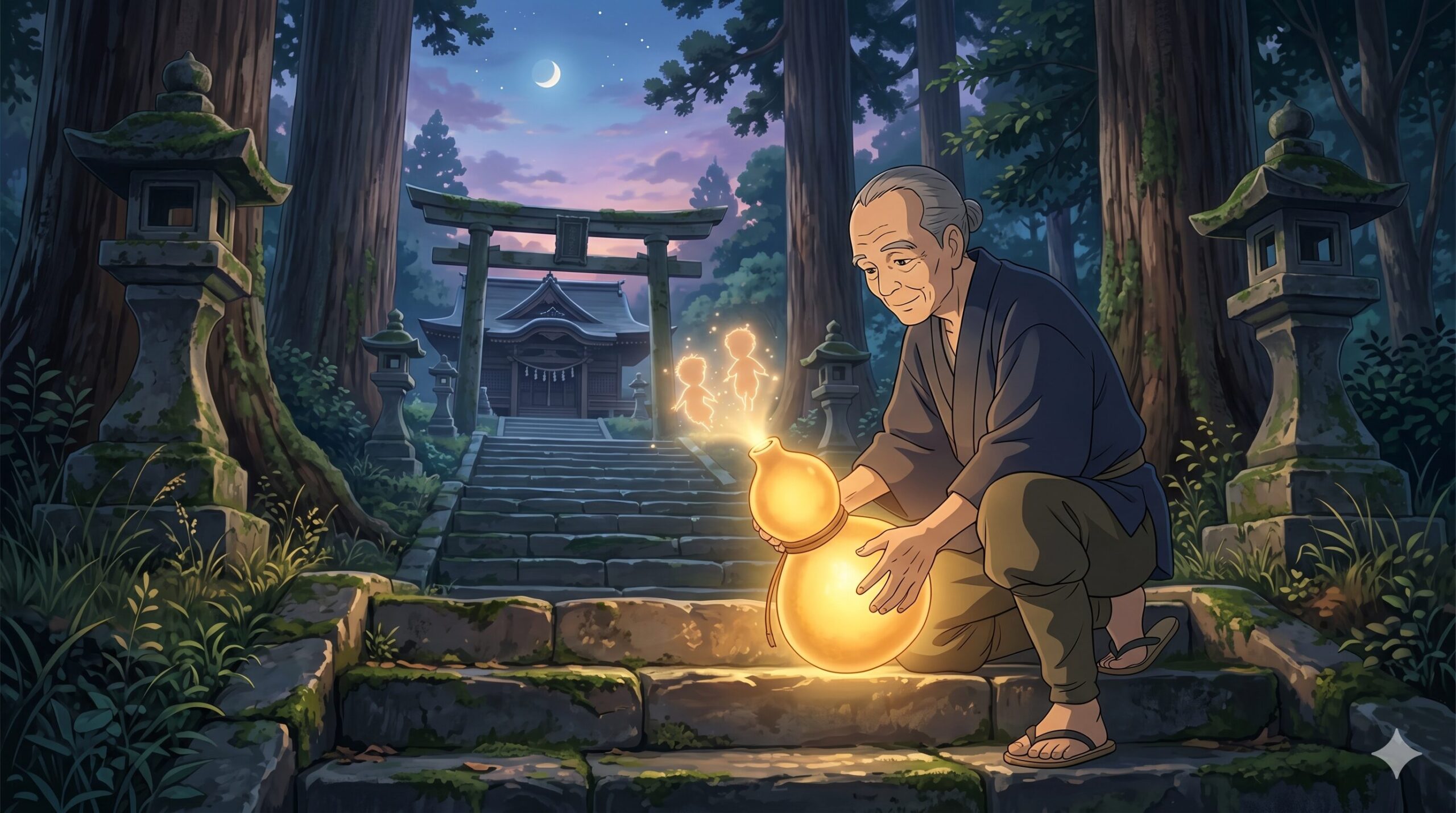
Japan has a vast collection of traditional folktales that have been passed down through generations. Each story reflects the lifestyle, spiritual beliefs, and profound life lessons of the people from those times—lessons that still resonate today. Today, we will introduce a heartwarming folktale from Aomori Prefecture in the Tohoku region of Japan, titled “The Gourd Millionaire” (Hyotan Choja). Let’s explore the deep spirituality and rich cultural background of Japan through this enchanting story.
The Story of “The Gourd Millionaire”
Long ago, in a quiet village, there lived a kind-hearted old man who was a deeply devout follower of Kannon (the Buddhist Goddess of Mercy). Rain or shine, the old man visited the Kannon temple every single day, quietly pressing his hands together in heartfelt prayer.
One autumn evening, as the old man finished his daily prayers and was walking down the long stone steps of the Kannon temple, he heard a strange sound behind him: *Kapon, kopon*. He turned around and, to his astonishment, saw a large gourd rolling down the stone steps, following right behind him.
Curious, the old man gently picked up the large gourd. With a soft *pop*, two tiny boys, small enough to fit in the palm of his hand, sprang out energetically from inside the gourd. They introduced themselves as “Kinshichi” and “Magoshichi”. “Please, take us with you,” the adorable little boys pleaded. Though surprised, the old man felt a deep sense of gratitude. “This must be a precious gift from the Kannon-sama I pray to every day,” he thought. He carefully carried them home. He and his wife decided to raise the two boys with immense love, treating them as their own children.
The next morning, when the old man and woman woke up, an incredible sight awaited them. Spread out in their kitchen was a lavish, delicious breakfast, the likes of which they had never seen before. As they stared in amazement, Kinshichi and Magoshichi smiled and said, “Grandpa, Grandma, this gourd is magical. It can produce anything you wish for if you just ask.”
Some time later, the old man took Kinshichi and Magoshichi to a lively festival dedicated to Tenjin (the God of Learning) in the nearby town. Amidst the festive atmosphere, the boys urged the old man, “Grandpa, try buying a lottery ticket over there.” The old man followed their advice, and to his shock, he won the grand prize! Instantly wealthy, the old man and woman were able to live a peaceful, comfortable life without any worries.
However, news of good fortune spreads quickly. One day, a notoriously greedy horseman from the village barged into the old man’s house. “Trade that gourd for my fine horse!” the horseman demanded aggressively. The old man hesitated, feeling sad at the thought of parting with the gourd, which he believed was a gift from Kannon. But Kinshichi and Magoshichi secretly whispered to him, “It’s okay, Grandpa. You can give the gourd to him now.” Trusting the boys, the old man reluctantly traded the gourd for the horse. After the horseman left, the boys laughed nonchalantly, “That is nothing but an empty gourd now.”
Meanwhile, the horseman, ecstatic about acquiring the magic gourd, plotted to use it to amass even more wealth. He went straight to the local Lord’s castle. Standing proudly before the Lord, he shook the gourd and boasted, “Now, watch as I produce a magnificent horse from this gourd!” However, no matter how hard he shook or hit the gourd, absolutely nothing came out. The Lord, furious at being made a fool of, severely scolded the horseman, who had to run away in utter disgrace.
The magic gourd was gone, but the old man’s true treasures—Kinshichi and Magoshichi—remained. The old man and woman continued to lovingly raise these mysterious and endearing boys, living happily and harmoniously for the rest of their days.
Deep Analysis of “The Gourd Millionaire”
This story is not merely a fantasy about a magical item; it contains profound insights into human nature and how we choose to live our lives.
The first thing to note is the “selflessness” of the old man. Although he was a devout follower of Kannon, he never prayed for wealth or fame. It was precisely because of his pure faith that he was blessed with the miracle of the gourd. Furthermore, even after obtaining the magic gourd, he did not abuse it for personal greed. Instead, he lived naturally, following the innocent advice of Kinshichi and Magoshichi.
In stark contrast stands the greedy horseman. He envied the good fortune of others and tried to monopolize wealth through aggressive means. However, all he acquired was the “physical form” of the gourd, failing to gain its true essence—the protection of Kinshichi and Magoshichi. This sends a powerful message: pursuing material wealth alone, without the accompanying spiritual purity, will never lead to true happiness.
Additionally, Kinshichi and Magoshichi are portrayed not merely as wizards, but rather as spiritual entities akin to “Zashiki-warashi” (household spirits) or Gods of Fortune found in the folklore of the Tohoku region. They follow only those with pure hearts and abandon (or lose their power around) those consumed by greed.
Connection to Japanese Culture: Animism and Kannon Faith
This folktale strongly reflects traditional Japanese cultural and religious perspectives.
Since ancient times, Japan has embraced the concept of “Yaoyorozu no Kami” (eight million gods), an animistic belief that gods and spirits reside in all things in nature. The “gourd” in particular has long been revered as a sacred vessel that houses divine spirits. Because it contains many seeds, it is a symbol of prosperity and fertility. Its unique, constricted shape was also believed to have the power to suck in and seal away evil spirits. There is a famous Japanese proverb: “A horse comes out of a gourd” (Hyotan kara koma), which means something completely unexpected happening. This story embodies the very roots and worldview of this proverb.
The “Kannon faith” underlying the story is also crucial. Kannon-sama (Bodhisattva Avalokitesvara) has been widely worshipped by the common people in Japan as a compassionate deity who hears the cries of the suffering and offers salvation. The old man’s daily prayers manifested as Kinshichi and Magoshichi, who can be interpreted as symbolizing “children”—the ultimate “wealth” that was considered more precious than anything else to the people of that era.
Conclusion: What Do You Feel From This Story?
The story of “The Gourd Millionaire” quietly asks us, “What is true wealth?” The old man and woman chose to love Kinshichi and Magoshichi for who they were, rather than clinging to the magic gourd that produced material riches. Their attitude reflects the “spirit of knowing when one has enough,” a concept we often forget in the modern world.
If a magic gourd that could grant any wish appeared before you, what would you do? And if someone aggressively demanded you hand it over, what decision would you make?
We hope this story inspires you to reflect on the “true treasures” hidden within your own heart.
Reference Link:
You can find more details about the folktale introduced in this article on the following site (Japanese):
Manga Nippon Mukashibanashi Database – Hyotan Choja
Related Category:
Please enjoy other fascinating Japanese folktales here:
Japanese Folktale Series
日本の心温まる昔話「ひょうたん長者」〜信仰と無欲がもたらす奇跡〜
日本には、古くから語り継がれてきた数多くの昔話が存在します。それぞれの物語には、当時の人々の生活様式や信仰心、そして現代にも通じる深い人生の教訓が込められています。今回は、日本の東北地方、青森県に伝わる心温まる昔話「ひょうたん長者」をご紹介します。この物語を通じて、日本の精神性や豊かな文化背景に触れてみましょう。
「ひょうたん長者」のストーリー
昔々、ある静かな村に、観音様をとても深く信仰している心優しいお爺さんが住んでいました。お爺さんは雨の日も風の日も、毎日欠かさず観音堂へ足を運び、静かに手を合わせて祈りを捧げていました。
ある秋の日のこと。お爺さんがいつものように観音様へのお参りを済ませ、観音堂の長い石段を下りていた時のことです。ふと、背後で「かぽん、こぽん」という不思議な音が聞こえました。振り返ってみると、なんと大きなひょうたんが一つ、石段を転がりながらお爺さんの後をついてくるではありませんか。
不思議に思ったお爺さんがその大きなひょうたんをそっと拾い上げると、ポンッと音がして、ひょうたんの中から「金七(きんしち)」と「孫七(まごしち)」と名乗る、手のひらに乗るほど小さな二人の男の子が元気よく飛び出してきました。「どうか、私たちを一緒に連れて行ってください」と、二人の可愛らしい童子はお願いしました。お爺さんは驚きながらも、「これはきっと、日頃からお参りしている観音様からの尊い授かりものに違いない」と深く感謝し、二人を大切に抱きかかえて家に連れ帰りました。そして、お婆さんと一緒に、本当の子供のように愛情を込めて育てることにしたのです。
翌朝、お爺さんとお婆さんが目を覚ますと、そこには驚くべき光景が広がっていました。台所には、二人が今まで見たこともないような豪華で美味しそうな朝ごはんがずらりと並べられていたのです。目を丸くする二人に、金七と孫七は笑顔で言いました。「お爺さん、お婆さん。このひょうたんはね、お願いすれば何でも好きな物を出すことができる魔法のひょうたんなんだよ」と。
それからしばらく経ったある日、お爺さんは金七と孫七を連れて、賑やかな町の天神様のお祭りに出かけました。お祭りの活気の中、金七と孫七が「お爺さん、あそこで富くじを買ってみて」と勧めました。お爺さんが二人の言う通りに富くじを買ってみると、なんとそれが大当たり。またたく間に大金を手に入れ、お爺さんとお婆さんは何不自由ない、豊かで穏やかな暮らしを送ることができるようになりました。
しかし、幸せな噂というものはすぐに広まるものです。ある日、村でも評判の欲張りな馬方が、お爺さんの家にやって来ました。「そのひょうたんと、俺の立派な馬を取り換えろ!」と、馬方は執拗に迫ります。お爺さんは、観音様からの贈り物であるひょうたんを手放すことに寂しさを感じ、ためらっていました。ところが、金七と孫七がこっそりとお爺さんに耳打ちしました。「お爺さん、大丈夫だよ。あのひょうたんはもう馬方に渡していいよ」。二人の言葉を信じたお爺さんは、しぶしぶひょうたんと馬を交換しました。馬方が去った後、金七と孫七は「あれはもう、ただの空っぽのひょうたんさ」と笑って平気な顔をしていました。
一方、魔法のひょうたんを手に入れたと有頂天の馬方は、これを利用して一儲けしてやろうと企み、お殿様のお城へ向かいました。お殿様の前で自慢げにひょうたんを振り、「さあ、このひょうたんから立派な馬を出してご覧に入れます!」と豪語しました。しかし、どれだけ力強くひょうたんを振っても、叩いても、中からは何も出てきません。お殿様を騙したと激怒され、馬方は大目玉を食らい、ほうほうの体で逃げ帰る羽目になりました。
魔法のひょうたんは失われましたが、お爺さんの家には一番の宝物である金七と孫七が残りました。お爺さんとお婆さんは、この二人の不思議で愛らしい童子を大切に育てながら、いつまでも幸せに、そして仲良く暮らしたということです。
昔話「ひょうたん長者」の深い考察
この物語は、単なる魔法のアイテムが登場するファンタジーではなく、人間の内面や生き方に対する深い洞察が込められています。
まず注目すべきは、主人公のお爺さんの「無欲さ」です。お爺さんは観音様を深く信仰していましたが、決して富や名声を求めて祈っていたわけではありません。純粋な信仰心を持っていたからこそ、ひょうたんという奇跡を授かりました。また、魔法のひょうたんを手に入れてからも、私利私欲のためにそれを乱用することなく、金七と孫七のアドバイスに従って自然体で生きています。
一方で、対照的に描かれているのが欲張りの馬方です。彼は他人の幸運を妬み、強引な手段で富を独占しようとしました。しかし、彼が手に入れたのは「形だけのひょうたん」であり、その本質(中身)である金七と孫七の加護は得られませんでした。これは、「物質的な豊かさだけを追い求めても、心や精神性が伴わなければ本当の幸福は得られない」という強いメッセージを放っています。
さらに、ひょうたんから出てきた「金七」と「孫七」は、単なる魔法使いではなく、東北地方に古くから伝わる「座敷わらし」や「福の神」のような存在として描かれています。彼らは純真無垢な心の持ち主にのみ従い、欲深い人間の元からは去っていく(あるいは力を失う)という性質を持っています。
日本文化との関連性〜アニミズムと観音信仰〜
この昔話には、日本の伝統的な文化や宗教観が色濃く反映されています。
日本では古くから、自然界のあらゆるものに神や霊が宿るという「八百万の神(やおよろずのかみ)」の信仰、すなわちアニミズムの考え方が根付いています。中でも「ひょうたん」は、神霊が宿る神聖な器として古くから扱われてきました。種が多く実ることから「子孫繁栄」の象徴であり、またそのくびれた独特の形から、邪気を吸い込み封じ込める力があるとも信じられていました。日本には「ひょうたんから駒(馬)が出る」ということわざがありますが、これは「思いもよらない場所から意外なものが出る」という意味です。この物語は、まさにこのことわざのルーツや世界観を体現しています。
また、物語の根底にある「観音信仰」も重要です。観音様(観音菩薩)は、人々の苦しみの声を聞き届け、慈悲の心で救いの手を差し伸べる仏様として、日本全国の民衆から広く信仰されてきました。お爺さんの日々の祈りが形となって現れたのが金七と孫七であり、彼らは「子宝」という、当時の人々にとって何よりも代えがたい究極の「富」を象徴しているとも解釈できます。
終わりに〜あなたはこの物語から何を感じましたか?〜
「ひょうたん長者」の物語は、私たちに「本当の豊かさとは何か」を静かに問いかけています。物質的な富を生み出す魔法のひょうたんよりも、金七や孫七という存在そのものを愛し、彼らとの生活を選んだお爺さんとお婆さんの姿には、現代の私たちが忘れがちな「足るを知る心」が表れています。
もし、あなたの目の前に何でも願いを叶えてくれる魔法のひょうたんが現れたら、あなたはどうしますか?そして、そのひょうたんを他人に譲れと迫られた時、あなたならどんな決断を下すでしょうか。
ぜひ、この物語をきっかけに、あなた自身の心の中にある「本当の宝物」について考えてみてください。
参考リンク:
この記事で紹介した昔話の詳細は、以下のサイトでもご覧いただけます。
まんが日本昔ばなし〜データベース〜 ひょうたん長者
関連カテゴリー:
他の魅力的な日本の昔話もぜひお楽しみください。
Japanese Folktale Series(日本の昔話シリーズ)


コメント