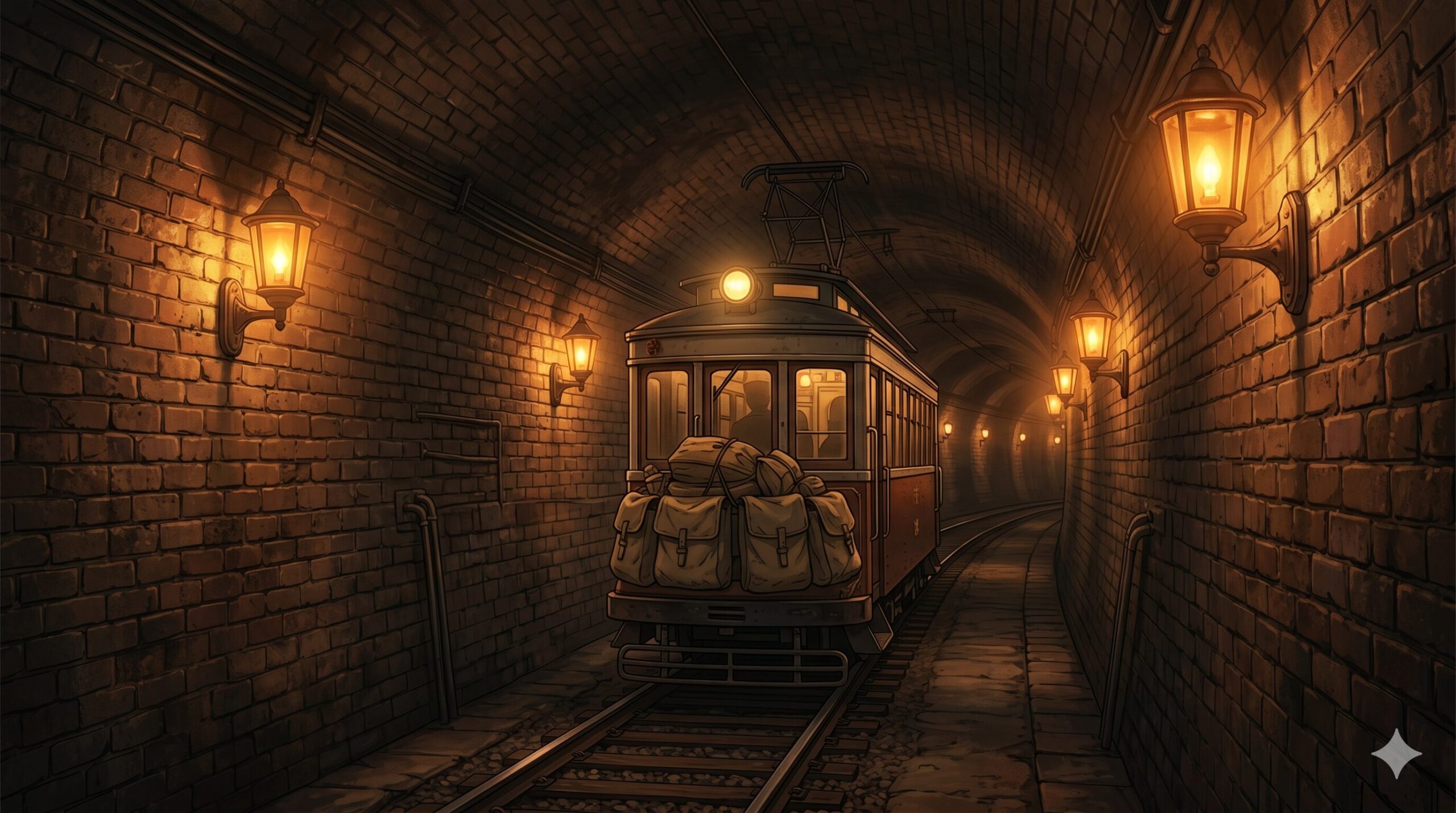
Tokyo’s underground space is known worldwide as a complex labyrinth and one of the most sophisticated transportation networks on the planet. Millions of people traverse this megalopolis every day using a spiderweb of subway lines. But did you know that the “very first step” of this massive underground network was actually not designed to carry humans at all?
The date was May 23, 1915 (Taisho 4). The history of Japan’s underground railways did not begin with the cheers of eager passengers, but with the quiet hum of electric motors on a small “Underground Postal Train” loaded with mountains of letters and parcels.
The Historical Truth: Why Was Japan’s First Subway for “Mail”?
In 1914, Tokyo Station, designed by architect Kingo Tatsuno with its iconic red-brick facade, opened as a symbol of Japan’s modernization. Right next to this massive terminal—the heart of Japan’s railway network—stood the Tokyo Central Post Office (now the site of JP Tower), which managed the nation’s mail.
Entering the Taisho era, Japan’s rapid economic growth and high literacy rates caused an explosive increase in mail volume. Relying on human labor and horse-drawn carriages to transport mountains of mail back and forth between the station and the post office every single day had become physically impossible. Japanese engineers devised a groundbreaking solution: “If surface transportation has reached its limit, let’s build a dedicated railway underground.”
Thus, on May 23, 1915, a subterranean track spanning just a few hundred meters opened between Tokyo Station and the Tokyo Central Post Office. Operating on these tracks were not the massive subway cars we see today, but tiny electric locomotives and trolley carts running on a narrow 762mm gauge. However, this small postal train, running quietly in the dark, was undeniably “Japan’s first underground railway.” Thanks to this system, mail could be sorted and transported at ultra-high speeds, perfectly timed with train departures and completely unaffected by weather or surface traffic jams.
Cultural Connection: An Obsession with Punctuality and the Aesthetics of Logistics
What we can decode from the history of this small postal train is the Japanese people’s “obsessive dedication to punctuality” and their profound aesthetic appreciation for perfect logistics.
During the Edo period (1603–1868), Japan had professional courier runners called “Hikyaku.” Running day and night, they covered the roughly 500-kilometer route between Tokyo (Edo) and Kyoto in just a few days. The spirit of “delivering reliably and on time, no matter what” was inherited by Hisoka Maeshima and others who established Japan’s modern postal system.
The introduction of the underground postal train in 1915 was not merely a technological advancement. It was the inevitable result of Japanese perfectionism, driven by the mandate: “Mail must be loaded onto departing trains without a single second of delay.” Today in Japan, the Shinkansen (bullet trains) run on minute-by-minute schedules, and delivery services drop off packages exactly within your requested time slot. The foundation of these modern marvels lies in the thorough investment and passion for “invisible infrastructure” that has flowed continuously since that 1915 postal train.
It wasn’t until 12 years later, in 1927, that a full-scale subway for human passengers (the current Tokyo Metro Ginza Line between Ueno and Asakusa) was opened. The fact that Japan’s pioneering underground development prioritized the “accurate transmission of information” over “human convenience” is a deeply fascinating and uniquely Japanese cultural trait.
What Do You Think?
Today, as we casually send messages on our smartphones and ride the subway to our destinations, beneath our very feet lie the passionate traces of an infrastructure dug over 100 years ago purely to “deliver letters on time.”
After reading this article, what are your thoughts on Japan’s dedication to infrastructure? Does the subway or postal system in your country have a hidden origin story that the general public might not know about? Please share this page on your social media and tell us the history and your thoughts on your local transportation networks!
Reference Links
- External Reference: History of Tokyo Station (Wikipedia)
- Internal Link: Explore more of the “What’s Today’s Special Day” Series
【5月23日】日本初の地下鉄は人間用ではなかった?1915年、東京駅地下で密かに動いていた郵便電車の秘密
東京の地下空間は、まるで迷宮のように複雑で、世界で最も精巧な交通ネットワークの一つとして知られています。毎日何百万人もの人々が、網の目のように張り巡らされた地下鉄を利用してメガロポリスを行き交っています。しかし、この巨大な地下鉄網の「最初の第一歩」が、実は人間を運ぶためのものではなかった事実をご存知でしょうか。
時は1915年(大正4年)5月23日。日本の地下鉄道の歴史は、乗客の歓声ではなく、大量の手紙や小包を乗せた小さな「郵便物受渡用地下電車」のモーター音とともに幕を開けました。
歴史の真実:なぜ日本初の地下鉄は「郵便用」だったのか?
1914年、日本の近代化の象徴として、建築家・辰野金吾の設計による赤レンガ造りの「東京駅」が開業しました。日本の鉄道ネットワークの中心となるこの巨大ターミナル駅のすぐ隣には、国内の郵便物を統括する東京中央郵便局(現在のJPタワーの場所)が位置していました。
大正時代に入り、日本の経済発展と識字率の向上に伴って、郵便物の量は爆発的に増加していました。駅と郵便局の間で、毎日山のような手紙や荷物を人力や馬車で運ぶことは、もはや物理的に不可能な状態に陥っていたのです。そこで日本の技術者たちは、画期的な解決策を導き出しました。「地上での運搬が限界なら、地下に専用の線路を敷けばいい」という発想です。
こうして1915年5月23日、東京駅と東京中央郵便局を結ぶ、全長わずか数百メートルの地下軌道が開通しました。そこを走っていたのは、現在の巨大な地下鉄車両とは似ても似つかない、軌間わずか762ミリの小さな電気機関車とトロッコでした。しかし、この人知れず暗闇を走る小さな郵便電車こそが、間違いなく「日本初の地下鉄道」だったのです。このシステムにより、郵便物は天候や地上の交通渋滞に一切影響されることなく、列車の発着時間に合わせて正確かつ超高速で仕分け・運搬されるようになりました。
日本文化との深い繋がり:「時間への執着」と物流の美学
この小さな郵便電車の歴史から読み解けるのは、日本人の「時間への異常なまでの執着」と、「完璧な物流(ロジスティクス)」に対する美学です。
江戸時代(1603年〜1868年)、日本には「飛脚(ひきゃく)」と呼ばれる手紙を運ぶプロのランナーたちがいました。彼らは東京(江戸)から京都までの約500キロの道のりを、昼夜を問わず走り続け、わずか数日で手紙を届けていました。この「何が何でも時間通りに確実に届ける」という精神は、近代的な郵便制度を創設した前島密(まえじま ひそか)らによって受け継がれました。
1915年の地下郵便電車の導入は、単なる技術的進歩ではありません。それは「列車の発車時刻に、1秒の遅れもなく郵便物を乗せなければならない」という、日本特有の完璧主義が生み出した必然的な結果だったのです。現代の日本で、新幹線が分単位のスケジュールで正確に運行され、「宅急便」と呼ばれる宅配サービスが指定された時間帯に1分の狂いもなく荷物を届けてくれる背景には、この1915年の地下郵便電車から脈々と受け継がれる「見えないインフラへの徹底的な投資と情熱」が存在しています。
人間用の本格的な地下鉄(現在の東京メトロ銀座線・上野〜浅草間)が開業するのは、この郵便電車から12年後の1927年のことです。日本の地下空間の開拓は、「人間の利便性」よりも「情報の正確な伝達」を優先して始まったという事実は、非常に日本的であり、興味深い文化的側面と言えるでしょう。
あなたならどう考えますか?
今日、私たちが何気なくスマートフォンでメッセージを送り、地下鉄に乗って目的地へ向かうその足元には、100年以上前に「手紙を時間通りに届けるためだけ」に掘られた情熱の痕跡が眠っています。
この記事を読んで、あなたは日本のインフラストラクチャーに対するこだわりにどのような印象を持ちましたか?あなたの国の地下鉄や郵便システムには、一般にはあまり知られていないような「隠された始まりの物語」がありますでしょうか?ぜひ、このページをSNSでシェアして、あなたの地元の交通インフラの歴史や感想を教えてください。
参考リンク集
- 外部参考資料(日本語): 東京駅の歴史と構造(Wikipedia)
- 外部参考資料(英語): Tokyo Station History (Wikipedia)
- 内部リンク: 今日は何の日シリーズをもっと読む (What’s Today’s Special Day Series)


コメント