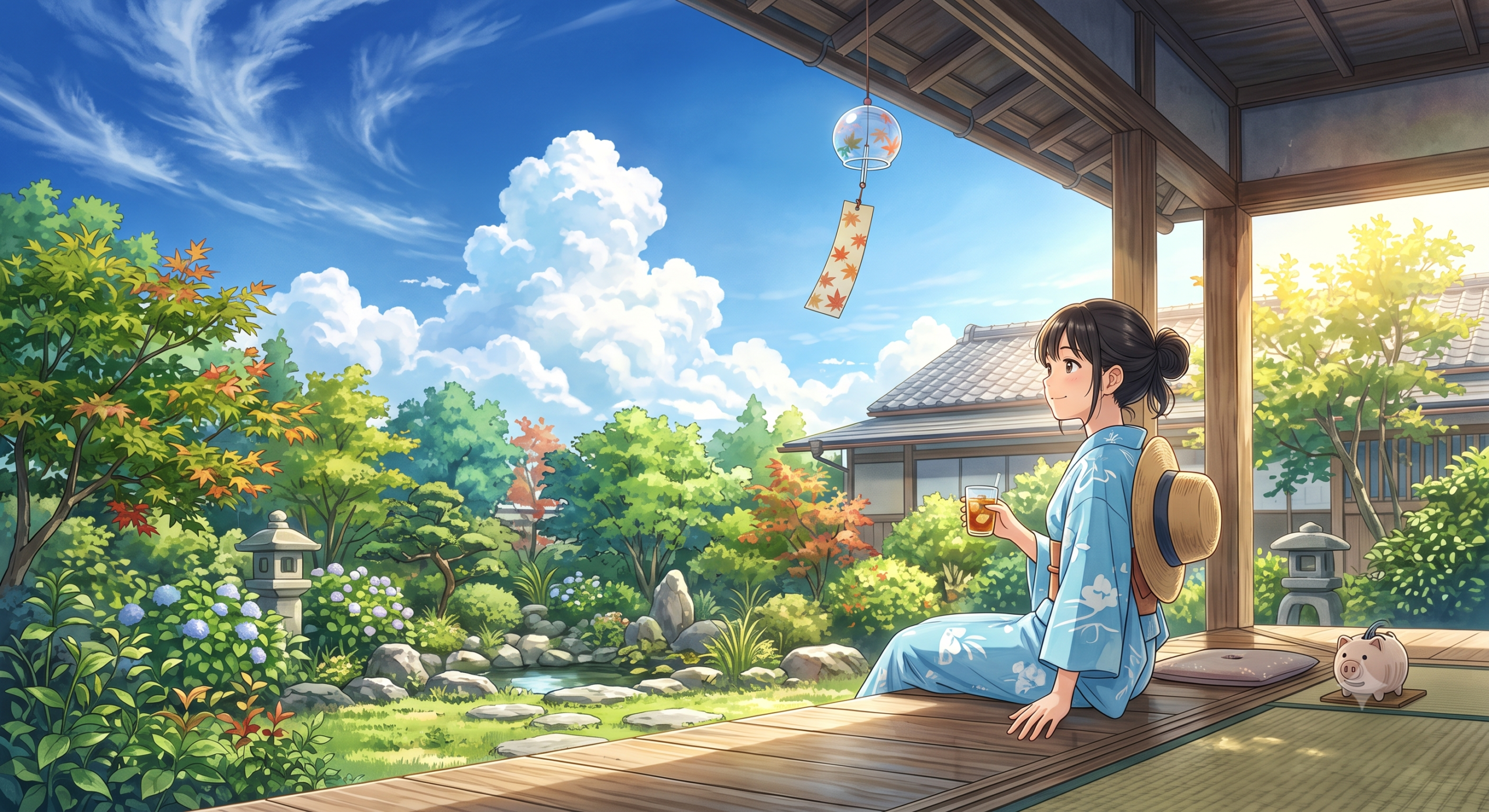
Summer in Japan is notoriously hot and humid, with August often marking the absolute peak of the heat. However, in the traditional Japanese calendar system known as the Nijushi Sekki (24 Solar Terms), August 7th (or 8th) is designated as “Risshu” (立秋). Literally translated, it means “The Beginning of Autumn.”
From a modern perspective, calling the hottest time of the year the “beginning of autumn” might seem like a massive contradiction. Yet, within this seemingly paradoxical calendar lies a profound Japanese insight into nature and a delicate aesthetic sense. In this article, we will explore the historical background of Risshu and unravel how traditional Japanese culture perceives the shifting of the seasons.
The 24 Solar Terms and the History of Risshu
To understand Risshu, we must first look at the Nijushi Sekki calendar system. Originating in ancient China, this system divides the sun’s annual path into 24 equal segments of 15 degrees each, designed to accurately track seasonal transitions. Risshu occurs precisely when the sun’s ecliptic longitude reaches 135 degrees.
While Japan’s old lunar calendar was based on the moon’s phases, it naturally caused discrepancies with the actual seasons. For practical daily life, particularly agriculture, the solar-based 24 Solar Terms were deemed highly important. Risshu is one of the four major seasonal turning points, alongside the beginnings of spring, summer, and winter.
But why does autumn begin during the hottest period? The reason is that the 24 Solar Terms define seasons not by their climatic peaks, but by the exact moment a new seasonal essence is born. From Risshu onward, amidst the fierce daytime heat, a faint coolness begins to mix into the morning and evening breezes. It is the turning point where summer has reached its zenith and slowly begins its inevitable transition into autumn.
Zansho-mimai: The Crystallization of Compassion in Japanese Culture
The calendrical milestone of Risshu brings a distinct change to Japanese communication culture. During the summer, there is a beautiful tradition called Shochu-mimai (mid-summer greeting), where people send letters or postcards to friends, relatives, and colleagues to check on their health during the harsh heat.
However, the very name of these greeting cards changes strictly to “Zansho-mimai” (late summer greeting) starting on the day of Risshu. Because it is already autumn on the calendar, the term changes from “mid-summer” to “lingering summer heat” (Zansho)—acknowledging that while the calendar says it is autumn, the intense heat still remains.
No matter how high the actual temperature is, seeking out the “signs of autumn” after Risshu is a uniquely Japanese elegance. The standard greeting phrase, “Although we have welcomed autumn on the calendar, the severe heat continues. How are you faring?” perfectly encapsulates this mindset. It reflects the meticulous spirit of the Japanese people: sharing the transition of the seasons while caring for each other’s well-being in a harsh natural environment.
Deciphering Autumn in Nature: The Japanese Sensibility
Once Risshu passes, Japanese people sharpen their five senses in daily life to search for a “small autumn.” They find beauty in discovering subtle changes within the overwhelming summer landscape.
For example, if you look up at the sky, you might see delicate cirrus clouds (a symbol of autumn) appearing high above the massive cumulonimbus clouds (the symbol of summer). This phenomenon is called Yukiai no Sora (the crossing sky), beautifully expressing the moment summer and autumn pass each other in the heavens. At night, mixed in with the loud buzz of cicadas, you might faintly hear the delicate chirping of crickets and bell crickets—the insects of autumn.
Deciphering the changing seasons not through dramatic visual shifts, but through minute phenomena like the temperature of the wind, the shape of the clouds, and the sound of insects, is deeply rooted in Japanese culture. This sensibility has been cultivated over centuries through traditional literature, such as Waka and Haiku poetry, representing a harmonious coexistence with nature.
Conclusion: How Do You Feel the Seasons?
Risshu, the beginning of autumn on the calendar, is not just a date; it is a mental preparation to notice nature’s microscopic changes. This culture of eagerly anticipating a cool breeze in the scorching heat and enjoying the subtle gradient of the seasons reminds us of the “dialogue with nature” we often forget in our busy modern lives.
How do you perceive the changing of seasons in your country or region? Have you ever felt the arrival of a new season through the wind on your skin or the sounds in the air, long before the visible scenery changes? If you like, take this opportunity of Risshu to write a letter to someone you care about far away, greeting them about the season and wishing them good health.
Reference Links
- External Reference (Wikipedia): 24 Solar Terms
- Related Articles on this Blog: What’s Today’s Special Day Series
8月7日は「立秋」:猛暑の中に潜む、日本独自の秋の気配
日本の夏は非常に高温多湿であり、特に8月はその暑さがピークに達する時期です。しかし、日本の伝統的な暦である「二十四節気(にじゅうしせっき)」において、8月7日(または8日)は「立秋(りっしゅう)」と呼ばれています。文字通り「秋が立つ(始まる)」日を意味します。
現代の感覚からすれば、一年で最も暑い時期に「秋の始まり」と呼ぶことは、大きな矛盾に感じられるかもしれません。しかし、この一見矛盾した暦の中にこそ、日本人の自然に対する深い洞察力と、繊細な美意識が隠されています。本記事では、立秋という日が持つ歴史的背景と、日本文化における季節の捉え方について詳しく紐解いていきます。
二十四節気と立秋の歴史的背景
「立秋」を理解するためには、まず「二十四節気」という暦のシステムを知る必要があります。古代中国で考案されたこの暦は、太陽の黄道上の動きを15度ごとに24等分し、季節の推移を正確に把握するために作られました。立秋は、太陽の黄経が135度に達した日を指します。
日本の旧暦(太陰太陽暦)は月の満ち欠けを基準としていましたが、それだけでは実際の季節とズレが生じてしまうため、農業などの実生活においては、太陽の動きを基準とした二十四節気が非常に重要視されていました。立秋は、立春、立夏、立冬と並んで季節の大きな節目である「四立(しりゅう)」の一つです。
では、なぜ最も暑い時期に秋が始まるのでしょうか。それは、二十四節気における季節の定義が「気候のピーク」ではなく、「季節の気配が生まれ始める地点」を重視しているからです。立秋を境に、日中の猛烈な暑さの中にも、朝夕の風にわずかな涼しさが混じり始めます。季節が極点に達し、そこからゆっくりと次の季節へと移行し始める、そのターニングポイントが立秋なのです。
残暑見舞い:相手を思いやる日本文化の結晶
立秋という暦の節目は、日本人のコミュニケーション文化にも明確な変化をもたらします。日本の夏には、親しい人やお世話になった人の健康を気遣い、手紙やはがきを送る「暑中見舞い(しょちゅうみまい)」という美しい習慣があります。
しかし、この手紙の名称は、立秋を迎えたその日から「残暑見舞い(ざんしょみまい)」へと切り替わります。暦の上ではすでに秋であるため、「暑さの真っ最中」という意味の「暑中」から、「暦の上では秋なのに、まだ残っている暑さ」を意味する「残暑」へと表現を変えるのです。
実際の気温がどれほど高くとも、立秋を過ぎれば「秋の気配を探す」のが日本特有の風流です。「暦の上では秋を迎えましたが、厳しい暑さが続いております。いかがお過ごしでしょうか」という定型句には、季節の移ろいを相手と共有し、過酷な自然環境の中でお互いの健康を労わり合う、日本人の細やかな精神性が表れています。
自然の中に秋を読み解く:日本人の感性
立秋を過ぎると、日本人は日常生活の中で五感を研ぎ澄まし、「小さな秋」を探し始めます。圧倒的な夏の風景の中に、微かな変化を見出すことに美しさを感じるのです。
例えば、空を見上げれば、夏を象徴する巨大な入道雲(積乱雲)の遥か上空に、秋の象徴である薄く繊細なうろこ雲(巻積雲)が現れ始めます。これを「行き合いの空(ゆきあいのそら)」と呼び、夏と秋が空の上ですれ違う様子を表現しています。また、夜になれば、うるさく鳴いていた蝉の声に混じって、コオロギや鈴虫などの秋の虫の音が微かに聞こえ始めます。
このように、目に見える大きな変化ではなく、風の温度、雲の形、虫の音色といった微細な現象から季節の移ろいを「読み解く」こと。これは、古来より和歌や俳句といった文学を通して培われてきた、日本人の自然との共生感覚そのものです。
終わりに:あなたはどう季節を感じますか?
暦の上で秋が始まる「立秋」。それは単なる日付ではなく、自然の微細な変化に気づくための心の準備期間とも言えます。厳しい暑さの中で涼しい風を待ち望み、季節のグラデーションを楽しむこの文化は、現代の忙しい生活の中で私たちが忘れがちな「自然との対話」を思い出させてくれます。
あなたの住む国や地域では、季節の変わり目をどのように感じ取りますか? 目に見える景色が変わる前に、肌に触れる風や、耳に届く音で季節の訪れを感じたことはありますか? もしよろしければ、この立秋を機に、遠く離れた大切な人へ、季節の挨拶と健康を気遣う手紙(残暑見舞い)を書いてみてはいかがでしょうか。
参考リンク
- 外部参考サイト(国立天文台 暦計算室): 二十四節気とは
- 当ブログの関連記事一覧: 今日は何の日シリーズ

コメント