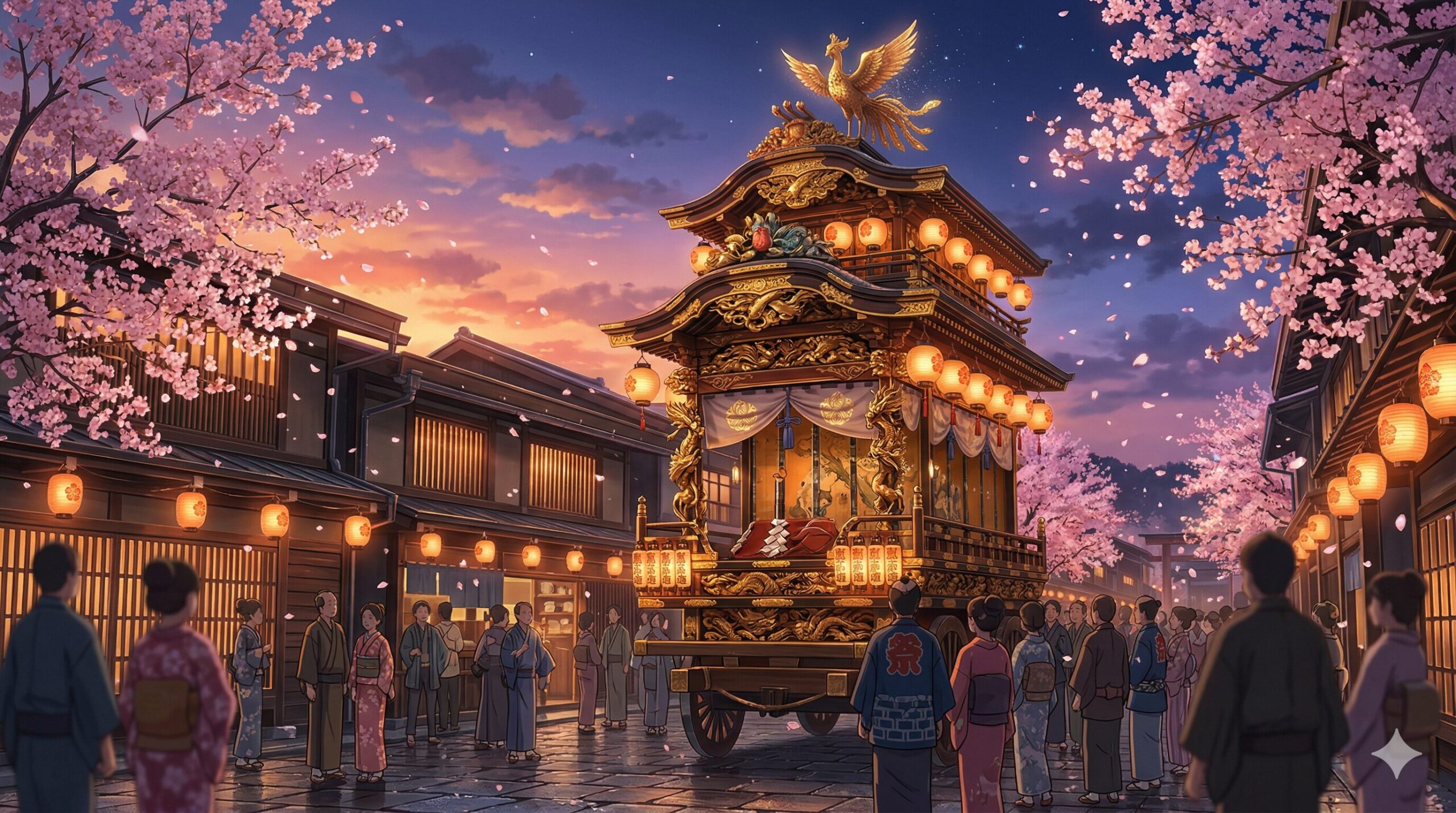
Every year on April 14th, the city of Takayama in Gifu Prefecture, Japan, is enveloped in a vibrant energy that marks the end of a long, harsh winter and celebrates the arrival of spring. The “Spring Takayama Festival (Sanno Matsuri),” which spans two days starting from this date, is ranked as one of Japan’s three most beautiful festivals. It is a magnificent traditional event that Japan proudly showcases to the world. Let us delve deeply into this day, which is not merely a festival, but a living museum where Japanese history, faith, and the souls of artisans are profoundly concentrated.
The History of the Takayama Festival and the “Moving Yomeimon” Floats
The origins of the Takayama Festival date back to the late 16th and 17th centuries during the Edo period. Takayama prospered as a territory under the direct control of the Tokugawa Shogunate (Tenryo), cultivating rich forest resources and a unique culture. The Spring Takayama Festival is the annual festival of Hie Shrine (Sanno-sama), the guardian deity of the southern half of the former Takayama castle town. It began as a Shinto ritual to pray for a bountiful harvest and offer gratitude to the gods.
The greatest highlight of this festival is undoubtedly the 12 gorgeous floats known as “Yatai.” Decorated with gold leaf, intricate carvings, and magnificent lacquerware, their appearance is often compared to the beauty of Nikko Toshogu Shrine, earning them the praise of “moving Yomeimon” (Yomeimon being the famous, highly ornate gate of Toshogu). Each Yatai boasts hundreds of years of history and has been carefully preserved and continuously restored by the local people.
Karakuri Dedication: The High-Tech of the Edo Period
Among the 12 floats, three (Sanbaso, Ishibashitai, and Ryujintai) feature a “Karakuri dedication.” This is a traditional performing art where marionettes (Karakuri Ningyo), made entirely of wood and strings, are manipulated by master puppeteers (Tsunakata) to perform complex and delicate movements, making them look as if they have been brought to life. The sight of a doll instantly changing its face or scattering confetti is a breathtaking performance that fuses the advanced mechanical engineering and artistry of the Edo period, leaving spectators in awe.
Connection to Japanese Culture: “Hida no Takumi” and Community Bonds
The most crucial element of Japanese culture to decode from the Takayama Festival is the spirit of “Hida no Takumi” (the master carpenters of Hida). The Hida region (present-day northern Gifu Prefecture) has produced outstanding woodworkers since ancient times, deeply involving them in the construction of historic temples in Nara and Kyoto. The Takayama Festival floats are the culmination of these Hida artisans’ unparalleled woodworking, carving, and lacquering skills. It reveals that traditional Japanese beauty was supported not only by a privileged class but by the rich economic power of the townspeople and their profound respect for artisans.
Furthermore, this festival is operated entirely autonomously by local communities known as “Yatai-gumi.” The very system of passing down skills and pride from generation to generation over centuries symbolizes Japanese collectivism and the strong bonds of local communities. The landscape where the ultimate artworks created by humans harmonize with the beautiful cherry blossoms of spring is the pinnacle of the Japanese aesthetic that values coexistence with nature.
Reference Links
- External Link: Hida Takayama Official Tourism Site
- Internal Link: Read more from the “What’s Today’s Special Day” series
To Our Readers
How do you feel about the fact that craftsmanship from centuries ago still operates in perfect condition today, continuing to move people’s hearts? Does your country have any traditional events that the entire community has protected unchanged for hundreds of years? If you were to visit Japan in the spring, what kind of scenery would you want to capture with your camera at this festival where history and art intersect? Please share your thoughts and experiences in the comments below.
4月14日:春の高山祭(山王祭)~飛騨の匠の技と春の息吹が交差する日~
毎年4月14日、日本の岐阜県高山市は、長く厳しい冬の終わりを告げ、春の訪れを祝う熱気に包まれます。この日から2日間にわたって開催される「春の高山祭(山王祭)」は、日本三大美祭の一つに数えられ、日本が世界に誇る壮大な伝統行事です。単なるお祭りではなく、日本の歴史、信仰、そして職人たちの魂が凝縮された生きた美術館とも言えるこの日について、深く掘り下げていきましょう。
高山祭の歴史と「動く陽明門」と称される屋台
高山祭の起源は、16世紀後半から17世紀の江戸時代にまで遡ります。高山は、徳川幕府の直轄地(天領)として栄え、豊かな森林資源と独自の文化を育んできました。春の高山祭は、旧高山城下町の南半分の氏神様である日枝神社(山王様)の例祭です。豊作を祈り、神々への感謝を捧げる神道(Shinto)の儀式として始まりました。
この祭りの最大の見どころは、なんといっても「屋台(Yatai)」と呼ばれる12台の絢爛豪華な山車(だし)です。金箔や精巧な彫刻、見事な漆塗りで装飾されたその姿は、日光東照宮の美しさに例えられ「動く陽明門」と称賛されています。それぞれの屋台は、数百年の歴史を持ち、地域の人々によって大切に保管・修復され続けてきました。
からくり奉納:江戸時代のハイテク技術
12台の屋台のうち、3台(三番叟、石橋台、龍神台)では「からくり奉納」が行われます。これは、木と糸だけで作られた人形(からくり人形)が、熟練の綱方(人形を操る人々)の手によって、まるで命を吹き込まれたかのように複雑で繊細な動きを披露する伝統芸能です。人形が瞬時に顔を変えたり、紙吹雪を舞わせたりする様は、江戸時代の高度な機械技術と芸術性が融合した驚異的なパフォーマンスであり、観る者を圧倒します。
日本文化との関連:「飛騨の匠」とコミュニティの絆
高山祭から読み解くべき最も重要な日本文化の要素は、「飛騨の匠(Hida no Takumi)」の精神です。飛騨地方(現在の岐阜県北部)は古くから優秀な木工職人を輩出し、奈良や京都の歴史的な寺院建築にも深く関わってきました。高山祭の屋台は、この飛騨の匠たちの卓越した木工技術、彫刻技術、漆塗り技術の集大成です。日本の伝統美は、一部の特権階級だけでなく、町人たちの豊かな経済力と職人への敬意によって支えられてきたことがわかります。
さらに、この祭りは「屋台組」と呼ばれる地域のコミュニティによって完全に自律的に運営されています。数百年にわたり、世代から世代へと技術と誇りが受け継がれるシステムそのものが、日本の集団主義と地域社会の強い絆を象徴しています。美しい桜が咲き誇る春の自然と、人間が作り出した究極の芸術品が調和する風景は、自然との共生を重んじる日本の美意識の極致です。
参考リンク
読者の皆様へ
何世紀も前の職人技術が、今の時代にも完璧な状態で動き、人々の心を動かしている事実に、あなたは何を感じますか?あなたの国にも、何百年も変わらずに地域全体で守り続けている伝統行事はありますか?もしあなたが春の日本を訪れるなら、歴史と芸術が交差するこの高山祭で、どのような景色をカメラに収めたいですか?ぜひ、あなたの考えや体験をコメントで教えてください。
コメント