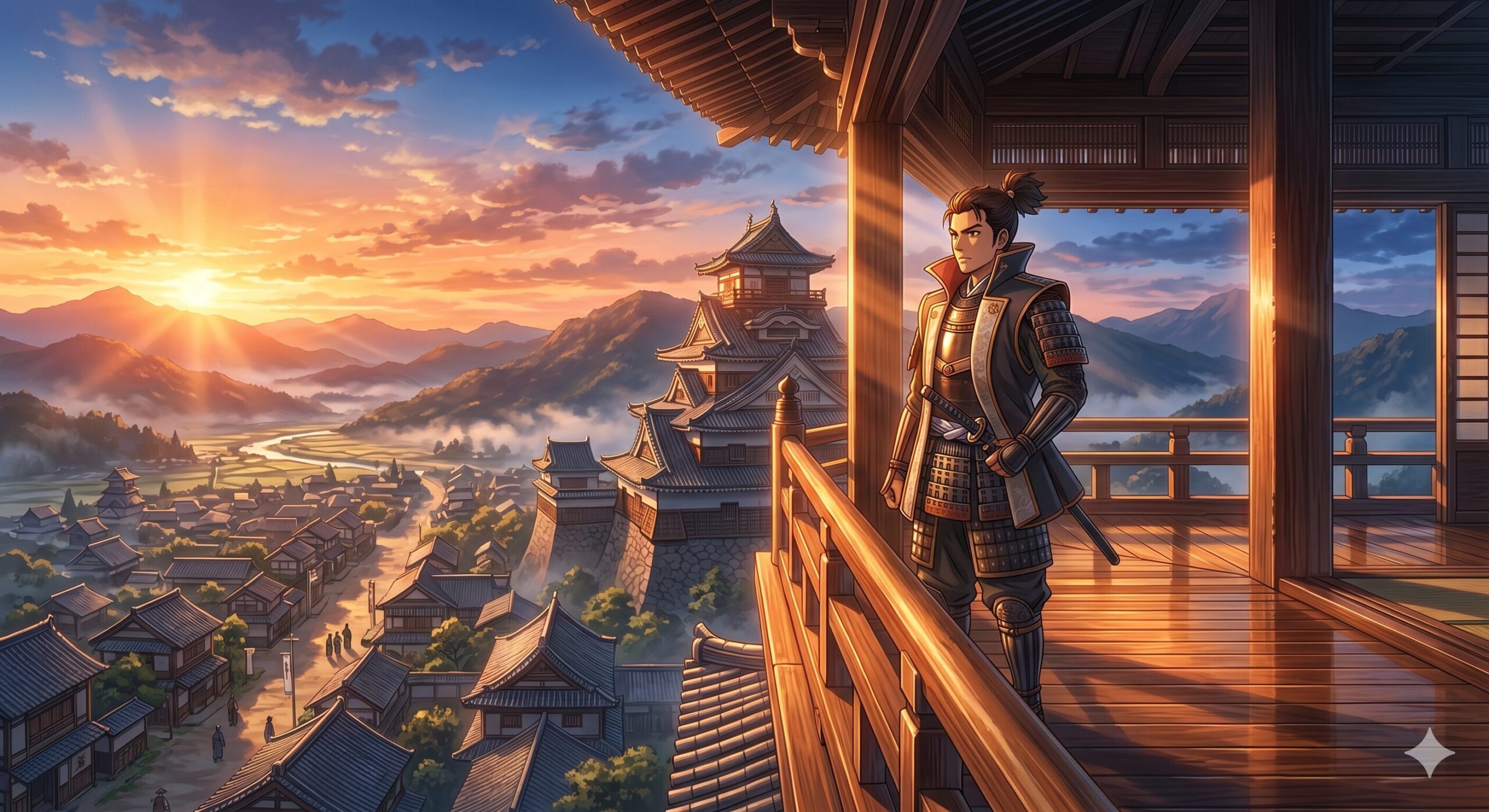
In the vast tapestry of Japanese history, there is one figure whose brilliant light continues to captivate the modern Japanese consciousness. June 23, 1534 (May 12, Tenbun 3 in the old lunar calendar), marks the birth of Oda Nobunaga, the ultimate hero of the Sengoku (Warring States) period. Born as a baby into a minor warlord family in Owari Province (present-day western Aichi Prefecture), he would eventually lead a fragmented Japan toward unification, destroying the old medieval order and throwing open the doors to the early modern era. Today, we will deeply explore the extraordinary existence of Oda Nobunaga—a man you cannot ignore when talking about Japanese history—and the immeasurable impact he had on Japanese culture.
From the “Fool of Owari” to the Ruler of Japan
Oda Nobunaga’s life was a continuous rebellion against common sense. In his youth, he paraded through the town in bizarre, eccentric clothing and preferred to socialize with people of low status. Because of this, those around him called him the “Great Fool of Owari.” However, this was a calculated period during which he cultivated his extreme rationalism and his discerning eye for recognizing true talent regardless of social class.
His name roared across Japan in 1560 during the “Battle of Okehazama.” With an army of only a few thousand men, he launched a surprise attack and defeated the powerful warlord Imagawa Yoshimoto, who was leading a massive army of tens of thousands. Sparked by this overwhelming victory, Nobunaga raised the slogan “Tenka Fubu” (unifying the realm by military force) and expanded his territory with unstoppable momentum. In the 1575 “Battle of Nagashino,” he mass-deployed matchlock guns (firearms)—the most cutting-edge weapon of the time—and completely annihilated the Takeda clan’s cavalry, which was feared as invincible. This was a historical moment that fundamentally changed Japanese military tactics.
Destruction and Creation: Nobunaga’s Revolution in Japanese Culture
Nobunaga’s greatness lies not merely in his military prowess. The political, economic, and cultural reforms he implemented were a massive experiment to modernize the nation of Japan. The critical aspects of Japanese culture we can interpret from him are “the embrace of the external” and “absolute meritocracy.”
First was the liberalization of the economy. He executed a policy called “Rakuichi Rakuza” (Free Markets and Open Guilds), dismantling the monopolistic merchant guilds controlled by the privileged class. He created a market where anyone could trade freely, leading to explosive economic revitalization. This can be seen as the precursor to the modern free-market economy.
Second was his strict adherence to meritocracy. Japan at the time had a rigid class system, but Nobunaga heavily favored Toyotomi Hideyoshi—a man born as a peasant who would later unify Japan—and placed him at the top of his military command. His attitude of disregarding lineage as long as one had ability blew a powerful breath of fresh air into a stagnant Japanese society.
Third was his proactive embrace of Western culture. Nobunaga protected Christian missionaries and was fond of globes, Western clocks, and velvet cloaks. While he fiercely opposed traditional domestic authorities (such as armed Buddhist factions), he was incredibly flexible toward new knowledge and technology. Japanese culture has an ancient characteristic of “adopting foreign elements and uniquely arranging them,” and Nobunaga is arguably the most extreme and successful example of this trait.
The Honno-ji Incident and the Eternal Charisma
In 1582, with the unification of Japan right before his eyes, Nobunaga lost his life in the “Honno-ji Incident” due to the betrayal of Akechi Mitsuhide, one of his most trusted retainers. It is said that he set fire to the temple himself and committed seppuku (ritual suicide) in the flames, but his body has never been found to this day. This dramatic end elevated Nobunaga from a mere historical figure to an absolute legend.
In contemporary Japan, Oda Nobunaga is constantly depicted as the main character in manga, anime, video games, and novels. Furthermore, his innovative leadership and out-of-the-box thinking are strongly admired by modern business professionals and entrepreneurs. Nobunaga continues to live on in the hearts of the Japanese people as the ultimate innovator who feared no change and constantly sought to create a new future.
A Question for You
Oda Nobunaga destroyed ancient traditions in his attempt to build a completely new world that no one had ever seen. He made many enemies in the process, but as a result, he propelled Japanese history massively forward.
If you had the power to completely change just one long-standing old rule or tradition in your society, what would you change? And what kind of new future would you want to create through that transformation?
Reference Links
- External Reference: Japan-Guide: The Sengoku Period and Oda Nobunaga
- Internal Link: Explore more from the What’s Today’s Special Day Series
1534年6月23日:日本の歴史を根底から覆した覇王、織田信長の誕生
日本の歴史において、最も強烈な光を放ち、現代の日本人にも絶大な人気を誇る人物がいます。1534年6月23日(旧暦:天文3年5月12日)は、戦国時代の英雄である織田信長がこの世に生を受けた日です。尾張国(現在の愛知県西部)の小さな大名の家に生まれたこの赤子が、やがて群雄割拠の日本を統一へと導き、中世という古い時代を破壊して近世の扉を開くことになります。本日は、日本の歴史を語る上で絶対に避けては通れない「織田信長」という規格外の存在と、彼が日本文化に与えた計り知れない影響について深く読み解いていきます。
「尾張の大うつけ」から天下人への軌跡
織田信長の生涯は、常識への反逆の連続でした。青年期の彼は、奇抜な服装で町を練り歩き、身分の低い者たちと遊ぶことを好んだため、周囲からは「尾張の大うつけ(大馬鹿者)」と呼ばれていました。しかし、これは彼の合理主義的な性格と、身分にとらわれず実力を見極める眼力を養うための期間でした。
彼の名を日本中に轟かせたのは、1560年の「桶狭間の戦い」です。わずか数千の兵で、数万の大軍を率いる強大な大名・今川義元を奇襲によって打ち破りました。この圧倒的な勝利を皮切りに、信長は「天下布武(武力によって天下を統一する)」というスローガンを掲げ、怒涛の勢いで領土を拡大していきます。1575年の「長篠の戦い」では、当時最新鋭の武器であった火縄銃(鉄砲)を大量に導入し、無敵と恐れられた武田氏の騎馬隊を壊滅させました。これは、日本の戦術が根本から変わった歴史的な瞬間です。
破壊と創造:信長が日本文化にもたらした革命
信長の偉大さは、単なる軍事的な強さだけではありません。彼が行った政治・経済・文化的な改革は、日本という国を近代化させるための巨大な実験でした。彼から読み解ける日本文化の重要な側面は「外部の受容」と「実力主義の徹底」です。
第一に、経済の自由化です。彼は「楽市・楽座」という政策を実行し、それまで特権階級が独占していた商工業の座(ギルド)を解体しました。誰でも自由に商売ができる市場を作り出し、経済を爆発的に活性化させたのです。これは現代の自由市場経済の先駆けと言えます。
第二に、徹底した実力主義です。当時の日本は厳格な身分制度がありましたが、信長は農民の出身であった豊臣秀吉(後に日本を統一する人物)を重用し、軍団のトップに据えました。能力さえあれば出自を問わないという態度は、硬直化していた日本社会に強烈な風穴を開けました。
第三に、西洋文化の積極的な受容です。信長はキリスト教の宣教師を保護し、地球儀や西洋の時計、ビロードの外套などを愛用しました。伝統的な権威(仏教勢力など)とは激しく対立した一方で、新しい知識や技術に対しては驚くほど柔軟でした。日本の文化は古来より「外来のものを独自にアレンジして取り入れる」という特性を持っていますが、信長はその最も極端で成功した例と言えます。
本能寺の変と、永遠に生き続けるカリスマ
天下統一を目前にした1582年、信長は最も信頼していた家臣の一人、明智光秀の裏切りにより「本能寺の変」で命を落とします。自ら火を放ち、炎の中で切腹したと伝えられていますが、彼の遺体は今日に至るまで発見されていません。このドラマチックな最期が、信長を単なる歴史上の人物から「伝説」へと昇華させました。
現代の日本において、織田信長は漫画、アニメ、ゲーム、小説などで幾度となく主人公として描かれています。また、彼の革新的なリーダーシップや常識を打ち破る思考法は、現代のビジネスパーソンや起業家からも強く支持されています。信長は、変化を恐れず、常に新しい未来を創造しようとした究極のイノベーターとして、日本人の心の中に今も生き続けているのです。
あなたへ問いかけたいこと
織田信長は、古い伝統を壊し、誰も見たことのない新しい世界を創り上げようとしました。その過程で多くの敵を作りましたが、結果として日本の歴史を大きく前進させました。
もしあなたに、長年続いてきた古いルールや常識を一つだけ完全に変える力があるとしたら、あなたは何を変えますか?そして、その変革によってどのような新しい未来を創り出したいですか?
コメント