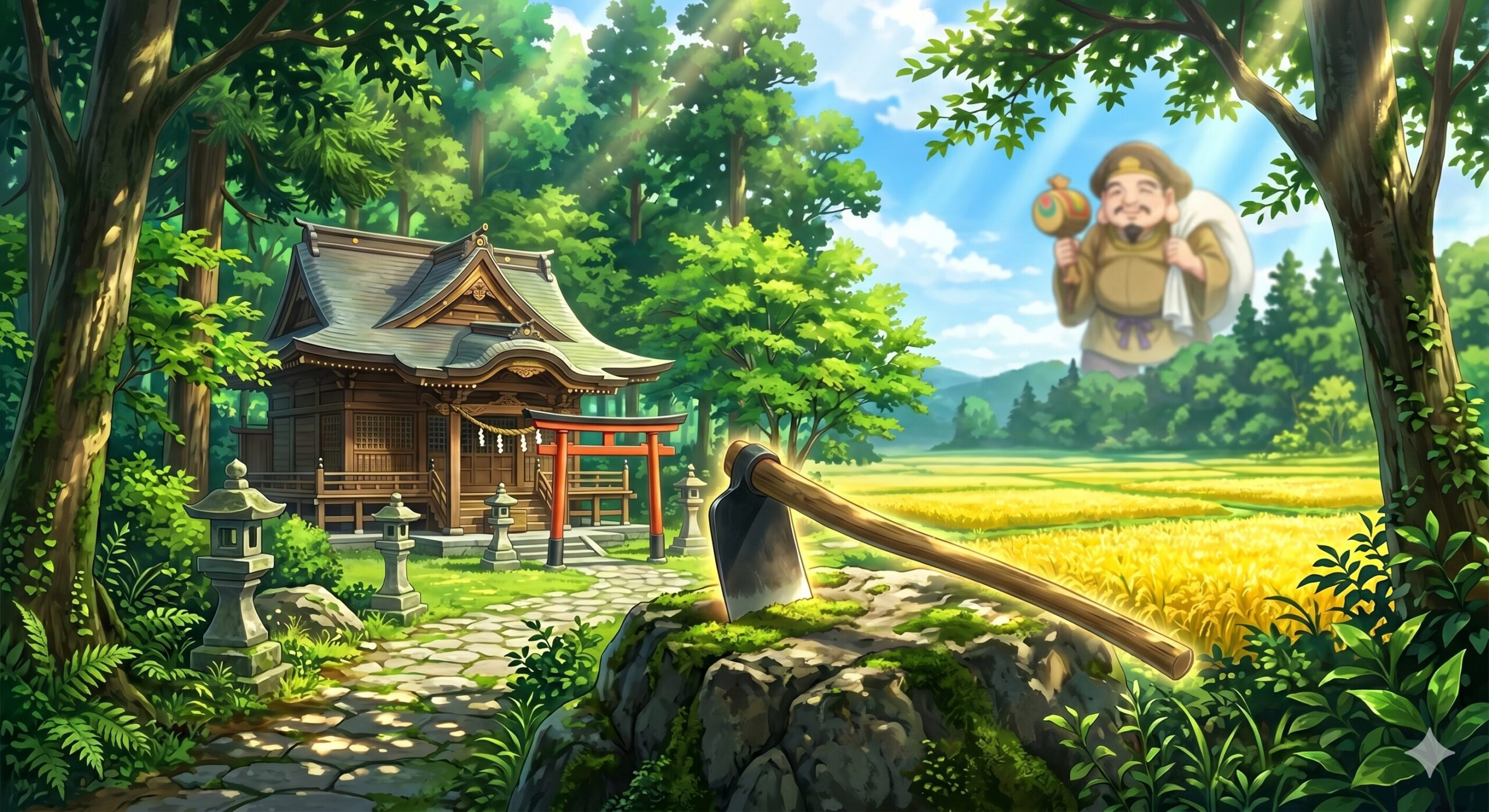
Japan has a rich tradition of folktales that convey life lessons and philosophy with a touch of humor. Today, we introduce a fascinating folktale from Oita Prefecture called “The Handle of the Mallet” (Kozuchi no E). This story is not just a fairy tale about magic; it is a masterpiece that strikes at the essence of human nature and the true meaning of wealth.
1. Story: The Handle of the Mallet
Once upon a time, in a certain village, there lived an incredibly lazy man. There was no food in the house, his children cried from hunger, and his wife yelled at him in utter fury, but the man didn’t care at all. Day after day, he simply lay in the fields taking naps.
One summer day, while he was lazing around in the field as usual, tiny ants walking near his feet spoke to him. “It is pathetic for a human to act like this. You should work hard like us,” they scolded. However, the lazy man paid no attention to the ants’ words.
Exasperated, the ants gave the man a piece of advice. “If that is how you are, go to Daikokuten (the deity of wealth) who lives in the mountain shrine. Daikokuten possesses the ‘Uchide no Kozuchi’ (the magic wishing mallet) that can produce anything you desire when shaken. You should go and borrow it.”
Overjoyed at the thought of eating for the rest of his life without working, the man immediately headed for the mountain shrine. Upon arriving, he audaciously begged Daikokuten to lend him the magic mallet. Daikokuten smiled and readily agreed, but set one condition: “I do not mind lending you the mallet, but unfortunately, its handle is broken and it cannot be used. You must bring a replacement handle.”
The man rushed home and grabbed his “Kuwa” (a farming hoe). He asked Daikokuten, “Can I use the handle of this hoe instead of the mallet’s handle?” Daikokuten shook his head and said, “To be used as the handle of the magic mallet, it must be worn down to the shape of hands from daily use, and it must shine black from sweat and oil.”
Desperate to use the magic mallet, the man believed Daikokuten’s words and hurried to his own fields. He began to diligently plow the soil solely to wear down the hoe’s handle and make it shine black.
The villagers were absolutely astonished. “Why is that lazy man working so hard?” they wondered. Through rain and wind, dreaming of the day he could swing the magic mallet, the man continued to plow the fields without taking a single day off. Gradually, the handle of the hoe began to shine black, but it did not easily become worn down. Still, the man did not give up and kept working.
One or two years passed in this manner. One day, Daikokuten came down from the mountain to check on the man. To his delight, the man’s once-barren fields were now transformed into magnificent fields bearing abundant crops. His wife and children were eating their fill every day and living with bright smiles.
When Daikokuten asked the man about the magic mallet, the man gasped and then laughed. Having been completely absorbed in tilling the soil and discovering the joy of growing crops every day, the man had entirely forgotten about the magic wishing mallet. Seeing this, Daikokuten laughed heartily and returned to his shrine with peace of mind.
2. Deep Analysis of the Folktale
This story possesses a brilliant structure: it uses the motif of a “magical item” to stimulate human greed, but ultimately completely erases the “attachment to magic.” Daikokuten is one of the Seven Lucky Gods in Japan, governing agriculture and wealth. Instead of directly punishing the man, Daikokuten used the man’s own desire (the urge to use the mallet) to guide him toward honest labor.
What is crucial here is the “condition of the handle” presented by Daikokuten. “Being worn down and shining black” signifies the crystallization of years of blood, sweat, and tears. The man started working for the sake of the mallet, but humans are mysterious creatures; when we earnestly dedicate ourselves to a single task and begin to see results (the harvest of crops), we forget our original, impure motives. Finding value in labor itself and achieving independence is the greatest catharsis of this story.
3. Decoding Japanese Culture: The “Magic” of Diligence
What we can decode from this folktale is the “virtue of diligence” in Japanese culture. Japan has historically been an agriculture-centric society. While expressing gratitude for nature’s blessings, tilling the soil with one’s own hands and shedding sweat has always been considered a profound virtue. The story contains a strong warning that quick riches or wealth obtained without effort, much like the magic mallet, are temporary and do not lead to true happiness.
Furthermore, in Japanese Shinto and folk beliefs, deities often do not perform direct miracles for humans. Instead, they provide the “catalyst” or “realization” for humans to carve out their own paths. What Daikokuten bestowed upon the man was not gold or silver, but the “joy of working”—a genuine, everlasting magic that never runs dry.
4. What Would You Do?
Through this story, we are confronted with the question of what “true wealth” really means. The man never acquired the magic mallet, yet he made his family happy and achieved a rich life through his own power.
What did you think after reading this story? If the “magic mallet that grants any wish” were right in front of you, would you rely entirely on it for your life? Or would you choose the path of gripping your own hoe and striving until its handle shines black? Please reflect on your own daily life and work, and find your own answer.
* This article is part of the Japanese Folktale Series.
* Reference: Manga Nippon Mukashibanashi Database – “Kozuchi no E”
日本の昔話「小槌の柄」:魔法の道具より価値のある真実の豊かさ
日本には、人生の教訓や哲学をユーモア交じりに伝える数多くの昔話が存在します。今回は、大分県などに伝わる非常に興味深い昔話「小槌の柄(こづちのえ)」をご紹介します。この物語は、単なる魔法のおとぎ話ではなく、人間の本質と豊かさの真理を突いた傑作です。
① ストーリー:小槌の柄
昔々、ある村に、呆れるほどの怠け者の男が住んでいました。家には食べるものがなく、子どもたちが空腹で泣きわめき、妻がどれほど激怒して怒鳴り散らしても、男は一切気にしません。毎日毎日、野原に寝転がって昼寝ばかりしていました。
ある夏の日、いつものように野原でゴロゴロしていると、足元を歩いていた小さなアリたちが男に話しかけました。「人間のくせに情けない。私たちのようにせっせと働きなさい」と説教をしたのです。しかし、怠け者の男はアリの言葉にも耳を貸しません。
呆れたアリは、男に一つの知恵を授けました。「それなら、山のお宮に住んでいる大黒様(だいこくさま)のところへ行きなさい。大黒様は、振れば何でも好きなものが出てくる『打ち出の小槌』を持っています。それを借りてくればいいのです」
「働かずに一生食べていける!」と大喜びした男は、すぐさま山のお宮へ向かいました。お宮に着くと、男は図々しくも大黒様に打ち出の小槌を貸してほしいと頼み込みます。大黒様は微笑みながら快諾しましたが、一つの条件を出しました。「小槌を貸すのは構わないが、あいにく柄(手で持つ部分)が折れていて使えないのだ。代わりの柄を持ってきなさい」
男は急いで家に帰り、畑仕事で使う「鍬(くわ)」を持ってきました。そして「この鍬の柄を、小槌の柄の代わりに使えませんか?」と尋ねました。すると大黒様は首を横に振ってこう言いました。「小槌の柄にするには、毎日使い込んで、持つところが手の形に凹み、汗と脂で黒光りしているものでなければならない」
魔法の小槌をどうしても使いたい男は、大黒様の言葉を信じ、急いで自分の畑へ向かいました。そして、鍬の柄を凹ませて黒光りさせるためだけに、せっせと畑を耕し始めたのです。
「あの怠け者が、どうしてあんなに働いているんだ?」と村人たちは驚愕しました。男は雨の日も風の日も、小槌を振る日を夢見て、毎日休まずに畑を耕し続けました。次第に鍬の柄は黒光りしてきましたが、なかなか凹むまでには至りません。男は諦めずに働き続けました。
そうして一年、二年という歳月が流れました。ある日、大黒様が男の様子を見に山から降りてくると、男の荒れ果てていた畑は、立派な作物が豊かに実る見事な畑に変わっていました。妻も子どもたちも、毎日お腹いっぱいご飯を食べ、笑顔で暮らしています。
大黒様が男に小槌のことを尋ねると、男はハッとして笑いました。なんと男は、毎日無我夢中で土を耕し、作物を育てる喜びに目覚め、打ち出の小槌のことなどすっかり忘れてしまっていたのです。それを見た大黒様は大笑いし、安心してお宮へと帰っていきました。
② 昔話「小槌の柄」の考察
この物語は、「魔法の道具」という人間の強欲を刺激するモチーフを使いながら、最終的には「魔法への執着」を見事に消し去るという鮮やかな構造を持っています。大黒様は、七福神の一柱であり、豊穣と財宝を司る神です。大黒様は男に直接罰を与えるのではなく、男自身の欲望(小槌を使いたいという思い)を逆手に取り、彼を労働へと向かわせました。
ここで重要なのは、大黒様が提示した「柄の条件」です。「使い込んで凹み、黒光りしていること」は、長年の血のにじむような努力の結晶を意味します。男は小槌のために働き始めましたが、人間は不思議なもので、一つのことに真剣に打ち込み、そこから結果(作物の収穫)が出始めると、本来の不純な目的を忘れてしまう生き物です。労働そのものに価値を見出し、自立したことこそが、この物語の最大のカタルシスです。
③ 日本文化との関連:勤勉という名の「魔法」
この昔話から読み解けるのは、日本文化における「勤勉の尊さ」です。日本は古くから農業を中心とした社会であり、自然の恵みに感謝しながらも、自らの手で土を耕し、汗を流すことを美徳としてきました。「打ち出の小槌」のような一獲千金や、何の苦労もなく得られる富は、一時的なものであり、真の幸福には結びつかないという強い戒めが込められています。
また、日本の神道や民俗信仰において、神様は人間に直接奇跡を起こすのではなく、人間が自ら道を切り開くための「きっかけ」や「気づき」を与える存在として描かれることが多くあります。大黒様が男に与えたのは、金銀財宝ではなく、「働くことの喜び」という、一生枯れることのない本物の魔法だったのです。
④ あなたならどうしますか?
この物語を通して、私たちは「真の豊かさとは何か」を突きつけられます。男は魔法の小槌を手に入れることなく、自分自身の力で家族を幸せにし、豊かな人生を手に入れました。
あなたは、この物語を読んでどう思いましたか?もしあなたの目の前に「振れば何でも手に入る小槌」があったら、それに頼りきって生きていきますか?それとも、自分自身の鍬を握りしめ、柄が黒光りするまで努力を続ける道を選びますか?ぜひ、ご自身の日常や仕事と照らし合わせ、あなたなりの答えを見つけてみてください。
※この記事はJapanese Folktale Seriesのカテゴリに属しています。
※参考資料:まんが日本昔ばなし〜データベース〜「小槌の柄」

コメント