Once Upon a Time: The Tale of Nezumi Jodo
Once upon a time, in a remote mountain village, there lived a very kind old man and his wife. Although they were poor, they worked hard in their fields every day and lived a humble, peaceful life.
One day, the old man went to the mountains to gather firewood. At noon, when he was about to eat the rice dumplings (dango) his wife had made for his lunch, one dumpling slipped from his hands and rolled across the ground. The dumpling tumbled straight into a deep hole at the base of a tree.
“Oh, what a waste,” the old man said as he peered into the hole. Suddenly, he heard beautiful singing coming from nowhere. “Dumpling rolling, round and round. Dumpling rolling, underground.” Enticed by the joyful voices, the old man leaned forward and accidentally tumbled into the hole himself.
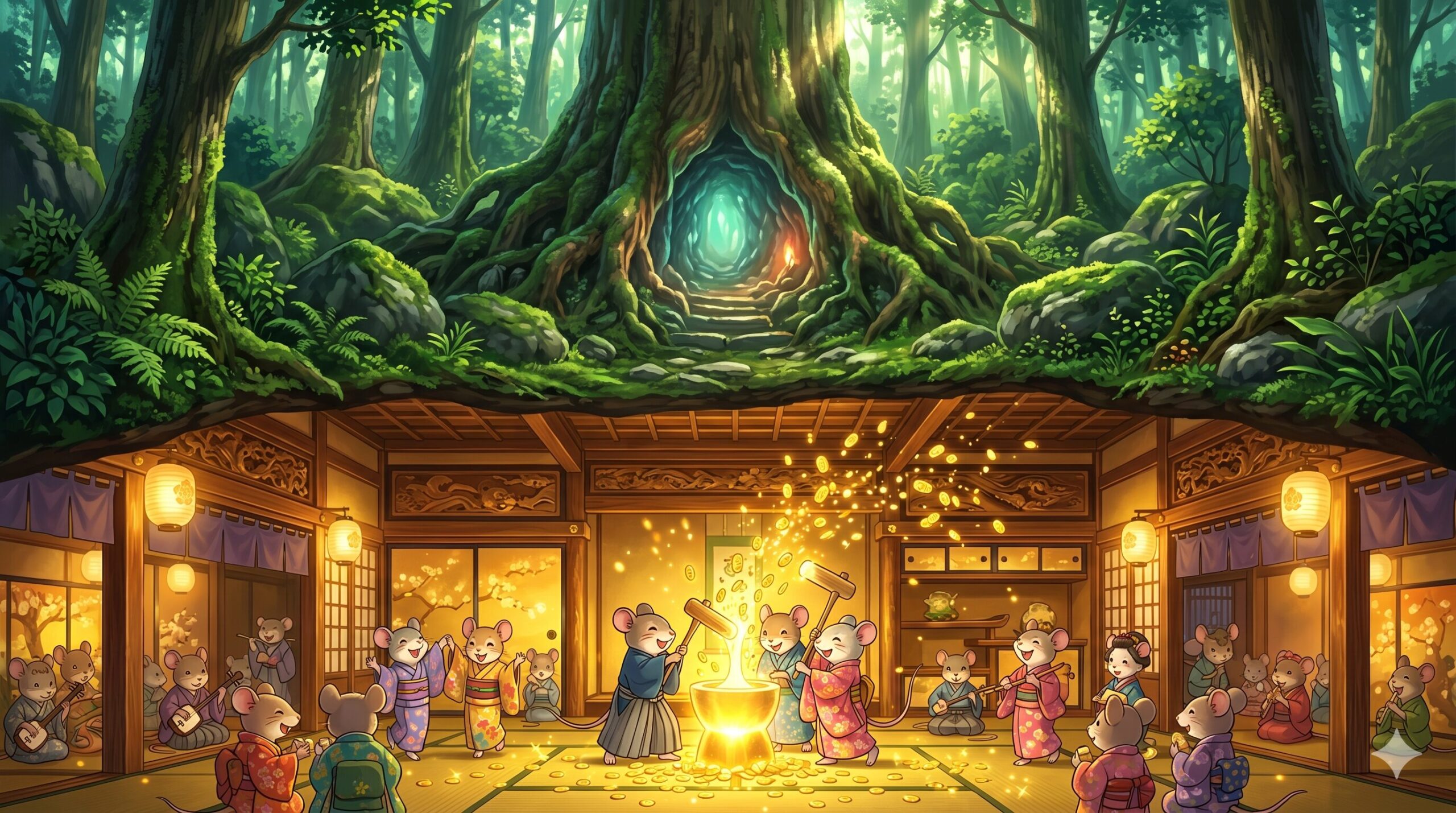
When he opened his eyes, he was not in the dark dirt, but in a bright, glowing, beautiful world. To his astonishment, it was “Nezumi Jodo,” a paradise inhabited by mice. To thank him for the dumpling he had dropped, the mice guided the old man to a grand hall and treated him to a magnificent feast. Furthermore, the mice brought out a tiny mortar and pestle and began making mochi (rice cakes). As they pounded the mochi, gold coins and dazzling treasures poured out endlessly.
“Kind old man, thank you for the delicious dumpling. This is our token of gratitude,” the mice said, presenting him with a wealth of treasure. The old man thanked them profusely, returned home with the treasures, and lived happily ever after with his wife.
However, the greedy and mean old man living next door heard this story. Plotting to steal the mice’s treasures for himself, the neighbor deliberately went to the mountains, kicked a dumpling into the hole, and jumped in after it.
The mice tried to welcome the neighbor just as they had the kind old man. But the greedy old man wanted to monopolize all the treasures. To do so, he imitated the sound mice fear the most—a cat’s meow. “Meow! Meow!”
Terrified, the mice fled in all directions. Instantly, all the lights in Nezumi Jodo went out, plunging the world into pitch blackness. Far from taking any treasure, the greedy old man lost his way in the dark. He had to crawl through the dirt like a mole, finally emerging above ground covered in mud. Instead of gaining wealth, he became the laughingstock of the entire village.
Analysis of Nezumi Jodo: Why Greed Leads to Ruin
The story of “Nezumi Jodo” is much more than a simple, amusing fairy tale for children. At its core, the narrative contrasts two aspects of human nature: selflessness and selfish desire.
The kind old man did not drop the dumpling expecting a reward. He simply showed genuine wonder at the unexpected event and respected the world of the mice. His pure heart ultimately attracted unforeseen good fortune.
In contrast, the greedy neighbor acted with clear malice and avarice. He ignored the rules of the mice’s world, attempted to dominate others through fear (imitating a cat), and sought to monopolize the benefits. The profound lesson of this story is a universal truth: those who try to take by force or fear will ultimately destroy themselves and be left in the dark. The imagery of losing one’s way in the darkness serves as a powerful metaphor for how greed narrows human vision and causes one to lose the right path in life.
Connection to Japanese Culture: Coexistence with Nature and Karmic Retribution
From this tale, we can clearly decipher traditional Japanese values and culture. First is the concept of animism and coexistence with nature. In ancient Japan, it was believed that gods and spirits resided in animals and natural phenomena. For the agrarian Japanese of the past, mice were pests that ate crops, yet they were also considered messengers of Daikokuten (the god of wealth) and symbols of fertility. The fact that mice are not treated merely as enemies to be eradicated, but as creatures possessing their own beautiful world (a pure land or paradise), reflects the deep reverence the Japanese hold for nature.
Second is the spirit of “Inga Oho” (karmic retribution) and the promotion of good while punishing evil. The Buddhist teaching that good deeds bring good results and bad deeds bring disaster upon oneself is deeply rooted in Japanese folktales. The ending, where the greedy neighbor fails miserably, demonstrates how behavior that seeks only personal gain without respecting the happiness of others was heavily shunned in the communal village society. The Japanese culture that values “Wa” (harmony) has been passed down from generation to generation through stories like this.
To Our Readers: What Would You Do in the Dark?
Being selfless like the kind old man might be extremely difficult in today’s competitive society. However, acting like the greedy neighbor—exploiting others for personal gain—carries the ultimate risk of extinguishing the light around you.
If you accidentally stumbled upon a secret paradise hidden underground, what would you do? Would you build a friendship with its inhabitants and enjoy the moment? Or would you scheme to use the secret to gain wealth? This story quietly questions the state of our own hearts as we live in the present. We would love to hear your thoughts.
Related Links
Read more Japanese Folktale Series:
Japanese Folktale Series (Internal Link)
Learn more about Japanese folklore (External Reference):
Japanese Folklore – Wikipedia
ネズミ浄土:地下に隠された驚くべきネズミたちの楽園
むかしむかしあるところに…「ネズミ浄土」の物語
むかしむかし、ある山奥の村に、とても心の優しいおじいさんとおばあさんが住んでいました。二人は貧しいながらも、毎日一生懸命に畑仕事をして、ささやかで平和な日々を送っていました。
ある日のこと、おじいさんは山へ薪を拾いに出かけました。お昼になり、おばあさんが作ってくれたお弁当の団子を食べようとしたとき、手が滑って団子が一つ、コロコロと地面を転がっていきました。団子はそのまま、木の根元にある深い穴の中へと落ちてしまいました。
「ああ、もったいないことをした」とおじいさんが穴の中を覗き込むと、どこからともなく美しい歌声が聞こえてきます。「お団子コロリン、スットン トン。お団子コロリン、スットン トン」。その楽しげな歌声に誘われ、おじいさんは思わず身を乗り出し、自分自身も穴の中へと転がり落ちてしまいました。
目を覚ますと、そこは真っ暗な土の中ではなく、光り輝く美しい世界でした。なんと、そこはネズミたちが住む「ネズミ浄土」だったのです。ネズミたちは、おじいさんが落とした団子のお礼にと、おじいさんを大広間へと案内し、豪華なごちそうでもてなしました。さらに、ネズミたちは小さな臼と杵を持ち出し、「ペッタン、トントン」と餅つきを始めました。彼らが餅をつくと、なんと小判や宝物が次々と溢れ出てくるのです。
「優しいおじいさん、いつも美味しいお団子をありがとうございます。これは私たちからの恩返しです」と、ネズミたちはたくさんの宝物をおじいさんにプレゼントしました。おじいさんはお礼を言い、宝物を持って家に帰り、おばあさんと一緒に幸せに暮らしました。
さて、この話を耳にしたのが、隣に住む欲張りで意地悪なおじいさんです。「自分もネズミから宝物を奪ってやろう」と企んだ隣のおじいさんは、わざと山へ行き、穴の中に団子を蹴り落としました。そして、自分から穴の中へ飛び込んだのです。
ネズミたちは隣のおじいさんも同じようにもてなそうとしましたが、欲張りなおじいさんはネズミたちの宝物をすべて独り占めしようと考えました。そこで、ネズミたちが一番怖がる「猫の鳴き真似」をしたのです。「ニャーオ!ニャーオ!」
驚いたネズミたちは一目散に逃げ出し、同時にネズミ浄土の灯りもすべて消えて真っ暗になってしまいました。欲張りなおじいさんは宝物を持ち帰るどころか、暗闇の中で出口を見失い、モグラのように土の中を這いずり回って、泥だらけになってようやく地上に戻りました。彼は宝物を手に入れるどころか、村中の笑いものになってしまったのです。
「ネズミ浄土」の深い考察:なぜ欲張るとすべてを失うのか
この「ネズミ浄土」の物語は、単なる子供向けの愉快なおとぎ話にとどまりません。物語の核心にあるのは、「無私の心」と「利己的な欲望」という人間の二面性の対比です。
優しいおじいさんは、決して見返りを求めて団子を落としたわけではありません。ただ偶然起きた出来事に対して素直に驚き、ネズミたちの世界に敬意を払いました。その純粋な心が、結果として予期せぬ幸運を引き寄せたのです。
一方で、隣の欲張りなおじいさんは、明確な悪意と強欲を持って行動しました。彼はネズミの世界のルールを無視し、恐怖(猫の鳴き真似)によって他者を支配し、利益を独占しようとしました。この物語が教えているのは、「力や恐怖で奪おうとする者は、最終的に自滅し、暗闇に取り残される」という普遍的な真理です。暗闇の中で出口を失う描写は、強欲が人間の視野を狭め、正しい道筋を見失わせることの暗喩として非常に機能しています。
日本文化との関連:自然との共生と「因果応報」
この物語からは、日本の伝統的な価値観や文化を明確に読み解くことができます。第一に、「アニミズム(万物に魂が宿るという考え方)」と「自然との共生」です。日本では古来より、動物や自然現象には神や精霊が宿っていると考えられてきました。農業を営む昔の日本人にとって、ネズミは穀物を食べる害獣であると同時に、大黒天(富の神様)の使いとして豊穣の象徴でもありました。ネズミを単なる排除すべき敵とせず、彼らにも独自の美しい世界(浄土)があると考えた点に、日本人の自然に対する畏敬の念が表れています。
第二に、「因果応報」と「勧善懲悪」の精神です。良い行いをすれば良い結果が返り、悪い行いをすれば自らに災いが降りかかるという仏教的な教えが、日本の昔話には深く根付いています。隣のおじいさんが欲をかいて失敗する結末は、他者の幸福を尊重せず、自己の利益のみを追求する態度が、共同体(村社会)においていかに忌避されていたかを示しています。日本の「和」を重んじる文化は、こうした物語を通じて世代から世代へと受け継がれてきたのです。
読者の皆様へ:あなたなら、暗闇でどう行動しますか?
優しいおじいさんのように無欲でいることは、現代の競争社会において非常に難しいことかもしれません。しかし、隣のおじいさんのように、他者を利用して自分だけが得をしようとする行動は、最終的に自分の周りから光を奪ってしまう危険性を持っています。
もしあなたが偶然、地下に隠された秘密の楽園を見つけたら、どうしますか?彼らと友情を築き、その瞬間を楽しみますか?それとも、その秘密を利用して富を得ようと企みますか?この物語は、今を生きる私たち自身の心のあり方を静かに問いかけています。ぜひ、あなたの考えを聞かせてください。
関連リンク
日本の昔話シリーズをもっと読む:
Japanese Folktale Series (Internal Link)
日本の民間伝承について深く知る(外部参考リンク):
Japanese Folklore – Wikipedia

コメント