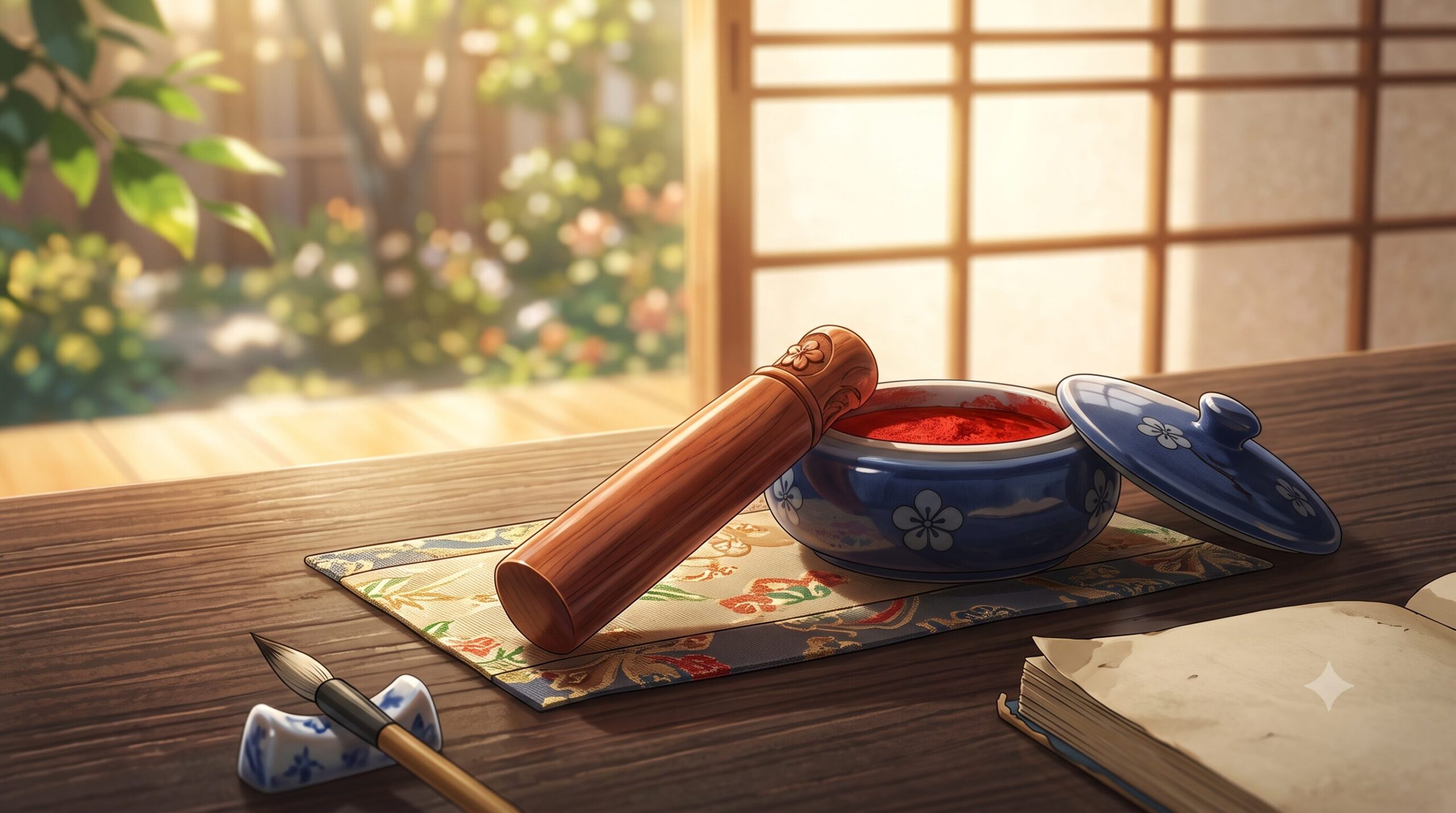
In Japanese daily life and business, there is a small but absolutely indispensable tool: the “Hanko” (personal seal or stamp). Every year, August 5th is celebrated as “Hanko Day” in Japan, playfully derived from a Japanese wordplay where 8 is read as “Ha” and 5 as “ko” (Ha-n-ko).
Even in today’s digital society, where electronic signatures and paperless systems are highly promoted, the Japanese hanko culture maintains its unique status and charm. In honor of Hanko Day, let’s unravel the history of seals in Japan and the deep cultural significance behind them.
From the National Treasure “Gold Seal” to Modern Times
While the origin of the seal itself is said to trace back to ancient Mesopotamia, the most famous and pivotal beginning of hanko history in Japan is the “Gold Seal of the King of Na.” Gifted by the Emperor of China (Eastern Han dynasty) in 57 AD, this National Treasure marks the first historical record of Japan using a seal for international diplomacy and is a must-learn topic in Japanese history textbooks.
Later, during the samurai era, stylized handwritten signatures called “Kao” were mainstream. However, from the Edo to the Meiji period, the modern system of registering a personal hanko as legal proof was established. In an era where literacy was not universal, the hanko served as an incredibly democratic and rational system, allowing everyone to legally prove their “will” equally.
Hanko in Japanese Culture: More Than a Signature, Proof of the Soul
The greatest difference between a Western handwritten signature and a Japanese hanko lies in the “weight” and “formal beauty” infused into the act. In Japan, there is a culture of commissioning a new hanko at major life milestones: coming of age, starting a career, or getting married. People choose beautiful, durable materials—such as boxwood, black water buffalo horn, ivory, or recently, titanium—and have master craftsmen carve their names.
- Jitsuin (Registered Seal): The legally binding seal registered at the local city hall. It is used for life’s most critical contracts, such as buying a house or a car.
- Ginkoin (Bank Seal): The seal registered when opening a bank account. It acts as the vital key to protecting one’s assets.
- Mitomein (Everyday Seal): Used for receiving parcels or acknowledging internal company documents, signifying “I have confirmed this.”
The physical act of pressing a hanko heavily coated in bright red ink (shuniku) onto an important document is accompanied by a mental resolve that goes beyond mere approval—it is the acceptance of full responsibility. This fleeting motion encapsulates the “sincerity” and “trust in others” that Japanese people have cherished since ancient times.
The Evolution of Hanko in Modern Society
Recently, Japan has been moving away from mandatory hanko use in administrative and routine business procedures. However, this does not mean the end of hanko culture. Freed from mundane paperwork, the hanko is being rediscovered for its true value: a traditional craft that expresses personal identity.
The intricate typography of a stamped impression is a unique piece of graphic art. It has become incredibly popular among international tourists visiting Japan to create an original hanko by translating their names into Kanji or Katakana to take home as a souvenir. The hanko is now a supreme art piece that allows you to hold Japanese tradition and aesthetic beauty in the palm of your hand.
How Do You Prove Your “Will”?
We live in an age where digital data circles the globe in an instant. Yet, the physical experience of touching natural wood or horn, smelling the unique red ink, and pressing an avatar of yourself onto paper provides a deep sense of satisfaction and solemnity that a digital click can never replicate.
To our readers: How do you authenticate your will and decisions during the most important moments of your life? If you ever have the chance to visit Japan, I highly recommend creating your own one-of-a-kind hanko engraved with your name. That small seal will surely become a key that deeply connects you to Japanese culture.
Related Category:
What’s Today’s Special Day Series
8月5日は「ハンコの日」:日本の信用と責任を形にする伝統文化
日本の日常生活やビジネスシーンにおいて、決して欠かすことのできない小さな道具があります。それが「ハンコ(判子・印鑑)」です。毎年8月5日は、日本語の「ハ(8)ン・コ(5)」の語呂合わせから「ハンコの日」として親しまれています。
現代のデジタル社会において、電子署名やペーパーレス化が推進される中であっても、日本のハンコ文化は依然として独自の地位と魅力を保ち続けています。今回は、このハンコの日にちなみ、日本における印章の歴史と、そこに込められた深い文化的意味を紐解いていきましょう。
国宝「金印」から始まる、壮大なハンコの歴史
ハンコそのものの起源は紀元前のメソポタミア文明にまで遡ると言われていますが、日本におけるハンコの歴史で最も有名かつ重要な幕開けは、西暦57年に中国(後漢)の皇帝から贈られたとされる国宝「漢委奴国王(かんのわのなのこくおう)」の金印です。この金印は、日本という国が国際的な外交において「印章」を用いた最初の記録として、歴史の教科書にも必ず登場します。
その後、武士の時代には自筆のサインである「花押(かおう)」が主流となりましたが、江戸時代から明治時代にかけて、現在の「ハンコを登録し、証明として用いる」という実印制度が確立しました。文字を読み書きできる層が限られていた時代において、ハンコはすべての人が平等に「自身の意志」を証明できる極めて民主的で合理的なシステムだったのです。
日本文化におけるハンコ:ただのサインではない「魂の証明」
西洋における手書きのサイン(署名)と、日本のハンコ(捺印)の最大の違いは、そこに込められる「重み」と「形式美」です。日本では、人生の節目において新しいハンコを作る文化があります。成人した時、就職した時、そして結婚した時。象牙、黒水牛、柘植(つげ)、近年では耐久性に優れたチタンなど、美しく堅牢な素材から自分のための一本を選び、熟練の職人に名前を彫り込んでもらいます。
- 実印(Jitsuin):役所に登録された、法的な効力が最も高いハンコ。家や車の購入など、人生の重大な契約で使用されます。
- 銀行印(Ginkoin):銀行口座を開設する際に登録するハンコ。財産を守る重要な鍵となります。
- 認印(Mitomein):荷物の受け取りや、社内での書類確認など、日常的に「確認しました」という意味で使われるハンコ。
朱肉(赤いインク)をたっぷりとつけ、重要な書類に力強くハンコを押す行為(捺印)には、単なる承認を超えた「自身の全責任を負う」という精神的な覚悟が伴います。この一瞬の動作に、日本人が古来より大切にしてきた「誠実さ」と「他者への信用」が凝縮されているのです。
現代社会におけるハンコの進化とアイデンティティ
近年、日本では行政手続きやビジネスにおいて「脱ハンコ」が進んでいます。しかし、それはハンコ文化の終焉を意味するものではありません。むしろ、事務的な手続きから解放されたことで、ハンコは「自分自身のアイデンティティを表現する伝統工芸品」としての価値を再認識されています。
美しい書体でデザインされた印影(ハンコの跡)は、世界に二つとないグラフィックアートでもあります。海外から日本を訪れる旅行者の間でも、自分の名前を漢字やカタカナに当てはめてオリジナルのハンコを作り、お土産として持ち帰ることが大流行しています。ハンコは今や、日本の伝統と美意識を手の中に収めることができる、最高のアートピースなのです。
あなたの「意志」はどうやって証明しますか?
デジタルデータが世界を一瞬で駆け巡る現代。しかし、木や角といった自然の素材に触れ、赤い朱肉の香りを嗅ぎながら、紙に自分の分身を押し付けるという物理的な体験は、デジタルのクリック一つでは決して得られない深い満足感と緊張感を与えてくれます。
この記事を読んでくださっているあなたは、人生の重要な局面において、どのように自身の意志と決断を証明していますか?もし日本を訪れる機会があれば、ぜひあなた自身の名前を刻んだ、世界で一つだけのハンコを作ってみてください。その小さな印が、あなたと日本の文化を深く結びつける鍵となるはずです。


コメント