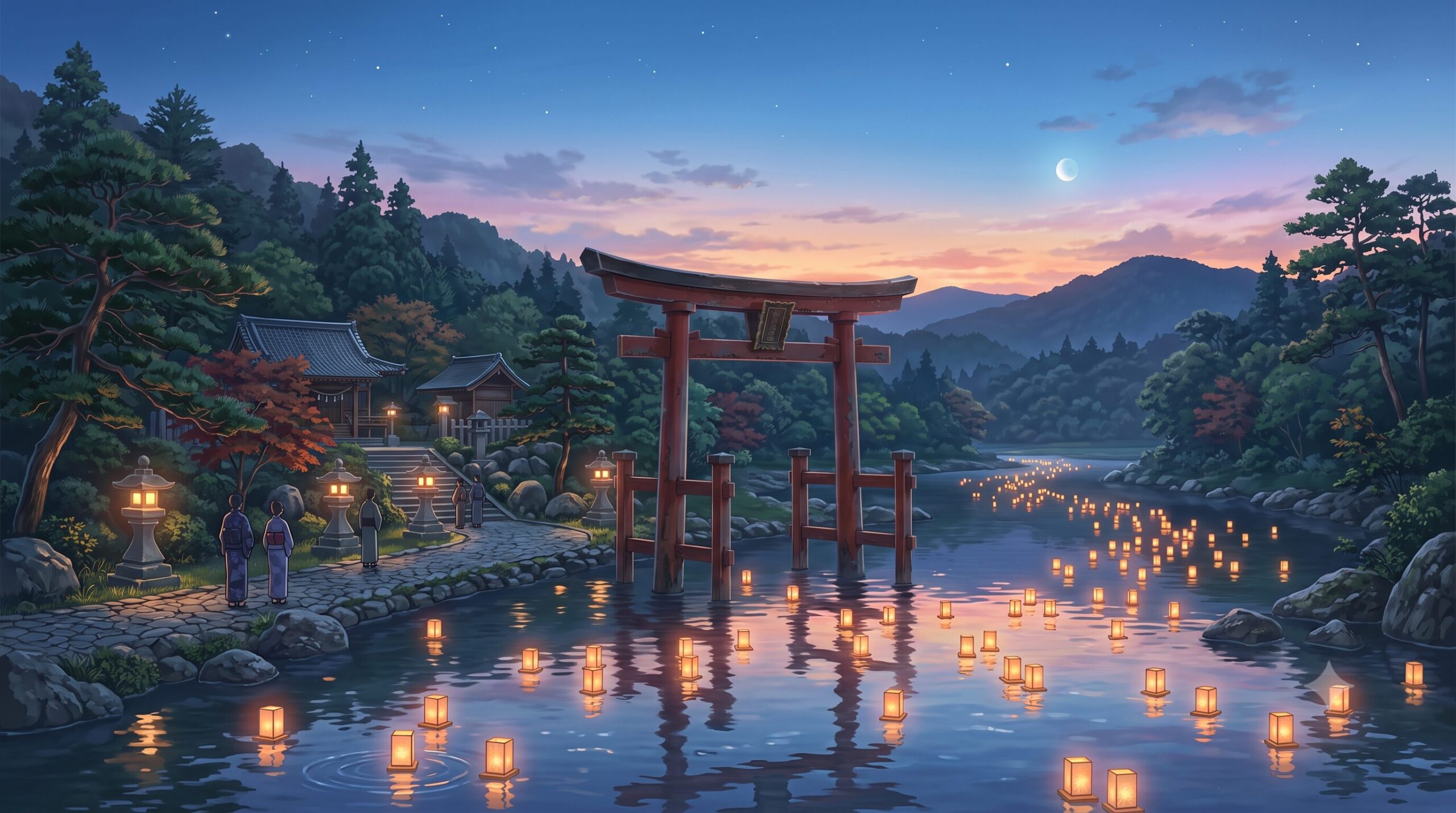
To truly understand Japan and the spirituality of its people, exploring their view of life and death is absolutely essential. From an international perspective, Japanese people are often described as non-religious. In reality, they simply do not strictly adhere to a single religious organization. Instead, profound ancient beliefs are deeply rooted in their daily habits and rituals. The most prominent example of this is the Japanese funeral.
While the majority of modern Japanese funerals are conducted in the Buddhist style, the underlying thoughts and rituals beautifully intertwine Buddhist teachings with the indigenous philosophy of Shinto. In this article, we will thoroughly explain how the Japanese perceive the end and beginning of life from two distinct perspectives: the Buddhist concept of “Rinne Tensei” (Reincarnation) and the Shinto concept of “Kannagara no Michi” (The Path of the Gods).
Buddhism’s “Rinne Tensei”: The Cycle of Life and the Next Journey
Over 90 percent of funerals in Japan are Buddhist. At the core of the Buddhist view of life and death is the concept of “Rinne Tensei” (Reincarnation). This is the belief that after death, living beings are reborn in another world based on their actions (karma) from their previous life. Death is not an absolute end, but merely a transition period to a new life.
In Japanese Buddhist funerals, the 49 days following death are called “Chuin,” considered a period when the deceased’s soul is traveling toward its next destination. During this time, the bereaved family holds memorial services every seven days, praying that the deceased will be reborn into a better world, such as the Pure Land. This act of prayer reflects the strong family bond where the living actively support the journey of the dead.
Furthermore, during Japanese funerals, attendees wear formal mourning attire (Montsuki) adorned with their family crest, and these crests are deeply engraved on tombstones. For example, the highly prestigious “Gosan no Kiri” family crest visually demonstrates the unbroken connection of the family line and deep respect for ancestors. In historically rich regions like Ako, these traditions and rituals honoring ancestors are still carefully preserved within the community, making the continuity of life from the past to the present strongly felt.
Shinto’s “Kannagara no Michi”: Becoming a Kami to Protect the Family
While Buddhism holds strong influence, the view of life and death in Shinto, Japan’s indigenous religion, is also deeply ingrained in the Japanese subconscious. Shinto funerals are called “Shinso-sai.” The core of the Shinto view of life and death is “Kannagara no Michi” (The Path of the Gods)—the philosophy of walking the path to becoming a deity (Kami).
In Shinto, it is believed that human beings receive their lives from the gods and are born into this world. Upon death, the soul leaves the physical body, returns to nature and the mountains, purifies over a long time, and becomes an ancestral spirit (Sorei). As more time passes, the individual soul merges into the collective existence of ancestors, ultimately becoming a guardian deity (Ujigami) that protects the family and descendants.
While Buddhism preaches “journeying to another world” (Reincarnation), Shinto preaches “remaining in this land to watch over descendants” (becoming a Kami). When Japanese people visit graves or pray at Buddhist altars and Shinto shrines during events like Obon and Higan, it is entirely driven by the Shinto sense that “our ancestors are always watching over us.”
The Spiritual Fusion of the Japanese People
Buddhism’s “Rinne Tensei” and Shinto’s “Kannagara no Michi.” At first glance, these two philosophies might seem contradictory, but the Japanese have brilliantly fused them together throughout history (a phenomenon known as Shinbutsu Shugo, the syncretism of Shinto and Buddhism).
Upon death, the soul is guided to the Pure Land by Buddhist teachings, while simultaneously remaining in the local land as a Shinto guardian deity to protect the family. This flexible and inclusive view of life and death is the very essence of the Japanese identity. The Japanese way of life—which involves a deep reverence for nature and prioritizing the connection with ancestors above all else—is entirely shaped by this unique perspective.
A Japanese funeral is not merely a ritual of farewell. It is a highly spiritual space where people affirm that life continues in a different form and offer deep gratitude to unseen presences.
Read more about traditional Japanese culture and history
Historical background of Shinto (Wikipedia)
葬式から読み解く日本の死生観:仏教の輪廻転生と神道のかんながらの道
日本という国、そして日本人の精神性を深く理解する上で「死生観」を知ることは非常に重要です。海外の人々から見ると、日本人は無宗教であると言われることがよくあります。しかし実際には、特定の宗教組織に固執しないだけであり、日常の習慣や儀式の中に古来からの深い信仰心がしっかりと根付いています。その最も顕著な例が「葬式」です。
現代の日本の葬式の多くは仏教形式で行われますが、そこに込められた思いや儀式の根底には、仏教の教えと日本固有の神道の思想が複雑かつ美しく絡み合っています。本記事では、仏教の「輪廻転生」と神道の「かんながらの道」という二つの視点から、日本人が命の終わりと始まりをどのように捉えているのかを詳しく解説します。
仏教が教える「輪廻転生」:命は巡り、次の生へ向かう
日本の葬儀の9割以上は仏教式で行われます。仏教の死生観の中心にあるのは「輪廻転生(りんねてんせい)」という思想です。これは、命あるものは死後、生前の行い(カルマ)に基づいて別の世界で再び生まれ変わるという考え方です。死は完全な終わりではなく、新しい命への移行期間に過ぎません。
日本の仏教葬儀では、死後49日間を「中陰(ちゅういん)」と呼び、故人の魂が次の生まれ変わり先に向かって旅をしている期間と考えます。遺族はこの期間、7日ごとに法要を行い、故人がより良い世界(極楽浄土など)へ生まれ変われるように祈りを捧げます。この祈りの行為は、残された生者が死者の旅路をサポートするという、強い家族の絆の表れです。
また、日本の葬儀において、参列者は家紋の入った喪服(紋付)を着用し、墓石にも代々の家紋が深く刻まれます。例えば、格式高い「五三桐(ごさんのきり)」の家紋などは、脈々と受け継がれる家族の繋がりと、祖先への深い敬意を視覚的に示しています。赤穂地方などの歴史深い地域では、こうした祖先を敬う伝統や儀式が今も地域社会の中で大切に守り継がれており、過去から現在、そして未来へと続く命の連続性を強く感じさせます。
神道が教える「かんながらの道」:神となり、家族を護る
仏教の影響が強い一方で、日本固有の宗教である神道(しんとう)の死生観も、日本人の深層心理に強く根付いています。神道の葬儀は「神葬祭(しんそうさい)」と呼ばれます。神道における死生観の核心は、「かんながらの道(神随の道)」、つまり「神になる道を歩む」という思想です。
神道では、人は神々から命を授かり、この世に生まれ落ちたと考えます。そして死を迎えると、その魂は肉体を離れ、自然や山へと還り、長い時間をかけて浄化され、「祖霊(それい)」となります。さらに時間が経つと、個人の魂はご先祖様という大きな存在に溶け込み、最終的には家族や子孫を守る「守護神(氏神)」になるのです。
仏教が「別の世界へ旅立つ(輪廻)」ことを説くのに対し、神道は「この地に留まり、子孫を見守る(神となる)」ことを説きます。お盆や彼岸といった行事で、日本人がお墓参りをしたり、仏壇や神棚に手を合わせたりするのは、「ご先祖様がいつも私たちを見守ってくれている」という神道的な感覚が背景にあるからです。
二つの思想が融合した日本人の精神性
仏教の「輪廻転生」と神道の「かんながらの道」。一見すると矛盾するこの二つの思想を、日本人は歴史の中で見事に融合させてきました(神仏習合)。
死を迎え、魂は仏教の教えに導かれて極楽浄土へ向かい、同時に神道の教えによってこの地に留まり、家族を護る神となります。この柔軟で包容力のある死生観こそが、日本人のアイデンティティです。自然を畏れ敬い、祖先との繋がりを何よりも重んじる日本人の生き方は、この独自の死生観によって形作られています。
日本の葬式は、単なる別れの儀式ではありません。それは、命が形を変えて続いていくことを確認し、見えない存在への感謝を捧げる、極めて精神性の高い空間なのです。
コメント