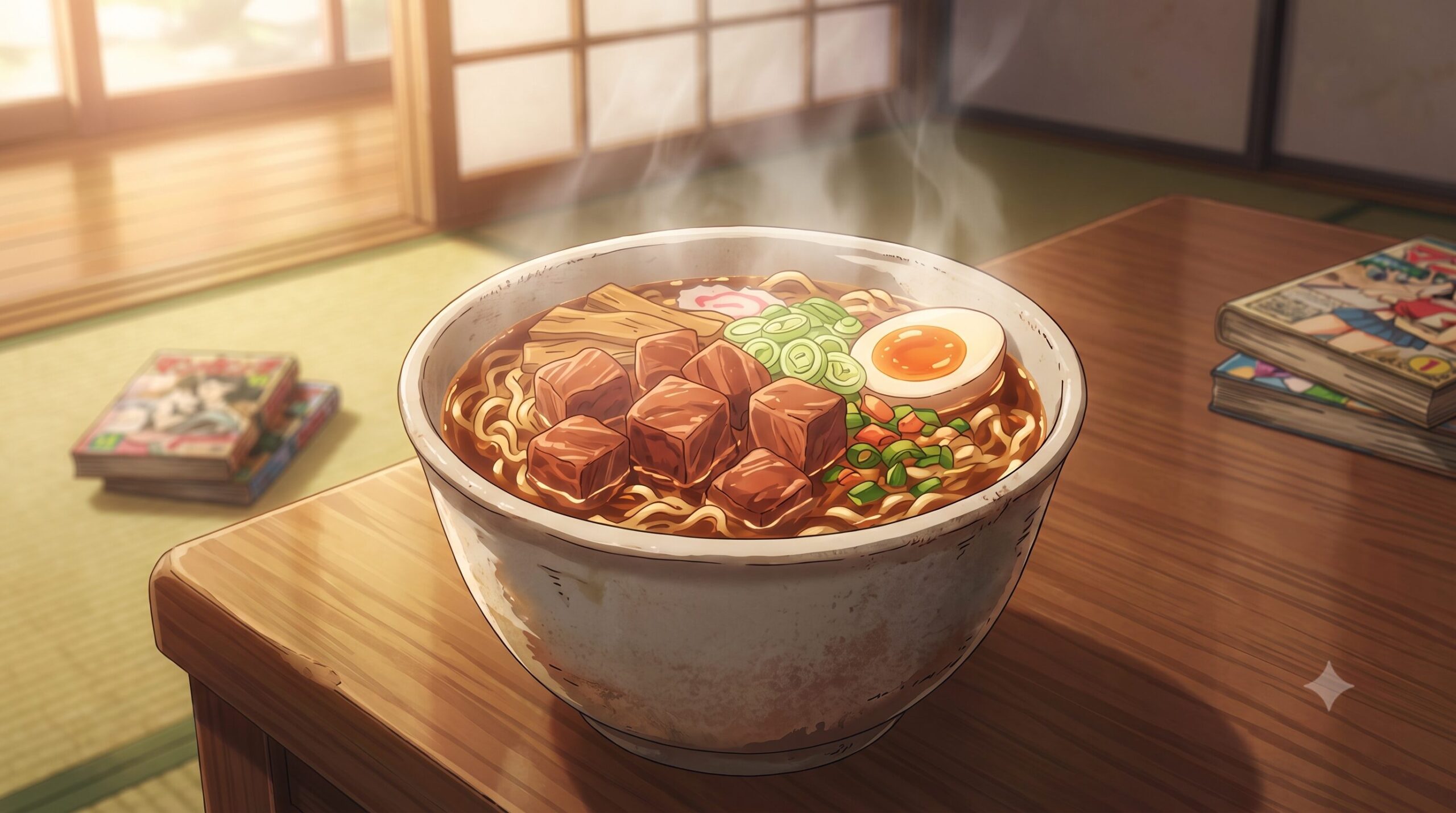
Step into any supermarket or convenience store in Japan, and you will be greeted by countless varieties of instant ramen lining the shelves. Yet, the undisputed king that continues to be loved not just in Japan, but around the world, is Nissin’s “Cup Noodle.” But are you aware of the strange, delicious, cube-shaped ingredient hiding inside this national comfort food?
On the Japanese internet, this ingredient has long been called “Nazo-niku” (Mystery Meat), boasting a cult-like following. In Japan, the 29th of every month is designated as “Meat Day” due to a numerical wordplay (2 = “ni”, 9 = “ku”, forming “niku”, the Japanese word for meat). July 29th is the perfect time to celebrate this legendary “Mystery Meat” and explore its undeniable charm. Today, we will dive deep into the history of “Nazo-niku”—where Japanese food culture intersects with internet culture—and decipher the unique cultural aspects of Japan hidden within it.
What Exactly is “Nazo-niku”? Its True Identity and History
When people from overseas open a Cup Noodle for the first time, they often look at the freeze-dried square blocks of meat and wonder, “What kind of meat is this?” For many years, its official name was “Dice Mince” (seasoned minced pork). However, due to its unique texture and addictive savory flavor, consumers affectionately gave it the slang nickname “Nazo-niku” (Mystery Meat).
In 2017, Nissin finally revealed the official truth behind this Mystery Meat. The ingredients were a mixture of pork, soybean-derived ingredients, and vegetables, processed using freeze-drying technology. In other words, a technology that predates the recent global trend of “plant-based meat” was already being utilized when Cup Noodle first launched in 1971. This revelation became a massive talking point, proving the high technological capability and foresight of Japanese food manufacturers.
The Flexible Fusion of Japanese Internet Culture and Corporations
The term “Nazo-niku” originally emerged organically as internet slang on massive anonymous message boards in Japan (like 2channel). Usually, large corporations hate it when their products are referred to by suspicious-sounding terms like “mystery meat.” However, what is remarkable about modern Japanese corporate culture is that instead of denying this slang, Nissin officially adopted it into their marketing.
They showed a willingness to fully embrace the playful spirit of their consumers, releasing special editions packed with massive amounts of the meat called the “Nazo-niku Festival,” and proudly using the word “Nazo-niku” on their official social media. This is proof that modern Japanese companies value two-way communication, breaking down the walls between themselves and consumers. It showcases Japan’s “broad-mindedness” to elevate subculture and otaku culture into the mainstream rather than alienating them.
Deciphering Japan’s “Kaizen” and “Mottainai” Spirit Through Mystery Meat
The existence of Nazo-niku is also deeply tied to ancient Japanese philosophies. One is the spirit of “Mottainai”—making the most out of limited resources. By combining soybean with pork, they kept costs down while boosting nutritional value and reducing environmental impact. This is an incredibly rational approach that aligns perfectly with today’s modern sustainability goals.
Furthermore, we cannot forget the philosophy of “Kaizen” (continuous improvement). The Nazo-niku found in today’s Cup Noodle is not exactly the same as the one from the original launch. It has been continually, albeit subtly, improved to taste better, adapting to changing palates and rising health consciousness over the decades.
Conclusion: What Would You Do?
Triggered by the July 29th Nazo-niku Day, we hope you were able to feel the Japanese technology, humor, and culinary curiosity packed into a single cup of instant ramen. Japan’s Cup Noodle and its “Mystery Meat” are not just fast food; they are a mirror reflecting modern Japanese culture.
After reading this article, do you want to try Japan’s “Nazo-niku”? If you had the freedom to invent your own instant ramen topping, what kind of “mystery ingredient” would you create? Please let us know your ideas!
Reference Links:
・Nissin Cup Noodle Official Brand Site: https://www.cupnoodle.jp/
・Read more from our Japanese Anniversaries and Culture Series: What’s Today’s Special Day Series
日本の「謎肉」の秘密:7月29日謎肉の日とカップヌードル文化の進化
日本のスーパーマーケットやコンビニエンスストアに足を踏み入れると、数え切れないほどのインスタントラーメンが棚に並んでいます。その中でも、日本のみならず世界中で愛され続けている絶対的な王者が、日清食品の「カップヌードル」です。そして、この国民的食品の中に潜む、サイコロ状の奇妙で美味しい具材をご存知でしょうか?
日本のインターネット上では、この具材は長年「謎肉(Nazo-niku / Mystery Meat)」と呼ばれ、カルト的な人気を誇ってきました。日本では毎月29日が「2(に)9(く)」の語呂合わせで「肉の日」とされていますが、7月29日はこの伝説的な「謎肉」を祝い、その魅力に迫るのに絶好のタイミングです。今回は、日本の食文化とインターネット文化が交差する「謎肉」の深い歴史と、そこから読み解ける日本特有の文化について詳しく解説します。
「謎肉」とは一体何なのか?その正体と歴史
初めてカップヌードルを開けた海外の人々は、フリーズドライされた四角い肉のブロックを見て「これは何の肉なのだろう?」と疑問に思うはずです。長年、公式名称は「ダイスミンチ(味付豚ミンチ)」でしたが、消費者の間ではその独特の食感とジャンクな旨味から、親しみを込めて「謎肉」というスラングで呼ばれていました。
2017年、日清食品はついにこの「謎肉」の正体を公式に発表しました。その正体は「豚肉」と「大豆由来の原料」、そして野菜などを混ぜ合わせてフリーズドライ加工したものでした。つまり、近年の世界的なトレンドである「プラントベースミート(代替肉)」の先駆けとも言える技術が、1971年のカップヌードル発売当初からすでに採用されていたのです。この事実は、日本の食品メーカーの技術力の高さと、先見の明を証明する大きな話題となりました。
日本のインターネット文化と企業の柔軟な融合
この「謎肉」という言葉は、もともとは日本の巨大匿名掲示板(2ちゃんねる等)で自然発生したネットスラングでした。通常、大企業は自社の製品が「謎の肉」などという怪しげな言葉で呼ばれることを嫌がります。しかし、日本の企業文化において注目すべきは、日清食品がこのスラングを否定するどころか、公式のマーケティングに採用したことです。
「謎肉祭」と称して謎肉を大量に入れた特別商品を発売したり、公式SNSで「謎肉」という言葉を堂々と使ったりと、企業側が消費者の遊び心に全力で乗っかる姿勢を見せました。これは、現代の日本企業が消費者との間にある壁を取り払い、双方向のコミュニケーションを大切にしている証拠です。サブカルチャーやオタク文化を排除せず、むしろメインストリームの文化として昇華させる日本の「懐の深さ」がここに表れています。
謎肉から読み解く日本の「改善(Kaizen)」と「もったいない」精神
謎肉の存在は、日本古来の精神とも深く結びついています。限られた資源を最大限に活用する「もったいない」の精神です。豚肉だけでなく大豆を組み合わせることで、コストを抑えつつ栄養価を高め、環境への負荷も減らしています。これはSDGsが叫ばれる現代において非常に合理的なアプローチです。
また、絶えず製品を改良し続ける「改善(Kaizen)」の哲学も忘れてはいけません。現在のカップヌードルに入っている謎肉は、発売当初のものと全く同じではありません。時代の人々の味覚の変化や、健康志向の高まりに合わせて、少しずつ、しかし確実に美味しく改良され続けているのです。
終わりに:あなたならどう楽しみますか?
7月29日の謎肉の日をきっかけに、一杯のインスタントラーメンの中に詰まった日本の技術、ユーモア、そして食への探求心を感じていただけたでしょうか。日本のカップヌードルとその「謎肉」は、単なるファストフードではなく、日本の現代文化を映し出す鏡なのです。
この記事を読んで、あなたは日本の「謎肉」を食べてみたいと思いましたか?もし、あなたが自由にインスタントラーメンの具材を開発できるとしたら、どんな「謎の具材」を発明してみたいですか?ぜひ、あなたのアイデアを教えてください。
参考リンク:
・日清食品 カップヌードル 公式ブランドサイト:https://www.cupnoodle.jp/
・日本の記念日と文化シリーズをもっと読む:What’s Today’s Special Day Series


コメント