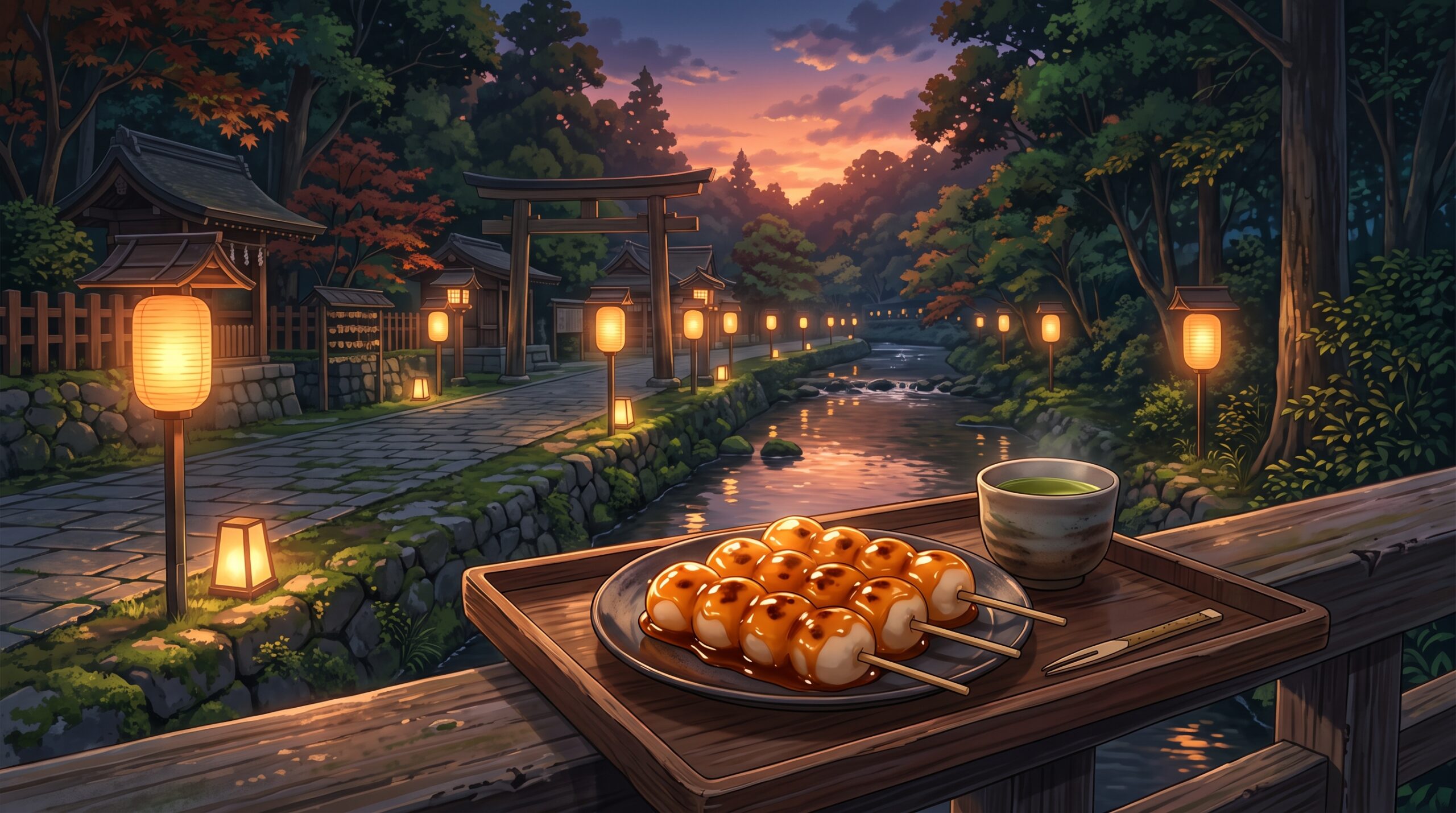
In supermarkets and traditional wagashi (Japanese sweet) shops across Japan, there is one treat that everyone recognizes: “Mitarashi Dango.” Chewy, perfectly roasted rice flour dumplings skewered on a bamboo stick and heavily coated in a sweet-and-savory, glowing amber soy sauce glaze. September 5th is “Mitarashi Dango Day,” a day dedicated to celebrating this beloved national dessert.
However, few know that this familiar everyday snack actually originated from a sacred “warding-off-evil ritual” at an ancient shrine in Kyoto, possessing over a thousand years of history. In this article, we will unravel the grand history behind Mitarashi Dango, the meaning hidden in the number of dumplings, and the unique Japanese spiritual culture where gods and humans intersect.
Why is September 5th “Mitarashi Dango Day”?
“Mitarashi Dango Day” was established by Yamazaki Baking Co., Ltd., and is officially recognized by the Japan Anniversary Association. The origin comes from a uniquely Japanese wordplay known as “Goroawase.” Because the numbers 3, 4, and 5 can be pronounced as “mi” (3), “tarashi” (4), and “dango” (5), the 3rd, 4th, and 5th of every month have been designated as the anniversary. September 5th, with the approach of autumn making hot green tea especially delicious, is the most fitting day to symbolize “dango.”
The Birthplace: World Heritage “Shimogamo Shrine”
The birthplace of Mitarashi Dango is the World Cultural Heritage site “Shimogamo Shrine” in Kyoto. Surrounded by the primeval “Tadasu no Mori” forest, this ancient shrine contains a sacred spring known as the “Mitarashi Pond.”
During the Kamakura period, when Emperor Go-Daigo visited Shimogamo Shrine and scooped water to purify his hands at the Mitarashi Pond, a mysterious phenomenon occurred. One large bubble suddenly floated up with a pop, followed a moment later by a sequence of four smaller bubbles.
People of that era saw the will of the gods in natural phenomena. Interpreting this as a divine revelation, they kneaded rice flour and shaped round dumplings to mimic the form of those water bubbles. This was the original prototype of Mitarashi Dango.
The Meaning Behind “5 Dumplings”: The Human Body
Authentic Mitarashi Dango served at long-established shops around Shimogamo Shrine always features exactly “5 dumplings on 1 skewer.” The topmost dumpling is slightly larger, followed by a small gap, and then four dumplings below.
These five dumplings represent the “human body.” The large dumpling at the top signifies the “head,” while the four dumplings below represent the “four limbs.” Mitarashi Dango was not merely a sweet; it was a “Hitogata” (human effigy) representing one’s own body, used as a substitute in Shinto purification rituals. People offered these to the gods, praying for protection from evil and illness.
[Story] The Amber Prayer
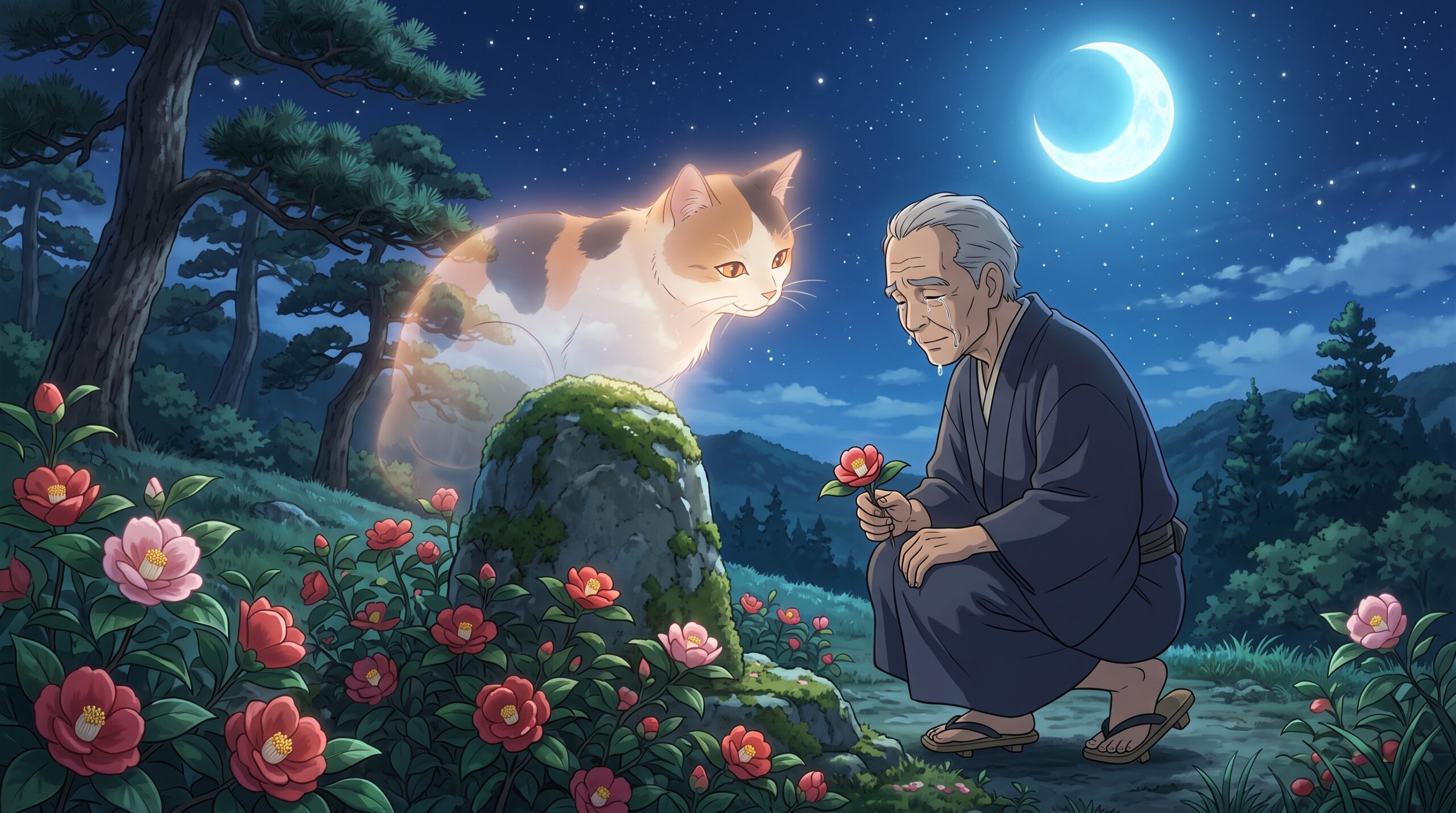
At the end of the Heian period, an epidemic was running rampant in Kyoto. The mother of a young girl named Rin had collapsed from a severe fever. With no money for a doctor, Rin ran to the “Mitarashi Festival” at Shimogamo Shrine.
Stepping into the freezing Mitarashi River at dusk, Rin desperately prayed to the gods to save her mother’s life. After praying, she saw one large bubble emerge from the pond, followed by four smaller bubbles. Feeling it was a divine revelation, Rin rushed home and shaped five dumplings from leftover rice flour, skewering them as a substitute for her mother’s body. She created a thick, amber-colored soy sauce glaze and coated the fire-roasted dumplings.
When her bedridden mother took a bite, she shed tears at its gentle sweetness. Miraculously, her mother soon recovered. The rumor of this “amber elixir” quickly spread, eventually becoming established as Mitarashi Dango.
Decoding Culture: Japanese Spirituality Through Food
The history of Mitarashi Dango reveals that everyday food and invisible sacred prayers blend seamlessly in Japanese culture. Purifying dumplings shaped like the human body with fire and coating them in a sacred glaze was a spiritual process of assimilating divine power.
Today, whether you are gazing at the gentle flow of the Kizu River in southern Kyoto, or sharing these sweets with a six-year-old child getting sticky glaze all over their face, we are unknowingly passing down a thousand-year-old prayer for family health and happiness.
A Question for You
The everyday foods you casually eat might also hold centuries of history and the desperate prayers of someone from the past. What wishes are hidden in the traditional foods you enjoy daily? The next time you eat Mitarashi Dango, whose health and happiness will you pray for?
- Shimogamo Shrine Official Website
- Yamazaki Baking Co., Ltd.
- Explore the “What’s Today’s Special Day” Series
9月5日は「みたらしだんごの日」:京都・下鴨神社に眠る祈りの物語
日本のスーパーマーケットや和菓子店で、誰もが一度は目にする「みたらしだんご」。香ばしく焦げ目のついたもちもちの団子に、甘辛く輝く琥珀色の醤油ダレがたっぷりとかかったこの和菓子は、世代を超えて愛され続けています。9月5日は、そんな日本の国民的スイーツを讃える「みたらしだんごの日」です。
しかし、この身近で手頃なおやつが、実は千年の歴史を持つ古都・京都の神聖な神社における「厄除けの儀式」から生まれたものであることを知る人は多くありません。本記事では、みたらしだんごの誕生に秘められた壮大な歴史、団子の数に込められた意味、そして神と人が交わる日本特有の精神文化を、一つの深い物語とともに紐解いていきます。
なぜ9月5日が「みたらしだんごの日」なのか?
「みたらしだんごの日」は、製パン・製菓企業である山崎製パン株式会社によって制定され、日本記念日協会に正式に認定されています。その由来は、日本語特有の言葉遊びである「語呂合わせ」です。「み(3)」「たらし(4)」「だんご(5)」という発音の響きから、毎月の3日、4日、5日が記念日として定められました。秋の気配が近づき、温かい日本茶が美味しくなる9月5日は、まさに「だんご」を象徴するにふさわしい日と言えます。
発祥の地:世界遺産「下鴨神社」と御手洗池の伝説
みたらしだんごの発祥の地は、京都市にある世界文化遺産「下鴨神社(正式名称:賀茂御祖神社)」です。広大な「糺の森(ただすのもり)」に囲まれたこの古社には、「御手洗池(みたらしのいけ)」と呼ばれる神聖な泉が湧き出ています。
鎌倉時代のこと。後醍醐天皇がこの下鴨神社を参拝し、御手洗池で手を清めようと水を掬った際、水面から最初に「ポコッ」と大きな泡が1つ浮かび上がり、少し間を置いてから「ポコポコポコポコ」と4つの小さな泡が続けて湧き上がりました。
自然現象に神の意志を見出していた当時の人々は、この不思議な水泡の湧き方を神からの啓示と捉え、その泡の形を模して米の粉を練り、丸い団子を作りました。これが「みたらしだんご」の原型です。
「1串に5個」の団子が意味する、人間の体と身代わり信仰
下鴨神社周辺の老舗和菓子店で提供される正統なみたらしだんごは、必ず「1串に5個」刺さっています。一番上の団子だけが少し大きく作られ、少し隙間を空けて下の4つの団子が並んでいるという特殊な構造です。
この形状には、極めて重要な意味が込められています。5つの団子は「人間の体」を表しており、一番上の大きな団子が「頭」、下の4つが「両手・両足」を意味しています。みたらしだんごは単なるお菓子ではなく、自分自身の体を表した「人形(ひとがた)」であり、神道の儀式に用いられる「形代(かたしろ=身代わり)」だったのです。当時の人々は、この団子を神前に供えて祈祷を受け、持ち帰って食べることで、自らの厄や病気を祓いました。
【物語】御手洗川の清めと、琥珀色の祈り
平安時代末期、夏の京都は猛烈な暑さと湿気により疫病が蔓延していました。都の郊外に住む少女・凛(りん)の母親もまた、正体不明の熱病に倒れ、生死の境を彷徨っていました。医者を呼ぶ当てもない凛は、霊験あらたかと噂される下鴨神社の「御手洗祭(みたらしまつり)」へ向かいました。
夕闇が迫る糺の森は神秘的な静寂に包まれていました。御手洗川に足を踏み入れると、骨の髄まで冷えるような清らかな水が凛の足を包みます。凛は冷たい水の中で、母の命を救ってほしいと必死に祈り続けました。
祈りを終え、御手洗池のほとりにしゃがみ込んだ時、暗い水面から「ポコッ」と一つの大きな泡が湧き上がり、続いて「ポコポコポコポコ」と四つの小さな泡が続きました。水神様からの啓示だと直感した凛は、家に帰り、なけなしの米の粉で5つの丸い団子を作りました。母の病を引き受ける「身代わり」として竹串に刺し、貴重な醤油と葛を集め、琥珀色のタレを作りました。
香ばしく焼けた団子を病床の母の口に運ぶと、母はその優しい甘さに涙を流しました。驚くべきことに数日後には母は病から回復し、この「琥珀色の霊薬」の噂は瞬く間に広がり、いつしか「みたらしだんご」として定着していったのです。
文化の読み解き:「食」を通じた日本人の精神性
みたらしだんごの歴史からは、「日常の食と、目に見えない神聖な祈りが溶け合っている」という日本文化の本質が読み取れます。人間の体に見立てた団子を火で清め、神聖なタレを絡めて体内に取り入れるという行為は、神の霊力を自分と同化させるプロセスでした。
京都府南部、木津川の穏やかな流れを眺めながら、あるいは6歳の我が子と一緒に甘いタレを口の周りにつけながら団子を頬張る時、私たちは千年以上の昔に家族の健康を祈った人々の、温かい願いの記憶を無意識に受け継いでいるのです。
あなたへの問いかけ
今日、あなたが何気なく口にしている食べ物にも、誰かの切実な祈りが込められているかもしれません。あなたが日常的に楽しんでいる伝統的な食べ物には、どのような願いが隠されていますか?次にみたらしだんごを食べる時、あなたは誰の健康と幸福を祈りますか?

コメント