A Quiet Village and an Old Cat
Long ago, in a village surrounded by the rich nature of Japan, there lived a kind-hearted village headman. By his side was always a beautiful calico cat named “Tama.” Tama was taken in by the headman as a kitten and raised for over a decade with deep affection, much like a real daughter. Whether he was sipping tea on the veranda or tending to the garden, Tama was always close by. A strong bond, transcending words, existed between them.
However, during late autumn when Tama had become an old cat, her behavior suddenly changed. Night after night, she would stare intently at the ceiling of the headman’s bedroom, sometimes letting out a low growl. The unusual behavior of the normally gentle Tama made the headman anxious. At the time in Japan, there was a superstition that “cats who live a long time become Bakeneko (monster cats).” Gradually, the headman fell into paranoia, suspecting that Tama had been possessed by an evil spirit.
The Night of Destiny and a Fierce Battle
On a cold winter night when the snow began to fall, the headman was in bed when Tama suddenly let out a crazed shriek and leaped high toward the ceiling. The next moment, with an earth-shaking thud, a massive shadow fell from the attic. It was a giant rat that had lived for decades and transformed into a Yokai (monster). The giant rat had been targeting the headman’s life, secretly waiting for the right opportunity.
Tama threw herself in front of the giant rat to protect the headman, baring her sharp fangs and claws. A gruesome battle to the death unfolded, filling the room with terrifying screeches and flying blood. Paralyzed by fear, the headman could do nothing but tremble and watch the spectacle.
When dawn broke and silence returned to the room, the headman saw the lifeless body of the giant rat, and securely locked onto its throat was Tama, covered in blood and no longer moving. Tama had not become a monster; she had fought at the cost of her own life to protect her beloved master from a Yokai.
Building the Nekozuka: Regret and Eternal Gratitude
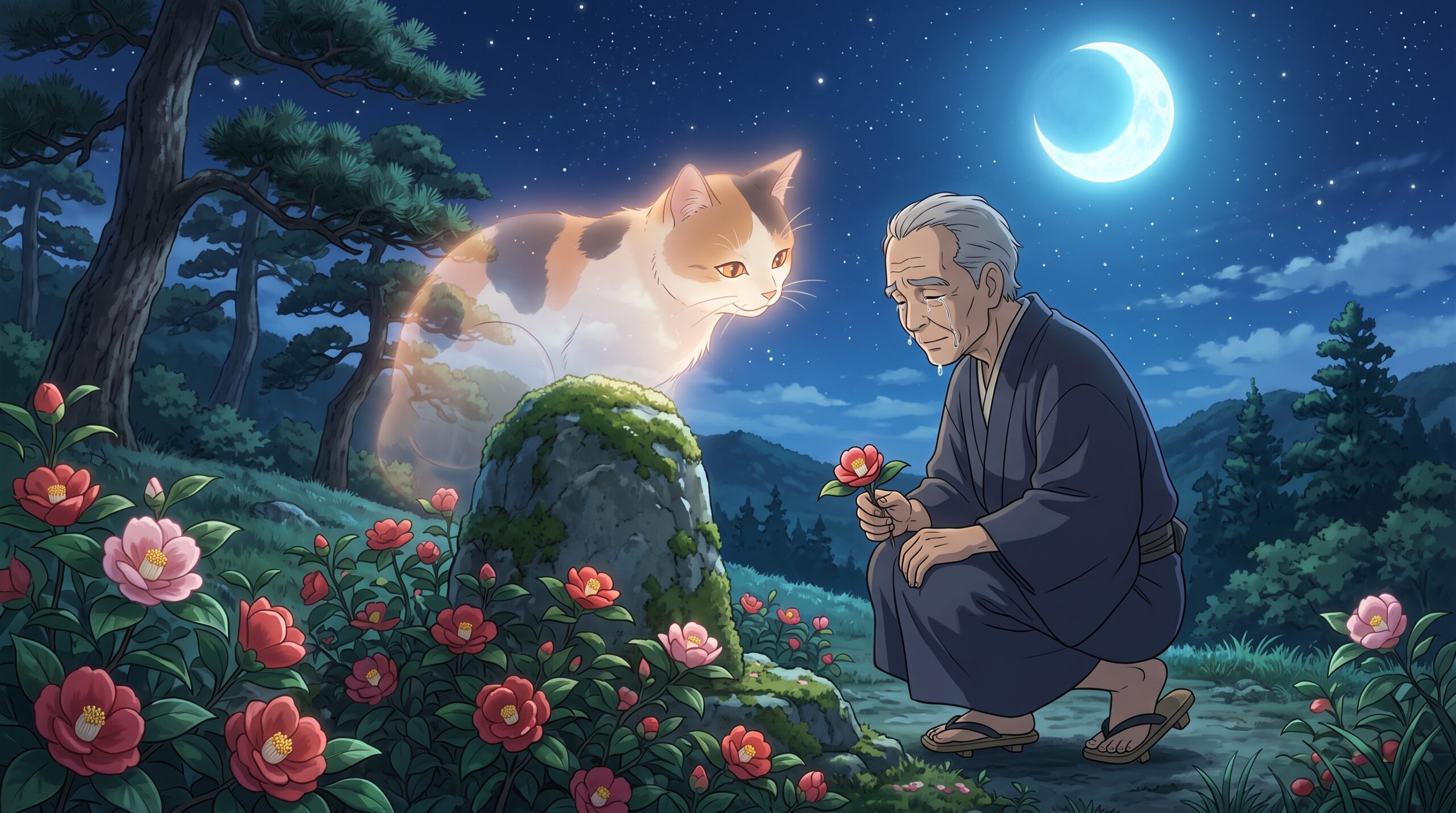
Learning the truth, the headman embraced Tama’s cold body and broke down in tears. Deeply ashamed of his suspicions and to repay Tama’s unconditional love and loyalty, he built a magnificent mound (Tsuka) on the sunniest hill in the village. This was the beginning of “Nekozuka” (The Cat Mound). The headman offered flowers there every day, continuously praying for Tama’s soul. Eventually, this story was passed down among the villagers, and Nekozuka was cherished for a long time as a sacred place to comfort the souls of animals.
Analysis: Crossed Paths and Silent Loyalty
The greatest tragedy of this story lies in the “communication barrier” between humans and animals. Tama intuitively sensed the approaching danger and tried to warn her master, but to the headman, it only looked like madness or a monstrous transformation. Humans often judge things by their own standards and fear the unknown. However, the actions of animals without words sometimes hide a love purer and deeper than that of humans. Tama’s actions represent the ultimate spirit of self-sacrifice—protecting her master even at the cost of being misunderstood.
Connection to Japanese Culture: Animism and the Spirit of “Ongaeshi”
The traditional Japanese spirituality can be read heavily from this story of “Nekozuka.” First is the culture of “Ongaeshi” (repaying a favor). Since ancient times in Japan, there has been a moral view that favors received must be repaid. This applies not only between humans but also to animals, as seen in famous tales like “The Crane’s Return of a Favor.”
Second is Japanese “Animism.” The belief that souls dwell in everything in nature—even animals and old tools—leads directly to the act of building a “Tsuka” (a mound, tomb, or monument) to console dead animals (a ritual called Kuyo). Even today in Japan, the culture of holding memorial services for unusable sewing needles (“Hari-Kuyo”) or beloved dolls remains. Nekozuka is a historical legacy proving that humans respected animals not merely as property, but as equal beings possessing souls living alongside them.
Over to You
If you were in the village headman’s position, how would you have faced the unusual changes in your beloved cat when you couldn’t understand her words? Also, in your life, have you ever experienced deep affection or loyalty without words? Through this story, please share your thoughts on the “silent love” we often overlook in our daily lives.
Reference Links
- Internal Link: Read more from the Japanese Folktale Series
- External Link: Learn about Bakeneko traditions in Japan (Wikipedia)
猫塚:命を懸けた忠猫の伝説と日本人の心
静かな村と一匹の老猫
むかしむかし、日本の豊かな自然に囲まれたある村に、心優しい村長が住んでいました。彼の傍らには、いつも「タマ」という名の美しい三毛猫がいました。タマは子猫の頃に村長に拾われ、それから十数年もの間、まるで実の娘のように深い愛情を受けて育ちました。村長が縁側で茶をすするときも、庭の手入れをするときも、タマは常に寄り添い、二人の間には言葉を超えた強い絆がありました。
しかし、タマが老猫になったある秋の終わりのこと。タマの様子が急におかしくなりました。夜な夜な村長の寝所の天井をじっと睨みつけ、時には低く唸り声を上げるようになったのです。普段は温厚なタマの異様な振る舞いに、村長は不安を覚えました。当時の日本では「長く生きた猫は化け猫になる」という迷信があったため、村長も次第に「タマは魔物にとり憑かれてしまったのではないか」と疑心暗鬼に陥っていきました。
運命の夜と壮絶な戦い
冷たい雪が降り始めた冬の夜。村長が床についていると、タマが突然、狂ったように鳴き声を上げ、天井に向かって高く飛び上がりました。次の瞬間、天井裏からドスーンという地響きとともに、巨大な影が落ちてきました。それは、何十年も生きながらえて妖怪と化した「大ネズミ」でした。大ネズミは村長の命を狙い、密かに機会をうかがっていたのです。
タマは村長を庇うように大ネズミの前に立ち塞がり、鋭い牙と爪を剥き出しにして飛びかかりました。部屋中に凄まじい叫び声と血しぶきが舞い、壮絶な死闘が繰り広げられました。村長は恐怖で動くことができず、ただ震えながらその光景を見つめることしかできませんでした。
夜が明け、静寂が戻った部屋で村長が見たものは、息絶えた巨大なネズミの喉笛にしっかりと食らいついたまま、血まみれになって動かなくなったタマの姿でした。タマは化け猫になったのではなく、愛する主人を妖怪から守るために、自らの命を懸けて戦っていたのです。
猫塚の建立:後悔と永遠の感謝
真実を知った村長は、冷たくなったタマを抱きしめ、声を上げて泣き崩れました。自分の疑心を深く恥じ、タマの無償の愛と忠義に報いるため、村長は村で一番日当たりの良い丘の上に立派な塚を建てました。これが「猫塚」の始まりです。村長は毎日そこへ花を供え、タマの冥福を祈り続けました。やがてこの話は村人たちの間で語り継がれ、猫塚は動物の魂を慰める神聖な場所として、長く人々に大切にされるようになりました。
考察:すれ違う心と無言の忠義
この物語の最大の悲劇は、人間と動物の間の「コミュニケーションの壁」にあります。タマは迫り来る危機を本能で察知し、主人に警告しようとしていましたが、村長にはそれが「狂気」や「妖怪化」にしか見えませんでした。人間はしばしば自分の尺度で物事を判断し、未知のものに恐怖を抱きます。しかし、言葉を持たない動物の行動には、時に人間以上に純粋で深い愛情が隠されています。タマの行動は、誤解されようとも主人を守り抜くという、究極の自己犠牲の精神を表しています。
日本文化との関連:アニミズムと「恩返し」の精神
この「猫塚」の物語からは、日本の伝統的な精神性が色濃く読み取れます。第一に「恩返し」の文化です。日本では古来より、受けた恩は必ず返すものという道徳観があり、それは人間同士だけでなく、鶴の恩返しのように動物にも適用されてきました。
第二に、日本の「アニミズム(万物有霊論)」です。自然界のあらゆるもの、動物や古い道具にさえ魂が宿ると考えるこの思想は、命を落とした動物のために「塚(お墓や記念碑)」を建てて供養するという行為に直結します。日本では現在でも、使えなくなった針を供養する「針供養」や、愛用した人形を供養する文化が残っています。猫塚は、人間が動物を単なる所有物ではなく、共に生きる魂を持った対等な存在として敬っていたことを証明する歴史的遺産なのです。
あなたへ問いかけ
もしあなたが村長の立場だったら、言葉の通じない愛猫の異変にどう向き合っていたでしょうか?また、あなたの人生において、言葉なしに深い愛情や忠誠を感じた経験はありますか?この物語を通じて、私たちが日常で見落としている「無言の愛」について、ぜひあなたの考えを教えてください。
参考リンク
- 内部リンク:日本の昔話シリーズをもっと読む
- 外部リンク:日本の化け猫伝承について(Wikipedia)


コメント