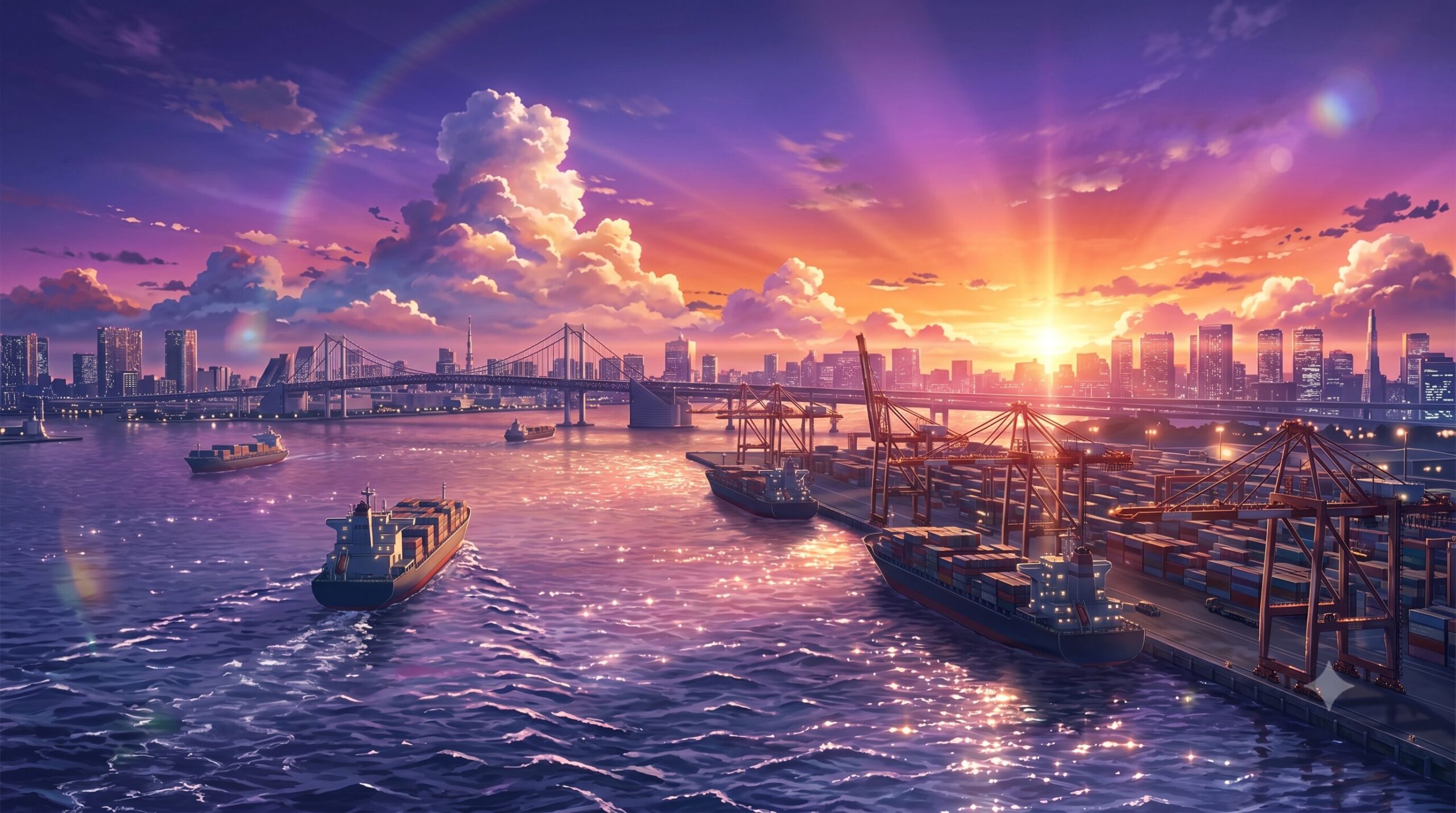
Every year on May 20th, Japan celebrates the “Tokyo Port Opening Anniversary.” Established by the Tokyo Metropolitan Government, this day commemorates May 20, 1941, when the Port of Tokyo was officially designated as an international foreign trade port. When thinking of historic Japanese port cities, Yokohama, Kobe, or Nagasaki might come to mind first. Indeed, Tokyo Port was quite late to make its debut as an international gateway compared to these other major ports. However, this late-blooming giant would eventually grow into the most crucial artery supporting the economy and culture of modern Japan.
Through the historical milestone of the Tokyo Port Opening Anniversary, let’s deeply explore how Japan—an island nation—has interacted with the sea and evolved over the centuries.
Why 1941? The Truth Behind the “Latecomer Giant Port”
During the Edo period, “Edo” (present-day Tokyo) was already one of the world’s largest cities, boasting a population of over one million. However, Tokyo Bay (then Edo Bay) was notoriously shallow, making it incredibly difficult for large vessels to dock directly. Because of this, even after Japan opened its borders to the world, massive foreign ships had to anchor at the deeper Port of Yokohama. Goods were then painstakingly transferred to smaller boats or trains to be transported into Tokyo.
“To build a massive port in the imperial capital of Tokyo that connects directly to the world”—this was a long-held dream and a monumental project for Japan. After years of grueling dredging (excavating the seabed) and land reclamation, the Port of Tokyo finally opened as an international trade port on May 20, 1941. It was the exact moment the heart of Japan’s consumption was physically hardwired to the global stage.
The “Port Culture” and Spirituality of an Island Nation
For Japan, surrounded by the sea on all four sides, a “port” is much more than a logistical hub. It is the boundary line with foreign cultures, a “window” through which new knowledge, technology, and unknown stories flow in.
Ancient Japanese folklore and Yokai (monster) culture—such as gods arriving from beyond the ocean, or water-dwelling creatures like the Kappa and Umibozu—are reflections of both the awe and gratitude the Japanese feel toward the unpredictable power of the sea. What comes from the ocean can be terrifying, but it also brings immeasurable wealth. The opening of Tokyo Port represented Japan’s determination to awaken from its long sleep of national isolation (Sakoku) and face the massive wave of Western modernization head-on, right in the center of Tokyo.
Take a look at the modern Port of Tokyo today. The sophisticated waterfront, symbolized by Odaiba and the Rainbow Bridge, is loved by fans worldwide as the breathtaking backdrop for countless Japanese anime and films. The area that was once a shallow mudflat is now bathed in beautiful neon lights—a magical place where “dreams” and “entertainment” are imported and exported alongside shipping containers.
Globalism and the Future Brought by Tokyo Port
Today, the Port of Tokyo stands as Japan’s premier international trade port, handling everything from food supplies to the latest electronics. The foreign products we enjoy daily, and the high-quality “Made in Japan” goods cherished by people all over the world, cross this very body of water. The dream held by pioneers on that day in 1941—to connect directly with the world—has perfectly materialized into our affluent modern lives.
If you ever have the chance to visit Japan, please visit the Port of Tokyo at dusk. Watching massive gantry cranes move and international ships pass by under a sky painted in deep orange is to witness the powerful, beating heart of Japan itself.
What Do You Think?
For the island nation of Japan, ports have always been the sole bridges to the outside world. What is the most moving piece of Japanese culture or product that has crossed the ocean to reach your country? Furthermore, if you were to visit the Port of Tokyo, what kind of scenery would you want to gaze at while feeling the sea breeze? Please share your thoughts, feelings, and ocean-related memories!
Check out other articles in this series:
Read the What’s Today’s Special Day Series
5月20日は東京港開港記念日:近代日本の心臓が世界へ開かれた日
毎年5月20日は、「東京港開港記念日」です。1941年(昭和16年)のこの日、日本の首都である東京港が、外国貿易港として正式に開港指定を受けたことを記念し、東京都によって制定されました。日本の歴史において、港町といえば横浜や神戸、長崎などが真っ先に思い浮かぶかもしれません。事実、東京港が国際的な貿易港としての産声を上げたのは、他の主要港と比べるとずいぶん遅いタイミングでした。しかし、この遅咲きの巨大港は、現代日本の経済と文化を支える最も重要な大動脈へと成長を遂げることになります。
今回は、この「東京港開港記念日」という歴史的節目から、日本という島国が海とどう向き合い、どのように発展してきたのかを深く読み解いていきます。
なぜ1941年だったのか?「遅れてきた巨大港」の真実
江戸時代、現在の東京である「江戸」は、100万人規模の人口を抱える世界有数の大都市でした。しかし、東京湾(当時の江戸湾)は水深が浅く、大型の船が直接着岸することが困難でした。そのため、開国後も大型の外国船は水深の深い横浜港に停泊し、そこから小さな船や鉄道に荷物を積み替えて東京へと運ぶという、非常に手間のかかる物流網が敷かれていました。
「帝都である東京に、直接世界と繋がる巨大な港を造る」。これは、当時の日本にとって悲願とも言える大プロジェクトでした。長年にわたる過酷な浚渫(海底の土砂を掘り下げること)工事と埋め立てを経て、ついに1941年5月20日、東京港は念願の外国貿易港として開港しました。それは、日本の消費の心臓部が、物理的にも世界と直結した瞬間だったのです。
海と生きる島国・日本の「港文化」と精神性
四方を海に囲まれた日本において、「港」は単なる物流の拠点ではありません。それは、異文化との境界線であり、新しい知識や技術、そして未知の物語が流れ込んでくる「窓」でした。
日本の古くからの言い伝えや妖怪文化(例えば海からやってくる神々や、水辺の妖怪である河童や海坊主など)も、海という予測不可能な大自然への畏怖と恩恵の表れです。海からやってくるものは、時に恐ろしく、時に計り知れない富をもたらします。東京港の開港は、鎖国という長い眠りから覚めた日本が、西洋の近代化という巨大な波を東京のど真ん中で真正面から受け止めるという決意の表れでもありました。
現代の東京港を眺めてみてください。お台場やレインボーブリッジに代表される洗練された近代的なウォーターフロントは、今や日本のアニメーション作品や映画の舞台として世界中のファンに愛されています。かつて泥の海だった場所は、今や美しい光に包まれ、世界中からコンテナと共に「夢」や「エンターテインメント」を輸出入する魔法の場所へと変貌を遂げたのです。
東京港がもたらしたグローバリズムと未来
現在、東京港は日本を代表する国際貿易港として、食品から最新の電子機器まで、あらゆる物資を取り扱っています。私たちが日常で手にする海外の製品も、そして世界中の人々が手にする高品質な「メイド・イン・ジャパン」の製品も、この海を渡って行き交っています。1941年のあの日、先人たちが抱いた「世界と直接繋がる」という夢は、現代の私たちの豊かな生活として完璧に結実しています。
日本を訪れる機会があれば、ぜひ夕暮れ時の東京港を訪れてみてください。オレンジ色に染まる空の下、巨大なガントリークレーンが動き、世界中から集まった船が行き交う光景は、日本の力強い鼓動そのものです。
あなたはどう感じますか?
島国である日本にとって、港は常に世界との唯一の架け橋でした。あなたは、海を越えてあなたの国へやってきた日本の文化や製品の中で、最も心を動かされたものは何ですか?また、もしあなたが東京港を訪れるなら、海風を感じながらどんな景色を見つめたいですか?ぜひ、あなたの考えや海にまつわる思い出を教えてください。
関連情報・外部リンク:
東京港の歴史と現在の役割についてより深く知りたい方は、東京都港湾局の公式情報をご覧ください。
東京都港湾局 (Tokyo Metropolitan Government Port Authority)その他の記念日シリーズはこちら:
What’s Today’s Special Day Series を読む

コメント