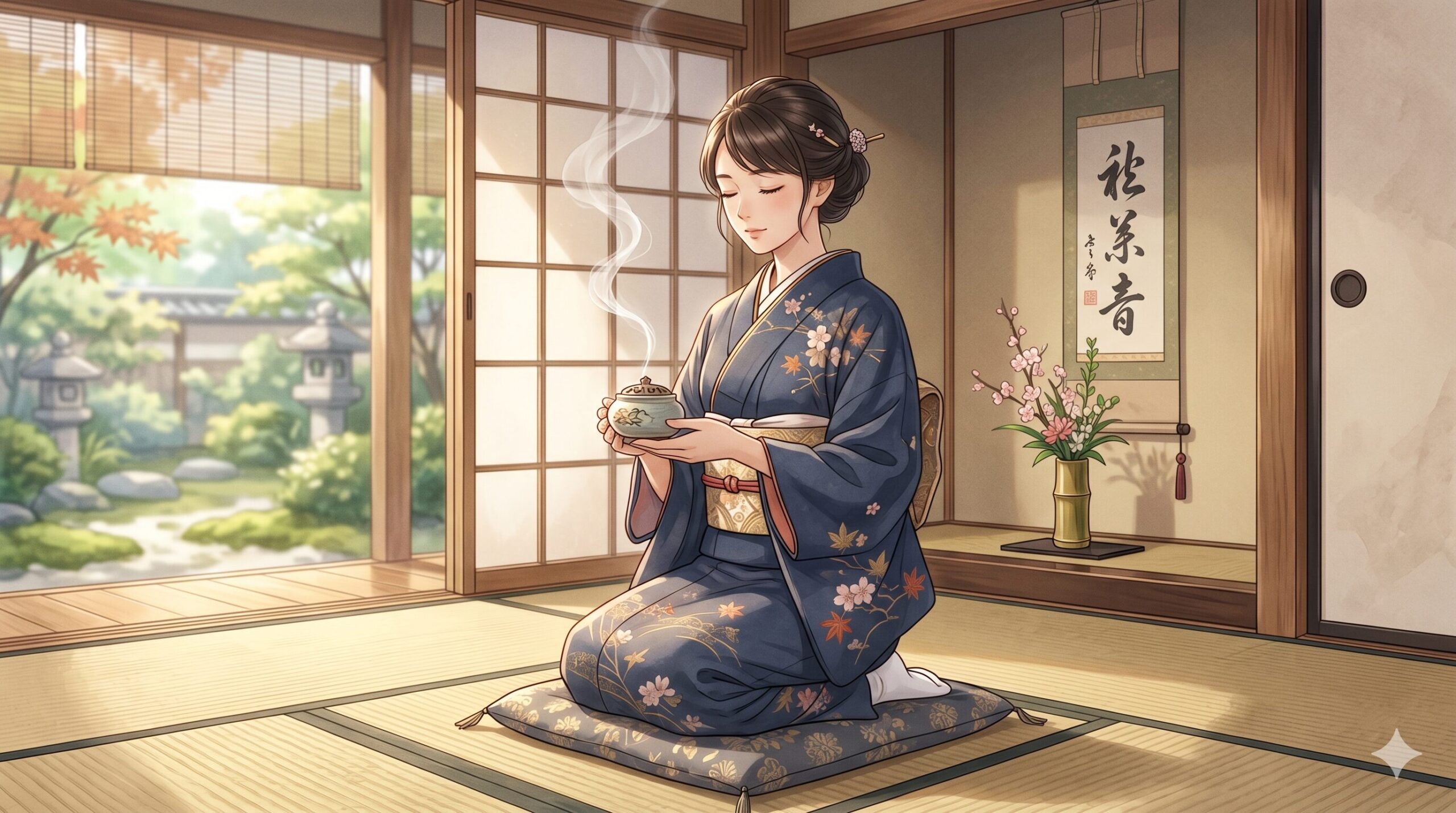
Japan has an incredible number of anniversaries throughout the year, but one of the most elegant and deeply rooted in historical romance is “Incense Day” (Okou no Hi) on April 18. The culture of “scent” in Japan has evolved far beyond simple relaxation; it is deeply intertwined with spirituality and aesthetics. Let’s unravel the grand history of how Japanese people have interacted with scents, starting from the origins of this special anniversary.
The Arrival of Fragrant Wood in the Nihon Shoki and the Secret of the Kanji “香”
Why was April 18 designated as Incense Day? The reason combines a record from the Nihon Shoki (The Chronicles of Japan) and the structural formation of a Chinese character (Kanji).
The era was the Asuka period. In April of the year 595 AD, during the reign of Empress Suiko, an unfamiliar piece of driftwood washed ashore on the beaches of Awaji Island. When the islanders picked it up and burned it in their stoves with other firewood, a rich, mystical fragrance they had never experienced before filled the area. Astonished, the islanders immediately presented this mysterious wood to the Imperial Court. It is said that Prince Shotoku, upon seeing it, instantly recognized it as highly valuable “Agarwood” (Jinkou). This is the very first official record of incense in Japan.
The specific date, the “18th,” is hidden within the Kanji character for incense itself: “香”. If you break down the character vertically, you can extract the components “一” (one), “十” (ten), “八” (eight), and “日” (day). Combining this clever linguistic play with the “April” record from the Nihon Shoki, the National Incense Stick Cooperative Association officially established April 18 as Incense Day in 1992.
From Prayers to Aristocratic Playfulness
During Prince Shotoku’s time, incense played a primarily religious role in Buddhist ceremonies, used to purify the altar and deliver prayers to the heavens. However, as Japan entered the Heian period (794–1185), the culture of incense underwent a dramatic evolution.
The aristocrats began to enjoy scents in their daily lives, stepping away from purely religious uses. The trend of Nerikou (blended incense) emerged, where nobles mixed natural aromatics themselves to create unique, signature scents. As depicted in the famous Tale of Genji, aristocrats passionately engaged in Takimono-awase, an elegant game where they competed to see who could create the superior fragrance. They didn’t just scent their rooms; they infused their layered kimonos (Juunihitoe) and handwritten letters with incense. Even if a person couldn’t be seen, the lingering scent would announce their arrival. For the Heian nobility, fragrance was the ultimate means of self-expression, showcasing their education and refined taste.
Samurai Mindfulness and the Establishment of “Kodo”
As time progressed into the Kamakura and Muromachi periods, when the Samurai class rose to power, incense culture transformed once again. Samurai warriors would scent their helmets with incense before heading into battle. This wasn’t merely for grooming; it was an act of extreme mental concentration, a ritual to calm their minds before facing life and death.
During the Muromachi period, the appreciation of fragrance was formalized into Kodo (The Way of Incense), standing alongside the Tea Ceremony (Sado) and Flower Arrangement (Kado) as a systematic art form. In Kodo, you do not “smell” the incense; you “listen” to it (Monkou). This practice requires quieting the mind and focusing intensely as if listening to the faint whisper of the fragrant wood. Practitioners deeply appreciate the natural blessings of rare fragrant woods, sensing the landscapes and literary backgrounds (such as traditional poetry) hidden beyond the scent. This truly represents the high spirituality unique to Japan.
Incense and Mindfulness in the Modern World
In modern society, Japanese incense is once again attracting passionate attention from around the world. In our stressful, fast-paced lives, the act of lighting incense, watching a single wisp of smoke rise, and quietly “listening” to the scent is the ultimate form of mindfulness.
Tied to Zen philosophy and the spirit of Wabi-sabi (finding beauty in imperfection), Japanese incense culture is distinctly different from modern room sprays. It functions as a tool for conversing with your inner self and intentionally creating a “blank space” of peace in a busy daily routine. Even today, about 70% of Japan’s incense production comes from Awaji Island—the very place where incense first arrived—keeping traditional manufacturing methods and artisan craftsmanship alive.
A Question for You
It has been over 1,400 years since that driftwood washed ashore on Awaji Island. How did you enjoy this story of “Incense” walking alongside Japanese history?
After reading this article, what kind of emotions are you feeling right now?
If you were to acquire traditional Japanese incense, at what time of day, and with what intentions, would you want to light it? I invite you to bring the richness of “listening to scent” into your daily life.
Reference Links & Related Articles
4月18日は「お香の日」!淡路島から始まった日本の奥深い香り文化
日本には、一年のうちにおびただしい数の記念日が存在しますが、その中でも特に優雅で、歴史のロマンを感じさせるのが4月18日の「お香の日」です。日本の「香り」の文化は、単なるリラクゼーションの枠を超え、精神性や美意識と深く結びついて発展してきました。今回は、この記念日の由来から、日本人がどのように香りと向き合ってきたのか、その壮大な歴史を紐解いていきましょう。
日本書紀に刻まれた香木の伝来と、「香」の文字に隠された秘密
なぜ4月18日が「お香の日」に制定されたのでしょうか。その理由は、日本の正史である『日本書紀』の記述と、漢字の成り立ちという2つの要素が組み合わさっています。
時代は飛鳥時代、推古天皇の御代である595年(推古3年)4月のこと。淡路島の海岸に、見慣れない一本の流木が漂着しました。島民がそれを拾い上げ、かまどに入れて燃やしたところ、これまでに嗅いだことのないような芳醇で神秘的な香りが辺り一面に立ち込めたのです。驚いた島民は、すぐさまこの不思議な木を朝廷に献上しました。これを見た聖徳太子は、それが「沈香(じんこう)」という非常に価値の高い香木であることを見抜いたと伝えられています。これが、日本におけるお香の始まりの記録です。
そして「18日」という日付の由来は、「香」という漢字そのものに隠されています。「香」の字を上下に分解すると、「一」「十」「八」「日」という文字が隠れているのがわかります(上の「禾」の部分が「千」に似ていますが、解釈として「一十八」と読み解きます)。この漢字のユーモアと、日本書紀の「4月」という記録を掛け合わせ、1992年に全国線香協同組合が4月18日を「お香の日」と制定しました。
祈りの香りから、雅な貴族の遊びへ
聖徳太子の時代、お香は主に仏教の儀式において、仏前を清め、祈りを届けるための宗教的な役割を担っていました。しかし、平安時代に入ると、お香の文化は劇的な進化を遂げます。
貴族たちは、宗教的な用途から離れ、日常の暮らしの中で香りを楽しむようになりました。天然の香料を自ら調合し、独自の香りを作り出す「練香(ねりこう)」が流行します。『源氏物語』にも描かれているように、貴族たちは自ら調合した香りの優劣を競い合う「薫物合(たきものあわせ)」という優雅な遊びに熱中しました。彼らは部屋に香りを漂わせるだけでなく、自らの衣服(十二単など)や手紙にも香りを焚き染めました。姿が見えなくとも、漂ってくる香りで「あの人が来た」とわかる。香りは、平安貴族にとって自らの教養やセンスを示す、最も重要な自己表現の手段だったのです。
武士の精神統一と、確立された「香道」
時代が下り、武士が台頭する鎌倉時代から室町時代にかけて、お香の文化はさらに変化します。武士たちは、出陣の前に兜にお香を焚き染めました。これは単なる身だしなみではなく、心を落ち着かせ、生死を懸けた戦いに臨むための「精神統一」の儀式でした。
そして室町時代には、茶道や華道と並び、香りを体系的な芸術として楽しむ「香道(こうどう)」が確立します。香道において、香りは「嗅ぐ」とは言いません。「聞く」と言います。心を静め、香木の微かな香りに耳を傾けるように集中する「聞香(もんこう)」という作法が生まれました。限られた天然の香木が持つ自然の恵みに深く感謝し、その香りの奥にある景色や文学的背景(和歌など)を心で感じ取る。これはまさに、日本独自の高い精神性の表れです。
現代におけるお香とマインドフルネスの融合
現代社会において、お香は再び世界中から熱い注目を集めています。ストレスの多い現代において、お香に火を灯し、立ち上る一筋の煙を見つめ、静かに香りを「聞く」時間は、まさにマインドフルネスの極致です。
禅(Zen)の思想や、不完全なものに美を見出す「わび・さび」の精神と結びついた日本のお香文化は、単なるルームフレグランスとは一線を画します。それは、自分自身の内面と対話し、忙しい日常の中に意図的な「余白」を作り出すためのツールとして機能しているのです。現在でも、日本のお香の生産量の約7割は、お香伝来の地である淡路島で作られており、伝統的な製法と職人の技が脈々と受け継がれています。
この記事を読んだあなたへ
淡路島への漂着から1400年以上。日本の歴史とともに歩んできた「お香」の物語はいかがでしたか?
この記事を読んで、あなたは今、どのような気分を感じていますか?
もしあなたが日本の伝統的なお香を手に入れたら、一日のうちのどの時間に、どんな思いを込めて火を灯してみたいですか? ぜひ、あなたの日常に「香りを聞く」という豊かさを取り入れてみてください。

コメント