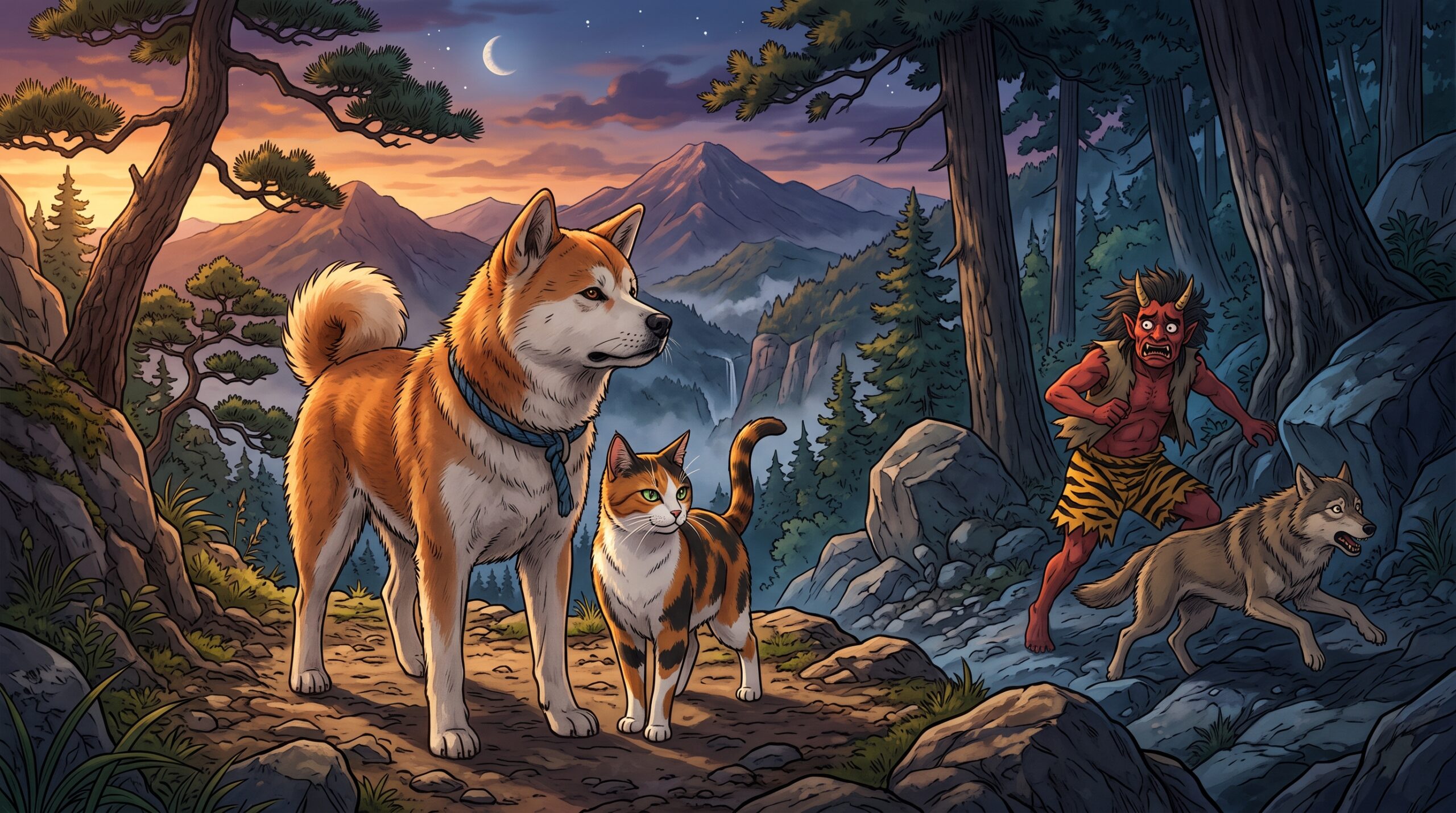
① The Story of “The Dog That Escaped Death”
Once upon a time, in a rural Japanese village, a farming family kept an old dog named Taro and a cat. In his youth, Taro worked tirelessly for the family, acting as a guard dog, chasing away wild boars, and keeping thieves at bay. However, as the years passed, Taro grew old and spent most of his days dozing on the porch.
One evening, while Taro was curled up resting, he overheard the master and his wife talking inside the house. “That old dog has become completely useless, just eating our food,” the master said coldly. “Tomorrow, let’s either abandon him deep in the mountains or kill him and skin him.”
Hearing these cruel words, Taro was struck with deep sorrow and despair. Devastated by the harsh sentence from the master he had served for so long, Taro couldn’t bear to stay. He quietly slipped away from the house and headed into the dark mountains.
Trudging along the mountain path, Taro encountered an old wolf deep in the forest. Seeing Taro’s depressed state, the wolf asked what was wrong. When Taro tearfully explained his situation, the cunning wolf smirked and offered a proposition.
“Alright, I’ll give you a brilliant plan. Tomorrow, your master will take his baby out to the fields. I will pretend to kidnap the baby. That’s when you jump out and ‘rescue’ the baby from me. If you do that, you’ll be hailed as a great hero who saved the child’s life, and they will cherish you forever.”
The next day, the plan was put into action. When the wolf lunged at the baby resting in the corner of the field, the master panicked. Taro dashed out fiercely, acting out a grand battle by pretending to bite the wolf. The wolf fled, and the master, with tears in his eyes, hugged Taro tightly. “Taro, you are a wonderful dog! I am so sorry I ever thought of abandoning you!” From that day on, Taro was given delicious food and treated as the family’s hero.
However, the peaceful days did not last long. A month later, the wolf appeared before Taro again. “Taro, our plan was a huge success. Now, as a reward for my help, bring me one of your master’s plump chickens,” the wolf demanded.
Taro was troubled but refused firmly. “I am truly grateful for your help. But I can never betray my master and hand over his precious livestock!” Enraged by this, the wolf snarled, “Then come to the peak of the back mountain tomorrow! We will settle this once and for all!” and left.
The next morning, prepared to die, Taro headed for the mountain. The cat, worried for her companion, said, “I’ll come with you,” and tagged along. Meanwhile, on the mountain, the wolf had brought a terrifying “Oni” (Japanese demon) as backup to ensure Taro’s defeat, and they were hiding in the bushes waiting.
Just as Taro and the cat reached the peak and were cautiously looking around, the pointed ears of the hiding Oni twitched in the bushes. Seeing this, the cat’s eyes gleamed. The cat had mistaken the moving ears of the demon for a giant mouse!
With a sharp “Meow!”, the cat dove into the bushes at lightning speed and bit down hard on the Oni’s ear.
“Gyaaaahhh!”
Caught off guard and feeling as if his ear was being torn off, the Oni panicked in pain and surprise, fleeing deep into the mountains as fast as his legs could carry him. Seeing the mighty demon run away, the wolf mistakenly thought, “What terrifying monster has arrived to make the Oni flee?!” Terrified, the wolf scrambled away, chasing after the demon.
As Taro stood there dumbfounded, not understanding what had just happened, the cat stood up proudly, licked her blood-stained lips, and said smugly, “See? I told you everything would be fine if I came along!”
② In-Depth Analysis of the Tale
This story goes far beyond a simple, comical animal escapade; it sharply depicts human egoism, the nobility of animals, and the irony of fate.
The first thing to note is human selfishness. The master’s attitude of valuing the dog when he is young and strong, but discarding him when he becomes old and useless, can be read as a biting satire on modern consumerism and efficiency-driven mindsets. Despite being almost abandoned by such humans, Taro ultimately chose “loyalty” by protecting his master’s chicken. Taro’s willingness to sacrifice himself to protect his master’s property, even if it meant betraying his benefactor (the wolf), embodies the spirit of self-sacrifice akin to the Japanese Bushido (way of the warrior).
On the other hand, the wolf symbolizes the “threat of nature” and a “deal with the devil.” He initially offers a deal to save Taro but later demands an exorbitant price. This serves as a moral lesson that relying on easy solutions or deceitful methods will inevitably lead to paying a heavy price later.
The most fascinating character is the cat. The cat instantly shatters the serious, life-or-death conflict between the dog and the wolf through a completely unrelated, instinctual action based on a misunderstanding. This represents the absurdity and humor of the world—how sometimes, even in the face of grim fate or desperate crises, unpredictable coincidence or pure instinct can easily turn the situation around.
③ Cultural Connections and Lessons Learned
In Japanese culture, dogs, cats, and Oni hold very significant roles.
In Japan, as represented by the famous “Hachiko,” dogs have long been passed down in stories as symbols of loyalty, sincerity, and remembering debts of gratitude. Taro’s actions are the very embodiment of this idealized Japanese “loyal dog.”
In contrast, cats are often depicted in Japanese literature and folktales as free-spirited, independent, and sometimes possessing mysterious powers beyond human comprehension. The cat in this story acts neither for the master nor for Taro, but simply follows her hunting instincts, and in doing so, defeats the strongest enemy. This effortless strength is a unique Japanese sense of humor that resonates with Zen philosophy.
Furthermore, there is the presence of the “Oni.” While Japanese Oni are originally depicted as powerful, terrifying Yokai (monsters) or avatars of gods, in folktales, they often have a foolish side, being easily tricked or scared away by small animals or humans. This reflects the robust spirituality of the common people: the belief that no matter how terrifying the authority or overwhelming the violence, it can be overturned by wit, laughter, or luck.
④ Over to You: What Would You Do?
Through this story, we are prompted to think deeply about loyalty, bargains, and unexpected luck. If you were in Taro’s paws, would you have accepted the wolf’s demand and handed over the chicken? Or would you have prepared for death and refused?
Also, how do you feel about the cat’s actions that so easily resolved a critical situation? Perhaps, when facing problems in life, instead of overthinking them, diving in with intuition and instinct like the cat might open up a path more easily than expected.
Please share your thoughts and what you felt after reading this story! Have you ever experienced an unexpected savior like the “cat” appearing in your daily life?
Reference: Japanese Folktales (Wikipedia)
Read more stories here: Japanese Folktale Series Category
日本昔話「命びろいした犬」:知恵と忠義、そして奇跡の痛快ストーリー
① 昔話「命びろいした犬」のストーリー
むかしむかし、ある村の農家に「タロウ」という名前の一匹の老犬と、一匹の猫が飼われていました。タロウは若い頃、番犬としてイノシシを追い払ったり、泥棒を警戒したりと、家族のために粉骨砕身働いてきました。しかし、年月が経ち、すっかり年老いたタロウは、今では縁側で一日中うとうとと寝てばかりの毎日を過ごしていました。
ある晩のことです。タロウがいつものように丸くなって休んでいると、家の中から主人夫婦の話し声が聞こえてきました。「あの老犬も、今ではただ飯を食うばかりですっかり役に立たなくなった。明日にでも山へ連れて行って捨てるか、それとも殺して皮を剥いでしまおうか」。
その冷酷な言葉を聞いたタロウは、深い悲しみと絶望に打ちひしがれました。長年尽くしてきた主人からの非情な宣告。タロウは居ても立っても居られず、こっそりと家を抜け出し、暗い夜の山へと向かいました。
山道をトボトボと歩いていると、タロウは森の奥で同じく年老いた一匹のオオカミに出会いました。オオカミはタロウの落ち込んだ様子を見て事情を尋ねました。タロウが涙ながらに事の顛末を話すと、狡猾なオオカミはニヤリと笑い、ある提案を持ちかけました。
「よし、ワシがいい知恵を授けてやろう。明日、お前の家の主人は赤ん坊を連れて畑仕事に出るだろう。その隙を突いて、ワシがその赤ん坊をさらうフリをする。そこでお前が飛び出してきて、ワシから赤ん坊を取り返すんだ。そうすれば、お前は赤ん坊の命を救った大恩人として、一生大切にされるはずだ」
翌日、計画は実行に移されました。オオカミが畑の隅に寝かされていた赤ん坊に飛びかかると、主人はパニックに陥りました。そこへタロウが猛然とダッシュし、オオカミに噛みつくフリをして大立ち回りを演じました。オオカミは逃げ去り、無事に赤ん坊を取り返したタロウを、主人は涙を流して抱きしめました。「タロウ、お前は本当に素晴らしい犬だ!捨てるなんて言ってすまなかった!」。その日から、タロウには毎日美味しいご飯が与えられ、家族の英雄として手厚く扱われるようになりました。
しかし、平和な日々は長くは続きませんでした。一ヶ月後、あのオオカミが再びタロウの前に姿を現したのです。「タロウよ、この間の作戦は大成功だったな。さあ、あの時の恩返しとして、お前の家で飼っている丸々と太ったニワトリを1羽、ワシに差し出せ」と脅迫してきたのです。
タロウは悩みましたが、きっぱりと断りました。「確かにあなたの協力には感謝している。しかし、主人の大切な家畜を裏切って渡すことなど、私には絶対にできない!」。それを聞いたオオカミは激怒し、「ならば明日、裏山の頂上へ来い!決着をつけてやる!」と捨て台詞を吐いて去っていきました。
翌朝、タロウは死を覚悟して山へ向かいました。その背中を心配した同居の猫が「私もついて行くわ」と付き添ってくれました。一方、山ではオオカミが、タロウを確実に仕留めるために、恐ろしい「鬼」を助っ人に呼んで茂みに隠れて待っていました。
タロウと猫が頂上に到着し、周囲を警戒していたその時です。茂みからチラリと、鬼の尖った耳の先が動くのが見えました。それを見た猫の目が、キラーンと光りました。なんと猫は、その動く鬼の耳を「巨大なネズミ」だと勘違いしたのです。
「ニャーッ!」と鋭い鳴き声を上げ、猫は凄まじいスピードで茂みに飛び込み、鬼の耳にガブリと力いっぱい噛みつきました。
「ギャアアアアッ!」
不意打ちで耳を噛みちぎられそうになった鬼は、痛さと驚きでパニックに陥り、一目散に山奥へと逃げ出しました。それを見たオオカミも「鬼が逃げるほどの恐ろしい化け物が来たのか!」と勘違いし、腰を抜かさんばかりに慌てて鬼の後を追って逃げ去っていきました。
何が起きたのか分からず、ポカンとしているタロウの横で、猫はすくっと立ち上がり、血のついた口元を舐めながら得意げに言いました。「ね!だから私がついて行けば大丈夫だって言ったでしょ?」
② 「命びろいした犬」の深い考察
この物語は、単なる動物たちのコミカルなドタバタ劇にとどまらず、人間のエゴイズムと動物の気高さ、そして「運命の皮肉」を鋭く描き出しています。
まず注目すべきは、人間の身勝手さです。若く力がある時は重宝し、老いて役に立たなくなれば不要なものとして切り捨てようとする主人の態度は、現代の消費社会や、効率主義に対する痛烈な風刺として読み取ることができます。タロウはそんな人間に見捨てられかけながらも、最終的には「主人のニワトリを守る」という忠義を選びました。恩人であるオオカミを裏切ってでも、主人の財産を守り抜こうとしたタロウの姿には、日本の武士道にも通じる自己犠牲の精神が宿っています。
一方で、オオカミは「自然界の脅威」と「悪魔の契約」を象徴しています。一度はタロウを救う取引を持ちかけますが、後になって過大な代償を要求します。これは、安易な解決策や不正な手段に頼ると、後で必ず大きなツケが回ってくるという教訓を示しています。
そして最も面白い存在が「猫」です。犬とオオカミの命を懸けたシリアスな対立構造を、猫は「ネズミと勘違いする」という全く無関係な本能的行動によって一瞬で破壊します。これは、重苦しい運命や絶体絶命の危機であっても、時に予測不可能な偶然や、純粋な無知(本能)があっさりと事態を好転させてしまうという、世界の不条理さとユーモアを表しています。
③ 昔話から読み解く日本文化との関連
日本文化において、犬と猫、そして鬼は非常に重要な役割を持っています。
日本では「忠犬ハチ公」に代表されるように、犬は「忠誠心」「誠実さ」「恩義を忘れない」存在として古くから語り継がれてきました。タロウの行動は、まさにこの日本的な「忠犬」の理想像そのものです。
対照的に、猫は日本文学や昔話において、しばしば「自由奔放」「マイペース」「時に人智を超える不思議な力を持つ存在」として描かれます。この物語における猫も、主人のためでもタロウのためでもなく、ただ自分の狩猟本能の赴くままに行動した結果、最強の敵を打ち倒してしまいます。この「無為自然」な強さは、禅の思想にも通じる日本独特のユーモア感覚です。
さらに「鬼」の存在です。日本の鬼は、本来は強大で恐ろしい妖怪や神の化身として描かれますが、昔話の中ではしばしば「間抜けな一面」を持ち、小さな動物や人間にあっさりと騙されたり、痛がって逃げ出したりします。これは、どんなに恐ろしい権力や圧倒的な暴力であっても、知恵や笑い、あるいは偶然によって覆すことができるという、庶民の逞しい精神性を反映しています。
④ 読者の皆様へ:あなたならどうする?
この物語を通して、私たちは「忠義」「取引」「予期せぬ幸運」について深く考えさせられます。もしあなたがタロウの立場だったら、恩人であるオオカミの要求を呑んでニワトリを差し出しましたか?それとも、死を覚悟して断ったでしょうか?
また、危機的状況をあっけなく解決してしまった猫の行動について、あなたはどう感じましたか?人生における問題も、時に深刻に考えすぎるより、猫のように直感と本能で飛び込んでみることで、案外簡単に道が開けるのかもしれません。
ぜひ、あなたの考えや、この物語を読んで感じたことを教えてください。日々の生活の中で、あなたにとっての「猫」のような予期せぬ救世主が現れた経験はありますか?
参考リンク:日本昔話について(Wikipedia)
その他の物語はこちら:Japanese Folktale Series カテゴリー


コメント