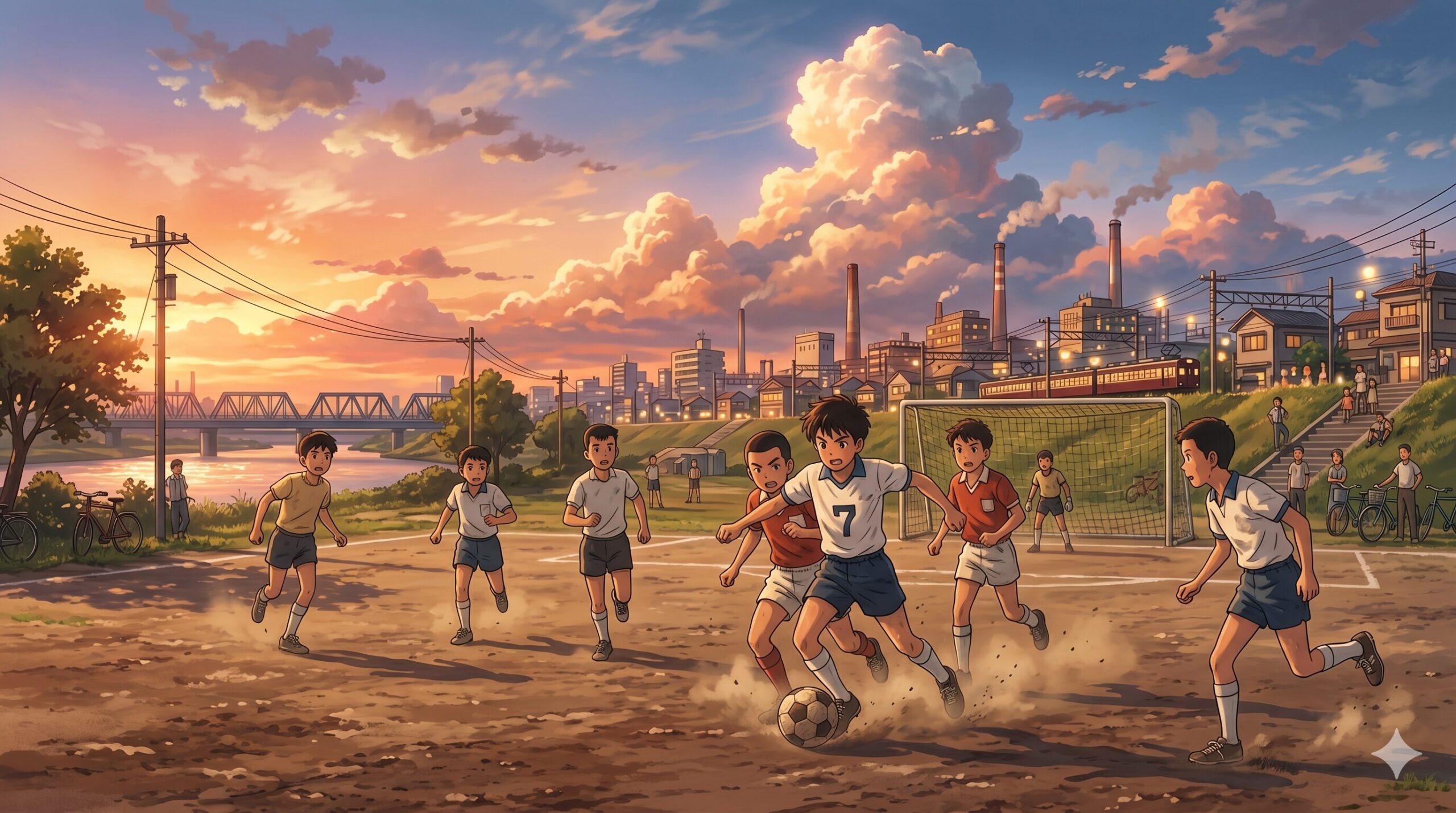
On June 6, 1965, a monumental milestone was etched into the history of Japanese sports: the opening of the Japan Soccer League (JSL). The strong foundation of the modern “J.League,” now beloved by football fans worldwide, was born on this exact day. Unlike professional leagues overseas, the Japan Soccer League at that time was entirely amateur. Every participating team was a corporate squad owned by massive Japanese conglomerates.
The backdrop to this historic moment was the bitter experience of the 1964 Tokyo Olympics held the previous year. Although the Japanese national team advanced to the best eight, a massive skill gap existed between them and the world’s elite powerhouses. Dettmar Cramer, a German coach affectionately known as the “Father of Japanese Soccer,” strongly advised, “Without a solid domestic league, strengthening the national team is impossible.” Cramer’s philosophy mobilized corporations across Japan, leading directly to the creation of a nationwide league.
Corporate Warriors and Sports: Japan’s Unique Development Model
To truly understand the birth of the JSL, one must comprehend the unique “corporate culture” of Japan during that era. In the 1960s, Japan was rising from the ashes of war, smack in the middle of its rapid economic growth period. People held immense loyalty to the companies they worked for, driving the Japanese economy as fiercely dedicated “Corporate Warriors” (Kigyo Senshi).
The soccer players of the time were no exception. They worked full-time as regular employees in corporate offices and factories from morning until evening. Only after their shifts ended, or on weekends, would they hit the pitch, chasing the ball covered in mud. Giant corporations representing Japan, such as Mitsubishi Heavy Industries, Hitachi, and Yanmar Diesel, owned these teams. Fellow employees passionately cheered for the players who fought as symbols of their companies. Sports functioned as a vital tool to boost employee morale and strengthen a collective sense of belonging to the corporation.
While soccer clubs in Europe and South America typically developed based on “local communities,” Japanese soccer developed based on “companies.” This clearly reflected Japanese culture at the time, where citizens found their primary identity and community within their workplace rather than their geographic neighborhood.
From Amateurism to Professionalism and Community Integration
For the next 27 years, the JSL reigned as Japan’s top league, producing legendary players like Kunishige Kamamoto and Yasuhiko Okudera. The bronze medal victory at the 1968 Mexico Olympics was a direct result of the continuous development fostered by the JSL. However, as the era transitioned into the Heisei period (1989-), the limits of corporate dependency became glaringly apparent. Following the collapse of the bubble economy, an increasing number of companies abandoned their sports teams. Japanese soccer was forced to pivot toward a global standard model: “professionalization” and “community-based” club management.
In 1993, the JSL was constructively dissolved, and the professional “J.League” kicked off. The “J.League 100 Year Vision” aimed to foster a sports culture integrated with local communities, dropping corporate names in favor of regional city names. This was not merely a reform of a sports league; it symbolized a massive paradigm shift in Japanese society—moving away from a strictly “corporate-centric” value system toward one that prioritized “local community and individual enrichment.”
What Are Your Thoughts?
The opening of the Japan Soccer League in 1965 vividly preserves the image of a Japan where the company functioned as a family and a primary community. The history of sports development is a mirror that reflects the changing social structures and values of a nation.
How have popular sports developed in your country’s history? If you were to support a local team, which would move you more: a team fighting as the “symbol of a corporation,” or a team fighting as the “symbol of your local community”? Please take a moment to reflect on your own opinions and your country’s cultural background.
Reference Links:
Japan Football Association (JFA) Official English Site: https://www.jfa.jp/eng/
J.League Official Site: https://www.jleague.jp/
Related Articles:
Discover more about Japan’s special days and historical events here:
What’s Today’s Special Day Series
1965年6月6日:日本サッカーリーグ(JSL)開幕と「企業戦士」のスポーツ文化
1965年(昭和40年)6月6日、日本のスポーツ史において極めて重要なマイルストーンが刻まれました。日本サッカーリーグ(JSL)の開幕です。現在、世界中のサッカーファンに知られる「Jリーグ」の強固な基盤は、この日に産声を上げました。海外のプロリーグとは異なり、当時の日本サッカーリーグは完全な「アマチュア」であり、参加チームはすべて日本の大企業が保有する実業団チームでした。
この歴史的瞬間の背景には、前年に開催された1964年東京オリンピックでの悔しい経験があります。日本代表はベスト8に進出したものの、世界の強豪との間には圧倒的な実力差が存在していました。「日本サッカーの父」と呼ばれるドイツ人コーチ、デットマール・クラマー氏は、「強固な国内リーグなくして、代表チームの強化はあり得ない」と強く進言しました。このクラマー氏の哲学が、日本全国の企業を動かし、全国規模のリーグ戦創設へと繋がったのです。
企業戦士とスポーツ:日本独自の発展モデル
JSLの誕生を読み解く上で、当時の日本特有の「企業文化」を理解することは不可欠です。1960年代の日本は、戦後の焼け野原から立ち上がり、高度経済成長期の真っただ中にありました。人々は自らが所属する企業に強い忠誠心を抱き、猛烈に働く「企業戦士(Kigyo Senshi)」として日本経済を牽引していました。
当時のサッカー選手たちも例外ではありません。彼らは午前中から夕方まで会社のオフィスや工場で一人の社員としてフルタイムで働き、業務終了後の夜間や休日に泥だらけになってボールを追いかけていました。三菱重工、日立製作所、ヤンマーディーゼルといった日本を代表する巨大企業がチームを持ち、社員たちは自分たちの会社のシンボルとして戦う選手たちを熱狂的に応援しました。スポーツは、社員の士気高揚と企業への帰属意識を高めるための重要なツールとして機能していたのです。
ヨーロッパや南米のサッカークラブが「地域社会(ローカルコミュニティ)」を基盤に発展したのに対し、日本のサッカーは「企業(カンパニー)」を基盤に発展しました。これは、当時の日本人が地域社会よりも「会社」という共同体に強いアイデンティティを見出していた日本文化の明確な反映です。
アマチュアリズムからプロフェッショナル、そして地域密着へ
JSLはその後27年間にわたり日本のトップリーグとして君臨し、釜本邦茂や奥寺康彦といった伝説的なプレーヤーを輩出しました。1968年のメキシコオリンピックでの銅メダル獲得も、このJSLによる継続的な強化の賜物です。しかし、時代が平成へと移り変わるにつれ、企業依存の限界が見え始めます。バブル経済の崩壊とともに企業がスポーツチームを手放すケースが増加し、日本サッカーは「プロ化」と「地域密着」という世界基準のモデルへの転換を迫られました。
そして1993年、JSLは発展的に解消され、プロサッカーリーグ「Jリーグ」が開幕します。Jリーグが掲げた「Jリーグ百年構想」は、企業名ではなく地域名をチーム名に冠し、地域社会と一体となったスポーツ文化を醸成することでした。これは単なるスポーツリーグの改革にとどまらず、日本社会全体が「企業中心」の価値観から「地域と個人の豊かさ」を重視する価値観へとパラダイムシフトを起こしたことを象徴しています。
あなたはどう考えますか?
1965年の日本サッカーリーグ開幕は、企業が家族であり共同体であった時代の日本の姿を色濃く残しています。スポーツの発展の歴史は、その国の社会構造や人々の価値観の変化をそのまま映し出す鏡です。
あなたの国の人気スポーツは、どのような歴史的背景を持って発展してきましたか?もしあなたが地元のチームを応援するとしたら、「企業の象徴」としてのチームと、「地域社会の象徴」としてのチーム、どちらに強く心を動かされるでしょうか。ぜひ、あなたの意見や国の文化について深く考えてみてください。
参考リンク:
日本サッカー協会(JFA)公式英語サイト: https://www.jfa.jp/eng/
日本プロサッカーリーグ(J.League)公式: https://www.jleague.jp/
関連記事:
その他の日本の記念日や歴史的出来事については、こちらをご覧ください。
What’s Today’s Special Day Series


コメント