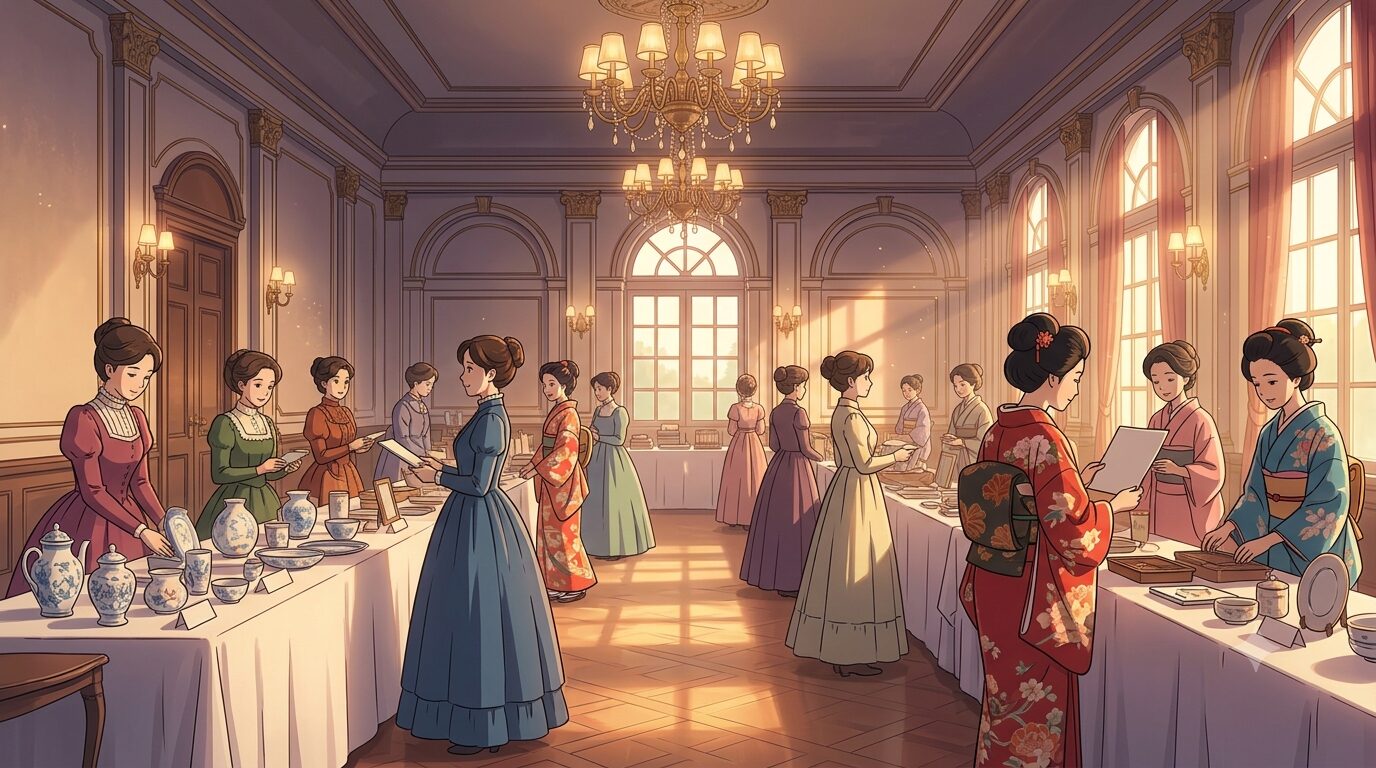
The History and Details: A Historic Moment at the Rokumeikan in 1884
Every year on June 12th, Japan celebrates “Bazaar Memorial Day” (Baza Kinenbi). This day commemorates the very first large-scale charity bazaar (Ladies’ Charity Market) held in Japan on June 12, 1884, at the famous Rokumeikan in Tokyo, a grand symbol of Japan’s modernization.
During that time, Japan was in the midst of “Bunmei Kaika” (Civilization and Enlightenment), actively adopting Western culture and systems. The Meiji government, aiming to revise unequal treaties with Western powers, built the Rokumeikan as a lavish guest house to entertain foreign dignitaries and prove that Japan was a modern, equal nation. In this glamorous social hub, events were planned not just for dancing, but for genuine social contribution.
This unprecedented bazaar was led by pioneering Meiji women, most notably Sutematsu Oyama. Sutematsu was one of the first Japanese women to study abroad, graduating from Vassar College in the United States. To plant the Western concept of philanthropy and “noblesse oblige” in Japan, she and other aristocratic women collected donated artworks and handicrafts to sell. The proceeds were dedicated to funding a nursing school for the Tokyo Charity Hospital. Held over three days, the market was a massive success, raising about 8,000 yen—equivalent to tens of millions of yen in today’s currency.
Deep Connection to Japanese Culture: The Fusion of Western “Charity” and Japanese “Yui”
The crucial takeaway from this historical event is how the Western concept of “charity” seamlessly blended with Japan’s ancient cultural practices.
Since ancient times, Japan has had a deeply rooted spirit of mutual aid called “Yui” or “Ko,” where local communities helped each other with agricultural work, weddings, and funerals. However, this was typically limited to small, close-knit communities where everyone knew each other. The charity bazaar at the Rokumeikan introduced a new concept to the Japanese people: “public welfare” and helping unknown others across society.
Today, bazaars in Japan have evolved uniquely. They are essential events for community building, often held as “PTA bazaars” at kindergartens and elementary schools, or as community markets at local shrines and public halls. The modern sight of people bringing handmade goods and unused household items to raise funds for school equipment or local welfare is the direct result of the seeds planted at the Rokumeikan in 1884, beautifully fused with Japan’s traditional culture of compassion and hospitality (Omotenashi).
To Our Readers
From the day elegant women in Western dresses stood up for public welfare over 130 years ago, to the familiar school events of today, the history of Japanese bazaars is a continuous thread of community support. Are there special charity events or traditional markets in your country or region that support the local community? If you have the chance to visit Japan, would you like to explore a local neighborhood bazaar or a handmade craft market? Please share your thoughts and experiences in the comments below!
Reference Links
- What’s Today’s Special Day Series (Explore more historical days)
- National Diet Library Portraits of Modern Japanese Historical Figures: Oyama Sutematsu
6月12日はバザー記念日:明治の華「鹿鳴館」から始まった日本の新しい助け合い文化
バザー記念日の歴史と詳細:1884年、鹿鳴館での歴史的瞬間
毎年6月12日は、日本において「バザー記念日」として制定されています。この記念日は、1884年(明治17年)のこの日、日本の近代化の象徴である東京の「鹿鳴館(ろくめいかん)」にて、日本初となる大規模なバザー(婦人慈善市)が開催されたことに由来しています。
当時の日本は、西洋の文化や制度を積極的に取り入れる「文明開化」の真っ只中にありました。不平等条約の改正を目指す明治政府は、日本が西洋諸国と対等な近代国家であることをアピールするため、外国の要人をもてなす迎賓館として鹿鳴館を建設しました。この華やかな社交場で、単なる舞踏会だけでなく、社会貢献を目的としたイベントが企画されたのです。
この日本初のバザーを主導したのは、大山捨松(おおやますてまつ)をはじめとする明治の先駆的な女性たちです。捨松は、日本初の女子留学生の一人としてアメリカのヴァッサー大学を卒業した教養豊かな女性でした。彼女たちは、西洋の「ノブレス・オブリージュ(高貴なる者の義務)」やボランティアの精神を日本に根付かせるため、有志から寄付された美術品や手芸品を販売し、その収益を「東京慈恵医院(現在の東京慈恵会医科大学附属病院の前身)」の看護婦教育施設設立のための資金に充てました。3日間にわたって開催されたこの慈善市は、当時の金額で約8,000円(現在の価値で数千万円相当)という莫大な収益を上げ、大成功を収めました。
日本文化との深いつながり:西洋の「慈善」と日本の「結(ゆい)」の融合
この歴史的出来事から読み解くべき重要なポイントは、西洋から持ち込まれた「チャリティー(慈善)」という概念が、日本古来の文化とどのように融合していったかという点です。
日本には古くから、農作業や冠婚葬祭において地域社会で互いに助け合う「結(ゆい)」や「講(こう)」といった相互扶助の精神が根付いていました。しかし、これらはあくまで「顔の見える狭い共同体の中での助け合い」でした。鹿鳴館で開催されたバザーは、見知らぬ他者や社会全体に対する「公共の福祉」という、新しい形の助け合いの概念を日本人に提示したのです。
現在、日本のバザーは独自の進化を遂げています。幼稚園や小学校の「PTAバザー」、地域の神社や公民館で開催される「フリーマーケット」や「お祭り」の一部として、日本のコミュニティ形成において欠かせない行事となっています。手作りの品々や家庭の不用品を持ち寄り、収益を学校の備品購入や地域の福祉に役立てるという現代の風景は、1884年に鹿鳴館で蒔かれた種が、日本の「思いやりの文化」と見事に融合し、全国に花開いた結果と言えます。
読者の皆様へ
130年以上前、ドレスに身を包んだ日本の女性たちが社会のために立ち上がった日から、現在の身近な学校行事まで、日本のバザーの歴史はつながっています。あなたの住む国や地域では、コミュニティを支えるための特別なチャリティーイベントや伝統的な市場はありますか?もし日本を訪れる機会があれば、地域で開催されているローカルなバザーや手作り市に足を運んでみたいと思いますか?ぜひ、あなたの考えや体験をコメントで教えてください。


コメント