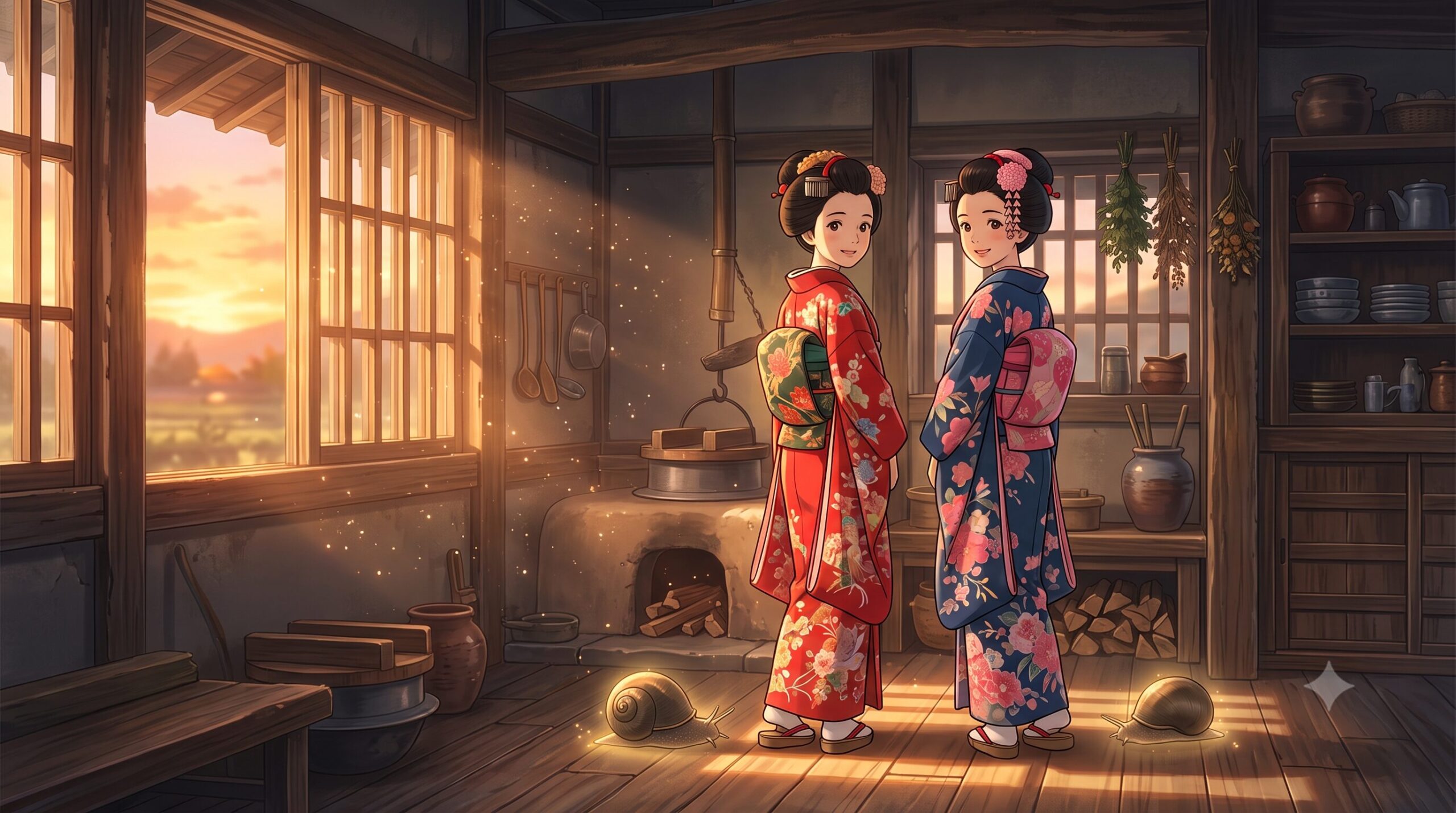
Surrounded by lush green mountains and crystal-clear rivers, an old Japanese village holds a mysterious legend passed down through generations. It is the story of “The Tanishi (River Snail) Sisters.” Unlike typical Western fairy tales, this story deeply reflects traditional Japanese values, views on nature, and spiritual faith, offering a profound moral lesson that resonates with us even today. Let’s travel back in time to the original landscapes of Japan and unravel this beautiful yet bizarre tale.
① The Story: The Strange Fate of the Tanishi Sisters
Once upon a time, in a certain village, there lived two hardworking brothers who got along exceedingly well. From morning till night, they plowed the fields and chopped wood in the mountains, living earnestly without ever uttering a word of complaint.
One evening at dusk, as the younger brother went to the river to draw water, he found two uniquely beautiful, glowing “Tanishi” (river snails) in the clear shallows. Their shells glittered like jewels reflecting the setting sun, and he was completely captivated. “These are so rare. I must show them to my brother,” he thought. He carefully scooped them up with both hands, brought them home, and decided to keep them safely in a water jug.
The mysterious events began the very next day. When the younger brother returned from the fields a little earlier than usual to prepare dinner, he saw a thin trail of smoke rising from their chimney. Wondering if he had left a fire unattended, he rushed to open the door, only to be greeted by the aroma of freshly cooked rice and a delicious soup simmering in the hearth pot. He had no idea who had cooked it. Though a bit spooked, the exact same thing happened the following day—a perfect dinner was waiting for them when they returned home.
The younger brother confided in the older brother, “Brother, I think something magical has taken up residence in our house.”
On the evening of the third day, to uncover the truth, the brothers finished their farm work much earlier than usual and quietly peeked through the window of their house. What they saw was unbelievable. Two breathtakingly beautiful young women, whom they had never seen before, were skillfully chopping vegetables and tending the hearth fire to prepare dinner.
Astonished, the brothers burst into the house. “Who on earth are you? And why are you cooking meals in our home?”
Startled by the brothers’ sudden appearance, the girls shrank back, but eventually, as if resigning to their fate, began to speak with tears in their eyes. “Truth be told, we are those very ‘Tanishi’ you picked up from the river three days ago.”
According to the girls, they were originally daughters of a wealthy village headman from the village across the river. However, having been spoiled by their parents, they grew incredibly selfish, refusing to help with any household chores and spending all their days playing. One day, unable to watch them any longer, their mother scolded them severely: “If you continue to be so lazy and refuse to work, you will be cursed and turned into river snails!”
But the rebellious sisters, showing no remorse, talked back, “Hmph, whatever. We don’t care if we become snails. It’s better than having to work.”
The moment those words left their lips, something terrifying happened. Their bodies rapidly shrank, became covered in cold shells, and they were literally transformed into river snails. The girls cried and screamed, but it was too late. They were washed away by the river, eventually to be picked up by the younger brother.
They explained, “Only for a brief moment at dusk can we return to our human forms. To repay your kindness for saving us, and as an atonement for our past selfishness, we wanted to at least prepare your meals.”
Hearing this story, the brothers were deeply moved. They felt immense pity for the poor sisters who deeply regretted their mistakes, and strongly wished to restore them to their original forms. From that day on, the brothers visited the shrine of Ebisu (the god of fishing, commerce, and good fortune) every single day. Forgetting their own needs, they fervently prayed, “Please, restore these sisters completely to their human forms.”
Several days later, the smiling deity Ebisu appeared to the brothers in a dream.
“In recognition of your pure hearts that care for others, and your fervent prayers, I shall lift the sisters’ curse and return them to human form.”
When the brothers awoke the next morning, they found the sisters fully restored to their human forms, smiling gently in the morning sun. The sisters wept tears of joy and expressed their deepest gratitude. “Thanks to your kindness, we have been given a second chance at life.”
The sisters then safely returned to their home village. It is said that they completely changed their ways, working incredibly hard and becoming devoted daughters to their parents.
② Analyzing the Folktale: The Unexpected Ending of “Unconditional Love”
Upon reading this story, many might be surprised by its “unexpected ending.” In the standard formula of Western fairy tales like “Beauty and the Beast” or “Cinderella,” the kind-hearted brothers who broke the curse and the beautifully reborn sisters would naturally fall in love, marry, and “live happily ever after.”
However, in “The Tanishi Sisters,” the sisters simply thank the brothers profusely and promptly return to their parents’ home. The brothers, too, send them off without asking for anything in return. Here lies the profound depth of this folktale. The brothers’ prayers were not a selfish desire to “gain beautiful wives,” but stemmed from pure, unconditional love and compassion—a genuine wish to save pitiful souls who regretted their mistakes. This illustrates a moral view that goodwill offered without expecting a reward is the most noble of all.
③ Connecting to Japanese Culture: The Power of “Kotodama” and the Value of Labor
There are two essential elements of Japanese culture that can be deciphered from this story. The first is the concept of “Kotodama” (the spirit of words).
In Japan, since ancient times, there has been a belief that words possess spiritual power, and what is spoken aloud will directly influence reality. The fact that the curse was triggered the moment the sisters casually said, “We don’t care if we become snails,” perfectly symbolizes the terrifying power of Kotodama. This story carries a strong warning against using careless, especially negative, words.
The second is the “Value of Labor.”
In Japanese village societies, which developed primarily around agriculture, working together as a community was an absolute necessity for survival. Therefore, “laziness” was not merely a personal flaw, but often seen as a sin against the community. The plot where the selfish, lazy sisters lose their humanity, and regain it only to become hardworking individuals, vividly represents traditional Japanese views on diligence and hard work.
④ What Would You Do?
“The Tanishi Sisters” teaches us about the power of words and the beauty of kindness without expectation of reward. How did you feel after reading this story?
If you were in the brothers’ shoes, could you pray to the gods simply to send these magical, beautiful beings who cook you dinner every night back to their world, asking for nothing in return? Or would you feel a little reluctant to let them go? Also, do you find yourself unintentionally uttering negative “Kotodama” in your daily life?
We invite you to reflect on your own mindset through this story. Please let us know your thoughts and what you would do in the comments section below!
Reference URL: Manga Nippon Mukashibanashi Database – The Tanishi Sisters
Enjoy more fascinating Japanese folktales in this category.
日本の不思議な昔話「たにしの姉妹」:言葉の魔法と無償の愛
緑豊かな山々と清らかな川に囲まれた日本の古い村に、ある不思議な伝説が語り継がれています。それは「たにしの姉妹」と呼ばれる物語です。西洋の童話とは一味違う、日本の伝統的な価値観や自然観、そして神仏への信仰が色濃く反映されたこの物語は、現代を生きる私たちの心にも深く響く教訓を持っています。さあ、日本の原風景へタイムスリップして、この美しくも奇妙な物語を紐解いてみましょう。
① 物語:たにしの姉妹の数奇な運命
むかしむかし、ある村に、大変仲の良い、働き者の兄弟が住んでいました。彼らは朝から晩まで畑を耕し、山の木を切り、決して文句を言うことなく真面目に暮らしていました。
ある日の夕暮れ時、弟が川へ水を汲みに行くと、浅瀬の澄んだ水の中に、今までに見たこともないほど美しく光り輝く二つの「たにし(巻貝)」を見つけました。その殻は夕日を反射して宝石のように輝いており、弟はすっかり心を奪われました。「これは珍しい。兄さんにも見せてやろう」と、弟はその二つのたにしを丁寧に両手で包み込み、家に持ち帰って水瓶の中で大切に飼うことにしました。
不思議な出来事が起こり始めたのは、その次の日のことです。弟が夕飯の支度をするために、いつもより少し早く畑から帰ってくると、なんと家の煙突から細く煙が立ち上っています。「火の不始末でもしただろうか」と慌てて戸を開けると、土間にはふっくらと炊き上がったご飯の香りが漂い、囲炉裏の鍋では美味しそうな汁物が煮立っていました。誰が作ったのか全く見当がつきません。薄気味悪く思った弟でしたが、翌日も同じように、家に帰るとすでに完璧な夕食が用意されていたのです。
「兄さん、我が家には何か不思議なものが住み着いているようです」と、弟は事の次第を兄に打ち明けました。
三日目の夕暮れ、兄弟は真実を突き止めるべく、いつもよりずっと早く農作業を切り上げ、足音を忍ばせて家の窓から中を覗き込みました。すると、そこには信じられない光景が広がっていました。見ず知らずの、それも目を見張るほど美しい二人の娘が、手際よく包丁を動かし、かまどに薪をくべて夕飯の支度をしていたのです。
驚いた兄弟は、たまらず家の中に飛び込みました。「お前さんたちは、いったい誰じゃ? なぜ私たちの家で飯を作っているのだ?」
兄弟の問いかけに、二人の娘は驚いて身を縮めましたが、やがて観念したように涙ながらに語り始めました。「実は、私たちは三日前にあなたが川で拾ってくださった、あの『たにし』なのです」
娘たちの話によれば、彼女たちは元々、川の向こうの里に住む裕福な庄屋の娘でした。しかし、親に甘やかされて育ったため、成長するにつれて非常にわがままになり、家の手伝いも一切せずに毎日遊んでばかりいました。ある日、見かねた母親が「そんなに働かないで怠けてばかりいると、今にバチが当たって『たにし』にでもなってしまいますよ!」と厳しく叱りつけました。
ところが、反抗期の姉妹は悪びれもせず、「ふん、なんの。たにしになってもええわいな。働かなくて済むならその方がマシよ」と口答えをしてしまったのです。
その言葉を口にした途端、恐ろしいことが起きました。二人の体はみるみるうちに縮み、冷たい殻に覆われ、本当にたにしに姿を変えられてしまったのです。娘たちは泣き叫びましたが後の祭りでした。彼女たちは川に流され、やがて弟に拾われたのでした。
「夕暮れのわずかな時間だけ、こうして人間の姿に戻ることができるのです。拾っていただいた恩返しと、過去のわがままへの罪滅ぼしのために、せめてお食事の用意をさせていただいておりました」
その話を聞いた兄弟は、すっかり心を打たれました。自らの過ちを深く悔いている哀れな姉妹を、なんとか元の姿に戻してやりたいと強く願ったのです。それからというもの、兄弟は毎日欠かさず、近くの神社に祀られている恵比寿様(漁業や商売、幸運の神様)の祠へ通い、「どうかあの姉妹を、完全に人間の姿に戻してやってください」と、自分たちのことはそっちのけで熱心に祈り続けました。
幾日か経ったある夜、兄弟の夢枕にふくよかな笑顔を浮かべた恵比寿様が立ちました。
「お前たちの他者を思いやる純粋な心と、熱心な祈りに免じて、あの姉妹の呪いを解き、人間の姿に戻してやろう」
翌朝、兄弟が目を覚ますと、そこにはすっかり人間の姿に戻り、朝日に照らされて微笑む姉妹の姿がありました。姉妹は涙を流して兄弟に深く感謝しました。「あなた方の優しさのおかげで、私たちはもう一度やり直すことができます」
そして姉妹は、無事に故郷の里へと帰っていきました。その後、心を入れ替えた彼女たちは、見違えるように真面目に働き、親孝行をするようになったということです。
② 昔話を考察する:予想を裏切る「無償の愛」の結末
この物語を読んで、多くの人が一つの「意外な結末」に驚くのではないでしょうか。西洋の童話、例えば「美女と野獣」や「シンデレラ」などのロマンチックな物語の定石であれば、呪いを解いてくれた心優しい兄弟と、美しく生まれ変わった姉妹は、そのまま恋に落ちて結婚し、「いつまでも幸せに暮らしました」となるのが一般的です。
しかし、この「たにしの姉妹」では、姉妹は兄弟に丁重にお礼を言った後、あっさりと自分の実家へ帰ってしまいます。兄弟もまた、見返りを求めることなく彼女たちを送り出します。ここに、この昔話の持つ奥深さがあります。兄弟の祈りは「美しい嫁を手に入れるため」の利己的なものではなく、純粋に「過ちを悔いている哀れな命を救いたい」という無償の愛(慈悲)から出たものでした。見返りを求めない善意こそが、最も尊いという道徳観がここに示されています。
③ 日本文化との関連:言霊(ことだま)の信仰と労働の尊さ
この物語から読み解ける日本文化の重要な要素が二つあります。一つは「言霊(ことだま)」という概念です。
日本では古来より、発した言葉には霊的な力が宿り、口に出した言葉がそのまま現実に影響を与えるという信仰がありました。姉妹が「たにしになってもいい」と口走った瞬間に呪いが発動したのは、まさに言霊の恐ろしさを象徴しています。不用意な言葉、特にネガティブな言葉を発することへの強い戒めが、この物語には込められているのです。
二つ目は「労働の尊さ」です。
農業を中心として発展してきた日本の村落社会では、共同体全員で協力して働くことが生きていくための絶対条件でした。そのため、「怠惰」は単なる個人の欠点ではなく、共同体に対する罪悪とみなされることがありました。わがままで働かない姉妹が人としての姿を失い、改心して働き者になったことで真の人間性を取り戻すという筋書きは、日本の伝統的な勤労観を如実に表しています。
④ あなたならどうしますか?
言葉の持つ力、そして見返りを求めない優しさを教えてくれる「たにしの姉妹」。皆さんはこの物語を読んで、どう感じましたか?
もしあなたが兄弟の立場だったら、毎日の夕食を作ってくれる美しい魔法の存在を、ただ見返りもなく元の世界に帰すために神様に祈ることができますか? それとも、少し惜しい気持ちになってしまうでしょうか。また、日常でついネガティブな「言霊」を放ってしまってはいませんか?
ぜひ、この物語を通じて、あなた自身の心の在り方を見つめ直してみてください。あなたの感想や、あなたならどう行動するかを、ぜひコメント欄で教えてくださいね!
参考URL:まんが日本昔ばなし〜データベース〜 たにしの姉妹
その他の魅力的な日本の昔話はこちらのカテゴリーからお楽しみください。

コメント