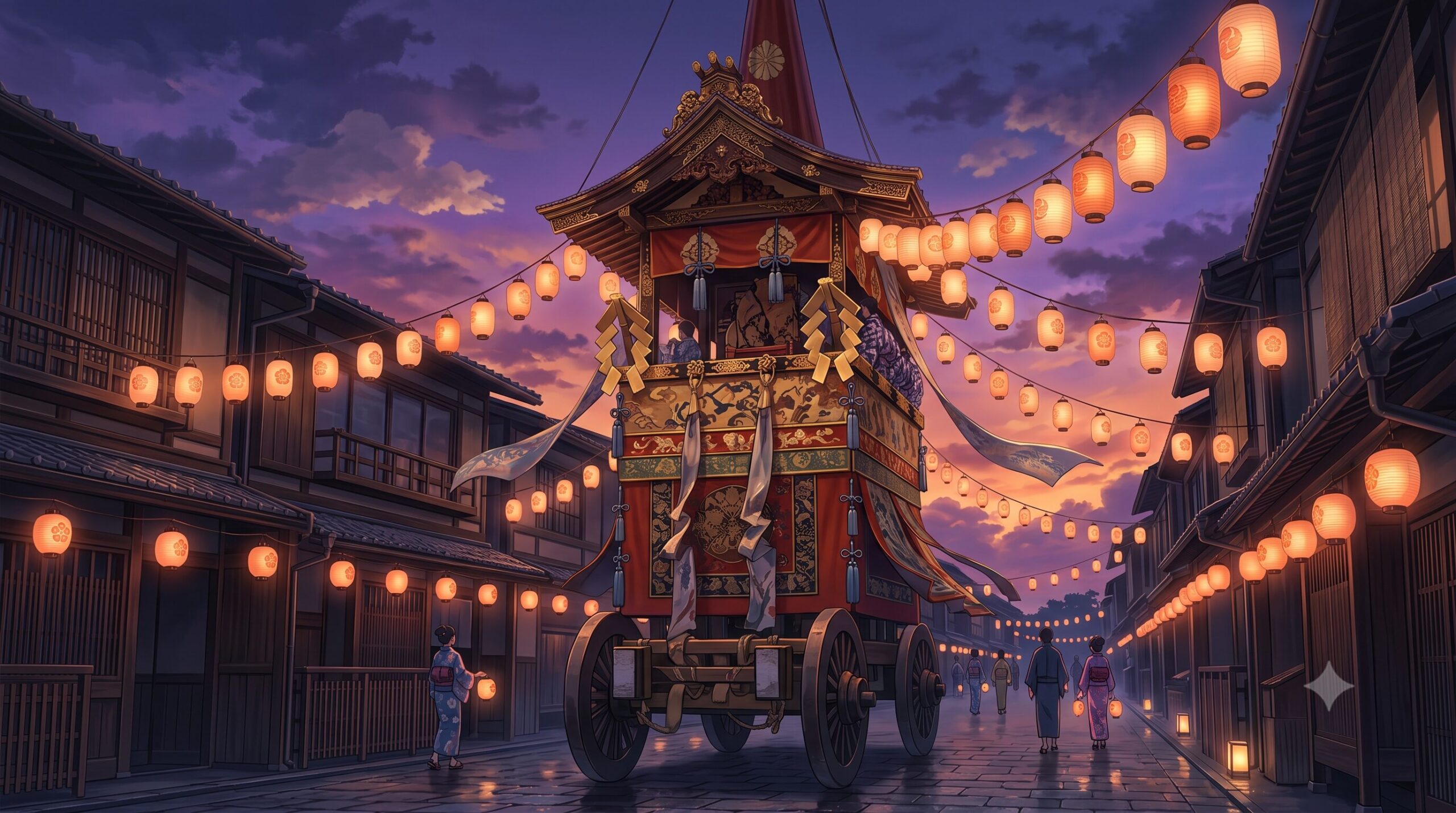
Every July, the ancient capital of Kyoto is enveloped in an atmosphere of enthusiasm and mystique. Massive, gorgeously decorated floats called Yamahoko parade through the streets, while the traditional Gion-bayashi music echoes into the night sky. The Gion Matsuri, one of Japan’s three major festivals, attracts visitors from all over the world. However, it is not merely a spectacular event. Delving into its roots reveals the earnest prayers of the people and the ancient Japanese spirit of confronting the threats of nature.
Today, let’s travel back in time to July 19, 970 (Tenroku 1 on the lunar calendar)—the day the Gion Matsuri was first established as an official state festival (Kansai). Let’s unravel its historical background and the depths of Japanese culture.
The Terror of Plagues and Vengeful Spirits in Heian-kyo
The story begins in the Heian period. Heian-kyo (modern-day Kyoto), the capital of Japan at the time, was a place where brilliant aristocratic culture flourished, yet it suffered from incredibly harsh sanitary conditions. The Kamo River flooded frequently, and Kyoto’s hot, humid summers were the prime season for rampant epidemics such as malaria and dysentery.
People of that era believed these plagues and natural disasters were not medical or meteorological phenomena, but rather the work of Onryo (vengeful spirits)—the grudges of those who had died unjustly. To protect the capital from these invisible terrors, rituals called Goryo-e were held nationwide to pray to the gods and pacify the angry spirits. In 869, 66 halberds representing the number of provinces in Japan at the time were erected, and portable shrines were sent out to pray for the eradication of the disaster. This is widely considered the very beginning of the Gion Matsuri.
The Decision of 970: Elevating the Ritual to a State Festival
Until then, the Goryo-e rituals were held irregularly, only when a plague broke out. However, a major turning point occurred on July 19, 970, during the reign of Emperor En’yu. On this day, it was decreed that the Goryo-e held at Gion-sha (now Yasaka Shrine) would become a Kansai (an official, state-led festival) to be held annually.
With this decision, the Gion Matsuri evolved from a temporary warding-off ritual into a firmly established annual tradition dedicated to praying for the peace of the nation and the health of its people. Without this decree in 970, the unbroken 1,000-year tradition of the Gion Matsuri we know today might not exist.
- The Terror of Plagues and Vengeful Spirits in Heian-kyo
- The Decision of 970: Elevating the Ritual to a State Festival
- Pacifying Spirits and Coexisting: Decoding Japanese Culture Through Gion Matsuri
- How Do You Overcome Difficulties?
- 疫病退散の祈りから世界に誇る祭典へ:970年7月19日、祇園祭の原点
- 怨霊を鎮め、共に生きる:祇園祭から読み解く日本文化の真髄
- あなたなら、困難をどう乗り越えますか?
Pacifying Spirits and Coexisting: Decoding Japanese Culture Through Gion Matsuri
The history of the Gion Matsuri vividly reflects Japan’s unique views on nature and religion. Let’s look at some aspects of Japanese culture that differ slightly from Western perspectives.
The Spirit of “Kegare” (Impurity) and “Harai” (Purification)
Central to Shinto (Japan’s indigenous religion) are the concepts of Kegare and Harai. Illness, death, and disaster are considered Kegare (a state of depleted life force), and the act of cleansing them is Harai. The magnificent Yamahoko floats of the Gion Matsuri are actually not vessels for the gods to ride in. Instead, their vibrant decorations are designed to attract the gods of plague and evil spirits wandering the city, gathering them into the floats to carry them out of the city and purify the streets.
The Power of the Townspeople: Sublimating Fear into Beauty
Another profound characteristic of the Gion Matsuri is the philosophy of not trying to crush terrifying vengeful spirits with force, but rather to please them with “beauty”—such as music and art—to calm their anger and transform them into guardian deities. As time passed into the Muromachi period, the main operators of the festival shifted from the state to Kyoto’s wealthy merchants (the Machishu).
Competing in financial power, they decorated the floats with the finest art gathered from around the world, including Persian carpets and European tapestries. A ritual born from the fear of disease was sublimated by the energetic power of the people into an overwhelming artistic celebration, often called a “moving museum.” This showcases the resilience of the Japanese people: taking difficult situations and turning them into cultural energy.
How Do You Overcome Difficulties?
Since being designated an official festival in 970, the Gion Matsuri has faced numerous crises threatening its existence, including the Onin War and World War II. Yet, it has been revived every time through the passion of the people of Kyoto. Transforming invisible fears into beautiful forms of prayer and deepening community bonds—that is the true power of the Gion Matsuri.
We, living in the modern world, also face various unknown difficulties and unexpected events (what we might call modern plagues). When you face hardships in your life, how do you try to overcome them? Can you, like the Gion Matsuri, transform fear into positive energy or something beautiful? I would love to hear your thoughts.
Reference Links
- Yasaka Shrine Official Website
- Kyoto City Official Travel Guide
- Read more in the “What’s Today’s Special Day?” Series
疫病退散の祈りから世界に誇る祭典へ:970年7月19日、祇園祭の原点
毎年7月、日本の古都・京都は熱狂と神秘の空気に包まれます。巨大で絢爛豪華な山鉾(やまほこ)が街を巡行し、コンチキチンという祇園囃子(ぎおんばやし)の音色が夜空に響き渡る「祇園祭」です。日本三大祭りの一つとして世界中から観光客を集めるこの祭りは、単なる華やかなイベントではありません。そのルーツを探ると、人々の切実な祈りと、自然の脅威に立ち向かう日本古来の精神が見えてきます。
今回は、この祇園祭が初めて国家の公式な祭礼(官祭)として定められた日、970年(天禄元年)7月19日(旧暦)にタイムスリップし、その歴史的背景と日本文化の深層を紐解いていきましょう。
平安京を襲った怨霊と疫病の恐怖
時は平安時代。当時の日本の首都であった平安京(現在の京都)は、華やかな貴族文化が花開く一方で、非常に過酷な衛生環境にありました。鴨川は頻繁に氾濫を起こし、蒸し暑い京都の夏は、マラリアや赤痢といった疫病が蔓延する季節でもあったのです。
当時の人々は、これらの疫病や自然災害を「医学的な現象」ではなく、「非業の死を遂げた者たちの怨念(怨霊)の仕業」であると信じていました。目に見えない恐怖から都を守るため、神仏に祈りを捧げ、怨霊を鎮めるための儀式「御霊会(ごりょうえ)」が国を挙げて行われるようになります。869年には、当時の日本の国の数と同じ66本の矛(ほこ)を立て、神輿を送り出して厄災の除去を祈りました。これが祇園祭の起源とされています。
天禄元年の決断:祇園祭の官祭化
それまでは疫病が流行するたびに不定期に行われていた御霊会ですが、970年の7月19日、円融天皇の時代に大きな転機を迎えます。この日、祇園社(現在の八坂神社)で行われる御霊会を、毎年旧暦の6月14日(後に日付は変遷)に行う「官祭(国家が主導する公式な祭り)」として定めたのです。
これにより、祇園祭は単なる一時的な厄除けの儀式から、国家の安寧と人々の健康を毎年定期的に祈願する、確固たる地位を持った祭礼へと進化しました。この970年の決定がなければ、1000年以上の時を超えて現代に続く祇園祭の伝統は存在しなかったかもしれません。
怨霊を鎮め、共に生きる:祇園祭から読み解く日本文化の真髄
祇園祭の歴史を紐解くと、そこには日本独自の自然観や宗教観が色濃く反映されています。西洋の考え方とは少し異なる、ユニークな日本文化の側面を見ていきましょう。
「穢れ(けがれ)」と「祓い(はらい)」の精神
神道(日本古来の宗教)の中心的な概念に、「穢れ」と「祓い」があります。病気や死、災厄は「穢れ(生命力が枯渇した状態)」であり、それを清める行動が「祓い」です。祇園祭の山鉾は、実は神様が乗るものではなく、街中に漂う疫病神や悪霊(穢れ)をその華やかな装飾で惹きつけ、山鉾に集めて街から外へ持ち出し、清める(祓う)ための巨大な装置なのです。
恐れを美しさに昇華する町衆の力
祇園祭のもう一つの大きな特徴は、怨霊という「恐ろしいもの」を武力でねじ伏せるのではなく、音楽や美術といった「美しさ」で喜ばせ、怒りを鎮めて守護神へと変えようとする思想です。さらに時代が下り室町時代になると、祭りの主役は国家から、京都の裕福な商人たち(町衆)へと移り変わります。
彼らは財力を競い合うように山鉾をペルシャの絨毯やヨーロッパのゴブラン織りなど、世界中から集めた最高級の美術品で飾り立てました。疫病への恐怖から始まった儀式は、人々の力強いエネルギーによって、「動く美術館」と呼ばれるほどの圧倒的な芸術的祭典へと昇華されたのです。困難な状況にあっても、それを文化的なエネルギーに変えていく日本人のたくましさがここにあります。
あなたなら、困難をどう乗り越えますか?
970年に公式な祭りとして定められて以来、応仁の乱や第二次世界大戦など、幾度もの存続の危機に直面しながらも、祇園祭は京都の人々の熱意によってその都度復活を遂げてきました。見えない恐怖を美しい祈りの形に変え、コミュニティの絆を深める。それが祇園祭の真の力です。
現代を生きる私たちもまた、様々な未知の困難や予期せぬ出来事(現代の疫病とも言えるもの)に直面します。あなたは人生の困難に直面したとき、それをどのように乗り越えようとしますか? 祇園祭のように、恐れを前向きなエネルギーや美しいものへと変えることはできるでしょうか。ぜひ、あなたの考えを聞かせてください。
コメント