- What is Boshu? The Turning Point of the Season Told by the 24 Solar Terms
- Tsuyu (The Rainy Season) and Rice Planting: A Dialogue with “Water” Shaping Japanese Spirituality
- Listening to the Sound of Rain and Admiring the Changing Seasons
- How Will You Spend This Shift in the Seasons?
- 芒種とは何か?二十四節気が告げる季節の転換点
- 梅雨と田植え:日本の精神性を形作る「水」との対話
- 雨音に耳を澄まし、季節の移ろいを愛でる
- あなたなら、この季節の変わり目をどう過ごしますか?
What is Boshu? The Turning Point of the Season Told by the 24 Solar Terms
In Japan, there is an ancient calendar system called the “24 Solar Terms” (Niju-shi Sekki), which divides the year into 24 distinct seasons. June 5th marks the 9th term, known as “Boshu” (芒種). The kanji character “Bo” (芒 – also read as ‘nogi’) refers to the needle-like bristles or awns found on the tips of grains like rice and wheat. Therefore, Boshu translates to “the time for sowing the seeds of grain with awns.”
While modern agricultural techniques have moved the rice-planting season earlier, in ancient Japan, Boshu signaled the true beginning of full-scale rice planting. It is an incredibly energetic season when the lives that survived the harsh winter and sprouted in the spring begin to grow vigorously under the early summer sun and water.
Furthermore, when we look at the “72 Microclimates” (Shichijuni-ko), which subdivide the Boshu period into three smaller phases, we can vividly grasp the delicate changes in Japan’s nature:
- Kamakiri shouzu (Praying mantises hatch): The time when praying mantis eggs, laid in the autumn, finally hatch.
- Kusaretaru kusa hotaru to naru (Rotten grass becomes fireflies): The magical time when fireflies begin to dance, emitting their ethereal light from the waterside grasses.
- Ume no mi kibamu (Plums turn yellow): The time when green Japanese plums (ume) turn yellow, signaling they are ready for harvest.
Tsuyu (The Rainy Season) and Rice Planting: A Dialogue with “Water” Shaping Japanese Spirituality
Around the time of Boshu, most of the Japanese archipelago enters the rainy season known as “Tsuyu” (梅雨). While days of continuous rain might feel gloomy to some, deeply decoding Japanese culture and history reveals just how crucial this rain is.
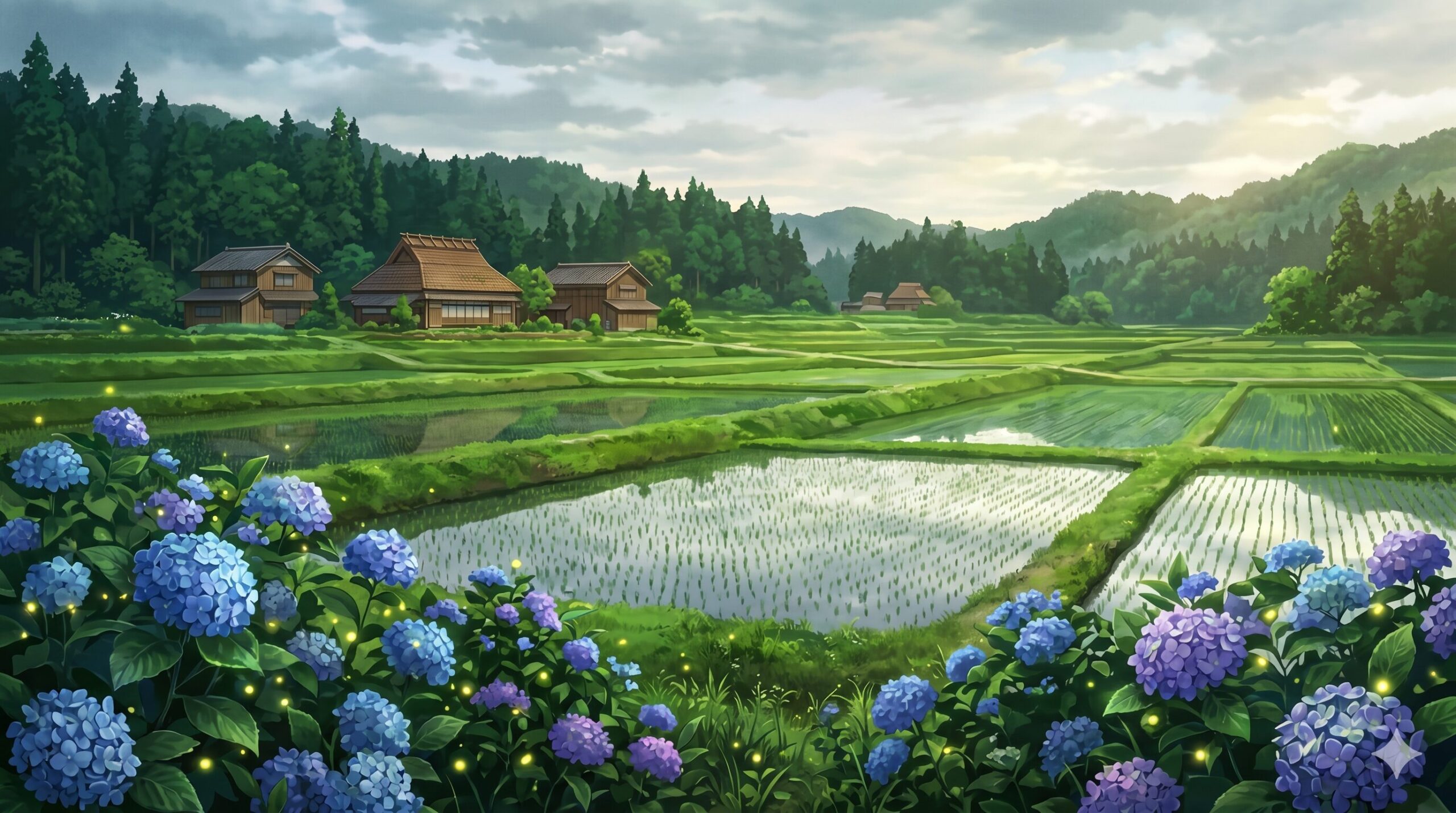
Japan has long been called “Mizuho no Kuni” (The Land of Abundant Rice Ears). For the Japanese, who have built a society centered around rice farming and rely on rice as a staple food, the rain that falls during the planting season is truly a “blessed rain” (megumi no ame). The sight of rice paddies filled with water, where lush, green seedlings are carefully planted, is the primeval landscape etched into the deepest parts of the Japanese soul.
During this period, shrines across Japan hold a Shinto ritual called “Otaue-sai” (Rice Planting Festival). It is a ceremony where people dressed in traditional garments plant rice while praying to the gods for a bountiful harvest. This is not merely an agricultural task; it is a dialogue with the gods of nature (the eight million gods) and an expression of deep gratitude for nature’s blessings. At the foundation of Japanese culture flows the philosophy of coexisting with and leaning into the cycles of nature, rather than attempting to dominate it.
Listening to the Sound of Rain and Admiring the Changing Seasons
From the day of Boshu, we can learn the “observational eye” that never misses the subtle changes in nature, and the “aesthetic sense” that finds beauty in all phenomena.
Hydrangeas (ajisai) blooming even more vibrantly in the wetness, countless ripples drawn on the surface of the water, and the gentle light of fireflies illuminating the dark night. These are all ephemeral, poetic beauties that can only be experienced during the transition from Boshu to the rainy season. Since ancient times, Japanese people have found beauty in this moisture-laden air through traditional waka poetry, haiku, and paintings.
How Will You Spend This Shift in the Seasons?
Boshu is when the blessed rain nourishes the earth and new life takes root strongly. During this time, Japan transforms into a special space where vitality and tranquility beautifully intersect.
After reading this article, how do you feel about the transition of nature? What kind of traditions or landscapes are seen in your country or region during the changing of seasons? If you ever visit Japan during this time, try walking through a quiet temple garden or a lush countryside landscape while listening to the sound of the rain. You are sure to encounter a special kind of Japanese beauty that only a rainy day can offer. Please share your thoughts and experiences with us!
Related Links
- For Japanese calendar and astronomical data: National Astronomical Observatory of Japan (NAOJ) (External Link)
- Explore more Japanese special days and culture: What’s Today’s Special Day Series (Internal Link)
6月5日「芒種(ぼうしゅ)」:命を育む恵みの雨と、日本の原風景
芒種とは何か?二十四節気が告げる季節の転換点
日本には、一年を24の季節に分ける「二十四節気(にじゅうしせっき)」という古くからの暦が存在します。6月5日は、その9番目の節気である「芒種(ぼうしゅ)」にあたります。「芒(のぎ)」とは、稲や麦などの穀物の穂先にある針のような毛のこと。つまり芒種とは、「芒のある穀物の種をまく時期」を意味しています。
現代の農業技術では田植えの時期は早まっていますが、古来の日本では、この芒種の時期こそが本格的な田植えの幕開けでした。厳しい冬を越え、春に芽吹いた命が、初夏の太陽と水を受けて力強く成長を始める、非常にエネルギーに満ちた季節なのです。
また、芒種の期間をさらに3つに分けた「七十二候(しちじゅうにこう)」を見ると、日本の自然の繊細な変化が手に取るようにわかります。
- 蟷螂生(かまきりしょうず):秋に産み付けられたカマキリの卵が孵化する時期。
- 腐草為蛍(くされたるくさほたるとなる):水辺の草むらから、幻想的な光を放つ蛍が舞い始める時期。
- 梅子黄(うめのみきばむ):青かった梅の実が黄色く色づき、収穫の時を迎える時期。
梅雨と田植え:日本の精神性を形作る「水」との対話
芒種を迎える頃、日本列島の大部分は「梅雨(つゆ)」と呼ばれる雨季に入ります。連日降り続く雨は、時には鬱陶しく感じられるかもしれませんが、日本の文化や歴史を深く読み解くと、この雨がいかに重要であるかがわかります。
日本は「瑞穂の国(みずほのくに)」と呼ばれてきました。これは「みずみずしい稲の穂が豊かに実る国」という意味です。米を主食とし、稲作を中心とした社会を築いてきた日本人にとって、田植えの時期に降る梅雨の雨は、まさに「恵みの雨」です。水田にたっぷりと水が張られ、そこに青々とした早苗が植えられる風景は、日本人の心の奥底にある原風景と言えるでしょう。
この時期、日本各地の神社では「御田植祭(おたうえさい)」という神事が行われます。神様に豊作を祈願し、伝統的な衣装を身にまとった人々が田植えを行う儀式です。これは単なる農業の作業ではなく、自然界の神々(八百万の神)との対話であり、自然の恵みに対する深い感謝の表現です。日本文化の根底には、自然を支配するのではなく、自然のサイクルに寄り添い、共に生きるという哲学が流れています。
雨音に耳を澄まし、季節の移ろいを愛でる
私たちは、この芒種という日から、自然の繊細な変化を見逃さない「観察眼」と、あらゆる事象に美しさを見出す「美意識」を学ぶことができます。
雨に濡れて一層鮮やかに咲き誇る紫陽花(あじさい)、水面に描かれる無数の波紋、そして夜の闇を優しく照らす蛍の光。これらはすべて、芒種から梅雨にかけての時期にしか味わえない、刹那的で詩的な美しさです。日本人は古くから、和歌や俳句、絵画などを通じて、この湿り気を帯びた空気の中に美を見出してきました。
あなたなら、この季節の変わり目をどう過ごしますか?
恵みの雨が大地を潤し、新しい命が力強く根を張る芒種。この時期の日本は、生命力と静寂が美しく交差する特別な空間へと変化します。
この記事を読んで、あなたは自然の移ろいをどのように感じましたか?あなたの国や地域では、季節の変わり目にどのような伝統や風景が見られますか?もしあなたがこの時期に日本を訪れるなら、雨音に耳を澄ませながら、静かな寺院の庭園や青々とした田園風景を歩いてみてください。きっと、雨の日ならではの特別な日本の美しさに出会えるはずです。ぜひ、あなたの考えや体験をシェアしてください。
関連リンク
- 日本の暦や天文学的なデータについて:国立天文台 暦計算室(外部リンク)
- その他の日本の記念日や文化について:What’s Today’s Special Day Series(内部リンク)

コメント