The Story of the Shrimp
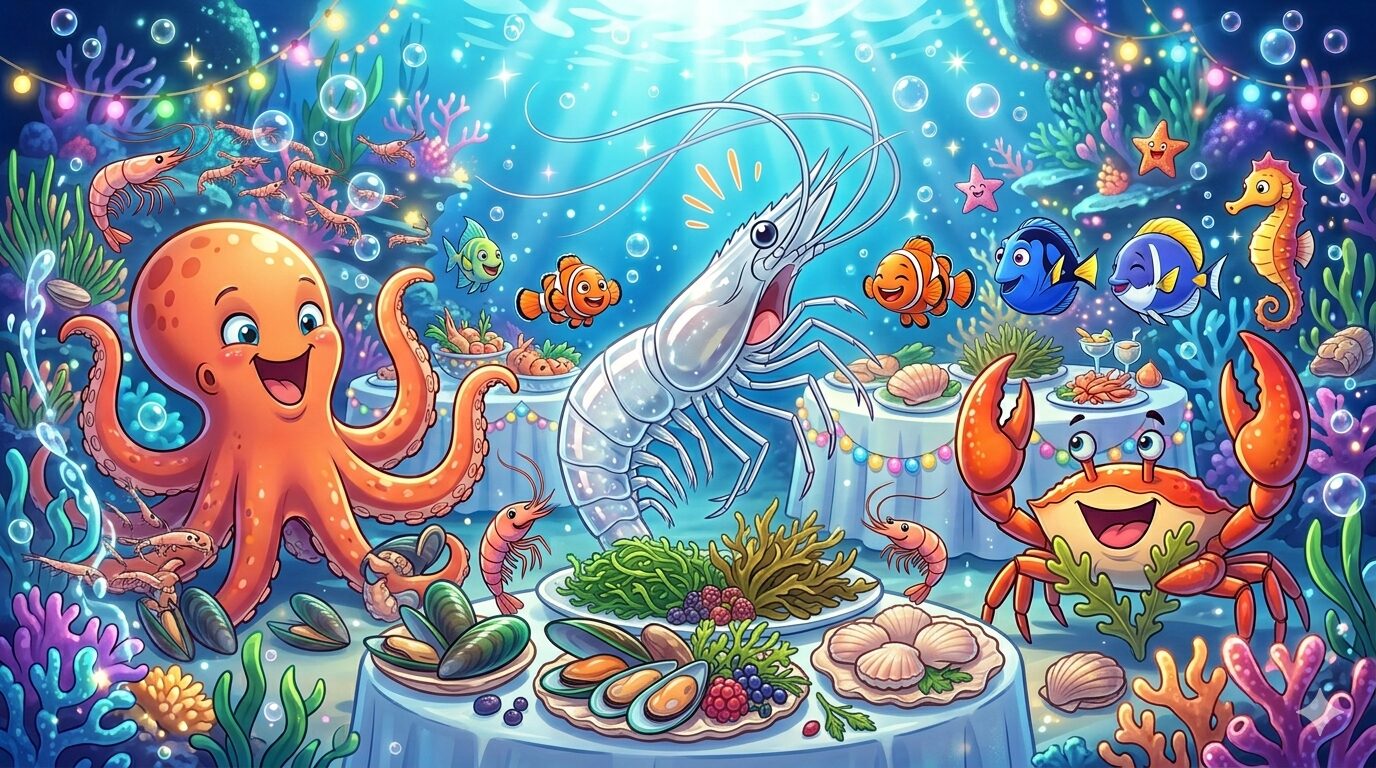
Long, long ago, in the depths of a beautifully clear blue sea, many sea creatures such as fish, shells, crabs, and octopuses lived peacefully together. Among them lived a single shrimp. The shrimp of that time looked completely different from the ones we see today; its back was perfectly straight, and its body was a beautiful, translucent silver color.
The shrimp was extremely proud of its straight, beautiful posture. “There is no creature in the sea with a posture as good and beautiful as mine,” it would always boast. Pushing out its chest, it would swim gracefully among the seaweed, constantly looking down on the other creatures. Whenever it saw the rounded octopus or the crab that could only walk sideways, it would sneer, “How clumsy. Can’t you live straight like me?”
One day, the God of the Sea gathered all the living creatures and held a grand banquet. The coral palace was lined with a feast, and a lively party unfolded with sea breams and flounders dancing. All the sea creatures forgot their daily struggles and made merry, drinking and singing. However, the shrimp was different. It positioned itself in the center of the banquet, thinking only of showing off its beautiful figure.
As the banquet reached its peak, the sea creatures began to perform their special skills as entertainment. The octopus spewed ink to create black clouds, and the crab clicked its claws to create an interesting rhythm. Seeing this, the shrimp could not hold back any longer. “Stop such unsightly performances! I shall show you the most beautiful dance in the world!” it declared, stepping forward.
The shrimp arched its proud, straight body deeply and began to dance, leaping around. However, being so intoxicated by its own reflection, it failed to notice a large scallop shell lying at its feet. The shrimp tripped violently over the shell and took a spectacular fall. The way it fell was so comical that a huge roar of laughter erupted from the previously quiet banquet hall.
The octopus, the crab, the sea bream, and the flounder—everyone pointed at the shrimp and laughed heartily. The highly prideful shrimp felt an unprecedented level of humiliation. Overwhelmed with embarrassment, the shrimp’s entire body flushed a bright red. Then, as if trying to escape the laughter, it shrank its body, bent its back deeply, and hid behind a rock.
Because it bent its back so strongly and felt such deep shame, even after the banquet ended, the shrimp’s body never returned to its straight shape. Its color remained a bright red as well. Since then, as if to never forget the embarrassment of that moment, the shrimp has kept its back bent, and whenever it is surprised, it immediately jumps backward to escape.
A Deep Dive into the Story
This folktale, “Why is the Shrimp’s Back Bent?”, is more than just an origin story explaining the biology of an animal; it contains sharp insights into human psychology and social behavior. At the heart of the story are “excessive pride (arrogance)” and the “downfall” it brings.
The shrimp originally possessed a wonderful appearance. However, instead of using its beauty to elevate itself, it used it as a tool to look down on others and bask in a sense of superiority. It refused to acknowledge the diverse ways of the surrounding creatures (the roundness of the octopus or the sideways walk of the crab), judging the world solely by its own standards. This arrogance eventually backfired in the form of a massive failure in public.
The depiction of the shrimp’s back bending and its body turning red due to the fall and subsequent humiliation at the banquet visualizes the emotions of “regret” and “shame” through physical transformation. This story teaches the harsh reality that trust once lost, and pride damaged by embarrassment, cannot easily be restored. It carries a universal moral lesson: an attitude of overestimating oneself and disrespecting others will eventually end up suffocating oneself (or in this case, bending one’s back).
The Essence of Japanese Culture Within the Folktale
From this story, the importance of “humility,” a traditional Japanese value, can be clearly read. In Japan, there is a proverb: “The bough that bears most, hangs lowest” (実るほど頭を垂れる稲穂かな). Just as an ear of rice bows its head as it grows and bears grain, humans must become more humble as they deepen their knowledge and virtue. The shrimp, which boasted of being straight and held its head high, is portrayed precisely as the antithesis of this Japanese virtue.
In Japanese culture, which values “Wa” (harmony) with one’s surroundings, self-assertion that looks down on others tends to be disliked. The plot where the shrimp explodes with a desire for self-display in a community setting like a banquet, resulting in social embarrassment, functions as a warning to those who disrupt harmony.
However, an incredibly interesting and profound aspect of Japanese culture is how the interpretation of this “shrimp with a bent back” was transformed into something positive over time. In modern Japan, shrimp is an essential lucky food in traditional New Year’s “Osechi” cuisine. The reason is that it contains the wish for longevity, meaning “to live a long life until your back is bent.” The back of the shrimp, bent through failure and humiliation, is likened to the figure of an elderly person worthy of respect, and it is placed at celebratory feasts as a symbol of long life. Here, we can see the rich imagination and positive spirituality of the Japanese people, who accept even negative events and reconstruct their meaning into something auspicious.
What Would You Do?
The shrimp’s failure is by no means someone else’s problem. We all feel proud of our strengths and successes, and sometimes we have a desire for others to acknowledge them. But have you ever let that feeling go too far and ended up looking down on the people around you?
If you were this shrimp, how would you have used your straight body? Could you have enjoyed the banquet together with the other creatures, appreciating their differences? This story is also a mirror for reflecting on our own daily behavior. Please, let us know your thoughts.
Explore more Japanese folktales:
Japanese Folktale Series
Reference:
Wikipedia: Japanese folklore
日本昔話:エビの腰はなぜまがったか
昔ばなしのあらすじ
むかしむかし、はるか昔のことです。青く透き通るような美しい海の底には、魚や貝、カニやタコなど、たくさんの海の生き物たちが平和に暮らしていました。その中に、一匹のエビがいました。当時のエビは、今の姿とは全く異なり、背筋がピンと真っ直ぐに伸びていて、体も透き通るような美しい銀色をしていました。
エビは自分のその真っ直ぐで美しい姿を、とても誇りに思っていました。「海の中で私ほど姿勢が良く、美しい生き物はいない」と、いつも胸を張り、海草の間を優雅に泳ぎ回っては、他の生き物たちを見下していました。丸まっているタコや、横歩きしかできないカニを見ては、「なんと不格好なことだ。私のように真っ直ぐ生きられないのか」と鼻で笑っていたのです。
ある日のこと、海の神様が生き物たちを全て集め、盛大な宴会を開くことになりました。サンゴの宮殿にはご馳走が並び、タイやヒラメの舞い踊りなど、賑やかな宴が繰り広げられました。海の生き物たちは皆、日頃の苦労を忘れて飲めや歌えの大騒ぎです。しかし、エビだけは違いました。彼は宴会の中心に陣取り、自分の美しい姿を自慢することばかり考えていました。
宴もたけなわになった頃、余興として海の生き物たちが次々と得意な芸を披露し始めました。タコは墨を吐いて真っ黒な雲を作り、カニはハサミを鳴らして面白いリズムを刻みました。それを見たエビは、我慢できなくなりました。「そんな見苦しい芸などやめてしまえ!この私が、世界で一番美しい舞を見せてやろう」と進み出たのです。
エビは自慢の真っ直ぐな体を大きく反らせ、飛び跳ねるように踊り始めました。しかし、自分の姿に酔いしれるあまり、足元に転がっていた大きなホタテ貝の殻に気づきませんでした。エビは殻に激しくつまずき、派手に転んでしまいました。その転び方があまりにも滑稽で、静まり返っていた宴会の席から、ドッと大きな笑い声が湧き起こりました。
タコもカニも、タイもヒラメも、皆がエビを指差して大笑いしています。プライドの高いエビは、これまでにないほどの屈辱を感じました。恥ずかしさのあまり、エビの全身はカッと真っ赤に染まりました。そして、みんなの笑い声から逃げるように体を小さく縮こまらせ、腰を深く曲げて石の陰に隠れてしまったのです。
あまりにも強く腰を曲げ、あまりにも強く恥じ入ったため、宴会が終わってからもエビの体は二度と真っ直ぐに戻ることはありませんでした。色も真っ赤なままです。それ以来、エビはあの時の恥ずかしさを忘れまいとするかのように、腰を曲げ、驚くとすぐに後ろへ飛び退いて逃げるようになったのです。
物語の深い考察
この「エビの腰はなぜまがったか」という昔話は、単なる動物の生態の由来を語る物語(由来譚)にとどまらず、人間の心理や社会における振る舞いに対する鋭い洞察を含んでいます。物語の中心にあるのは「過度な自尊心(傲慢さ)」と、それがもたらす「失墜」です。
エビは元々、素晴らしい外見を持っていました。しかし、彼はその美しさを自分自身を高めるためではなく、他者を見下し、優越感に浸るための道具にしてしまいました。周囲の生き物たちの多様なあり方(タコの丸さやカニの横歩き)を認めず、自分独自の基準だけで世界を判断していたのです。この傲慢さが、最終的に公衆の面前での大失敗という形でしっぺ返しを受けます。
宴会での転倒と、それに伴う恥辱によって腰が曲がり、体が赤くなるという描写は、物理的な変化を通して「後悔」と「恥」の感情を視覚化しています。一度失った信用や、恥をかいて傷ついたプライドは、簡単に元には戻らないという厳しい現実を、この物語は教えてくれます。自己を過大評価し、他者を尊重しない態度は、いつか自分自身の首を絞める(この場合は腰を曲げる)結果になるという、普遍的な道徳的教訓が込められています。
昔話から読み解く日本文化の真髄
この物語からは、日本の伝統的な価値観である「謙虚さ」の重要性がはっきりと読み取れます。日本には「実るほど頭を垂れる稲穂かな」ということわざがあります。稲が成長して実をつけると穂先が重くなって下を向くように、人間も学問や徳が深まるほど、逆に謙虚にならなければならないという教えです。真っ直ぐであることを自慢し、頭を高く上げていたエビは、まさにこの日本の美徳の対極に位置する存在として描かれています。
周囲との「和」を重んじる日本文化において、他者を見下す自己主張は嫌悪される傾向にあります。エビが宴会というコミュニティの場において自己顕示欲を爆発させた結果、社会的な恥をかくという筋書きは、調和を乱す者への戒めとして機能しています。
しかし、日本文化の非常に面白く、奥深い点は、この「腰の曲がったエビ」に対する解釈を時代と共にポジティブなものへと転換させていったことです。現代の日本では、お正月のおせち料理にエビは欠かせない縁起物です。その理由は「腰が曲がるまで長生きするように」という長寿の願いが込められているからです。失敗と恥辱によって曲がってしまったエビの腰を、敬うべき老人の姿に見立て、長寿の象徴として祝祭の席に並べる。ここに、マイナスの出来事をも受容し、縁起の良いものへと意味を再構築する日本人の豊かな想像力と、前向きな精神性を見ることができます。
あなたならどうしますか?
エビの失敗は、決して他人事ではありません。私たちは誰しも、自分の長所や成功を誇らしく思い、時にはそれを他人に認めてほしいと願う心を持っています。しかし、その気持ちが行き過ぎて、周囲の人を見下してしまった経験はないでしょうか。
もしあなたがこのエビだったなら、自分の真っ直ぐな体をどのように使ったでしょうか。他の生き物たちと一緒に、その違いを楽しみながら宴会を過ごすことはできたでしょうか。この物語は、自分自身の日常の振る舞いを振り返るための鏡でもあります。ぜひ、あなたの考えを聞かせてください。
Explore more Japanese folktales:
Japanese Folktale Series
Reference:
Wikipedia: 日本の昔話 (Japanese Folktales)
コメント