The Giant of Mount Shodai and the Disappearing Offerings
Mount Shodai, towering in the northwestern part of Kumamoto Prefecture, has long been blessed with lush nature. According to local legends, a massive and powerful “Yama-otoko” (Mountain Man/Giant) lived deep within its forests. One year, food became extremely scarce on the mountain. Starving, the Yama-otoko descended to the village at the foot of the mountain in search of something to eat.
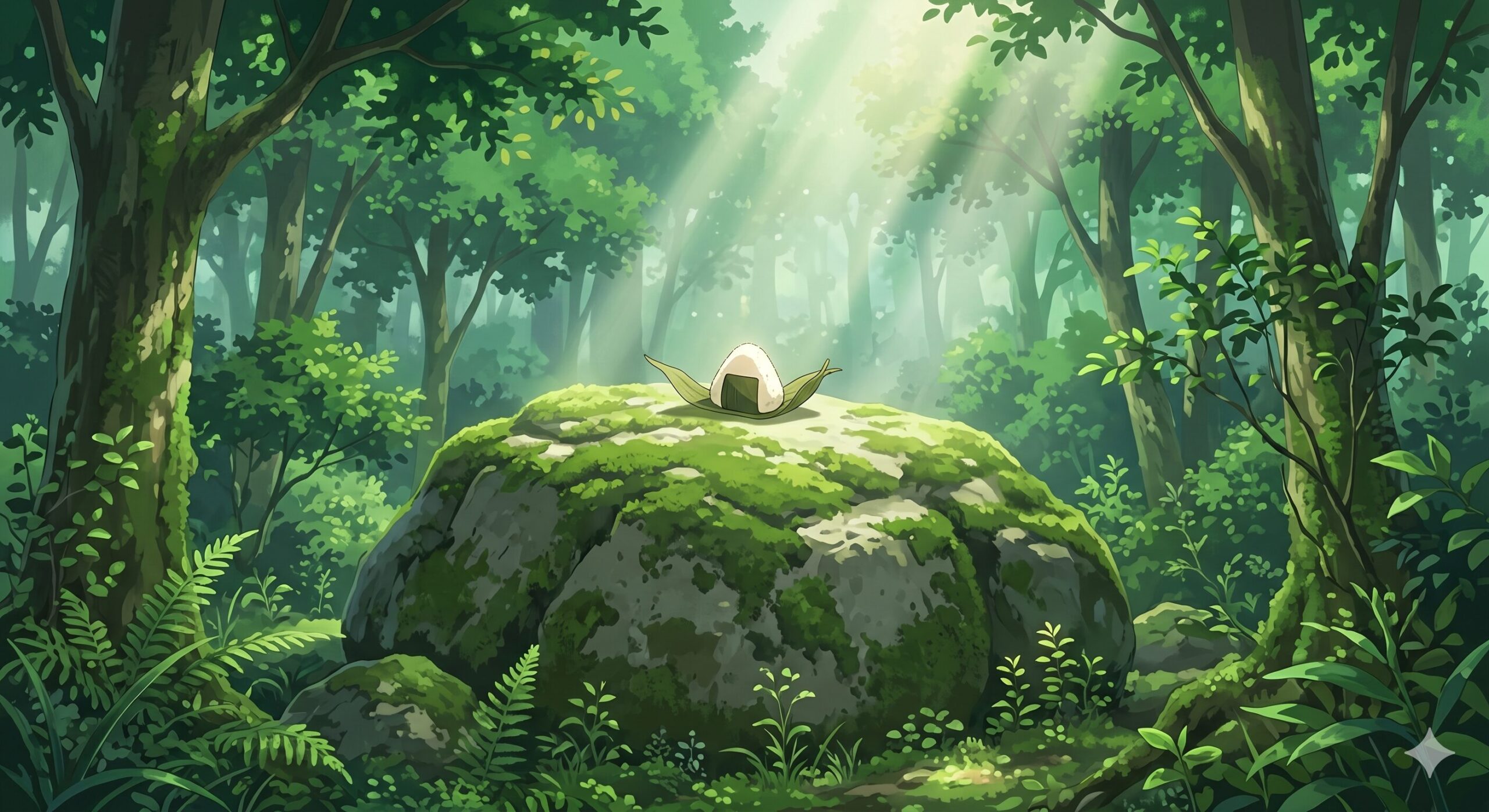
There, upon a large rock on the outskirts of the village, he found delicious-looking rice balls (onigiri) carefully wrapped in bamboo leaves. These were offerings made by the villagers to the Mountain Gods, praying for a bountiful harvest. Overjoyed, the hungry Yama-otoko ate the rice balls. From that day on, he visited the rock every night to eat the offerings.
Seeing that their offerings disappeared every single morning, the villagers firmly believed, “The Mountain God is listening to our prayers and accepting our food.” Filled with gratitude, they continued their daily offerings with even greater devotion.
The Great Drought and Jubei’s Devotion
However, the following year, a severe trial struck the village. A devastating drought occurred; not a single drop of rain fell. The rice paddies cracked open, and the rice crops withered away completely. The villagers prayed desperately for rain day and night, but the sky remained mercilessly clear. As a severe food shortage took hold, the people struggled to find even a single meal for themselves.
Despite this, Jubei, the most honest man in the village, believed, “It is precisely in these difficult times that we must rely on the gods and never forget our gratitude.” He drastically cut down his and his elderly mother’s own meager meals to continue making offerings to the rock. Though the rice balls grew smaller day by day, Jubei never once stopped offering them.
The Giant’s Anger and the Unexpected Truth
Meanwhile, as the offerings shrank and eventually stopped, the Yama-otoko was once again suffering from hunger. Suspicious, he thought, “Something is wrong with the village. Why are they suddenly sparing their offerings to the gods?” Under the cover of night, he descended to the village and peeked into the house of Jubei, the last man who had been making offerings.
What the Yama-otoko saw shocked him. In Jubei’s bowl was a heaping mound of what looked like pure white rice, and his mother seemed to be eating golden raw egg over rice. “While the whole village is starving to death, this Jubei is feasting on luxurious white rice all by himself!”
Driven by intense anger and a strong sense of justice, the Yama-otoko appeared before the villagers the next morning, loudly accusing Jubei of his selfishness. Shocked, the villagers rushed into Jubei’s house to check their cooking pots. It was then that the Yama-otoko’s words were proven to be a complete misunderstanding.
What looked like pure white rice was actually “Okara” (the leftover pulp from making soy milk, considered a very poor man’s food). And what looked like golden egg over rice was actually a humble bowl of yellow “Awa” (millet). Jubei and his mother had been sacrificing even these bare minimums for survival just to make offerings to the Mountain God.
Tears of the Giant and the Naming of the “Rice-Biting Rock”
Realizing his careless mistake and witnessing Jubei’s incredibly pure, self-sacrificing faith, the Yama-otoko fell to the ground, weeping large tears. “I was wrong. Jubei, I have truly received your pure heart. I promise you, I will negotiate with the Mountain Gods and bring rain to this village!”
With that powerful declaration, the Yama-otoko ran back deep into the forest. The very next day, exactly as the giant had promised, thick clouds covered the sky, and blessed, heavy rain poured down on the parched village. The dying fields were revived, and the village was entirely saved from the brink of destruction.
Since that day, no one has ever seen the Yama-otoko on Mount Shodai. However, whenever the villagers placed offerings on that large rock in deep gratitude, the food would always disappear by the next morning. Eventually, the villagers began to call the rock “Komekami-ishi” (The Rice-Biting Rock), and it still stands quietly in the village to this day.
Analyzing the Folktale: The Truth Behind Appearances
This story strongly highlights the danger of judging things purely by their outward appearance, as well as the beauty of an unrewarded, pure heart. The Yama-otoko may look like a terrifying giant, but he possesses a strong sense of justice that cannot tolerate inequality, and a pure soul capable of crying and apologizing when he realizes his mistake. The fact that monsters and mountain spirits display more deeply “human” emotions than actual humans is a major charm of Japanese folklore.
Furthermore, Jubei’s actions provide profound insights for us today. To remember gratitude and service to others—and to the unseen—precisely when one is suffering the most. That quiet strength ultimately moved the heart of the giant and brought forth a miracle that saved the entire village.
Cultural Connection: Reverence for Nature and Heritage
Japanese culture is built upon a profound respect for nature and a dedication to preserving familial and regional roots. The belief that gods dwell within “rocks” and the act of offering food is an ancient form of Japanese nature worship known as “Iwakura”. The Japanese people have not only feared the threats of nature but have constantly sought to coexist with the sacred powers residing within it.
This deep-rooted spirituality is not limited to any single region. For example, just as family crests (Kamon) like the ‘Gosan no Kiri’ (5-3 Paulownia)—which beautifully stylized plants from the natural world—have been passed down to the present day as symbols of family bonds and history, the gratitude toward the gods dwelling in mountains and rocks has also taken root in local communities across generations. The legend of Komekami-ishi is not just a fairy tale; it is the very “memory of life” of the Japanese people who have lived in harmony with nature.
How Would You Live?
If you were in the Yama-otoko’s shoes, realizing you had blamed someone based on a misunderstanding, could you honestly shed tears and apologize? And like Jubei, when facing absolute despair, could you continue to offer your gratitude to something unseen?
This legend surrounding a small rock in Kumamoto quietly questions our state of mind in today’s prosperous world. After reading this story, who is it that you want to express your gratitude to? We would love to hear your thoughts.
Reference:
Manga Nippon Mukashibanashi Database – Origin of Komekami-ishi
Discover more stories here:
Japanese Folktale Series
- The Giant of Mount Shodai and the Disappearing Offerings
- The Great Drought and Jubei’s Devotion
- The Giant’s Anger and the Unexpected Truth
- Tears of the Giant and the Naming of the “Rice-Biting Rock”
- Analyzing the Folktale: The Truth Behind Appearances
- Cultural Connection: Reverence for Nature and Heritage
- How Would You Live?
- 熊本の伝説「米かみ石由来」:山男の勘違いと奇跡の雨が教える日本の心
熊本の伝説「米かみ石由来」:山男の勘違いと奇跡の雨が教える日本の心
小岱山に住む山男と、消えるお供え物
熊本県の北西部にそびえる小岱山(しょうだいさん)。豊かな自然と深い緑に恵まれたこの山には、古くから屈強で巨大な「山男」が住んでいると伝えられていました。ある年のこと、山で木の実や獲物がすっかり姿を消し、飢えに苦しんだ山男は、食べ物を求めてふもとの村へと降りてきました。
すると、村外れにある大きな岩の上に、竹の皮に丁寧に包まれた美味しそうなおにぎりが置かれているのを見つけます。それは、村人たちが山の神様に豊穣を祈願して供えたものでした。空腹だった山男は喜んでそのおにぎりを頬張り、それ以来、毎晩のように岩を訪れてはお供え物を平らげるようになりました。
お供え物が毎朝確実になくなっているのを見た村人たちは、「山の神様が私たちの願いを聞き入れ、お供えを召し上がってくださっているのだ」と信じ、感謝とともにますます熱心にお供えを続けました。
村を襲う大干ばつと、正直者・十兵衛の祈り
しかし翌年、村を過酷な試練が襲います。雨が全く降らない大干ばつに見舞われ、田んぼはひび割れ、育てていた稲は枯れ果ててしまったのです。村人たちは連日連夜、必死に雨乞いをしましたが、空は無情にも晴れ渡るばかり。深刻な食糧難に陥り、人々は自分たちのその日の食事さえ事欠くようになりました。
それでも、村で一番の正直者である十兵衛は、「こんな苦しい時だからこそ神様におすがりし、感謝を忘れてはいけない」と、自分と年老いた母親の食事を極限まで削りました。おにぎりは日に日に小さくなっていきましたが、決して岩へのお供えを絶やすことはありませんでした。
山男の怒りと、思いがけない真実
一方、お供え物が小さくなり、ついには無くなってしまったことで、山男も再び飢えに苦しんでいました。「村の様子がおかしい。どうして神への供物を惜しむようになったのだ」と不審に思った山男は、夜の闇に紛れて里へ降り、最後までお供えを続けていた十兵衛の家をこっそり覗き込みました。
するとそこには、山男にとって信じられない光景が広がっていました。十兵衛の茶碗には真っ白なご飯が山盛りにされ、母親の茶碗には黄金色に輝く卵かけご飯がよそわれているように見えたのです。「村中が飢餓で苦しんでいるこの非常時に、十兵衛の奴は自分たちだけ贅沢な白米を食っているのか!」
激しい怒りと正義感に駆られた山男は、翌朝、村人たちの前に姿を現し、十兵衛の抜け駆けを大声で告げ口しました。驚いた村人たちが十兵衛の家に押し入り、鍋の中を確かめると、山男の言葉は全くの誤解であることが明らかになりました。
山男の目に真っ白なご飯に見えたのは、大豆の搾りかすである「おから」。そして卵かけご飯に見えたのは、黄色い「粟(あわ)」だけで炊かれた粗末なご飯だったのです。十兵衛親子は、命を繋ぐのがやっとの粗食をさらに削って、山の神様へのお供え物を作っていたのでした。
山男の涙と、名付けられた「米噛石」
己の軽率な勘違いと、十兵衛のあまりにも純粋で自己犠牲的な信仰心を知った山男は、大粒の涙を流して地面にひれ伏しました。「おれが悪かった。十兵衛、お前たちの純粋な心は確かに受け取った。必ず山の神様に掛け合って、この村に雨を降らせてみせる!」
そう力強く宣言すると、山男は深い森の奥へと走り去っていきました。そして翌日。山男の約束通り、空を厚い雲が覆い、干からびた村に恵みの大雨が降り注ぎました。枯れかけていた田畑は息を吹き返し、村は全滅の危機を見事に免れたのです。
それ以来、小岱山で山男の姿を見た者は誰もいません。しかし、村人たちが感謝を込めてあの大きな岩にお供え物をすると、翌朝には必ずなくなっていました。誰からともなく、その岩は「米を噛む(食べる)石」という意味を込めて「米噛石(こめかみいし)」と呼ばれるようになり、今もその地にひっそりと佇んでいます。
昔話からの考察:見た目に騙されない真実の心
この物語が私たちに強く訴えかけるのは、「表面的な出来事だけで物事を判断する危うさ」と、「見返りを求めない純粋な心の美しさ」です。山男は巨大で恐ろしい外見をしていますが、村人の不平等を許せない強い正義感と、自分の過ちを知った時に素直に涙を流して謝罪できる純粋さを持っています。妖怪や山の神の使いとも言える存在が、人間以上に人間らしい感情と義理人情を持っている点は、日本の昔話の大きな魅力です。
また、十兵衛の行動は現代の私たちにも多くの気づきを与えてくれます。自分が最も苦しい時にこそ、他者や見えざる存在への感謝と奉仕を忘れない。その静かな強さが、結果的に山男の心を打ち、村全体を救う奇跡を引き寄せたのです。
日本文化との関連:自然への畏敬とルーツの継承
日本の文化は、自然への深い敬意と、一族や地域のルーツを大切に守り抜く心で成り立っています。「岩」に神が宿ると信じ、食事を供える行為は「磐座(いわくら)信仰」と呼ばれる日本古来の自然崇拝の形です。人々は自然の脅威に怯えるだけでなく、そこに宿る神聖な力と共生しようとしてきました。
こういった精神性は、特定の地域に限ったものではありません。たとえば、自然界の植物を美しく意匠化した『五三の桐』のような家紋が、家族の絆や歴史の象徴として現代まで脈々と受け継がれているように、山や岩に宿る神への感謝の念もまた、世代を超えて地域に根付いてきました。米噛石の伝説も、単なるおとぎ話ではなく、自然と共に生き抜いてきた日本人の「命の記憶」そのものなのです。
あなたはどう生きるか?
もしあなたが山男の立場だったなら、自分の勘違いで相手を責めてしまったと気づいた時、素直に涙を流して謝ることができたでしょうか?また、十兵衛のように、自分が絶望的な状況にある時でも、目に見えない何かへの感謝を捧げ続けることができるでしょうか。
この熊本の小さな岩にまつわる伝説は、豊かになった現代を生きる私たちに、心のあり方を静かに問いかけています。この物語を読んで、あなたは誰に感謝を伝えたいと思いましたか?ぜひ、あなたの素直な思いを聞かせてください。
その他の物語もぜひご覧ください:
Japanese Folktale Series(日本の昔話シリーズ)
コメント