Since ancient times, it has been believed that mysterious plants and creatures beyond our comprehension lurk within Japan’s lush nature. The Japanese folktale “Torokashigusa” (The Melting Weed / Dissolving Grass) we are introducing today is a masterful story that depicts limitless human greed and the awe of the unknown powers of the natural world. Behind the unexpectedly humorous plot lies a spine-chilling moral lesson.
① The Story of “Torokashigusa”: The Miracle Weed and a Mountain of Soba
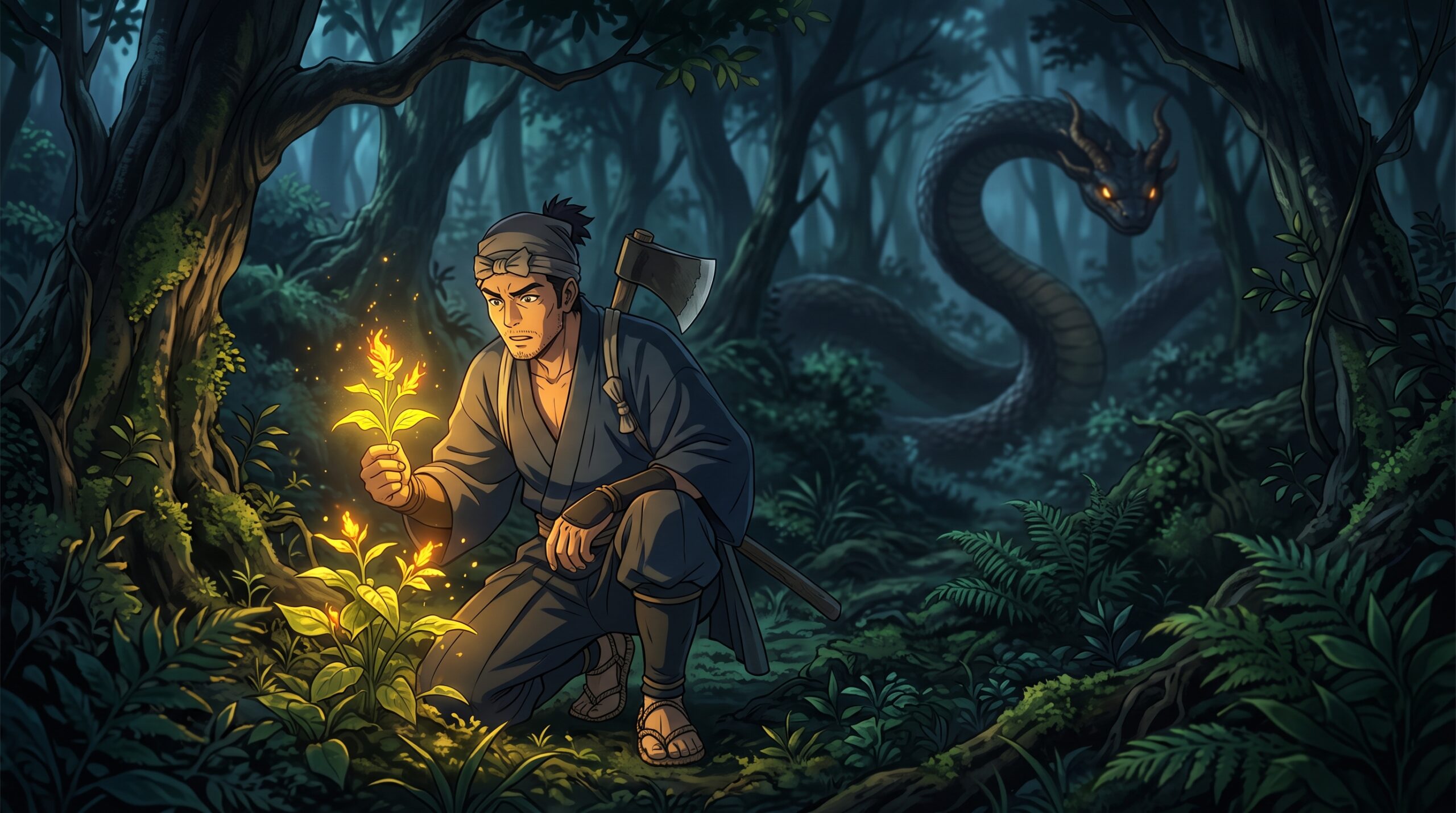
Once upon a time, at the foot of a deep mountain, there lived a woodcutter named Kiyobee. One day, while he was cutting wood deep in the forest as usual, a desperate scream echoed through the trees: “Help me!” Startled, he looked toward the voice and saw a giant mythical snake (Uwabami) attacking a traveler.
Terrified, Kiyobee frantically climbed a large tree nearby and held his breath. However, right before his eyes, the poor traveler was swallowed whole by the giant snake. Having swallowed a whole human, the snake’s belly swelled up massively, looking as if it were about to burst. The snake writhed on the ground in agony, but eventually slithered over to a patch of grass and began munching on a certain “yellow weed” growing there.
Then, an incredible thing happened. The snake’s massively swollen belly quickly shrank back to its normal, slender size. The snake then slithered away into the depths of the forest as if nothing had happened.
Watching this entirely from the tree, Kiyobee had a flash of inspiration. “That yellow weed must be a magical herb that instantly dissolves and digests anything you eat!” He climbed down, plucked a handful of the yellow weed the snake had been eating, stuffed it into his kimono, and ran back to his village.
Upon returning, Kiyobee told the villagers the terrifying story of the giant snake, but he kept the magical “yellow weed” a secret from everyone.
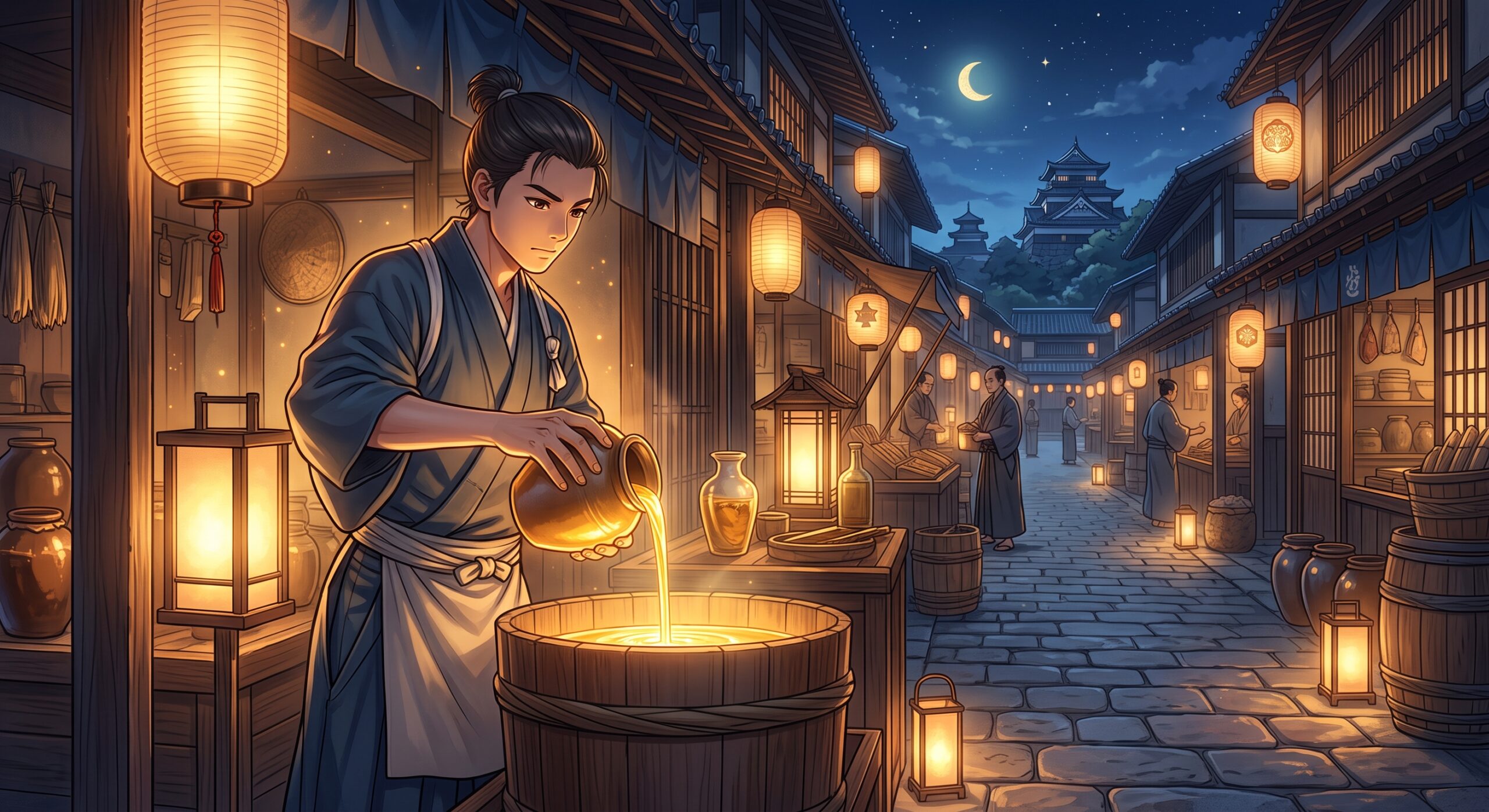
The next night, the villagers gathered at Kiyobee’s house to celebrate his narrow escape from death. Being a poor mountain village, the feast was nothing more than homemade Soba (buckwheat noodles) and some sake. As the party grew lively, the wealthiest man in the village made a sudden proposition.
“Listen here. If anyone can eat five heaping bowls of this Soba in a row, I will give them a large plot of my farming land!”
The villagers laughed it off, saying, “That’s impossible!” and “No human stomach can hold that much!” But Kiyobee was different. He remembered the yellow weed in his pocket. “Alright, I’ll take that challenge!” he announced with absolute confidence.
Ignoring the villagers’ worried warnings, Kiyobee began devouring the mountain of Soba at a furious pace. One bowl, two bowls, three bowls… The villagers gasped in amazement as he effortlessly emptied them. However, he finally reached his limit. As he started the fourth bowl, Kiyobee’s stomach was bloated to the bursting point, and he couldn’t take another bite.
“I just need to go to the restroom for a moment.”
Holding his massive belly, Kiyobee rushed to the outhouse. There, out of everyone’s sight, he pulled out the “yellow weed” and eagerly ate it. He was certain this would instantly digest the Soba in his stomach, allowing him to easily finish the fifth bowl.
However, time passed, and Kiyobee did not return. The worried villagers knocked on the outhouse door, calling out, “Kiyobee! Are you alright?” but there was no answer.
Finally, they broke down the door and rushed inside. To their shock, Kiyobee was nowhere to be found. Only the kimono he had been wearing was left on the floor. And inside that kimono sat the enormous mountain of Soba noodles he had just eaten.
The yellow weed was not an herb that dissolved food. It was a terrifying weed that dissolved humans!
② Deep Analysis of the Tale: Human Assumptions and Endless Greed
The greatest charm of this story is that despite its gruesome ending, it maintains a humorous and comical atmosphere. The trigger for Kiyobee’s tragedy was a fatal human flaw: the tendency to interpret facts in a way that is convenient for oneself. The snake’s belly shrank not because “the weed acted as a digestive medicine,” but because “the human inside was dissolved.”
Furthermore, even though Kiyobee had just narrowly escaped death, he was blinded by the immediate massive profit of the farming land, leading him to make a reckless bet beyond his physical limits. The irony of losing his life right after saving it serves as a powerful reminder of the universal truth that greed brings ruin.
This tale is also known as one of the roots for classical Rakugo (Japanese comic storytelling) performances such as “Soba-sei” and “Jagan-so.” While the Rakugo versions might change the protagonist to an Edo townsman or the food to mochi, the brilliant punchline of “the human melts away leaving only the food” remains the same, proving that this plot has captivated Japanese audiences for centuries.
③ Unlocking Japanese Culture Through the Story: Awe of Nature and Soba Culture
A crucial element of Japanese culture found in this folktale is the “deep awe of the natural world.” The belief of Animism is deeply rooted in Japan, suggesting that mystical powers beyond human understanding reside in the mountains and forests. The story serves as a warning: if humans try to exploit the powers of nature out of greed without true knowledge, they will face severe retribution.
Additionally, the “Soba eating contest” at the center of the story reflects the food culture of the Edo period and beyond. Soba was a common joy for the masses, and competitive eating events were actually highly popular as a form of entertainment. By fusing a familiar everyday item like “Soba” with the fantasy element of a “human-melting weed,” the story creates a highly realistic blend of horror and comedy.
④ Over to You: What Would You Do?
If you were in Kiyobee’s shoes and found a mysterious, magical weed, what would you do? Would you keep it a secret to use only for your own benefit, or would you consult someone about it?
In our daily lives, a little bit of greed or a convenient assumption can sometimes lead to irreversible mistakes. The story of “Torokashigusa” teaches us the importance of stopping to observe things objectively. Are you making any convenient “assumptions” in your life today?
Reference Links & Related Articles
The story of “Torokashigusa” introduced in this article is one of the most memorable pieces among numerous Japanese folktales. If you want to explore the original texts or related stories more deeply, please check the external link below.
Reference: Manga Nippon Mukashibanashi Database “Torokashigusa” (Japanese)
On our blog, we introduce many other fascinating and profound Japanese folktales. Please find your next favorite story from the category link below!
Read More from the Japanese Folktale Series
- ① The Story of “Torokashigusa”: The Miracle Weed and a Mountain of Soba
- ② Deep Analysis of the Tale: Human Assumptions and Endless Greed
- ③ Unlocking Japanese Culture Through the Story: Awe of Nature and Soba Culture
- ④ Over to You: What Would You Do?
- Reference Links & Related Articles
- 日本昔話「とろかし草」:欲望が招いた恐ろしくも滑稽な結末
日本昔話「とろかし草」:欲望が招いた恐ろしくも滑稽な結末
日本の豊かな自然の中には、私たちがまだ知らない神秘的な植物や生き物が潜んでいると古くから信じられてきました。今回ご紹介する日本昔話「とろかし草(とろかしぐさ)」は、人間の果てしない欲望と、自然界の未知なる力に対する畏怖を見事に描いた物語です。思わず笑ってしまうような展開の中に、背筋が凍るような教訓が隠されています。
① 「とろかし草」の物語:驚異の草と蕎麦の山
むかしむかし、ある深い山のふもとに清兵衛(せいべえ)という木こりが住んでいました。清兵衛がいつものように山奥で木を切っていると、突然「助けてくれ!」という悲痛な叫び声が響き渡りました。驚いて声のする方を見ると、なんと巨大な「うわばみ(大蛇)」が、一人の旅人に襲いかかっているではありませんか。
清兵衛は恐怖のあまり、慌てて近くの大きな木によじ登り、息を潜めました。しかし、清兵衛の目の前で、哀れな旅人は大蛇に丸呑みにされてしまったのです。人間を一人飲み込んだ大蛇のお腹は、はち切れんばかりにパンパンに膨れ上がりました。大蛇は苦しそうに地面をのたうち回っていましたが、やがて草むらへ這っていき、そこに生えていた「黄色い草」をむしゃむしゃと食べ始めました。
するとどうでしょう。あんなに大きく膨れ上がっていた大蛇のお腹が、みるみるうちにスゥーッと元の細さに戻っていったのです。大蛇は何事もなかったかのように森の奥へと姿を消しました。
木の上でこの一部始終を見ていた清兵衛はひらめきました。「あの黄色い草は、食べたものを一瞬で溶かしてしまう魔法の消化薬に違いない!」清兵衛は木から降りると、大蛇が食べていた黄色い草を一つかみ抜き取り、懐に入れて村へ逃げ帰りました。
村へ戻った清兵衛は、大蛇の恐ろしい出来事は村人たちに話しましたが、魔法の「黄色い草」のことだけは誰にも話さず、自分だけの秘密にしました。
次の日の夜、清兵衛が命拾いしたお祝いとして、村人たちが清兵衛の家に集まりました。山間の貧しい村のお祝い事ですから、ごちそうといっても手打ち蕎麦とお酒くらいです。宴会が盛り上がってきた頃、村で一番の金持ちである長者がこんなことを言い出しました。
「どうじゃ。ここに山盛りにした蕎麦を、立て続けに五杯平らげる者がおったら、わしの田畑を一反くれてやってもいいぞ!」
村人たちは「いくらなんでも無理だ」「人間のお腹に入る量じゃない」と笑い飛ばしました。しかし、清兵衛だけは違いました。懐にある黄色い草のことを思い出したのです。「よし、わしが挑戦してやる!」清兵衛は自信満々に名乗り出ました。
村人たちが心配して止めるのも聞かず、清兵衛は凄まじい勢いで山盛りの蕎麦を食べ始めました。一杯、二杯、三杯…順調に平らげていく清兵衛に、村人たちも驚きの声を上げます。しかし、さすがに限界が来ました。四杯目に差し掛かると、清兵衛のお腹はパンパンに膨れ上がり、一口も食べられなくなってしまったのです。
「ちょっと便所へ行ってくる」
清兵衛は大きなお腹を抱えて立ち上がり、便所へと駆け込みました。そして、誰にも見られないよう、懐からあの「黄色い草」を取り出し、むしゃむしゃと食べたのです。これで胃の中の蕎麦が一瞬で消化され、五杯目も楽々食べられるはずでした。
しかし、いつまで経っても清兵衛は便所から戻ってきません。心配した村人たちが戸を叩き、「清兵衛!大丈夫か!」と声をかけますが、返事はありません。
とうとう村人たちは戸をぶち破り、中へと踏み込みました。すると、そこに清兵衛の姿はありませんでした。ただ、清兵衛が着ていた着物だけが床に残されており、その着物の中には、清兵衛が食べたはずの山盛りの蕎麦がそのまま残っていたのです。
そう、あの黄色い草は、食べた食べ物を溶かす草ではなく、人間そのものを溶かしてしまう恐ろしい草だったのです。
② 物語の深い考察:人間の思い込みと果てしない強欲
この物語の最大の魅力は、残酷な結末でありながらも、どこかユーモラスで滑稽な雰囲気が漂っている点です。清兵衛の悲劇の引き金となったのは、「自分の都合の良いように事実を解釈してしまう」という人間の致命的な思い込みです。大蛇のお腹が引っ込んだのは「草が消化薬として働いた」からではなく、「お腹の中の人間が溶けた」からでした。
また、清兵衛は命拾いをしたばかりであるにも関わらず、田畑という目の前の大きな利益に目がくらみ、自らの限界を超えた無謀な賭けに出てしまいます。命の危機を脱した直後に自らの欲望で命を落とすという皮肉な展開は、強欲が身を滅ぼすという普遍的な真理を強烈に突きつけています。
なお、この物語は日本の伝統的な話芸である「落語」の演目『そば清(そばせい)』や『蛇含草(じゃがんそう)』のルーツの一つとも言われています。落語では主人公が江戸の町人であったり、食べるものが餅であったりと変化がありますが、「人間が溶けて食べ物だけが残る」という秀逸なオチは共通しており、昔から日本人を魅了してきた完璧なプロットであることがわかります。
③ 日本文化との関連:自然への畏怖と「蕎麦」の文化
この昔話から読み取れる日本文化の重要な要素は、「自然界への深い畏怖」です。日本の山林には、人間の理解を超えた神秘の力が存在するという「アニミズム(精霊信仰)」の考え方が根付いています。知識を持たずに自然の力を人間の欲望のために利用しようとすれば、手痛いしっぺ返しを食らうという警告が込められています。
また、物語の中心となる「蕎麦の大食い勝負」は、江戸時代以降の日本の食文化を反映しています。蕎麦は庶民の楽しみであり、同時に大食い勝負は一種のエンターテインメントとして実際に大流行していました。人々が日常的に楽しんでいた「蕎麦」という身近なアイテムと、「人間を溶かす草」というファンタジー要素が融合することで、よりリアリティのある恐怖と笑いを生み出しているのです。
④ 読者の皆様へ:あなたならどうしますか?
もしあなたが清兵衛の立場で、未知の不思議な草を手に入れたとしたら、果たしてどうしたでしょうか?自分のためだけに使おうと秘密にするでしょうか。それとも、誰かに相談して慎重に扱ったでしょうか。
私たちの日常でも、少しの欲望や自分に都合の良い思い込みが、取り返しのつかない失敗につながることがあるかもしれません。この「とろかし草」の物語は、立ち止まって物事を客観的に見つめ直すことの大切さを教えてくれます。あなたは今日の出来事の中で、自分に都合の良い「思い込み」をしていませんか?
参考リンク・関連記事
本記事で紹介した「とろかし草」の物語は、日本の数ある昔話の中でも特に印象深く、教訓に満ちた作品です。原典や関連する物語をもっと深く知りたい方は、以下の外部リンクをご覧ください。
当ブログでは、他にも魅力的で奥深い日本の昔話を多数紹介しています。以下のカテゴリーリンクから、あなたのお気に入りの物語を見つけてみてください。

コメント