August 23: The History and Culture of Oil Day
Throughout much of Japanese history, the night was a time enveloped in deep, prolonged darkness. The element that brought light to this darkness and drastically changed people’s lives and culture was “oil.” August 23rd is officially designated as “Oil Day” in Japan. This date originates from the founding of the Iwashimizu Hachimangu Shrine in Kyoto on August 23, 859 (the first year of the Jogan era).
Why is a Shinto shrine connected to oil? During the medieval period in Japan, the “Oyamazaki Oil Guild” (Oyamazaki Aburaza), under the protection of the Iwashimizu Hachimangu Shrine, held a monopoly on the production and sale of Egoma (perilla) oil. Oyamazaki, located southwest of Kyoto, was the crucial hub and the birthplace of Japan’s oil pressing industry. The oil they extracted was offered as sacred lighting for the Imperial Court and various temples, eventually becoming an indispensable part of the common people’s daily lives.
Story: The Dawn of Tojuro, a Merchant in Muromachi-era Oyamazaki
Let us take a journey back in time to medieval Japan.
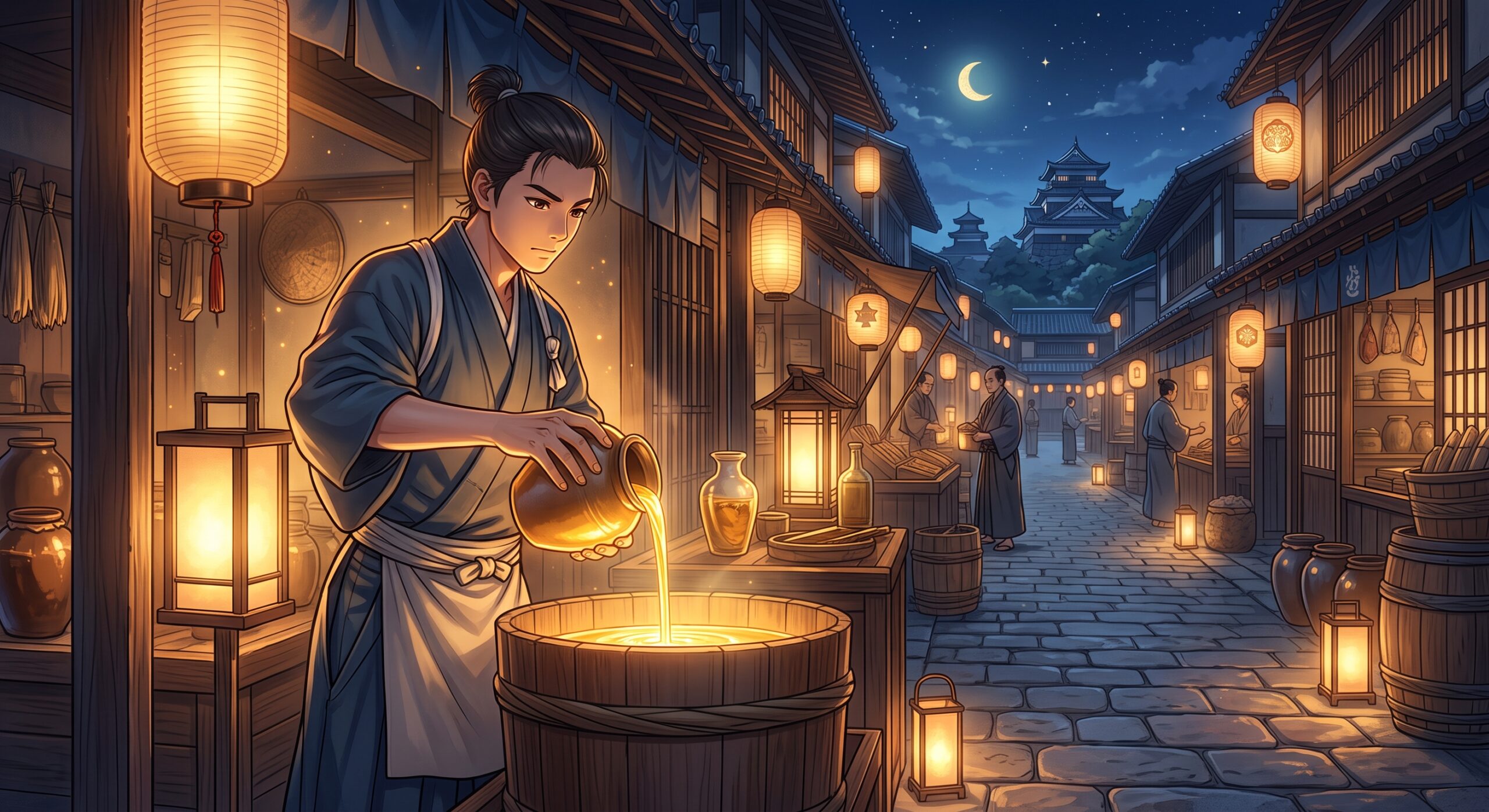
It is the Muromachi period. For Tojuro, a merchant whose livelihood is pressing oil in Oyamazaki, the morning begins early. He deals in the highest quality Egoma oil, shining with a golden hue. At the time, this oil was so precious it could be called “liquid gold.” One day, Tojuro received a massive order from a prominent temple in Kyoto for lighting oil to be used in a highly important festival.
“The radiance of this oil will dispel the darkness of the capital and carry the people’s prayers to the heavens.”
Tojuro and his artisans roasted countless Egoma seeds and slowly pressed them using heavy wooden presses. Every single drop that fell was a testament to their pride. Then came the night of the festival. The oil Tojuro provided was poured into hundreds of lanterns at the temple and ignited all at once. The flickering flames brightly illuminated the faces of the people, creating a magical atmosphere in the nocturnal capital. Witnessing this scene, Tojuro deeply realized that his work was not merely selling oil, but lighting a “beacon of hope” in the hearts of the people.
Deciphering the Evolution of Japanese Culture Through Oil
As this story illustrates, the widespread use of oil had a profound impact on Japanese culture. Through Egoma oil, and later the more common rapeseed oil, people finally acquired “time at night.”
Reading at night became possible, leading to a dramatic advancement in scholarship and literature. New forms of entertainment emerged, such as Ukiyo-e woodblock prints designed to look vibrant even under dim lamplight. Furthermore, oil caused a revolution not only in illumination but also in culinary culture. During the Edo period, as rapeseed oil became cheaper, deep-fried foods like “Tempura” became popular as a beloved street food. Tempura, now a globally adored representative of Japanese cuisine, would simply not exist without this history of mass oil production.
Oil Day on August 23 is not just an anniversary for a condiment. It is a day to celebrate a historical turning point that brightened Japan’s nights, deepened people’s knowledge, and gave birth to culinary richness.
A Question for You
Today, we can make the night as bright as day with the flip of a switch. But try to imagine the immense value a single drop of oil once held, and the deep emotion it evoked in people. Tonight, if possible, why not dim the lights in your room and spend some time with only the light of a candle or a small indirect lamp? When you gaze at that small, flickering light in the darkness, what do you feel, and what comes to your mind?
Reference Links and Categories
- External Reference Link: Iwashimizu Hachimangu Official Website
- Other articles in this series: What’s Today’s Special Day Series
8月23日は「油の日」:暗闇を照らした大山崎の奇跡と日本文化
8月23日:油の日の歴史的背景と文化
日本の歴史において、夜は長く深い闇に包まれた時間でした。その闇に光をもたらし、人々の生活と文化を劇的に変えたのが「油」です。8月23日は「油の日」として制定されています。この日付は、貞観元年(859年)8月23日に、京都にある石清水八幡宮が創建されたことに由来しています。
なぜ神社と油が結びつくのか。それは中世日本において、石清水八幡宮の庇護下にあった「大山崎油座(おおやまざきあぶらざ)」が、エゴマ(荏胡麻)油の製造と販売の特権(独占権)を握っていたからです。京都の南西に位置する大山崎は、日本の製油発祥の地とも言える重要な拠点でした。彼らが絞り出した油は、朝廷や寺社仏閣の灯明として奉納され、やがて庶民の生活にも欠かせないものとなっていきました。
ストーリー:室町時代・大山崎の商人、藤十郎の夜明け
ここで、中世の日本にタイムスリップしてみましょう。
時は室町時代。大山崎で油絞りを生業とする商人、藤十郎(とうじゅうろう)の朝は早く始まります。彼が扱うのは、黄金色に輝く最高級のエゴマ油。当時は「液体の純金」と呼べるほど貴重な品でした。ある日、藤十郎は京の都の有力な寺院から、重要なお祭りのための灯明油を大量に用命されます。
「この油の輝きが、都の闇を払い、人々の祈りを天へ届けるのだ」
藤十郎は職人たちと共に、数え切れないほどのエゴマの種を焙煎し、重い木製の搾り機でじっくりと圧搾しました。一滴一滴こぼれ落ちる油は、彼らの誇りそのものです。そして迎えた祭りの夜。藤十郎が納めた油は、寺院の何百もの灯籠に注がれ、一斉に火が灯されました。揺らめく炎は人々の顔を明るく照らし出し、夜の都に幻想的な別世界を創り出したのです。その光景を見た藤十郎は、自分の仕事が単に油を売ることではなく、人々の心に「希望の光」を灯すことなのだと深く悟りました。
油から読み解く日本文化の進化
この大山崎の油商人の物語が示すように、油の普及は日本の文化に多大な影響を与えました。エゴマ油、そして後に普及する菜種油によって、人々は「夜の時間」を手に入れたのです。
夜間の読書が可能になり、学問や文学が飛躍的に発展しました。夜でも色鮮やかに見える浮世絵や、夜間の宴などの新しい娯楽も生まれました。さらに、灯明としての役割だけでなく、食文化においても油は革命を起こします。江戸時代には菜種油が安価に流通するようになり、「天ぷら」などの揚げ物が屋台で庶民の味として親しまれるようになりました。現在、世界中で愛されている和食の代表格である天ぷらは、この油の大量生産の歴史なしには存在しなかったのです。
8月23日の油の日は、単なる調味料や燃料の記念日ではありません。日本の夜を明るくし、人々の知識を深め、食の豊かさを生み出した、歴史的転換点を祝う日なのです。
あなたへ問いかけ
現代の私たちは、スイッチ一つで夜を昼のように明るくすることができます。しかし、かつて一滴の油がどれほどの価値を持ち、人々にどのような感動を与えたかを想像してみてください。今夜、もし可能なら部屋の照明を少し落とし、キャンドルや小さな間接照明の光だけで過ごしてみてはいかがでしょうか。暗闇の中で揺らめく小さな光を見つめるとき、あなたは何を感じ、何を想うでしょうか?
参考リンク・カテゴリー
- 外部参考リンク:石清水八幡宮 公式サイト
- このシリーズの他の記事:今日は何の日シリーズ


コメント