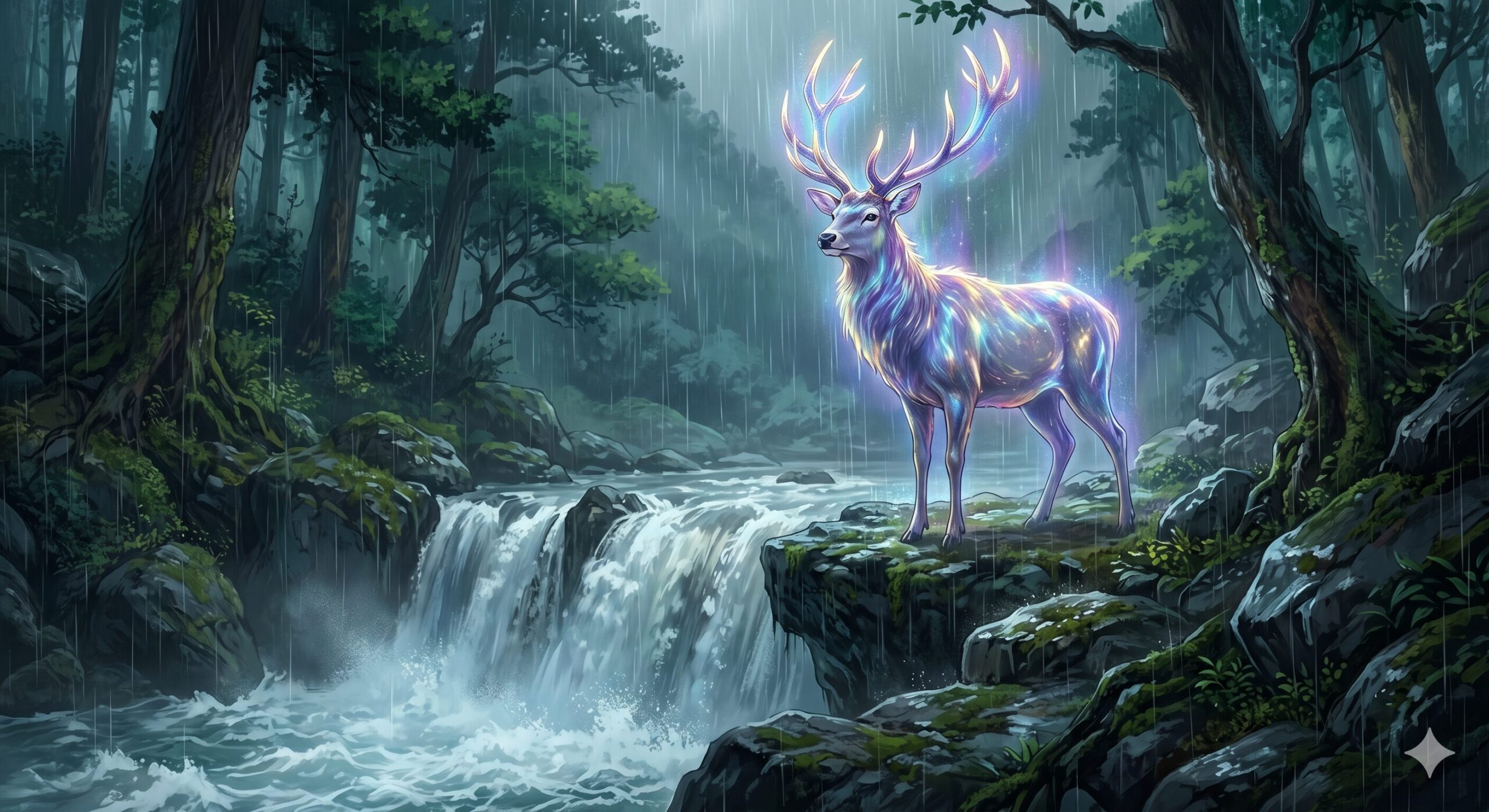
Folktales convey the rich natural landscapes of Japan and the subtle emotions of the people who live there. Today, we introduce “The Magical Colored Great Deer” (Kushiki Iro no Oojika), a story passed down in a deep mountain village in the Kyushu region. This is not merely a fairy tale; it confronts us with universal themes such as human fragility, deep affection, and awe for nature.
If you want to read more fascinating Japanese folktales, please visit our Japanese Folktale Series category.
1. The Story of “The Magical Colored Great Deer”
Once upon a time, deep in the mountains of Kyushu, there lived a very wealthy village headman. He had an only daughter whose beauty was otherworldly. Word of her exquisite looks quickly spread to neighboring villages, and every day, a long line of men gathered at the gates of the headman’s mansion just to catch a glimpse of her.
However, after a certain point, the daughter completely stopped appearing in public. One by one, the men gave up and left, but a young man named Heisaku was different. He genuinely cared for her, and even though he couldn’t see her, he walked around the mansion every day, praying for her safety. Then one day, Heisaku heard a shocking truth from a doctor leaving the estate. The beautiful daughter was bedridden with a life-threatening illness.
Deeply saddened by the news, Heisaku was heading home when a sudden, violent rainstorm struck the village. The river instantly overflowed, and the muddy torrent swallowed him. He struggled desperately, but he was powerless against the fury of nature. Finally, he was swept toward the edge of a massive waterfall. Just as he prepared himself for death—
A giant deer emitting a dazzling, mysterious light appeared. Its coat shone with magical, unprecedented colors. The great deer stood firmly on the edge of the waterfall basin and saved Heisaku’s life in the nick of time.
Having narrowly escaped death, Heisaku bowed down to the ground in gratitude. “You are my savior. I will do anything to repay this debt,” he said.
The great deer replied in a quiet yet majestic voice. “I need no thanks. I only ask for one thing: promise me that you will never tell anyone that you saw me or that I am here.” Heisaku swore an oath and returned to the village.
However, a cruel fate awaited him. A brand-new notice board was erected in front of the headman’s mansion.
“The living blood of the Magical Colored Great Deer will surely cure my daughter’s illness. Whoever reveals the deer’s location will be rewarded with whatever they desire.”
Heisaku’s heart was violently torn. The great deer was his absolute savior, and he had just made a firm promise. Yet, if he told the truth, he could save the life of the woman he secretly loved, whose flame of life was fading. Day after day, Heisaku locked himself in his house, agonizing as if coughing up blood. After spending many sleepless nights, he finally succumbed to his feelings for the daughter and went to the headman to reveal the deer’s location.
The headman immediately took his hunters, with Heisaku as their guide, and headed for the waterfall. In the very spot where Heisaku almost lost his life, the great deer stood quietly. Bows were drawn simultaneously, putting the deer in a desperate situation. But the deer did not try to run; it just looked calmly at the headman and spoke.
“I do not value my own life. But please, tell me just one thing. Who was it that told you I was here?”
The moment he heard that voice, Heisaku broke down in tears. The guilt of driving the sacred being who saved his life to death by his own hands had exceeded its limit. In a trembling voice, Heisaku confessed everything: how he drowned in the river, how the deer saved him, and how he had broken his firm promise and betrayed his savior.
Hearing the whole story, the headman lowered his gun. He was deeply moved by the nobility of the great deer, who had risked its life to save a human and, even after being betrayed, calmly accepted its fate. The headman stopped his men from shooting the deer and quietly withdrew his forces.
2. In-Depth Analysis of the Folktale
This story is a localized Japanese version of the legend of the “Nine-Colored Deer” (Jataka tales), rooted in ancient Indian Buddhist parables. In the original and other variations, the man who betrays the deer receives a cruel punishment, such as falling into hell or contracting a severe illness. However, in “The Magical Colored Great Deer,” the motive for betrayal is replaced not by “personal greed (money),” but by the “pure desire to save a loved one.”
Morally, Heisaku’s action is a grave sin of “betraying a benefactor.” But faced with the life of a loved one, can a person remain a completely rational moralist? Heisaku’s conflict realistically portrays the essential weakness of human beings and the tragedy born from deep affection. Furthermore, the ending where the headman stops the killing shows “forgiveness” and “compassion” rather than revenge or karmic retribution, elevating the story to a conclusion with a very Japanese emotional depth.
3. Connection to Japanese Culture: Obligation (On) and Animism
The crucial elements of Japanese culture that can be deciphered from this story are the concept of “On” (deep obligation/debt of gratitude) and “Animism” (nature worship).
In Japan, since ancient times, the moral responsibility toward a received favor is treated so heavily that there is a saying, “Carve the favors you receive in stone.” The reason Heisaku suffered to the very limit was not just about breaking a rule, but because of a strong sense of immorality against “On,” which lies at the root of the Japanese soul.
Also, the “Deer” is a special existence in Japan. As represented by Kasuga Taisha Shrine in Nara, deer have been revered as divine messengers (Shinroku). The “Great Deer” emitting a mystical light is not merely an animal, but a symbol of the will and divinity of Mother Nature itself. The deer saving Heisaku represents the blessings nature bestows upon humans, and the headman’s inability to shoot the deer is an expression of the “awe and respect for the divinity of nature” that Japanese people unconsciously hold.
4. Finally: What Would You Do?
Heisaku chose to break his promise to the savior of his life to save the life of the woman he loved. As a result, no one died thanks to the great deer’s generosity, but Heisaku will have to live the rest of his life carrying an unerasable sense of guilt.
If you were in Heisaku’s shoes, what would you have done?
Would you strictly keep your promise to your sacred savior until the end?
Or would you try to save the life of your loved one, no matter what sins you must bear?
Please let us know your thoughts on this question that has no right answer.
Reference: Manga Nippon Mukashibanashi Database “Kushiki Iro no Oojika”
【日本昔話】愛と恩義の狭間で揺れる心「奇しき色の大鹿」の深い教訓と日本文化
日本の豊かな自然と、そこに生きる人々の心の機微を伝える昔話。今回は、九州地方の山深い村に伝わる「奇しき色の大鹿(くしきいろのおおじか)」をご紹介します。この物語は、単なるおとぎ話にとどまらず、人間の弱さ、愛情、そして自然に対する畏敬の念という普遍的なテーマを私たちに突きつけます。
他の魅力的な日本の昔話をもっと読みたい方は、ぜひ日本の昔話シリーズのカテゴリーをご覧ください。
① 昔話「奇しき色の大鹿」
昔々、九州の山深いある国でのこと。その村には大変裕福な長者が住んでおり、彼にはこの世のものとは思えないほど美しい一人娘がいました。娘の美貌は瞬く間に近隣の村々にまで知れ渡り、彼女を一目見ようと、毎日多くの男たちが長者の屋敷の門前に列をなしていました。
しかし、ある時期を境に、娘は一切人前に姿を見せなくなりました。男たちは諦めて一人、また一人と去っていきましたが、平作(へいさく)という若者だけは違いました。彼は純粋に娘を想い、姿を見ることができなくても毎日屋敷の周りを歩き、彼女の無事を祈っていました。そんなある日、平作は屋敷から出てきた医者の口から、衝撃的な事実を耳にします。娘は、命に関わる重い病に伏せっていたのです。
娘の病を知り、深く悲しみながら帰路につく平作。その時、村を突然の豪雨が襲いました。あっという間に川は氾濫し、濁流が平作を飲み込みます。必死にもがくものの、自然の猛威の前では無力でした。ついに巨大な滝の落ち口へと流され、平作が死を覚悟したその瞬間――。
まばゆいばかりの不思議な光を放つ、巨大な鹿が現れました。その毛並みは見たこともないような奇しき(神秘的な)色彩に輝いていました。大鹿は力強く滝壺の淵に立ち、間一髪のところで平作の命を救い出しました。
九死に一生を得た平作は、地面にひれ伏して感謝しました。「あなた様は命の恩人です。このご恩に報いるためなら、何でもいたします」と。
大鹿は静かに、しかし威厳のある声で答えました。「礼など不要だ。ただ一つ、私の姿を見たこと、私がここにいることを、決して誰にも話さないと約束してほしい。」平作は固く誓い、村へと戻りました。
しかし、村に戻った平作を残酷な運命が待ち受けていました。長者の屋敷の前に、真新しい立て札が掲げられていたのです。
『奇しき色の大鹿の生き血を飲ませれば、娘の病は必ず治る。大鹿の居場所を教えた者には、望むだけの褒美を与える』
平作の心は激しく引き裂かれました。大鹿は自分の命を救ってくれた絶対の恩人であり、固い約束を交わしたばかりです。しかし、真実を話せば、密かに愛し、その命の灯火が消えかかっている娘を救うことができるのです。来る日も来る日も、平作は家に閉じこもり、血を吐くような葛藤に苦しみました。そして、幾夜も眠れぬ夜を過ごした末、平作はとうとう娘への想いに屈し、長者の元へ行き大鹿の居場所を告げてしまったのです。
長者はすぐさま猟師たちを引き連れ、平作を案内役として滝へと向かいました。かつて平作が命を落としかけたその場所には、静かに佇む大鹿の姿がありました。一斉に弓が引き絞られ、絶体絶命の窮地に立たされた大鹿。しかし、大鹿は逃げようともせず、ただ静かに長者を見据えて口を開きました。
「私の命は惜しくない。だが、一つだけ教えてほしい。私がここにいると、一体誰が教えたのか。」
その声を聞いた瞬間、平作は耐えきれずに泣き崩れました。自分の命を救ってくれた神聖な存在を、自分の手で死地に追いやった罪悪感が限界を超えたのです。平作は震える声で、自分が川で溺れたこと、大鹿に救われたこと、そして固い約束を破って裏切ってしまったことのすべてを白状しました。
事の一部始終を聞いた長者は、銃を下ろしました。自らの命を犠牲にしてまで人間の命を救い、裏切られてなお静かに運命を受け入れようとする大鹿の気高さに、深く心を打たれたのです。長者は大鹿を撃つことをやめ、静かに兵を引きました。
② 昔話の深い考察
この物語は、古代インドの仏教説話(ジャータカ)にルーツを持つ「九色鹿(くいろのしか)」の伝説が日本に伝わり、土着化したものです。オリジナルや他のバリエーションでは、裏切った男は地獄に落ちたり、重い病にかかるという残酷な罰を受けます。しかし、この「奇しき色の大鹿」では、動機が「個人的な欲望(金銭)」ではなく、「愛する人を救いたいという純粋な願い」に置き換えられています。
平作の行動は、道徳的には「恩人への裏切り」という大罪です。しかし、愛する人の命を前にして、人は果たして完全に理性的な道徳者でいられるでしょうか? 平作の葛藤は、人間の持つ本質的な弱さと、愛情の深さからくる悲劇をリアルに描き出しています。また、最終的に長者が殺生をやめる結末は、復讐や因果応報ではなく「赦し」と「慈悲」を示しており、非常に日本的な情緒を持った結末へと昇華されています。
③ 日本文化との関連性:恩義とアニミズム
この物語から読み解ける日本文化の重要な要素は、「恩(On)」の概念と「自然信仰(アニミズム)」です。
日本では古来より、「受けた恩は石に刻め」と言われるほど、恩義に対する道徳的責任が非常に重く扱われてきました。平作が極限まで苦しんだのは、単なる約束違反ではなく、日本人の魂の根底にある「恩」に対する強烈な背徳感があったからです。
また、日本における「鹿」は特別な存在です。奈良の春日大社に代表されるように、鹿は神の使い(神鹿・しんろく)として神聖視されてきました。神秘的な光を放つ「大鹿」は、単なる動物ではなく、大自然の意志や神性そのものを象徴しています。大鹿が平作を助けたのは、自然が人間に与える恵みであり、長者が大鹿を撃てなかったのは、日本人が無意識に持つ「自然の神性に対する畏怖と敬意」の表れなのです。
④ 最後に:あなたならどうしますか?
平作は、自分の命を救ってくれた恩人との約束を破り、愛する人の命を救う道を選びました。その結果、大鹿の寛大さによって誰も死ぬことはありませんでしたが、平作は一生消えない罪悪感を背負って生きていくことになります。
もし、あなたが平作の立場だったら、どうしたでしょうか?
神聖なる命の恩人との約束を最後まで守り抜きますか?
それとも、どんな罪を背負ってでも、愛する人の命を救おうとしますか?
正解のないこの問いについて、ぜひあなたの考えを聞かせてください。
コメント