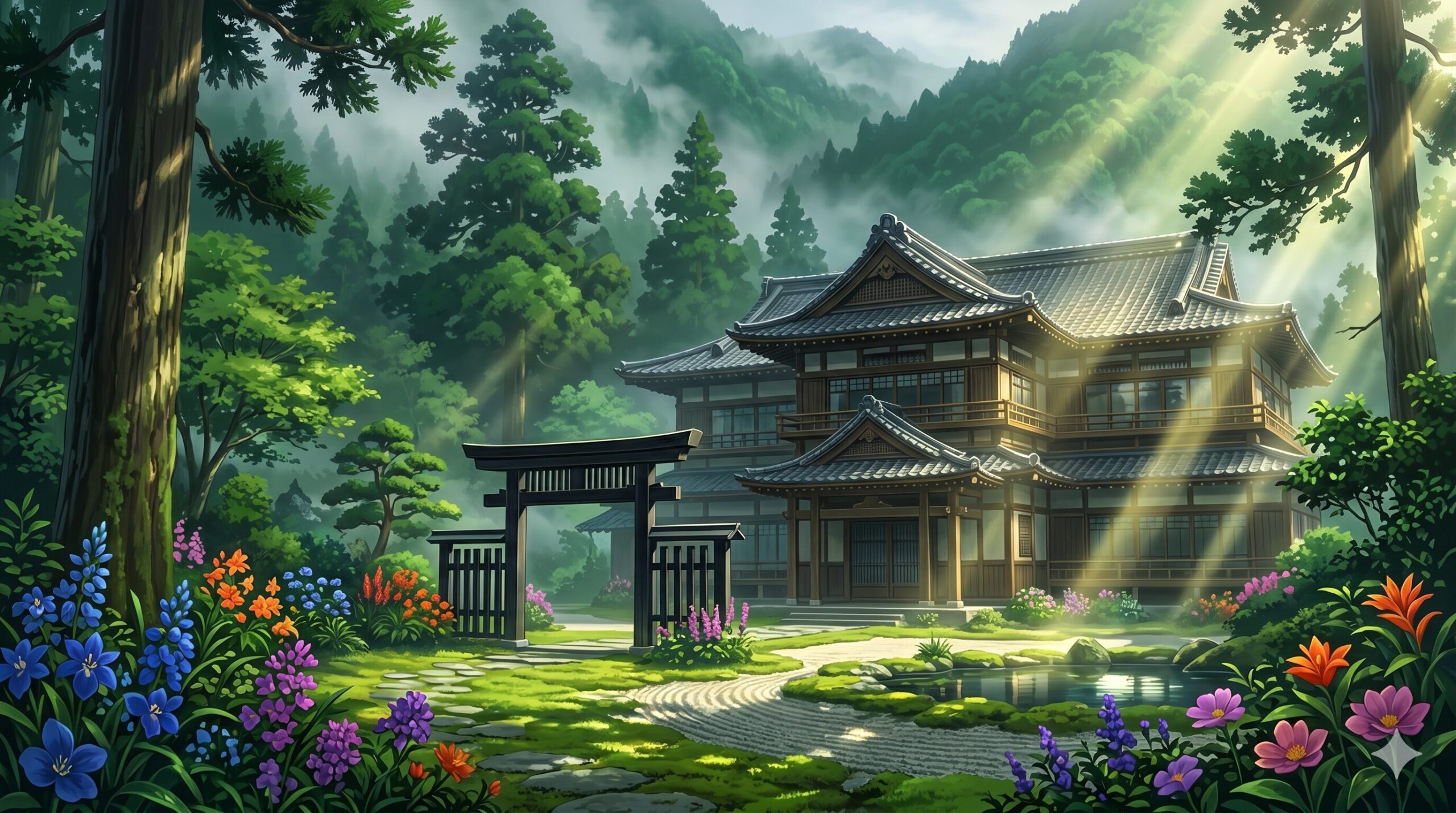
Once upon a time, deep in the majestic mountains of the Tohoku region, there existed a mysterious legend. It was the tale of a phantom mansion known as “Mayohiga” (The Lost House).
One day, a kind-hearted woman from a poor village ventured into the mountains to forage for wild vegetables. However, a thick fog descended, and she completely lost her way in the deep forest. As she wandered anxiously, the view suddenly opened up, and a magnificent mansion with an imposing black gate appeared before her. In the garden, vibrant flowers were in full bloom, cows and horses grazed peacefully, and chickens clucked. Yet, there was absolutely no sign of human life.
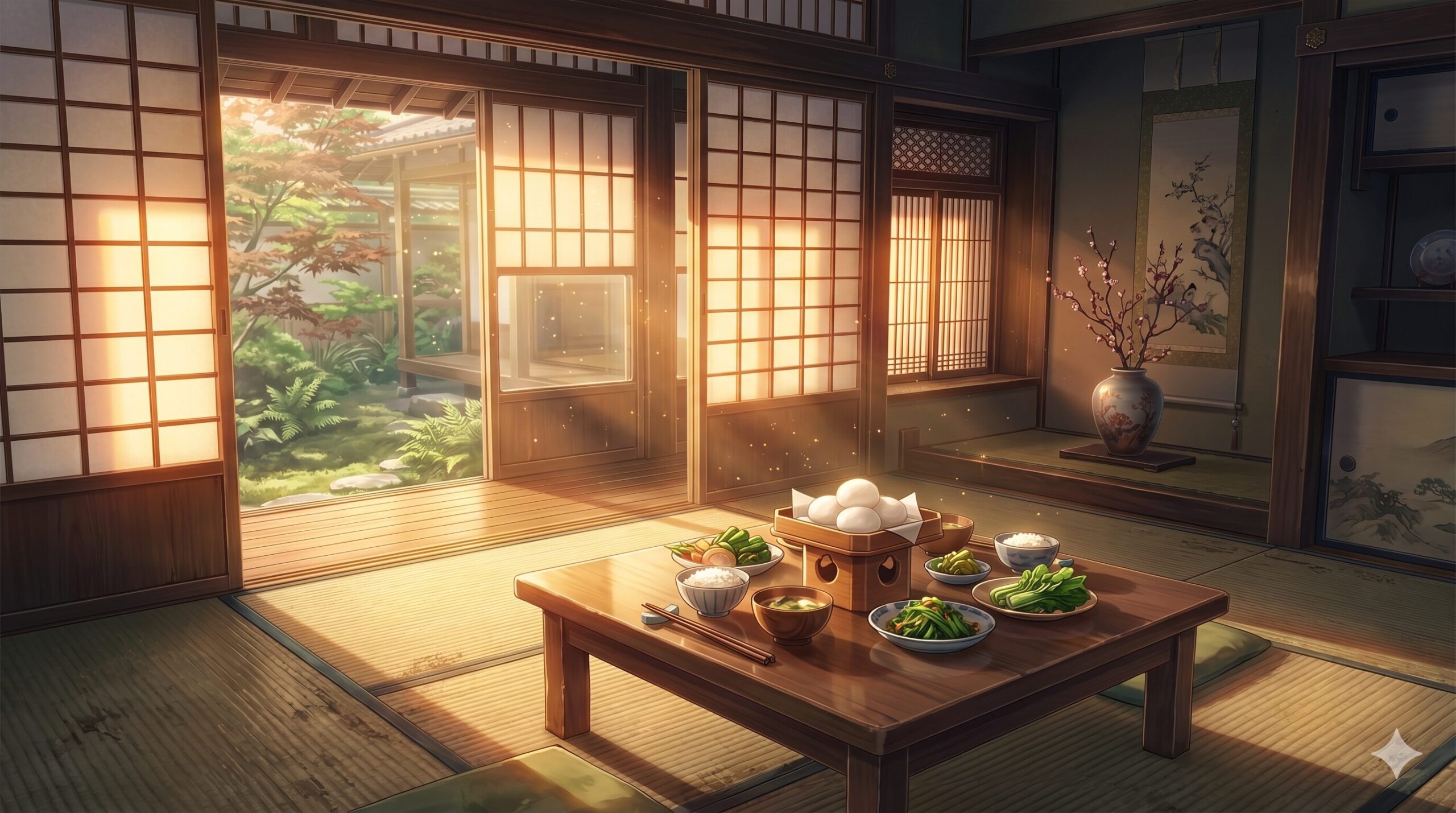
Feeling bewildered but curious, she stepped inside the mansion. In the rooms, luxurious vermilion-lacquered trays were neatly arranged, and an iron kettle was simmering over the sunken hearth, singing a warm tune. It looked exactly as if someone were preparing for a grand feast at that very moment. She realized, “This must be the Mayohiga that the gods have guided me to.” According to local legend, anyone who stumbles upon Mayohiga and takes just one item from the house is promised a lifetime of wealth and good fortune.
However, being humble and devoid of greed, she thought, “I cannot take things from another person’s home without permission.” She left the mansion without touching a single treasure and eventually found her way back to her village safely.
A few days later, while the woman was washing her hands in the village stream, a beautifully shining vermilion-lacquered bowl floated down from upstream. She gently picked it up and took it home. To her astonishment, when she used the bowl to measure rice, the rice in her storage box never depleted, no matter how many times she scooped. Thanks to this magical bowl, her family instantly became the wealthiest in the village, and they lived happily ever after.
Deep Analysis of “Mayohiga”: The Boundary Between Worlds
This story is not merely a fairy tale about good luck. In Japanese mythology and folklore, Mayohiga symbolizes a portal to the “Otherworld” (a dimension distinct from the human realm). Mountains have been revered since ancient times as sacred places where gods and spirits reside.
What is highly intriguing are the “conditions” for obtaining the wealth of Mayohiga. Taking tableware or livestock from this mansion is justified not as theft, but as a “gift from the gods.” Yet, the protagonist refused to take anything out of her own desire. Consequently, wealth (the vermilion bowl) was delivered to her by the gods through the river—a traditional symbol of the boundary connecting the Otherworld to our mortal world. This illustrates a profound moral: the divine tests human nature and bestows blessings only upon those who are truly worthy.
Connection to Japanese Culture: The Virtue of Selflessness and Mountain Worship
From the legend of Mayohiga, we can decipher two vital cultural values that flow at the foundation of Japan.
The first is “Mountain Worship” (Sangaku Shinko) and animism. The mountains, which occupy most of Japan’s landmass, are objects of awe and the ultimate source of nature’s blessings. A humble attitude toward nature is strongly reflected in this tale.
The second is the “Virtue of Selflessness” (Muyoku). In Japanese culture, suppressing greed and possessing a spirit of being content with what one has (a modesty that connects to the concept of Wabi-Sabi) is considered a high virtue. The fact that the protagonist did not jump at the treasure before her eyes, but instead received her fortune naturally later, is an expression of the Japanese ethical view that a pure heart without artificial desires ultimately attracts the greatest happiness.
A Question for You: What If You Found a Mansion in the Deep Woods?
Living in the modern world, we are surrounded by countless material desires every day. If you were to find the enchanting “Mayohiga” in the deep woods, fully prepared and waiting for you, what would you do?
Knowing that you are promised a lifetime of wealth, would you have the courage to walk away empty-handed? Or would you take the most beautiful treasure with you? Please reflect on this mysterious legend and search for the answer deep within your own heart.
If you want to enjoy more mysterious Japanese folktales, please check out this category:
Internal Link: Japanese Folktale Series
Reference (External Link): Wikipedia – Mayohiga
日本の神秘的な昔話「マヨヒガ(迷い家)」
昔々、東北地方の深い山奥にまつわる不思議な伝説がありました。それは「マヨヒガ(迷い家)」と呼ばれる、幻の豪邸のお話です。
ある日、貧しい村の心優しい女性が、山へ山菜を採りに入りました。しかし、霧が濃くなり、彼女は深い森の中で完全に道に迷ってしまいます。心細く歩き続けるうち、ふと視界が開け、立派な黒い門構えの大きな屋敷が目の前に現れました。庭には色鮮やかな花が咲き乱れ、牛や馬がのんびりと草を食み、鶏が鳴いています。しかし、人の気配は全くありません。
不思議に思いながらも屋敷の中に足を踏み入れると、部屋には豪華な朱塗りの膳が並べられ、囲炉裏には鉄瓶がシュンシュンと音を立てて湯を沸かしていました。まるで、今まさに誰かが宴の準備をしているかのようでした。彼女は「ここは神仏が私を導いてくれたマヨヒガに違いない」と悟りました。伝説によれば、マヨヒガに行き着いた者は、その家から何か一つでも持ち帰れば、一生涯の富と幸運を約束されると言われていたからです。
しかし、無欲で控えめな彼女は、「他人の家から無断で物を持ち帰ることはできない」と、何も手に取らずに屋敷を後にし、どうにか自分の村へと帰りつきました。
それから数日後、彼女が村の小川で洗い物をしていると、上流から美しく輝く朱塗りの椀が一つ流れてきました。彼女はそれをそっと拾い上げ、自宅へ持ち帰りました。驚くべきことに、その椀で米を量ると、何度すくっても米櫃の米が減らなくなったのです。この魔法の椀のおかげで、彼女の家は瞬く間に村一番の長者となり、末永く幸せに暮らしたと言われています。
「マヨヒガ」の深い考察:神隠しと異界の境界線
この物語は、単なる幸運のおとぎ話ではありません。マヨヒガは、日本の神話や民俗学において「異界(人間界とは異なる次元)」への入り口を象徴しています。山は古来より、神々や精霊が住む神聖な場所とされてきました。
興味深いのは、マヨヒガの富を得るための「条件」です。この屋敷の食器や家畜を持ち帰ることは、窃盗ではなく「神からの授かりもの」として正当化されています。しかし、物語の主人公は自ら欲を出して物を取ることを拒みました。結果的に、川という「異界と現世を繋ぐ境界」を通じて、神の方から彼女へ富(朱塗りの椀)が送り届けられます。これは、神が人間の本質を試し、真にふさわしい者にのみ恩恵を与えるという深い教訓を示しています。
日本文化との繋がり:無欲の美徳と山岳信仰
マヨヒガの伝説からは、日本の根底に流れる二つの重要な文化的価値観を読み解くことができます。
一つ目は「山岳信仰」とアニミズムです。日本の国土の多くを占める山々は、畏怖の対象であり、恵みをもたらす源でもあります。自然に対する謙虚な姿勢が、この物語には色濃く反映されています。
二つ目は「無欲の美徳」です。日本文化では、強欲を戒め、足るを知る精神(わび・さびにも通じる控えめな心)が美徳とされます。主人公が目の前の宝に飛びつかず、後から自然な形で幸運を受け取ったことは、作為的な欲望を持たない純粋な心が最終的に最大の幸福を引き寄せるという、日本的な道徳観の表れです。
あなたへ問いかけ:もしも森の奥で豪邸を見つけたら?
現代を生きる私たちは、日々多くの物質的な欲望に囲まれています。もしもあなたが、深い森の中で全てが用意された魅惑的な「マヨヒガ」を見つけたら、どうするでしょうか?
一生の富を約束されると知りながら、あなたは何も持たずに立ち去る勇気がありますか?それとも、一番美しい宝物を手にして帰りますか?ぜひ、この不思議な伝説を思い出しながら、あなた自身の心の奥底にある答えを探してみてください。
日本の不思議な昔話をさらに楽しみたい方は、ぜひこちらのカテゴリーをご覧ください。
内部リンク:Japanese Folktale Series
参考資料(外部リンク):Wikipedia – マヨヒガ
コメント