Japanese folklore is filled with mystical and heartwarming tales woven by humans, nature, and animals. Today, we introduce a beautiful legend that strongly reflects Japanese spirituality and religious views: “Tenki Shonin and the Married Tanuki.” Immerse yourself in the profound depths of Japanese culture through this story.
Tenki Shonin and the Married Tanuki: A Story of Compassion and Repayment
Once upon a time, in a quiet temple nestled deep in the mountains, there lived a highly virtuous Buddhist monk named Tenki Shonin. While devoting himself to rigorous daily ascetic practices, he poured deep love into the villagers and the creatures of the mountain, preaching his teachings without discrimination.
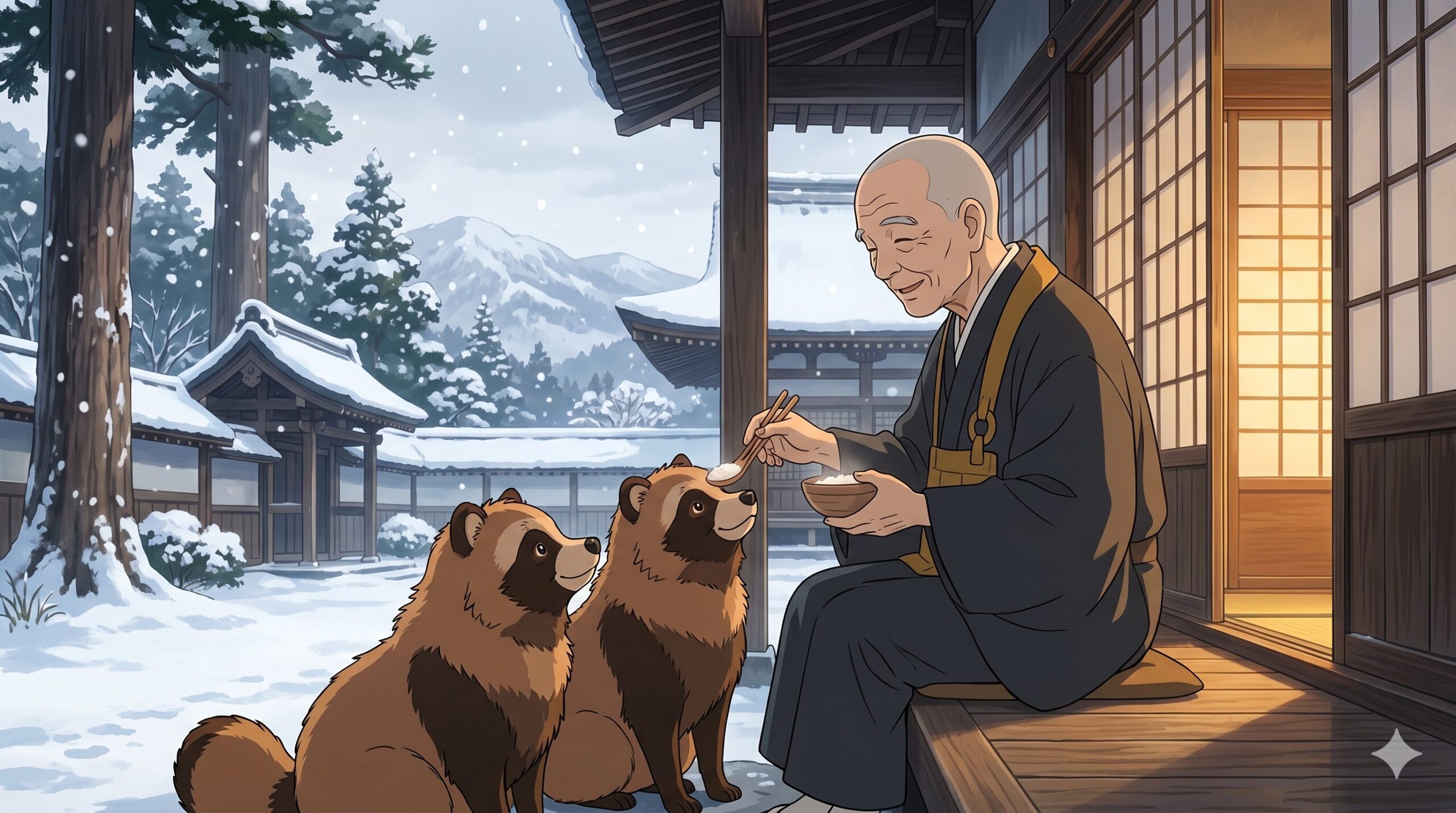
One winter, the mountain was hit by an unprecedented, fierce blizzard. Two Tanuki (Japanese raccoon dogs), starving and freezing, collapsed on the veranda of the temple. They were a married couple (Meoto). Feeling deep pity for them, Tenki Shonin invited them inside, shared his meager meal of rice porridge with them, and nursed them back to health by the warm hearth.
The Tanuki couple, having barely escaped death, were deeply moved by the monk’s profound compassion. Even when the snow melted and spring arrived, they did not return to the wild. Instead, they settled under the floorboards of the temple. Every day, they quietly listened as the monk preached the teachings of Buddha and chanted sutras.
Years passed, and a crisis struck the temple. A forest fire broke out in the middle of the night, and the flames rapidly approached the temple grounds. Tenki Shonin, unable to stop the fire alone, prepared himself for the end. At that moment, the Tanuki couple appeared. They soaked their fur in water and desperately threw themselves into the fire, risking their lives to extinguish the flames and protect the temple. Furthermore, they beat their large bellies like drums, echoing a warning sound throughout the valley to alert the villagers.
When the villagers finally arrived, the temple was miraculously safe, but the Tanuki couple had exhausted all their strength. They passed away peacefully in the arms of Tenki Shonin. The monk wept, buried them with the utmost respect, and enshrined them as the guardian deities of the temple. It is said that even today, their spirits remain in that land, continuing to protect people from disasters.
Analysis of the Tale: Why the Tanuki?
A crucial point in this story is the depiction of the “Tanuki.” In Japanese folklore, Tanuki, along with foxes (Kitsune), are often portrayed as mischievous Yokai (supernatural creatures) that trick humans. However, the Tanuki in this tale are not pranksters; they are depicted as beings with high spirituality, capable of understanding Buddhist teachings and feeling profound gratitude.
The fact that they are depicted as a “Meoto” (married couple) cannot be overlooked. In traditional Japanese values, the bond between a husband and wife is considered highly sacred and strong. The sight of the Tanuki couple adoring the monk together and risking their lives together to repay his kindness demonstrates the ultimate form of love and loyalty.
Connection to Japanese Culture: “Ongaeshi” and “Animism”
The core of Japanese culture to be decoded from this folktale is the spirit of “Ongaeshi” (repayment of kindness) and the worldview of “Syncretism of Shinto and Buddhism / Animism.”
1. The Aesthetics of Ongaeshi (Repayment of Kindness)
Many Japanese folktales share the theme of always repaying a favor received. The “Crane’s Return of a Favor” is famous, but “Tenki Shonin and the Married Tanuki” is another prime example. The act of rewarding a benefactor even at the cost of one’s own life symbolizes the moral values and sense of duty inherent in the Japanese people.
2. Animism and Coexistence
The idea that animals have hearts and can attain enlightenment by understanding Buddhist teachings is the result of merging Shinto animism—which believes gods reside in all elements of nature—with Buddhist philosophy, which seeks to save all living beings. This reflects the traditional Japanese view of nature: humans are not the rulers of nature, but a part of it, coexisting harmoniously with animals.
A Question for You
Tenki Shonin shared his own food with wild animals and saved their lives. In return, the Tanuki risked their lives to repay that kindness. Do we, living in modern society, possess such unconditional love and gratitude toward nature and others?
If you encountered an animal asking for help on a snowy night, what would you do? Furthermore, how do you wish to repay the “favors” you have received from others in your life? Please take a moment to reflect on your own heart through this story.
Reference Links
- Read more Japanese Folktale Series (Internal Link)
- Learn about Bake-danuki (Wikipedia)
- History of Japanese Folklore (Wikipedia)
日本の隠れた名作昔話:天基上人とめおと狸の物語
日本の昔話には、人間と自然、そして動物たちが織りなす神秘的で心温まる物語が数多く存在します。今回は、日本の精神性や宗教観を色濃く反映した美しい伝説「天基上人(てんきしょうにん)とめおと狸」をご紹介します。この物語を通じて、日本文化の深淵に触れてください。
天基上人とめおと狸:慈愛と恩返しの物語
むかしむかし、深い山奥にある静かなお寺に、天基上人という大変徳の高いお坊さんが住んでいました。上人は日々厳しい修行を重ねながらも、村人たちや山の生き物たちに深い愛情を注ぎ、分け隔てなく教えを説いていました。
ある年の冬、山は例年にない猛吹雪に見舞われました。食べ物を失い、寒さに凍える二匹の狸が、お寺の縁側に行き倒れていました。この二匹は夫婦の狸(めおと狸)でした。天基上人は彼らを不憫に思い、寺の中に招き入れ、自らのわずかな食事であるお粥を分け与え、温かい囲炉裏のそばで介抱しました。
一命を取り留めためおと狸は、上人の深い慈悲に心を打たれました。雪が解け、春が来ても、彼らは山へは帰らず、お寺の床下に住み着くようになりました。そして、毎日上人が仏の教えを説き、お経を読み上げるのを、静かに耳を傾けて聞いていたのです。
年月が流れ、お寺が火災の危機に瀕した時のことです。夜中に山火事が発生し、火の手がお寺に迫りました。天基上人は一人で火を防ぐことができず、覚悟を決めました。その時、めおと狸が現れました。彼らは自らの毛を水で濡らし、命がけで火の中に飛び込み、お寺を守ろうと必死に火を消し止めました。さらに、大きな腹を叩いて村人たちに危機を知らせる音を響き渡らせたのです。
村人たちが駆けつけた時、お寺は奇跡的に無事でしたが、めおと狸は力を使い果たし、上人の腕の中で静かに息を引き取りました。天基上人は涙を流し、彼らを手厚く葬り、お寺の守護神として祀りました。現在でも、彼らの魂はその地に留まり、人々を災いから守り続けていると伝えられています。
物語の考察:なぜ狸が選ばれたのか
この物語において非常に重要なポイントは、「狸(たぬき)」という動物が描かれている点です。日本の民間伝承において、狸は狐(きつね)と並んで人を化かす妖怪のような存在として描かれることが多い動物です。しかし、この物語の狸は悪ずらをする存在ではなく、仏の教えを理解し、恩義を感じる高い精神性を持った存在として描かれています。
「めおと(夫婦)」として描かれている点も見逃せません。日本の伝統的な価値観において、夫婦の絆は非常に神聖で強いものとされています。めおと狸が共に上人を慕い、共に命をかけて恩返しをする姿は、愛と忠誠の究極の形を示しています。
日本文化との関連:「恩返し」と「アニミズム」
この昔話から読み解くべき日本文化の核心は、「恩返し(Ongaeshi)」の精神と、「神仏習合・アニミズム」の世界観です。
1. 恩返し(Ongaeshi)の美学
日本の昔話の多くは、受けた恩を必ず返すというテーマを持っています。「鶴の恩返し」などが有名ですが、この「天基上人とめおと狸」もその一つです。自分が犠牲になってでも恩人に報いるという行動は、日本人の道徳観や義理堅さを象徴しています。
2. アニミズムと共生
人間以外の動物にも心があり、仏の教えを理解して悟りを開くことができるという考え方は、自然界のすべてのものに神が宿るとする神道のアニミズムと、命あるものすべてを救済しようとする仏教の思想が融合した結果です。人間は自然の支配者ではなく、自然の一部として動物たちと共生するという日本の伝統的な自然観がここに表れています。
あなたへの問いかけ
天基上人は、野生の動物に対して自らの食料を分け与え、命を救いました。そして狸たちは命を賭してその恩に報いました。現代社会に生きる私たちは、自然や他者に対してこれほどの無償の愛や感謝を持っているでしょうか?
もしあなたが雪の夜、助けを求める動物に出会ったら、あなたはどうしますか?また、あなたが誰かから受けた「恩」を、どのように返していきたいですか?ぜひ、この物語を通じて、あなた自身の心と向き合ってみてください。

コメント