Once upon a time, in a nature-rich and historic village in Kamakura, there stood a magnificent house with a large tile roof and a small thatched-roof house, built so close together they seemed to be embracing. The masters of these two households were the best of friends, paying absolutely no mind to the differences in their social standing or wealth. Their sons, “Rokusuke” and “Senkichi,” grew up watching their fathers’ backs and shared the exact same unbreakable bond of friendship.
Peaceful years passed, and eventually, both fathers departed from this world one after another. Amidst deep sorrow, Senkichi, who lived in the thatched-roof house, had a strange and heartbreaking dream one night. In his dream, he saw the pitiful figure of his deceased father wandering aimlessly through the endless darkness of the afterlife.
With an expression of pure anguish, his father said to Senkichi: “Senkichi, I am being fiercely tormented by the demon subordinates of Lord Enma (the King of Hell), and I still cannot attain Nirvana. The truth is, while I was alive, I borrowed ‘One Kan of coins and three bags of wheat’ from Rokusuke’s father next door, and I died before I could return it. Please, my beloved son, repay this debt in my stead and save my soul.”
Waking up in tears, Senkichi worked desperately, sacrificing his own well-being without a single day of rest—through rain and wind—for an entire year, all to save his beloved father from the suffering of hell. Finally, he managed to gather the “One Kan of coins and three bags of wheat.” He brought them to Rokusuke, explained every detail of his dream, and pleaded with him to accept the repayment so his father could finally attain Nirvana.
However, the story takes an unexpected turn here. On the night Rokusuke accepted the items from Senkichi, Rokusuke’s deceased father appeared in Rokusuke’s dream, absolutely furious. “Rokusuke! Times of trouble are mutual. I never intended to lend those items to my best friend in the first place; they were a gift. If you accept them now, I will have no face to show my friend in the afterlife, nor to society! You must absolutely return them!” he scolded fiercely.
The next morning, Rokusuke rushed to Senkichi to return the items. “My father strictly forbade me. I absolutely cannot accept this!”
Senkichi argued back, “No! If you don’t accept this, my father will continue to suffer in hell for eternity! Please, I beg you, take it!”
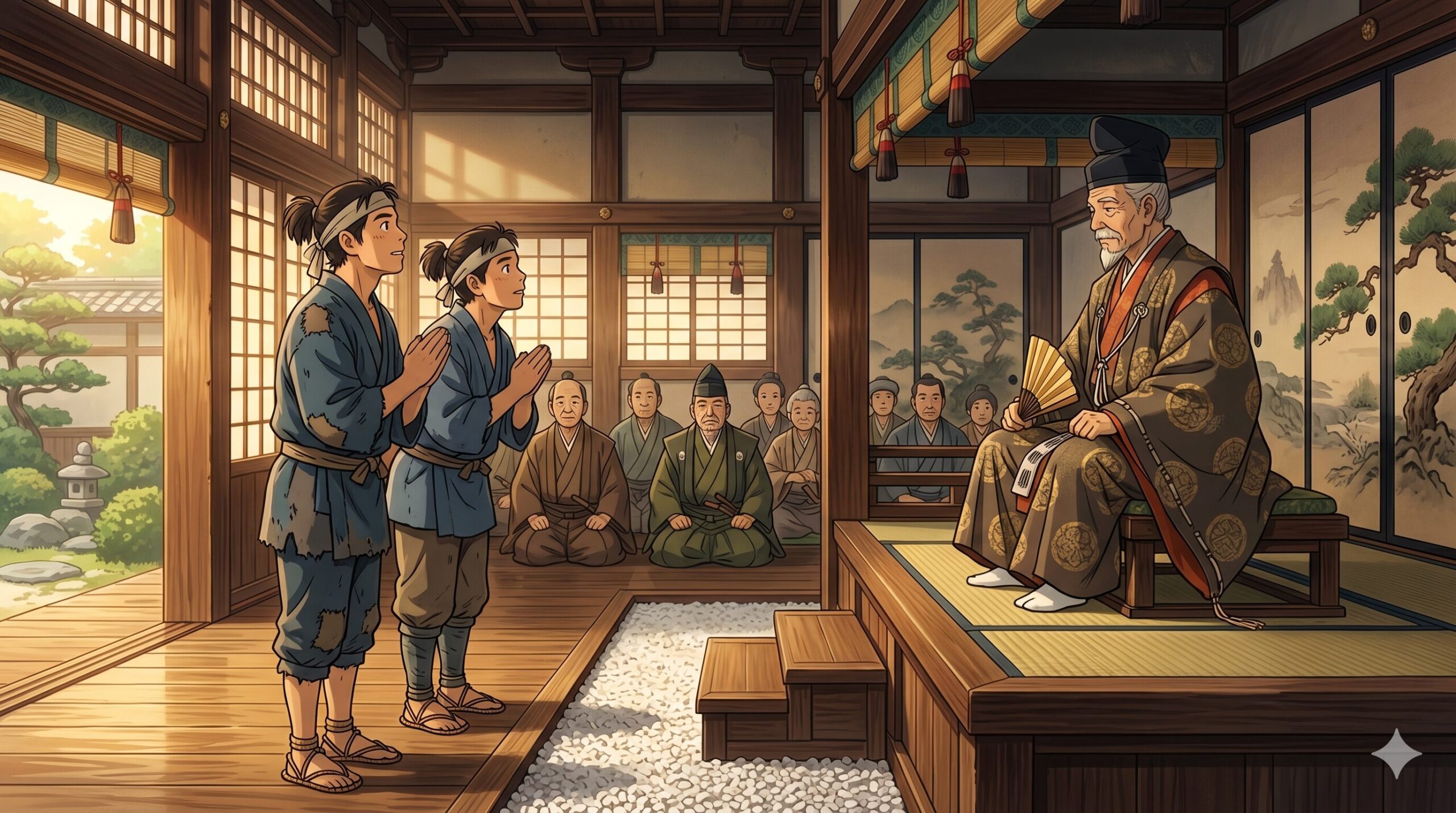
The two deeply filial sons, out of pure devotion to their fathers’ strict wishes, began an unyielding “fight of mutual concession.” This was not a conflict born of selfishness, but a dispute arising entirely from deep compassion for the other and profound love for their parents. No matter how much they discussed it, they could not reach a conclusion. At a complete loss, they finally decided to entrust the judgment to the “Magistrate” (the highest judge and governor) of Kamakura.
Listening quietly to every detail of their story, the Magistrate was deeply moved by their profound, pure hearts of filial piety and their beautiful friendship. He then delivered the following verdict in a calm yet majestic voice:
“Your devotion to your parents, and your compassion for your friend, is truly magnificent. This Magistrate’s office shall temporarily take official custody of the ‘One Kan of coins and three bags of wheat.’ Then, this office shall officially grant these items back to the two of you. Take this together to your Bodaiji (family temple) and offer it to hold a grand memorial service for your deceased fathers.”
Moved to tears by this warm and perfect judgment that saved both of their faces, the two sons were highly satisfied. They held a deeply respectful memorial service at the temple exactly as instructed. Thanks to this virtuous act, both fathers safely attained Nirvana, and this heartwarming tale of “Yume no Koushin” was proudly passed down by the villagers of Kamakura for generations to come.
Deep Analysis of the Folktale: Why Did They Fight?
The greatest charm of this story, and what deeply draws the reader in, lies in its incredibly rare conflict structure: a “clash of pure goodwill.” Throughout human history and in typical stories, conflicts arise from “stealing,” “hatred,” or “selfishness.” However, the dispute between Senkichi and Rokusuke stems entirely and beautifully from “giving” and “compassion.”
Senkichi worked desperately to clear his father’s sins and save his soul. Within this act lies deep love for his parent (filial piety) and an absolute, honest sincerity toward his best friend Rokusuke’s family. On the other hand, Rokusuke’s father maintained his unconditional love and friendship even after death, embodying the spirit of “helping each other in times of trouble.” Rokusuke, in turn, tried to protect his father’s noble spirit and honor.
Because both sides had “completely abandoned their own self-interest,” the issue reached a critical level where the involved parties could absolutely never resolve it themselves. To overcome this ultimate dilemma, the existence of an absolute authority, the “Magistrate,” acting as a third party, was indispensable. The Magistrate did not hand down a cold verdict bound by rigid laws and rules; instead, he presented a perfect solution that sublimated the situation without hurting either their “love for their parents” or their “compassion for each other.” This story is a masterpiece that portrays the beautiful friction that occurs when human virtues are elevated to their absolute limit, and the immense tolerance of a society that embraces it.
Decoding from Japanese Culture: The Spirit of “Otagaisama” and “Kuyou”
This tale, “Yume no Koushin,” heavily and beautifully reflects unique Japanese culture and spirituality. Here, we explain three particularly important traditional cultural backgrounds for our overseas readers.
1. The Spirit of “Otagaisama” (Mutual Help)
The phrase “Times of trouble are mutual,” spoken by Rokusuke’s father, represents one of the most highly valued traditional ethics in Japanese communal society. This is the profound philosophy that “Since every human being will inevitably face hardships while living, it is only natural to help each other.” This unconditional mutual support, without expecting anything in return, was the very foundation that strongly sustained traditional Japanese village communities and human bonds.
2. Lord Enma and the Japanese View of Life and Death
Senkichi’s father mentioned that he could not attain Nirvana because he was “tormented by Lord Enma for not repaying a debt.” In the traditional Japanese Buddhist view of life and death, it is believed that people face judgment by Lord Enma (the King of the Underworld) after they die. Dying while leaving behind earthly attachments or unfulfilled “Giri” (social obligations) was considered a grave sin that hindered the soul’s journey. Just as the Japanese proverb says, “A bird does not foul the nest it is about to leave,” cleanly settling one’s obligations and promises in this world is considered the most beautiful way to live and die.
3. “Kuyou” (Memorial Service) at the Bodaiji
The Magistrate ordered them to “offer the returned items to the Bodaiji (the temple where the family’s ancestral graves are located) to hold a memorial service.” In Japan, there is a deep-rooted, ancient culture of purifying financial troubles or intense, unresolvable feelings by converting them into an “offering” to Buddha or the gods. A “Kuyou” is a sacred act of praying from the bottom of one’s heart for the happiness of the deceased in the afterlife. By dedicating the money and wheat—the ultimate crystallization of their pure friendship and filial piety—to the temple, the items were sublimated from mere “material wealth” into a “sacred prayer” that eternally saved their parents’ souls.
To Our Readers: What Would You Do?
How did you feel about the unwavering, beautiful friendship between Senkichi and Rokusuke, and the magnificent, love-filled judgment of the Magistrate?
If your deceased parent appeared in your dream and strictly told you to “Repay that person without fail,” or “Never accept anything from that person,” how would you face those heavy words? In modern capitalist society, we often tend to prioritize our own personal gains and efficiency, but how did this story of “compassion accompanied by absolute self-sacrifice” resonate with your heart?
Please think deeply about your own life experiences and any similar moral values that might exist in your country. We would absolutely love to hear your brilliant thoughts and impressions, so please share them in the comments section or on SNS! We sincerely hope that Japanese folktales can serve as a wonderful spice to enrich your life.
References & Related Links
- Internal Link: Read more stories in our Japanese Folktale Series
- External Link: Kamakura Tourism Association – Discover the breathtaking scenery and historic temples of Kamakura, the beautiful real-world setting of this story.
- External Link: Japan National Tourism Organization (JNTO) – The official, comprehensive source for exploring and learning about traditional Japanese culture and history.
日本の心温まる昔話「夢の孝心(ゆめのこうしん)」
昔々、自然豊かで歴史ある鎌倉のとある村に、大きな瓦屋根の立派な家と、小さなわらぶき屋根の家が、まるで身を寄せ合うように並んで建っていました。二つの家の主人は身分や貧富の差を全く気にすることなく、家族のように非常に仲の良い親友同士でした。そして、彼らの息子である「六助(ろくすけ)」と「千吉(せんきち)」もまた、父親たちの背中を見て育ち、固い絆で結ばれた親友同士でした。
平和な月日は流れ、やがて二人の父親は相次いでこの世を去りました。深い悲しみに暮れる中、わらぶき屋根の家に住む千吉はある夜、非常に不思議で、胸の締め付けられるような夢を見ました。夢の中には、死後の世界である冥土の暗闇をあてどなくさまよう、父親の哀れな姿があったのです。
父親は千吉に悲痛な顔で告げました。「千吉よ、私は閻魔(えんま)様の手下の鬼たちに激しく責められ、いまだに成仏できずに苦しんでいる。実は生前、隣の六助の親父殿から『銭一貫と麦三俵』を借りたまま、返す前に死んでしまったのだ。どうか愛する息子よ、私の代わりにこの借りを六助に返して私を救ってくれ。」
涙とともに目を覚ました千吉は、愛する父親を地獄の苦しみから救うため、雨の日も風の日も休むことなく、自らの身を粉にして一年間必死に働き続けました。そしてついに「銭一貫と麦三俵」を用意し、六助のもとへ持参しました。千吉は夢の顛末をすべて話し、どうかこれを受け取って親父を成仏させてほしいと懇願しました。
しかし、物語はここで思わぬ方向へ進みます。千吉から品物を受け取ったその夜、今度は六助の夢枕に、六助の亡き父親が恐ろしい剣幕で現れたのです。「六助!困ったときはお互い様だ。私は最初から親友に物を貸したつもりなどない。すべて譲ったのだ。それを受け取ってしまっては、あの世で親友に合わせる顔がないし、世間様にも顔向けができない。絶対に突き返せ!」と激しく叱りつけました。
翌朝、六助は急いで千吉のもとへ行き、品物を突き返そうとしました。「親父からきつく止められた。これは絶対に受け取れない!」
「いや、これを受け取ってもらわなければ、俺の親父が地獄で永遠に苦しみ続けるんだ!頼むから受け取ってくれ!」
父親を深く敬愛する二人の親孝行な息子たちは、互いの父親の言いつけを守ろうとするあまり、絶対に引くことのない「譲り合いの喧嘩」を始めてしまいました。私利私欲のためではなく、相手を思いやり、親を思うがゆえの争いです。何度話し合っても結論は出ず、困り果てた二人は、ついに鎌倉を治める最高裁判官である「お奉行様」に裁きを委ねることにしました。
二人の話の一部始終を静かに聞いていたお奉行様は、彼らの深く純粋な親孝行の心と、相手を思いやる友情に深く感銘を受けました。そして、静かに、しかし威厳に満ちた声でこのように裁きを下しました。
「お前たちの親を思う心、そして友を思いやる心、実に見事である。その『銭一貫と麦三俵』は、一旦この奉行所が預かろう。そして、改めて奉行所からお前たち二人にこれを与える。二人でこれを菩提寺(ぼだいじ)に納め、亡き父親たちの立派な供養をしなさい。」
この温かく、そして双方の顔を立てる完璧な名裁きに、二人の息子は涙を流して大満足しました。二人は言われた通りにお寺で手厚い供養を行いました。その功徳により父親たちは無事に成仏し、この心温まる「夢の孝心」の物語は、鎌倉の村人たちによって後世まで語り継がれることになったのです。
昔話の深い考察:なぜ彼らは争うことになったのか?
この物語の最大の魅力であり、読み手を深く惹きつけるのは「善意と善意の衝突」という非常に珍しい対立構造を持っている点です。人類の歴史や通常の物語において、争いというものは「奪い合い」や「憎しみ」「利己心」から生まれます。しかし、千吉と六助の争いは完全に「与え合い」と「思いやり」から生じています。
千吉は、自分の父親の罪を清算し、魂を救済するために必死に働きました。そこには、親への深い愛情(孝心)と、親友である六助の家に対する一切の嘘偽りのない誠実さがあります。一方の六助の父親は、「困ったときはお互い様」という無償の愛と友情を死後も貫いており、六助もまたその父の気高い精神と名誉を守ろうとしました。
双方が「自分の利益を完全に放棄している」からこそ、この問題は当事者同士では絶対に解決できないレベルに達してしまったのです。この究極のジレンマを解消するためには、第三者であり、絶対的な権威を持つ「お奉行様」の存在が不可欠でした。お奉行様は、法律や規則に縛られた冷たい判決を下すのではなく、二人の「親を思う心」と「相手を思いやる心」の両方を傷つけることなく昇華させる、完璧な解決策を提示しました。この物語は、人間の美徳が極限まで高まったときに生じる葛藤と、それを優しく包み込む社会の寛容さを描いた傑作と言えます。
日本文化からの読み解き:「お互い様」と「供養」の精神
この「夢の孝心」には、日本独特の文化や精神性が色濃く、そして美しく反映されています。海外の読者の皆様に向けて、物語の背景にある特に重要な3つの日本文化を解説します。
1. 「お互い様(Otagaisama)」の精神
六助の父親が放った「困ったときはお互い様」という言葉は、日本の共同体社会において最も重要視される伝統的な価値観の一つです。これは「人間は生きている限り、誰しも必ず困難に直面する。だからこそ、お互いに助け合うのが当然である」という考え方です。見返りを一切求めないこの助け合いの精神が、かつての日本の村社会や人々の絆を強固に支える根幹でした。
2. 閻魔大王と日本の死生観
千吉の父親は「借金を返さないと閻魔(えんま)様に責められ成仏できない」と語りました。日本の仏教的死生観では、人は死後、冥界の王である閻魔大王の裁きを受けるとされています。現世での未練や「借り(義理)」を残したまま死ぬことは、魂の旅立ちを妨げる重大な罪と考えられていました。「立つ鳥跡を濁さず」という日本のことわざにもあるように、現世での義理や約束を綺麗に清算することが、最も美しい生き方であり死に方であるとされているのです。
3. 菩提寺での「供養(Kuyou)」という解決策
お奉行様は、返済物を「菩提寺(先祖代々の墓がある寺)に納めて供養しなさい」と命じました。日本では古くから、金銭的なトラブルや行き場のない強い思いを、仏様や神様への「奉納」という形に変換することで浄化する文化があります。供養とは、亡くなった方の冥福を心から祈り、あの世での幸せを願う神聖な行為です。二人の友情と孝心の結晶であるお金と麦を寺に納めることで、それは単なる「物質(お金)」から、親の魂を永遠に救う「神聖な祈り」へと昇華されたのです。
読者の皆様へ:あなたならどうしますか?
千吉と六助の決して揺るがない美しい友情と、お奉行様の愛に溢れた見事な裁きについて、あなたはどのように感じましたか?
もしあなたの夢に亡き親が現れ、「あの人に必ず借りを返してくれ」あるいは「あの人から決して物を受け取るな」と告げられたら、あなたはその重い言葉にどう向き合いますか?現代の資本主義社会において、私たちはつい自分の利益や効率を優先しがちですが、この物語が教えてくれる「自己犠牲を伴う思いやり」は、あなたの心にどのように響いたでしょうか。
ぜひ、あなた自身の人生経験や、あなたの国にある似たような道徳的価値観について深く考えてみてください。そして、あなたの素晴らしい考えや感想を、コメント欄やSNSで私たちと共有してください。日本の昔話が、皆様の人生を豊かにするスパイスになることを願っています。
参考文献・関連リンク
- 内部リンク:Japanese Folktale Series(日本の昔話シリーズの一覧はこちら)
- 外部リンク:鎌倉市観光協会 (Kamakura Tourism Association) – 物語の美しい舞台である鎌倉の風景や歴史的寺院の観光情報をご覧ください。
- 外部リンク:Japan National Tourism Organization (JNTO) – 日本の伝統文化や歴史について深く学べる公式情報サイトです。
コメント