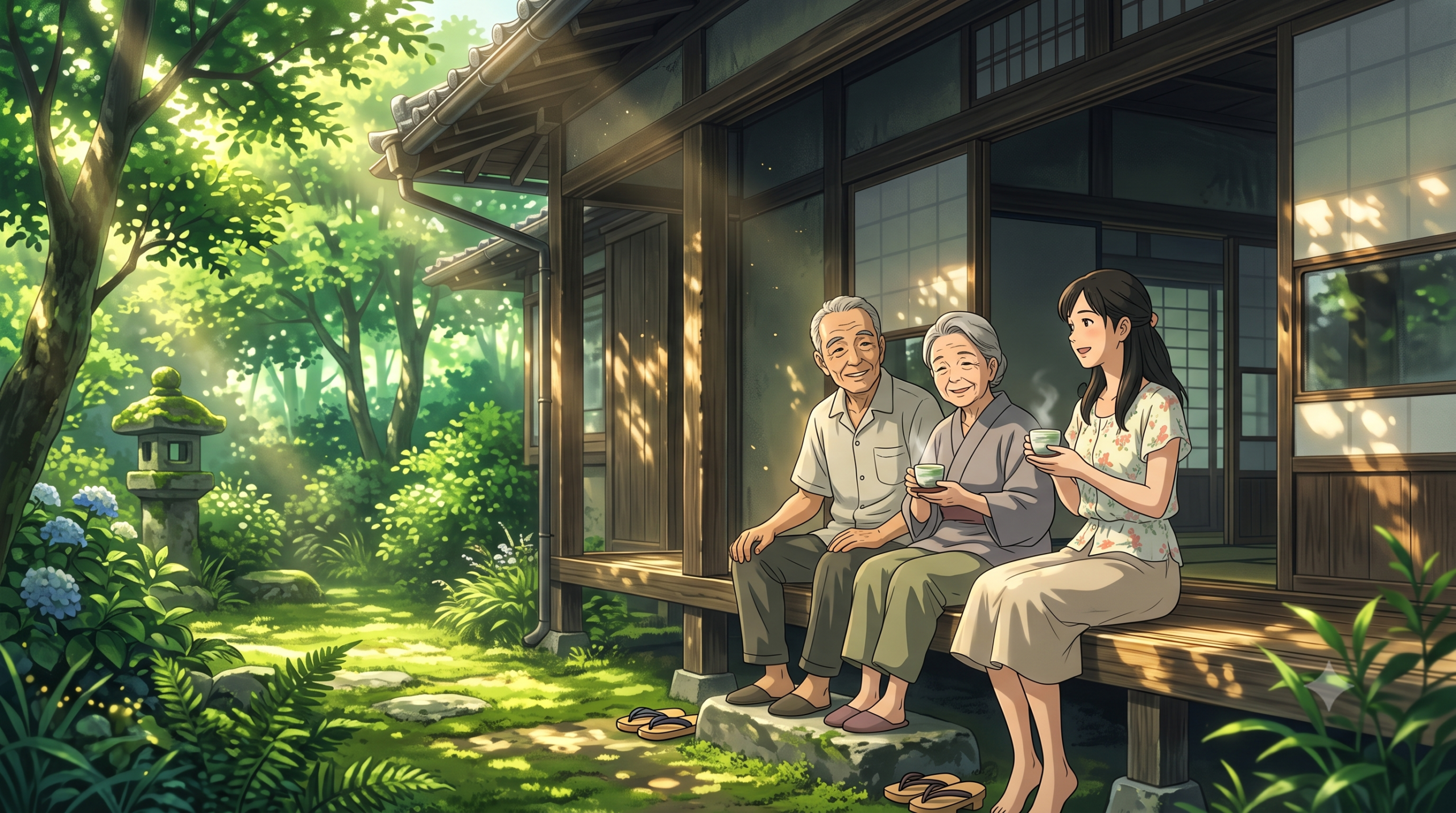
Japan is home to countless unique anniversaries and commemorative days throughout the year. Among them, August 8th stands out as “Oyakoko no Hi” (Filial Piety Day or Parents’ Day)—a vital occasion dedicated to reaffirming gratitude toward one’s family. Deeply reflecting traditional Japanese values and family dynamics, this day holds profound significance beyond a simple play on words. Today, we will explore the historical background of “Oyakoko no Hi” and deeply analyze the bonds of family within Japanese culture.
The Origin and Historical Background of “Oyakoko no Hi”
“Oyakoko no Hi” was established in 1989 by the National Filial Piety Promotion Council. The choice of August 8th stems from a clever Japanese play on words. The number “88” can be read as “Haha” (mother) and “Papa” (father) due to the phonetic sounds of the numbers. Therefore, it was deemed the most appropriate day to express heartfelt gratitude to both parents.
Furthermore, the month of August precedes “Obon,” a major traditional Japanese event. Obon is a period dedicated to welcoming and honoring the spirits of ancestors, during which many Japanese people return to their hometowns to gather with family and relatives. The existence of “Oyakoko no Hi” during this season beautifully symbolizes how respect for one’s ancestors and gratitude for living parents are continuously connected.
The Spirit of “Ko” (Filial Piety) in Japanese Culture
The concept of filial piety is deeply rooted in Japanese history and culture. Originally stemming from the Confucian philosophy of “Ko” in ancient China, it was introduced to Japan and merged with indigenous ancestral worship to undergo its own unique development.
During the Edo period (1603-1868), the Shogunate strongly promoted “Ko” as a pillar of moral education. Respecting and serving one’s parents was considered the most fundamental ethic for maintaining order in society as a whole. Literature and theater of the time, such as Kabuki and Joruri, frequently depicted tales of intense filial piety—sometimes even involving self-sacrifice—which deeply moved the public. While the older, self-sacrificing forms of filial piety have faded in modern Japan, the spiritual foundation of “repaying the debt of gratitude to the parents who raised you” is still securely inherited today.
Expressions of Gratitude in Modern Japan
In contemporary Japan, the forms of filial piety have diversified. It is no longer just about the traditional style of living together and providing financial support. Simply keeping in regular touch with parents who live far away, or gifting them a trip or a special meal on anniversaries, are considered excellent examples of modern filial piety.
Additionally, Japan has a culture of seasonal gift-giving known as “Ochugen” (summer) and “Oseibo” (winter). While these are customs for expressing gratitude to those who help you daily, they also serve as perfect opportunities to send special gifts to parents. Since August—the month of “Oyakoko no Hi”—coincides with the Ochugen season and summer vacation homecomings, simply sharing quality time as a family functions as the ultimate act of filial piety.
An Opportunity to Reflect on Family Gratitude
Japan’s “Oyakoko no Hi” is a wonderful reminder of the gratitude we often forget to show our closest loved ones amid our busy daily lives. Across cultures and borders, feelings of appreciation for parents and those who raised us are universal.
How did you feel reading this article? In your country or culture, how do you express your gratitude to your parents? Let today be the perfect excuse to convey your appreciation to your precious family in your own unique way.
Reference Links
- Explore more: What’s Today’s Special Day Series
- External Link: History and Concept of Filial Piety (Wikipedia)
8月8日は「親孝行の日」:日本文化に根付く家族の絆と感謝の心
日本には、一年を通じて数多くのユニークな記念日が存在します。その中でも8月8日は、家族への感謝を再認識するための大切な日、「親孝行の日」として制定されています。日本の伝統的な価値観や家族のあり方を深く反映しているこの記念日は、単なる語呂合わせ以上の深い意味を持っています。今回は、この「親孝行の日」の歴史的背景と、日本文化における家族の絆について詳細に紐解いていきます。
「親孝行の日」の由来と歴史的背景
「親孝行の日」は、1989年に親孝行全国推進協議会によって制定されました。8月8日が選ばれた理由は、日本語の語呂合わせに由来しています。「88」を「はち・はち」と読み、それが「はは(母)」と「ぱぱ(父)」の響きに通じることから、両親へ感謝を伝えるのに最もふさわしい日とされました。
また、8月という時期そのものが、日本の伝統行事である「お盆」の直前にあたります。お盆は先祖の霊を迎え入れ、供養する期間であり、多くの日本人が故郷に帰省し、家族や親戚と集まります。この時期に「親孝行の日」が存在することは、先祖への敬意と、今生きている両親への感謝が地続きであることを象徴しています。
日本文化における「孝」の精神
親孝行という概念は、日本の歴史と文化に深く根付いています。もともとは古代中国の儒教における「孝(こう)」の思想が日本に伝来し、日本の土着の祖先崇拝と融合することで独自の発展を遂げました。
江戸時代(1603年〜1868年)には、幕府が道徳教育の柱として「孝」を強く推奨しました。親を敬い、尽くすことは、社会全体の秩序を保つための最も基本的な倫理とされたのです。当時の文学や演劇(歌舞伎や浄瑠璃など)においても、自己犠牲を伴うほどの強い親孝行の物語が数多く描かれ、人々の心を打ちました。現代の日本では、自己犠牲を強いるような古い形の親孝行は影を潜めましたが、「育ててくれた親に対して恩返しをする」という精神的な基盤は、今も確実に受け継がれています。
現代日本における感謝の表現
現代の日本では、親孝行の形は多様化しています。同居して生活を支える伝統的なスタイルだけでなく、離れて暮らす両親と定期的に連絡を取り合うことや、記念日に旅行や食事をプレゼントすることも立派な親孝行とされています。
また、日本には「お中元(夏)」や「お歳暮(冬)」といった季節の贈り物文化があります。これらは日頃お世話になっている人へ感謝を伝える習慣ですが、両親に対して特別な品物を贈る絶好の機会でもあります。「親孝行の日」がある8月は、ちょうどお中元の時期や夏休みの帰省シーズンと重なるため、家族団らんの時間を共有すること自体が、最高の親孝行として機能しています。
家族への感謝を見つめ直す機会
日本の「親孝行の日」は、私たちが日々の忙しさの中でつい忘れがちな、最も身近な人々への感謝を思い出すための素晴らしいきっかけです。文化や国境を越えて、両親や育ててくれた人々に対する感謝の気持ちは普遍的なものです。
この記事を読んで、あなたはどのように感じましたか?あなたの国や文化では、両親への感謝をどのように表現しますか?ぜひ、今日という日をきっかけに、あなたなりの方法で大切な家族に「ありがとう」の気持ちを伝えてみてください。
参考リンク
- 内部リンク:今日は何の日シリーズをもっと読む
- 外部リンク:親孝行の歴史と概念(Wikipedia)

コメント