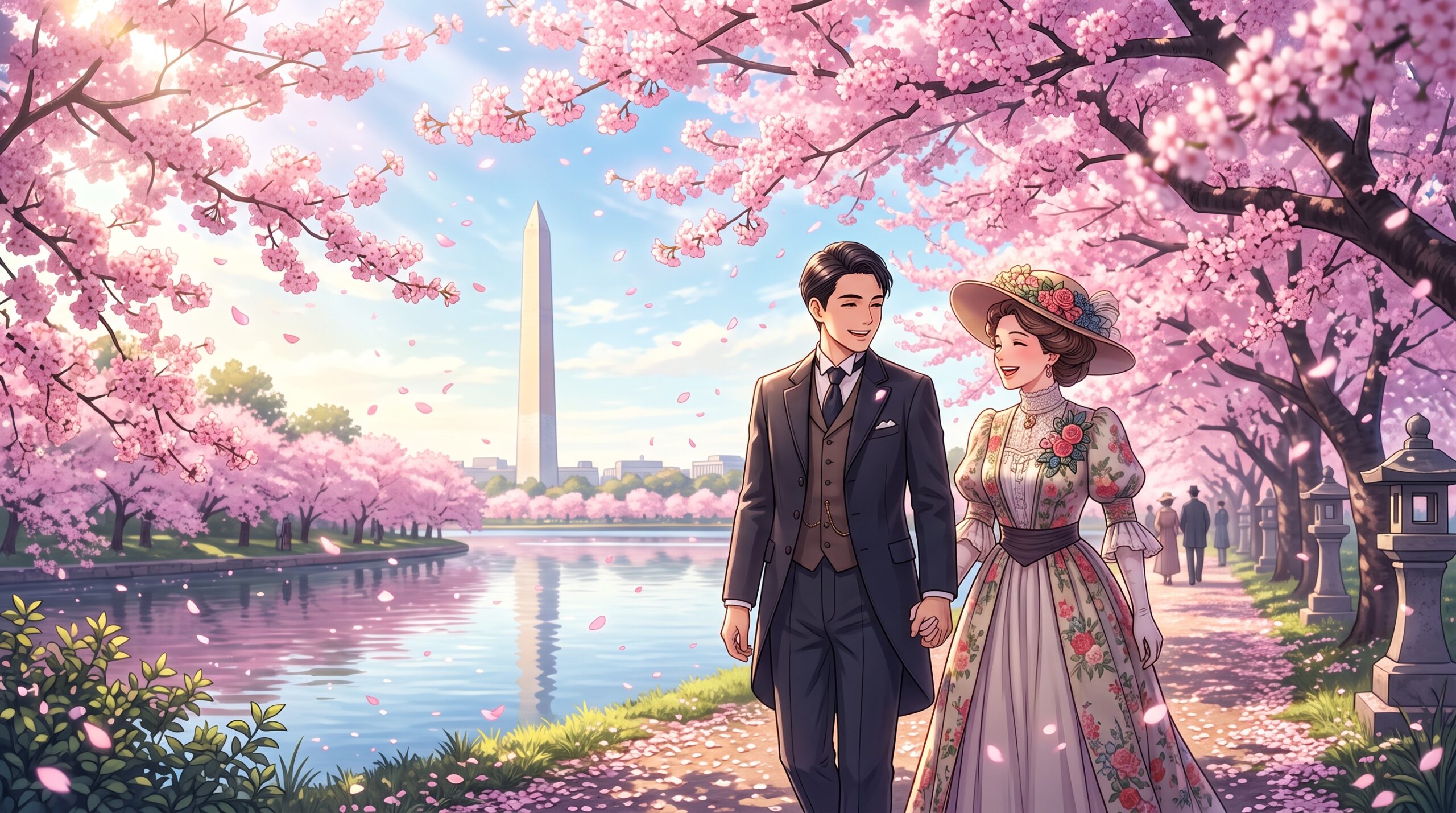
Washington D.C., the capital of the United States. Every spring, the banks of the Potomac River are dyed a beautiful pale pink, attracting millions of visitors not only from across the nation but from all over the world. Many of our readers may already know that the cherry blossom trees at the heart of this “National Cherry Blossom Festival” are actually a gift from Japan. However, few realize the depth of passion, setbacks, and profound friendship hidden behind this iconic scenery.
August 18, 1909, is a historic day when the city of Tokyo officially decided to donate 2,000 cherry blossom saplings to Washington D.C. as a token of goodwill between Japan and the United States. This day was not merely a date of diplomatic procedure; it was the first step in forging an eternal bond between two nations through the beauty of nature.
One Woman’s Dream and the Decision on August 18, 1909, That Moved History
The vision of planting cherry trees in Washington D.C. was by no means born overnight. Its origins trace back to the passion of a single woman: Eliza Ruhamah Scidmore, an American travel writer and the first female board member of the National Geographic Society. When she visited Japan, she was deeply captivated by the overwhelming beauty of the cherry blossoms and the culture of “Hanami” (flower viewing), where people enjoyed themselves under the flowers regardless of social status. After returning home, she persistently appealed to the U.S. government for 24 years, advocating that cherry trees should be planted along the Potomac River.
Her dream finally began to materialize in 1909. First Lady Helen Taft agreed with her proposal. Upon learning of this movement, Dr. Jokichi Takamine, a Japanese chemist known for discovering adrenaline, and Yukio Ozaki, the Mayor of Tokyo at the time, took action. They saw this as a perfect opportunity for Japan-U.S. friendship and elevated the plan from a private donation to an official gift from the city of Tokyo. Thus, on August 18, 1909, Tokyo officially decided to gift 2,000 cherry saplings.
Friendship Rising from the Ashes: The Unyielding Spirit of Japan and the US
The story does not end with a simple happily-ever-after here. In 1910, tragedy struck the 2,000 cherry trees that arrived in Washington D.C. via Seattle. Inspections by the U.S. Department of Agriculture revealed that the saplings were severely infested with pests and nematodes. To protect American agriculture, President Taft made an agonizing decision: all 2,000 newly arrived cherry trees had to be burned.
Having a gift of friendship burned could easily have escalated into a major international diplomatic issue. However, Japan did not respond with anger. Japanese diplomats and officials at the time showed deep understanding, stating, “Trees, like people, can get sick. Bringing diseased trees would only cause trouble for America.” This forgiving and graceful attitude deeply moved the American side.
Japan immediately assembled a team of top experts and restarted the project to cultivate perfect, pest-resistant cherry trees. Two years later, in 1912, an increased number of 3,020 perfectly healthy cherry saplings were delivered to Washington D.C. Some of the trees planted at that time are still vigorously blooming along the Potomac River today, over a century later. It is precisely because they overcame the tragedy of failure and incineration that these cherry blossoms became a symbol of true friendship.
The Heart of Japanese Culture Symbolized by Cherry Blossoms: Impermanence and “Omoiyari”
The reason Japanese people love cherry blossoms so deeply and wish to share them with the world is rooted in Japan’s unique culture and spirituality. The value of the cherry blossom lies not only in its beauty in full bloom but in its fleeting nature—falling after just a few days. This strongly reflects the Japanese aesthetic of “Mujokan” (the Buddhist concept of impermanence, that all things change and nothing is eternal) and “Mono no aware” (a deep emotional resonance and empathy for ephemeral things).
At the same time, Japan’s response when the trees were burned clearly demonstrates “Omoiyari” (compassion and consideration for others). They prioritized protecting the host country’s agriculture and environment over their own pride, quietly preparing for the next attempt instead of placing blame. This spirit of valuing harmony was, in fact, the true gift bestowed upon America through the cherry blossoms.
To Our Readers
Starting from the decision on August 18, 1909, the cherry blossoms of Washington D.C. have survived numerous hardships and have been passed down to this day. They are not merely plants, but the crystallization of cross-border human passion, understanding, and an unwavering spirit.
How did you feel reading this story? If you were to give “something” that symbolizes your country or culture to another nation, what would you choose? And what message or story would you embed in that gift? Please take a moment to reflect on your own thoughts and ideas.
References & Related Articles
- Internal Link: Read more in our “What’s Today’s Special Day” Series
- External Link: National Cherry Blossom Festival (Wikipedia)
- One Woman’s Dream and the Decision on August 18, 1909, That Moved History
- Friendship Rising from the Ashes: The Unyielding Spirit of Japan and the US
- The Heart of Japanese Culture Symbolized by Cherry Blossoms: Impermanence and “Omoiyari”
- To Our Readers
- References & Related Articles
- 【8月18日】ワシントンD.C.をピンクに染めた日米の絆:2,000本の桜が紡いだ感動のストーリー
【8月18日】ワシントンD.C.をピンクに染めた日米の絆:2,000本の桜が紡いだ感動のストーリー
アメリカ合衆国の首都、ワシントンD.C.。毎年春になると、ポトマック川の畔は美しい淡いピンク色に染まり、全米のみならず世界中から数百万人の人々が訪れます。この「全米桜祭り(National Cherry Blossom Festival)」の中心にある桜並木が、実は日本からの贈り物であることをご存知の読者も多いでしょう。しかし、その背後にどれほどの情熱、挫折、そして深い友情のストーリーが隠されているかは、あまり知られていません。
1909(明治42)年の8月18日は、当時の東京市がアメリカ・ワシントンD.C.へ日米親善の証として、2,000本の桜の苗木を寄贈することを正式に決定した歴史的な日です。この日は、単なる外交上の手続きが行われた日ではなく、二つの国が自然の美しさを通じて永遠の絆を結ぶ第一歩を踏み出した日なのです。
一人の女性の夢と、歴史を動かした1909年8月18日の決断
ワシントンD.C.に桜を植えるという構想は、決して一夜にして生まれたものではありませんでした。その起源は、アメリカの紀行作家でありナショナルジオグラフィック協会初の女性理事でもあった、エリザ・ルハマ・シドモアという一人の女性の情熱に遡ります。彼女は日本を訪れた際、桜の圧倒的な美しさと、花の下で人々が身分を問わず楽しむ「お花見」の文化に深く魅了されました。帰国後、彼女は「ポトマック川の畔に桜を植えるべきだ」と24年間にもわたりアメリカ政府に訴え続けました。
彼女の夢が現実へと動き出したのが1909年です。当時のファーストレディであったヘレン・タフト夫人が彼女の提案に賛同しました。この動きを知ったのが、アドレナリンの発見などで知られる日本の化学者・高峰譲吉博士と、当時の東京市長であった尾崎行雄です。彼らはこれを日米友好の絶好の機会と捉え、個人的な寄付から始まった計画を、東京市からの公式な贈り物へと昇華させました。そして1909年8月18日、東京市は正式に2,000本の桜の苗木の寄贈を決定したのです。
灰の中から蘇る友情:決して諦めなかった日本とアメリカ
物語はここでハッピーエンドを迎えるわけではありません。1910年、シアトルを経由してワシントンD.C.に到着した2,000本の桜に、悲劇が襲いかかります。アメリカ農務省の検査により、苗木が深刻な害虫や線虫に冒されていることが発見されたのです。アメリカの農業を保護するため、タフト大統領は苦渋の決断を下しました。到着したばかりの2,000本の桜は、すべて焼却処分されてしまったのです。
友好の証として送った贈り物が燃やされるという事態は、国際的な外交問題に発展してもおかしくありませんでした。しかし、日本は怒りませんでした。当時の日本の外交官や関係者は、「木も人間と同じように病気になることがある。病気の木を持ち込んではアメリカに迷惑がかかる」と深く理解を示したのです。この寛容な態度はアメリカ側を深く感動させました。
日本はすぐに最高の専門家チームを集め、害虫に強い完璧な桜を育てるためのプロジェクトを再始動させました。そして2年後の1912年、今度は3,020本に増やされた、完全に健康な桜の苗木が再びワシントンD.C.へと届けられました。この時植えられた桜の一部は、100年以上経った現在でもポトマック川の畔で力強く花を咲かせています。一度の失敗と焼却という悲劇を乗り越えたからこそ、この桜は真の友情の象徴となったのです。
桜が象徴する日本文化の心:無常観と「思いやり」
日本人がこれほどまでに桜を愛し、それを世界と共有したいと願う背景には、日本特有の文化と精神性が根付いています。桜は満開の美しさだけでなく、わずか数日で散ってしまうその儚さにこそ価値があるとされています。これは仏教的な「無常観(すべてのものは常に変化し、永遠ではないという考え)」と、「もののあわれ(儚いものに対する深い情緒や共感)」という日本人の美意識を強く反映しています。
同時に、桜が焼却された際の日本の対応には、「思いやり(相手の立場に立って配慮する心)」が明確に表れています。自分たちの誇りよりも相手国の農業や環境を守ることを優先し、非難するのではなく静かに次の準備に取り掛かる。この「和」を重んじる精神こそが、桜という花を通じてアメリカに贈られた真のギフトだったと言えるでしょう。
読者の皆様へ
1909年8月18日の決断から始まり、幾多の困難を乗り越えて今日に受け継がれるワシントンD.C.の桜。それは単なる植物ではなく、国境を越えた人々の情熱、理解、そして決して諦めない心の結晶です。
この記事を読んで、あなたはどう思われましたか?もしあなたが、自分の国や文化を象徴する「何か」を他の国へ贈るとしたら、何を選びますか?そして、その贈り物にはどのようなメッセージやストーリーを込めますか?ぜひ、あなたの考えやアイデアを考えてみてください。
コメント