The Flames Fickering in the Summer Night Sky: What is Okuribi?
August 16th marks the day of “Tsuki-okure Bon Okuribi” (the Spirit-Sending Fire) across Japan. Obon is a series of traditional Buddhist-rooted events where people welcome the spirits of their ancestors back to the earthly realm, spend a few days together, and then guide them back to the afterlife. In modern Japan, “Tsuki-okure Bon” (which takes place centered around August 13th to 16th on the Gregorian calendar) is the most widespread practice.
After lighting a “Mukaebi” (welcoming fire) on the 13th to invite the souls in, families light the “Okuribi” (sending fire) at dusk on the 16th to bid them farewell. It is believed that the ancestral spirits ride the smoke of this fire safely back to the Pure Land (the afterlife). It is not merely a fire, but a sacred light filled with the gratitude, prayers, and a touch of melancholy from those left behind.
[Story] Riding the Smoke of the Okuribi
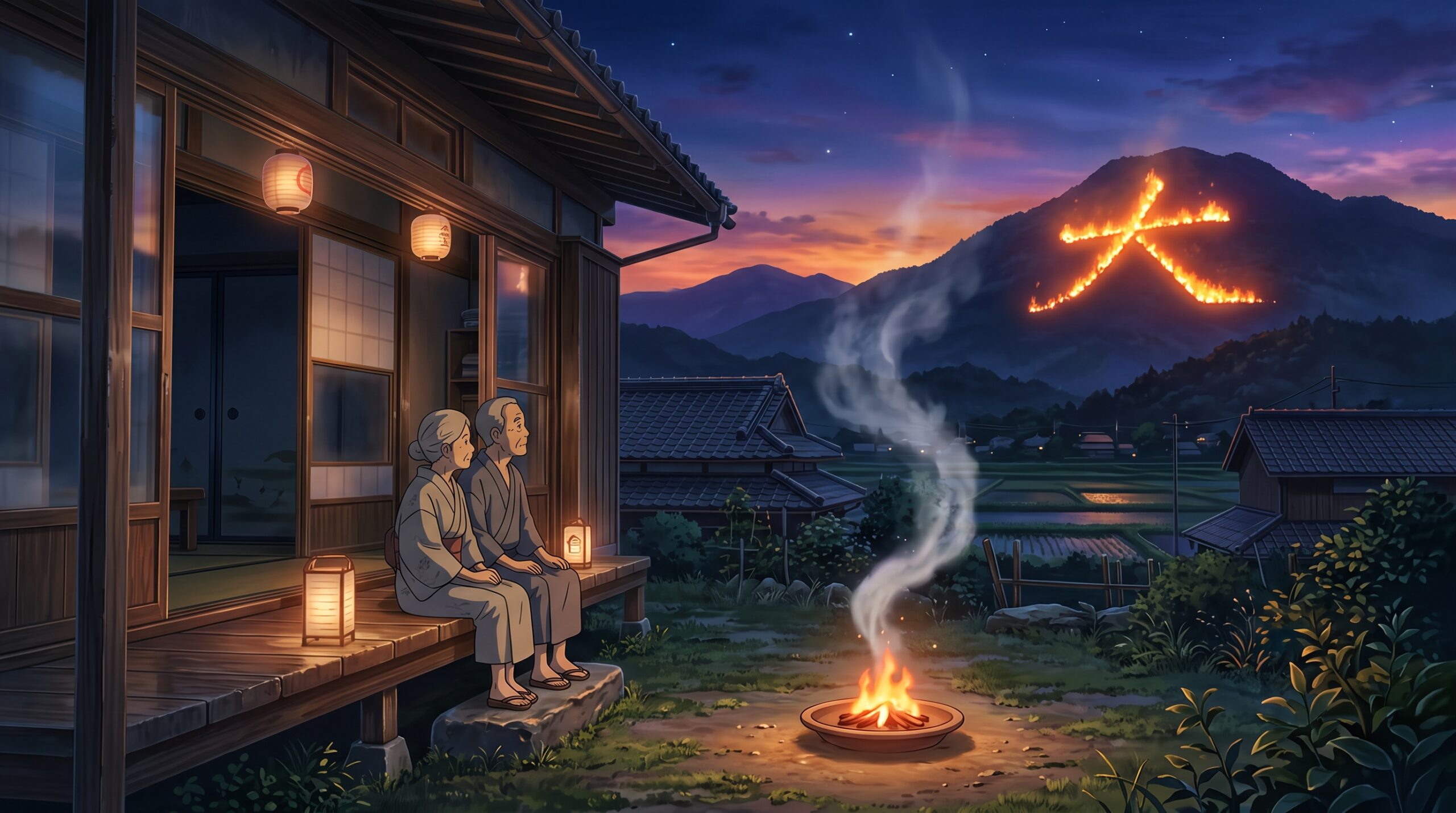
The chirping of crickets, a true sign of the changing season, had begun to echo across the wooden veranda. The evening sky was quietly shifting its colors from a burning crimson to a deep indigo.
“It’s about time we light the fire,”
Prompted by grandfather’s voice, the whole family gathered in the front garden. Dried hemp reeds (ogara) were carefully piled on top of an unglazed earthenware plate called a houroku. A match was struck, and as the small flame caught the reeds, it made a pleasant crackling sound, sending a plume of white smoke into the air.
“Your great-grandparents are riding this smoke all the way back to the sky,” grandmother said gently, holding her young grandchild’s hand.
A few days ago, when lighting the welcoming fire, there was a bouncy, joyous feeling of “welcome home.” But now, gazing at the flames of the sending fire, the family’s faces bore a lingering, yet peaceful expression. The heat of the fire and the distinct scent of burning grass melted into the late summer air. Looking up at the smoke rising high into the sky, we silently shared the wonder of interconnected lives and the preciousness of the turning seasons. By the time the flames quietly faded, leaving only white ash, the Japanese summer had quietly taken a step toward autumn.
History and Culture: The Flames Connecting Two Worlds
The culture of Okuribi was born from the fusion of the Buddhist event “Urabon’e” and Japan’s ancient ancestral worship. During Obon, a “Shoryodana” (spirit altar) is set up in each home, decorated with a cucumber horse and an eggplant cow. These represent a wish for the ancestors: to come quickly on a horse, and to return slowly, enjoying the scenery, on a cow.
The form of Okuribi varies by region. While some families light small fires at their gates or in their gardens, other regions practice “Toro Nagashi” (floating lanterns), where glowing paper lanterns are released down rivers or into the sea. Both water and fire have long been treated as sacred elements that purify the soul and serve as guideposts to the afterlife.
The most famous Okuribi in Japan is Kyoto’s “Gozan no Okuribi.” Every year on the night of August 16th, massive bonfires forming characters like “Dai” (Great) and shapes like a shrine gate are successively lit on the mountains surrounding Kyoto. These giant fiery characters floating in the summer night sky are not just a tourist event, but a solemn religious ritual to send off the Obon spirits. As the city lights dim, the blazing characters in the silent basin strike the hearts of viewers, creating a mystical time where the boundary between this world and the next blurs.
Japanese Views on Life, Death, and Our Connections
What we can interpret from this “Spirit Sending” event is Japan’s unique perspective on life, death, and nature. In Japan, the deceased are not seen as having gone to a distant world never to return; rather, they come and go with the changing seasons, remaining close by to watch over their descendants.
Throughout the few days of Obon, the living and the dead share the same space and time. There is no fear or avoidance, only deep respect and the reaffirmation of “connection.” The act of lighting the Okuribi is both a ritual of parting and a declaration of gratitude: “Because of you, we are alive here today.”
In our busy modern society, moments to be conscious of the continuity of life may be decreasing. However, the time spent lighting a fire at dusk and simply watching where the smoke goes intensely reminds us that we are the ones receiving the baton from the “past” and passing it to the “future.” Physical forms will eventually disappear, but prayers and thoughts rise into the sky like smoke, eternally circulating in this world.
A Question for You
In your country or culture, how do you remember your ancestors and loved ones who have passed away, and how do you deepen your bond with them? If you ever have the chance to visit Japan during the Obon season, what wishes or words would you want to place upon the small flickering flames of the “Okuribi” at dusk? Please imagine this beautiful scene of the end of a Japanese summer in your heart while reflecting on your own thoughts and culture.
Reference Links
- External Site: Kyoto City Official Travel Guide (Information on Gozan no Okuribi)
- Internal Link: Read more in the “What’s Today’s Special Day” series
8月16日 月遅れ盆送り火(精霊送り)— 祖先の魂を空へ還す、日本の美しき祈り
夏の夜空に揺れる炎、月遅れ盆送り火とは
8月16日は、日本全国で「月遅れ盆送り火(精霊送り)」が行われる日です。お盆とは、ご先祖様の霊が迷わずに帰ってこられるように迎え、共に数日間を過ごし、そして再びあの世へと送り出す一連の伝統行事です。現在の日本では、新暦の8月13日から16日を中心に行われる「月遅れ盆」が主流となっています。
13日に「迎え火」を焚いてお迎えした魂を、16日の夕暮れ時に「送り火」を焚いて見送る。この送り火の煙に乗って、ご先祖様の霊は無事に浄土(あの世)へと帰っていくと信じられています。ただの火ではなく、残された者たちの感謝と祈り、そして少しの寂しさが込められた神聖な灯りなのです。
【物語】送り火の煙に乗せて
縁側には、すっかり風物詩となった虫の音が響き始めていた。夕暮れ時の空は、燃えるような茜色から深い藍色へと、静かにその姿を変えていく。
「そろそろ、火を点けようか」
祖父の声に促され、家族全員が庭先に集まった。焙烙(ほうろく)と呼ばれる素焼きのお皿の上に、折った麻幹(おがら)が組まれている。マッチが擦られ、小さな火が麻幹に移ると、パチパチと小気味良い音を立てて白い煙が立ち上った。
「この煙に乗って、おじいちゃんたちのお父さんやお母さんが、また空の向こうへ帰っていくんだよ」と、祖母が小さな孫の手を握りながら優しく語りかける。
数日前、迎え火を焚いた時は「おかえりなさい」という弾むような喜びがあった。しかし、送り火の炎を見つめる家族の顔には、どこか名残惜しそうな、それでいて安らかな表情が浮かんでいる。炎の熱気と、独特な草の焦げる匂いが夏の終わりの空気に溶け込んでいく。立ち上る煙を空高く見上げながら、私達は繋がっている命の不思議さと、巡りくる季節の尊さを無言のうちに分かち合っていた。炎が静かに消え、白い灰だけが残る頃、日本の夏は静かに秋へと歩みを進めるのだ。
歴史と文化:あの世とこの世を繋ぐ炎
送り火の文化は、仏教の「盂蘭盆会(うらぼんえ)」と日本古来の祖先霊信仰が融合して生まれました。お盆の期間中、各家庭には「精霊棚(しょうりょうだな)」が設けられ、きゅうりの馬となすの牛(精霊馬)が飾られます。これらは、ご先祖様が来るときは馬に乗って早く、帰るときは牛に乗ってゆっくりと景色を楽しみながら帰ってほしいという願いが込められています。
送り火の形は地域によって様々です。家の門口や庭先で小さく焚く家庭もあれば、川や海に灯籠を流す「灯籠流し(精霊流し)」を行う地域もあります。水と火、どちらも魂を浄化し、あの世への道標となる神聖なものとして扱われてきました。
中でも日本を代表する送り火といえば、京都の「五山送り火」です。毎年8月16日の夜、京都を囲む山々に「大文字」「妙法」「船形」「左大文字」「鳥居形」の炎が次々と灯されます。京の夏の夜空に浮かび上がる巨大な火の文字は、単なる観光行事ではなく、お盆の精霊を送るための厳粛な宗教儀式です。街の灯りが落とされ、静寂に包まれた盆地に浮かぶ炎の文字は、見る者の心を強く打ち、あの世とこの世の境界線が曖昧になるような神秘的な時間を生み出します。
日本文化の死生観と私たちの繋がり
この「精霊送り」という行事から読み解けるのは、日本の独特な死生観と自然観です。日本では、死者は遠い世界へ行って二度と戻らないのではなく、季節の巡りと共に行き来し、常に子孫を見守る身近な存在として捉えられてきました。
お盆という数日間を通じて、生者と死者は同じ空間で時間を共有します。そこに恐怖や忌避の念はなく、あるのは深い敬愛と「繋がり」の確認です。送り火を焚く行為は、別れの儀式であると同時に、「私たちはあなたたちのおかげで、今ここで生きています」という感謝の表明でもあります。
現代社会は慌ただしく、命の繋がりを意識する瞬間は減っているかもしれません。しかし、夕暮れ時に火を灯し、ただ静かに煙のゆくえを見つめる時間は、私たちが「過去」から繋がり、「未来」へとバトンを渡す存在であることを強烈に実感させてくれます。形あるものはいつか消えますが、祈りや想いは煙のように空へと昇り、永遠に世界を循環していくのです。
あなたへ問いかけ
あなたの国や文化では、祖先や亡くなった大切な人たちをどのように思い出し、絆を深めていますか? もし日本のお盆の時期に訪れる機会があれば、夕暮れ時に灯る小さな「送り火」の炎に、あなたはどんな願いや言葉を乗せたいですか? ぜひ、あなたの考えや文化を思い浮かべながら、この美しい日本の夏の終わりの情景を心に描いてみてください。

コメント