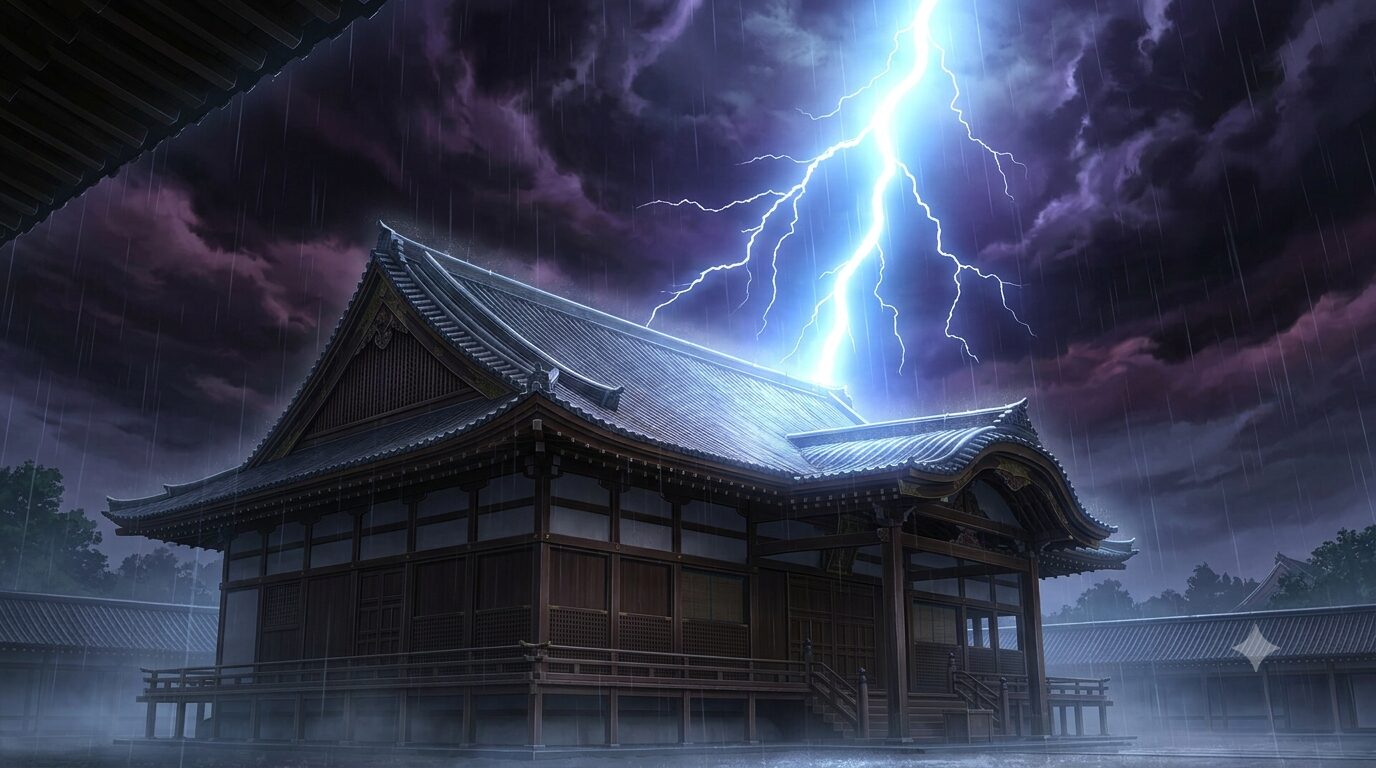
In Japan, dates that initially seem like simple records of natural phenomena often conceal deep and terrifying historical backgrounds. “Thunder Memorial Day” on June 26 is a prime example. This day is not merely a reminder of the power of lightning; it represents one of the most famous “Onryo” (vengeful spirit) legends in Japanese history and illustrates how the Japanese people have historically confronted the threats of nature.
The Seiryoden Lightning Strike and the Tragedy of Sugawara no Michizane
The story dates back to the Heian period in the year 930 AD. A massive lightning bolt suddenly struck the Seiryoden (the Emperor’s living quarters) within the Imperial Palace in Heian-kyo, the political center of the time. This unprecedented disaster claimed the lives of several high-ranking officials. The people of that era did not view this as a mere meteorological event. They were convinced it was the curse of Sugawara no Michizane, a great statesman and brilliant scholar.
Sugawara no Michizane had earned the Emperor’s absolute trust and risen to the highest rank of Minister of the Right. However, due to a conspiracy by his political rivals, the Fujiwara clan, he was falsely accused and exiled to Dazaifu in Kyushu. Unable to fulfill his wish of returning to the capital, Michizane died in despair. Following his death, epidemics swept through the capital, and those who had plotted against him met sudden, mysterious ends. The definitive blow was the lightning strike on the Seiryoden. The sheer terror of these events even caused the Emperor to fall ill and pass away.
From Terror to Reverence: Goryo Shinko and the Birth of Tenjin
A highly unique and fascinating aspect of Japanese culture is how it deals with such overwhelming “terror.” Rather than attempting to suppress raging spirits with force, ancient Japanese believed in “Goryo Shinko” (the pacification of vengeful spirits). By reverently enshrining the angry spirit as a deity, they sought to calm its wrath and transform it into a powerful guardian.
The Imperial Court pardoned Michizane’s alleged crimes and enshrined him as a deity named “Tenman Daijizai Tenjin.” Associated with the god of thunder, Michizane eventually became widely beloved by the common people as the “God of Learning,” reflecting his outstanding earthly scholarship. In modern Japan, it is a winter tradition for students facing entrance exams to flock to Tenmangu shrines nationwide to pray for success. The most terrifying vengeful spirit that once shook Japan has, over a millennium later, become one of its most approachable and beloved deities.
Nature’s Threat and Harmony in Japanese Culture
The essence of Japanese culture to be deciphered from Thunder Memorial Day is the sensibility of “finding the sacred within the terrifying.” In a country prone to natural disasters like earthquakes, typhoons, and lightning, nature brings abundant blessings but can also snatch everything away in an instant. The legend of Sugawara no Michizane heavily reflects the Japanese mentality of overlaying human emotion (grudges) onto the uncontrollable threats of nature, seeking harmony by respecting and fearing them.
Rather than dividing the world into a strict dualism of good and evil, even former enemies or terrifying entities can become allies if treated with reverence. This process of acceptance and sublimation is what gives Japanese culture its profound depth.
What Are Your Thoughts?
How do you view this historical transition—a vengeful spirit that once plunged people into the depths of terror becoming a gentle God of Learning who supports the dreams of modern students? If you have the chance to visit Japan, please stop by a Tenmangu shrine and reflect on the memory of the lightning strike from a thousand years ago and the history of people’s prayers. Does your culture have any legends where a terrifying entity transformed into a guardian over time?
Reference Link: Kitano Tenmangu Official Website (The head shrine of all Tenmangu shrines honoring Sugawara no Michizane)
For more Japanese anniversaries and cultural insights, please visit our “What’s Today’s Special Day” category.
6月26日は「雷記念日」:平安の都を震撼させた怨霊と神への昇華
日本には、一見するとただの自然現象の記録に思える日が、実は深く、そして恐ろしい歴史的背景を持っていることがあります。6月26日の「雷記念日」は、まさにその典型です。この日は、単に雷の威力を思い出す日ではなく、日本の歴史上最も有名な「怨霊(おんりょう)」の伝説と、日本人が自然の脅威にどう向き合ってきたかを示す重要な日です。
清涼殿落雷事件と菅原道真の悲劇
時代は西暦930年の平安時代に遡ります。当時の政治の中心であった平安京の内裏、清涼殿(天皇の日常の居所)に、突如として巨大な落雷がありました。この落雷により、複数の高官が命を落とすという前代未聞の大惨事となりました。当時の人々は、これを単なる気象現象とは考えませんでした。彼らはこれを、大政治家であり優れた学者でもあった「菅原道真(すがわらのみちざね)」の祟りであると確信したのです。
菅原道真は、天皇から絶大な信頼を得て右大臣という最高位にまで上り詰めました。しかし、ライバルであった藤原氏の陰謀により、無実の罪を着せられ、九州の大宰府へと左遷されてしまいます。都への帰還を叶えることなく、道真は失意のうちにこの世を去りました。その後、都では疫病が流行し、道真を陥れた者たちが次々と変死を遂げます。そして決定打となったのが、この清涼殿への落雷でした。天皇さえも恐怖のあまり体調を崩し、崩御される事態にまで発展したのです。
恐怖から信仰へ:御霊信仰と天神様の誕生
日本文化の非常に特異で興味深い点は、この圧倒的な「恐怖」に対する対処法です。古代の日本人は、荒ぶる怨霊を力でねじ伏せるのではなく、神として手厚く祀り上げることで、その怒りを鎮め、強力な守護神へと転換させる「御霊信仰(ごりょうしんこう)」という考え方を持っていました。
朝廷は道真の罪を赦免し、彼を「天満大自在天神(てんまんだいじざいてんじん)」という神として祀り上げました。雷の神(火雷天神)と結びついた道真は、やがてその生前の優れた学識から「学問の神様」として広く民衆に愛されるようになります。現代の日本では、受験生が合格祈願のために全国の天満宮(天神様)に押し寄せる光景が冬の風物詩となっています。日本を震撼させた最恐の怨霊は、1000年以上の時を経て、最も親しまれる神様の一柱となったのです。
日本文化における自然の脅威と調和
この雷記念日から読み解くべき日本文化の本質は、「恐ろしいものの中に神聖さを見出す」という感性です。地震、台風、そして雷。自然災害の多い日本では、自然は豊かな恵みをもたらすと同時に、一瞬で全てを奪い去る存在です。菅原道真の伝説は、コントロール不可能な自然の脅威(雷)と、人間の情念(怨念)を重ね合わせ、それを畏れ敬うことで調和を図ろうとした日本人の精神性を色濃く反映しています。
善悪を二元論で分けるのではなく、かつての敵や恐ろしい存在であっても、敬意を払うことで味方へと変わる。この受容と昇華のプロセスこそが、日本文化の奥深さを形成しています。
あなたはどう考えますか?
かつて人々を恐怖のどん底に陥れた怨霊が、現代では学生たちの夢を応援する優しい学問の神様になっているというこの歴史的変遷は、あなたの目にどう映りましたか?もしあなたが日本を訪れる機会があれば、ぜひお近くの天満宮に立ち寄り、千年前の落雷の記憶と、人々の祈りの歴史に思いを馳せてみてください。あなたの国には、恐ろしい存在が時を経て守護者に変わったような伝説はありますか?
参考リンク:北野天満宮 公式サイト(菅原道真公を祀る全国天満宮の総本社)
その他の日本の記念日や文化については、こちらの「今日は何の日」カテゴリーをご覧ください。
コメント