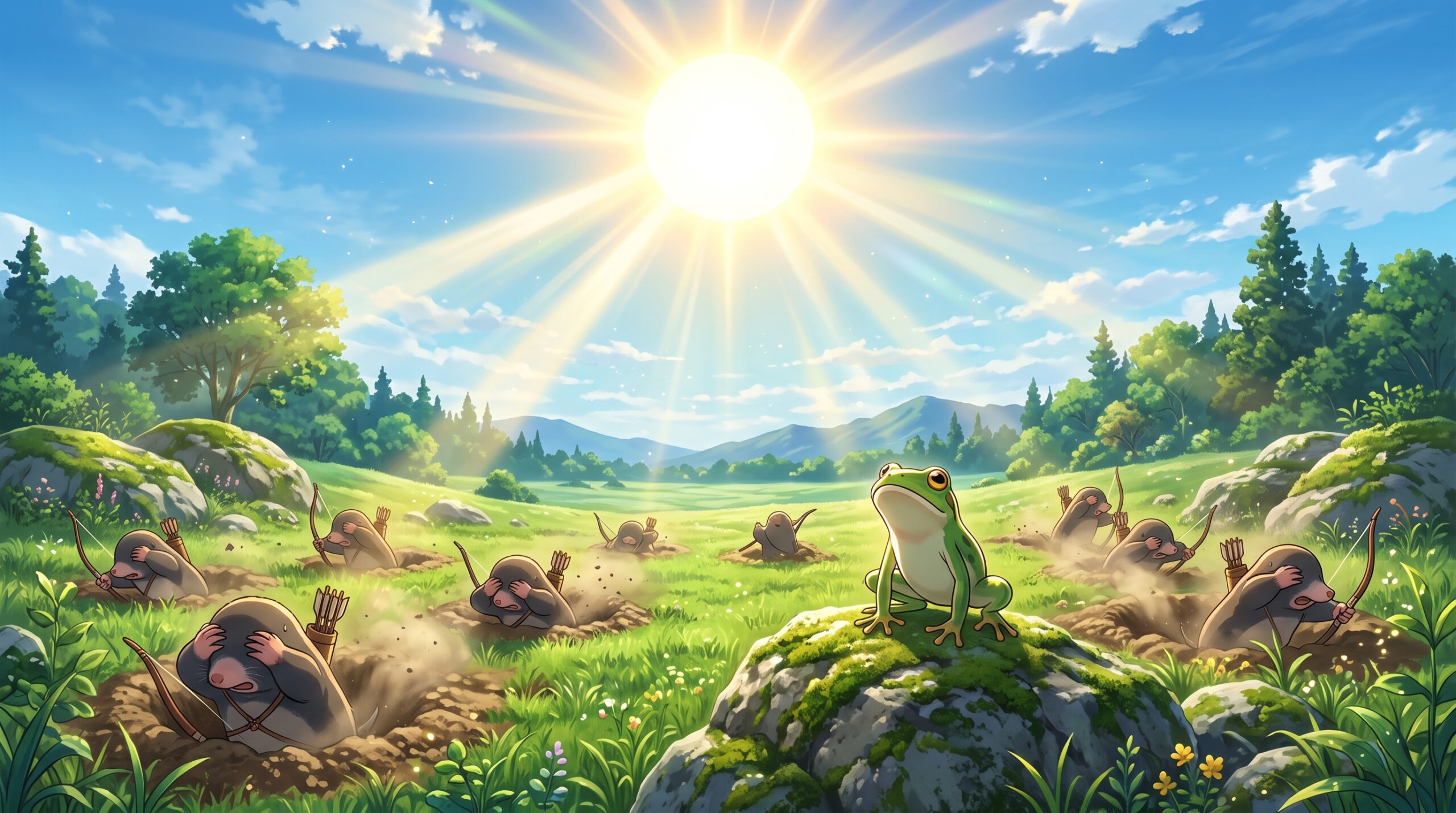
Japan has countless fascinating folktales that richly explain the mysteries of nature and the ecology of animals. Today, we introduce a highly unique and epic story passed down in the Kyushu region called “The Mole Who Shot the Sun” (Taiyou wo Iru Mogura). Why do moles live in the dark earth? Why do warm days suddenly arrive in the middle of winter? This story dramatically passes down the answers to such natural mysteries.
1. The Story: The Ambition of the Moles to Shoot Down the Sun
A long, long time ago, there was a time when moles lived in the bright above-ground world, just like us.
One summer, the heat was unprecedentedly fierce. The moles worked in the fields every day under the scorching sun, but they were completely exhausted by the harsh conditions. “If it’s this hot every day, no matter how many lives we have, it won’t be enough,” the moles complained, their frustration growing.
At dusk, as the bright red sun sank behind the western mountains, a cool breeze finally began to blow. Feeling this pleasant breeze, one mole came up with an outrageous idea. “I know! We just need to defeat that hateful sun!”
The mole leader immediately gathered the entire clan. “Listen, everyone! Tomorrow, when that sun that tortures us so much rises from the eastern sky, let’s shoot it down together with our bows and arrows!” The moles, whose patience with the heat had crossed its limit, were unanimous in their agreement. “Agreed! Shoot down the sun!” Thus, the terrifying plan was decided.
However, someone happened to hear this terrible conspiracy from behind the grass. It was a male frog. The blood drained from the frog’s face in shock. His beloved wife was pregnant and scheduled to give birth to cute tadpoles this winter. “If the sun disappears, the winter cold will become even more severe, and the swamps and rivers will freeze completely. If that happens, my wife won’t be able to give birth safely!”
Sensing the crisis, the frog immediately took action. To inform the sun of this danger, he desperately moved his short legs and ran toward the far east all night long. Just before dawn, right as the sun was about to peek over the eastern mountains, the frog stopped it just in time. “Mr. Sun, please wait! Please listen to me!”
Out of breath, the frog desperately pleaded with tears in his eyes, explaining that the moles were aiming their bows and arrows at the sun’s life, and that without the sun, his wife would not be able to give birth in the winter.
Hearing the frog’s courageous warning, the sun nodded quietly. “Thank you for telling me, kind-hearted frog. Run far away immediately so you won’t get caught in the crossfire. And leave the winter birth to me.”
After evacuating the frog to a safe place, the sun rose into the eastern sky as if nothing had happened. On the ground, the moles had their bows drawn, waiting eagerly for the sun.
At that moment, the sun emitted a blindingly intense beam of light, two or three times stronger than usual, directly at the moles. “Gaaah! My eyes, my eyes!” Overwhelmed by the extreme brightness and heat, the moles dropped their bows and arrows and fell into a panic. Completely blinded, the moles had no choice but to crawl and escape deep into the dark soil.
Ever since that day, the moles, having lost their sight, could no longer come up above ground and spent their entire lives in the cold, dark earth.
Meanwhile, the sun never forgot its promise to the frog. Around the end of January, during the freezing winter season, the sun created two or three warm and gentle days, almost like spring, known as “Donko’s Kawairi” (The Frog’s River Entry). Thanks to this, the ice on the swamp melted, and the frog’s wife was able to safely give birth to healthy babies.
2. Analyzing the Folktale: The Contrast Between Arrogance and Compassion
This story contains very deep lessons and philosophy that go beyond a simple origin tale of animals.
The first thing to note is the moles’ “egoism” and “arrogance toward nature.” They tried to eliminate the sun, which illuminates the entire world, simply because they were “hot and uncomfortable.” This perfectly overlaps with the arrogant attitude of humans trying to control the natural environment solely for their own convenience. Forgetting the blessings of nature and resorting to extreme destructive behavior out of temporary pain, the moles suffered a severe retaliation—forever driving their habitat into darkness.
Depicted in stark contrast is the frog. The frog acted regardless of danger, not for himself, but for “the new life about to be born.” Furthermore, he instinctively understood the balance of the entire world. This “love for others” and “broad perspective” ultimately brought the overwhelming natural force of the sun to his side, causing a miracle. The sun’s behavior perfectly expresses the dual nature of nature’s “blessings” and “threats”—a compassionate existence that nurtures life, yet mercilessly punishes those who disrupt the order.
3. Connection to Japanese Culture: Coexistence with Nature and Animism
What we can decipher from “The Mole Who Shot the Sun” is the “awe and respect for nature” that flows at the root of the Japanese people.
In Shinto, the traditional religion of Japan, the sun is regarded as the highest deity, “Amaterasu Omikami.” The act of trying to shoot down the sun is the ultimate rebellion against the divine. While there are episodes of shooting the sun in Western mythology, this Japanese folktale concludes not with “conquering nature,” but with “those who defy nature being punished.” This strongly reflects the Japanese spirituality of trying not to dominate nature, but to accept its threats and adapt to live with it.
Also, as seen in the phrase “Donko’s Kawairi” (Donko means frog in local dialects), there is a rich culture in rural Japan of naming weather phenomena and subtle changes in the seasons, attaching stories to them. To the question, “Why do warm days suddenly come in mid-winter?”, people in ancient Japan gave a romantic interpretation: “The sun is keeping a promise for the frog.” This perspective, viewing natural phenomena as the result of warm interactions with humans and animals rather than mere data, is a truly beautiful feature of Japanese culture.
4. How Did You Feel?
What did you think? Through familiar animals, it was a story filled with a strong message that we must not forget the providence of the natural world, the preciousness of life, and our gratitude toward nature.
If you were in the moles’ position, how would you try to overcome the harsh environment? And, like the frog, would you have the courage to raise your voice against an overwhelming power to protect a precious life?
Please think about what you felt after reading this folktale, or if there are similar stories in your country. And the next time you feel the warm sunshine in the middle of winter, please remember the heartwarming promise between the sun and the frog.
[Reference and Related Links]
- Reference Page: Manga Nippon Mukashibanashi Database – The Mole Who Shot the Sun (Japanese)
- Click here for other Japanese folktales: Japanese Folktale Series
日本の不思議な昔話:「太陽を射るモグラ」
日本には、自然界の謎や動物たちの生態を豊かに解き明かす魅力的な昔話が無数に存在します。今回ご紹介するのは、九州地方に伝わる非常にユニークで壮大なスケールを持つ物語、「太陽を射るモグラ」です。なぜモグラは暗い土の中で暮らしているのか?なぜ真冬に突然暖かい日が訪れるのか?この物語は、そんな自然の神秘をドラマチックに語り継いでいます。
① 昔話のストーリー:太陽を射落とそうとしたモグラたちの野望
ずっとずっと昔、モグラたちがまだ私たちと同じように、明るい地上の世界で暮らしていた頃のお話です。
ある年の夏は、例年にないほどの猛烈な暑さが続いていました。モグラたちは毎日、じりじりと肌を焦がすような日差しの中で畑仕事をしていましたが、あまりの厳しさにすっかり疲れ果ててしまいました。「こんなに毎日暑くては、命がいくつあっても足りないぞ」と、モグラたちは不満を募らせていたのです。
夕暮れ時になり、真っ赤な太陽が西の山へ沈むと、ようやく涼しい風が吹き始めます。その心地よい風に吹かれながら、一匹のモグラがとんでもないことを思いつきました。「そうだ、あの憎き太陽をやっつけてしまえばいいんだ!」
モグラの長はすぐさま一族を大集合させました。「みんな聞いてくれ。我々をこんなに苦しめる太陽など、明日、東の空から昇ってきたところを一斉に弓矢で射落としてしまおうではないか!」暑さに我慢の限界を超えていたモグラたちは、誰一人として反対しません。「賛成だ!太陽を撃ち落とせ!」と、恐るべき計画が決定しました。
しかし、この恐ろしい陰謀を、たまたま草葉の陰で聞いていた者がいました。一匹のオスのカエルです。カエルは血の気が引くほど驚きました。なぜなら、彼の愛する妻カエルは身重で、今年の冬に可愛いオタマジャクシを出産する予定だったからです。「もし太陽がなくなってしまったら、冬の寒さはさらに厳しくなり、沼も川も完全に凍りついてしまう。そうなれば、妻は無事に子供を産むことができない!」
危機を感じたカエルは、すぐさま行動を起こします。太陽にこの危機を知らせるため、短い足を懸命に動かし、夜通し東の果てへと走り続けました。そして夜明け前、今まさに東の山際から顔を出そうとしていた太陽をギリギリのところで呼び止めました。「お日様、お待ちください!どうか聞いてください!」
息を切らしたカエルは、モグラたちが弓矢を構えて太陽の命を狙っていること、そして、太陽がなくなっては自分の妻が冬に子供を産めなくなってしまうことを、涙ながらに必死に訴えました。
カエルの勇気ある忠告を聞いた太陽は、静かにうなずきました。「教えてくれてありがとう、心優しいカエルよ。お前は巻き添えにならないよう、すぐ遠くへ逃げなさい。そして、冬の出産のことは私に任せておきなさい。」
カエルを安全な場所へ避難させると、太陽は何食わぬ顔で東の空へ昇っていきました。地上では、モグラたちが今か今かと弓を引き絞り、太陽を待ち構えています。
その瞬間です。太陽は、モグラたちに向けて、通常の二倍も三倍も強い、目も眩むような強烈な光線を一気に放ちました。「うわああっ!目が、目がぁ!」あまりの眩しさと熱さに、モグラたちは持っていた弓矢を放り出し、パニックに陥りました。完全に目をやられてしまったモグラたちは、這いつくばるようにして暗い土の中へと逃げ込むしかありませんでした。
この日からというもの、光を失ったモグラたちは地上に出ることができなくなり、一生を冷たく暗い土の中で過ごすようになったのです。
一方、太陽はカエルとの約束を決して忘れませんでした。一番寒さが厳しくなる1月の終わり頃、凍りつくような冬の季節に、太陽は「どんこ(カエル)の川入り」と呼ばれる、まるで春のように暖かく穏やかな日を二、三日だけ作ってくれました。そのおかげで、沼の氷は溶け、カエルの妻は無事に元気な子供たちを産むことができたということです。
② 昔話を考察する:傲慢さと慈愛のコントラスト
この物語は、単なる動物の生態の由来(なぜモグラは土にいるのか)に留まらない、非常に深い教訓を含んでいます。
注目すべきは、モグラたちの「エゴイズム」と「自然への傲慢さ」です。彼らは自分たちが「暑くて辛い」という理由だけで、世界全体を照らす太陽を排除しようとしました。これは、人間の都合だけで自然環境をコントロールしようとする傲慢な姿勢と見事に重なります。自然の恵みを忘れ、一時的な苦痛から極端な破壊行動に出たモグラは、結果として自らの生きる場所を永遠に暗闇へと追いやるという強烈なしっぺ返しを受けました。
対照的に描かれているのがカエルです。カエルは自分のためではなく、「これからの新しい命」のために危険を顧みず行動しました。さらに、世界全体のバランスを本能的に理解していました。この「他者への愛」と「大局的な視野」が、結果的に太陽という圧倒的な自然の力を味方にし、奇跡を引き起こしたのです。太陽の振る舞いも、命を育む慈愛の存在でありながら秩序を乱す者には容赦しない、大自然の「恵み」と「脅威」の二面性を完璧に表現しています。
③ 昔話から読み解く日本文化との関連:自然との共生と「アニミズム」
「太陽を射るモグラ」から見えてくるのは、日本人の根底に流れる「自然に対する畏敬の念」です。
日本の伝統的な信仰である神道では、太陽は「天照大御神(アマテラスオオミカミ)」として最高位の神とされています。太陽を射落とそうとする行為は神への最大の反逆です。西洋の神話等でも太陽を射るエピソードは存在しますが、日本のこの昔話では「太陽を克服する」のではなく「自然に逆らった者が罰せられる」結末を迎えます。ここには、自然を支配するのではなく、自然の脅威を受け入れ、順応して生きようとする日本人の精神性が色濃く反映されています。
また、物語に登場する「どんこの川入り」という言葉の通り、日本の地方には気象現象や季節の微細な変化に名前をつけ、そこに物語を付与する豊かな文化があります。「なぜ真冬に急に暖かい日が来るのか?」という疑問に対し、「お日様がカエルのために約束を守ってくれているのだ」というロマンチックな解釈を与えました。自然現象をデータとしてではなく、人間や動物たちとの温かい心の交流の結果として捉える視点は、日本文化の美しく誇るべき特徴です。
④ あなたはどう感じましたか?
いかがでしたでしょうか。身近な動物を通して、自然界の摂理や命の尊さ、自然への感謝を忘れてはならないという強いメッセージが込められた物語でした。
もしあなたがモグラの立場だったら、厳しい環境をどう乗り越えようと考えますか?また、カエルのように、大切な命を守るために圧倒的な存在に対して声を上げる勇気を持てるでしょうか?
この昔話を読んであなたが感じたこと、あるいはあなたの国にある似たような物語について、ぜひ考えてみてください。次に真冬の暖かい日差しを感じた時は、太陽とカエルの心温まる約束を思い出してみてくださいね。
【参考・関連リンク】
- 参考ページ:まんが日本昔ばなし〜データベース〜 太陽を射るモグラ
- その他の日本昔話はこちら:Japanese Folktale Series(日本の昔話シリーズ)

コメント