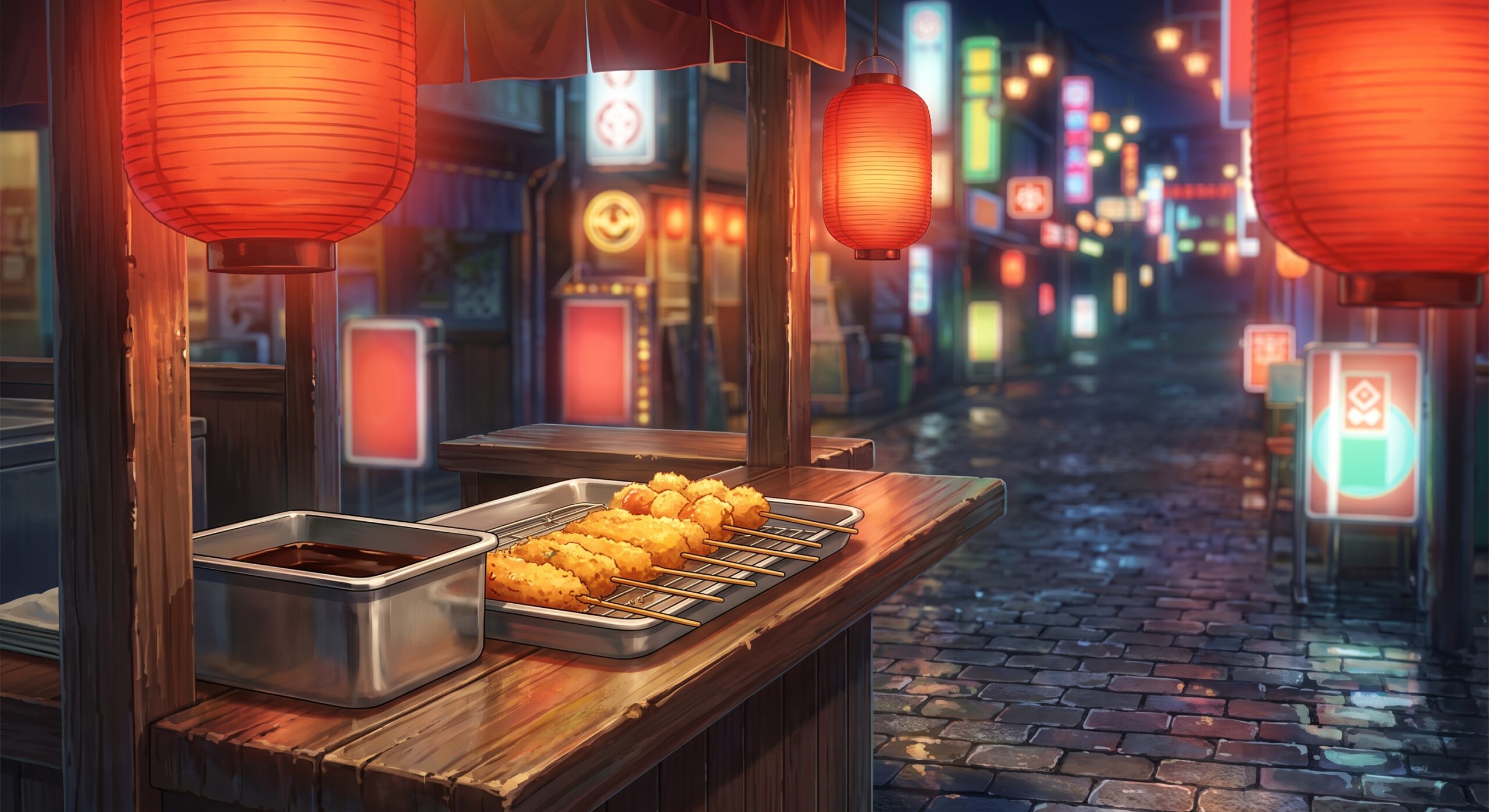
Every year on September 4th, Japan celebrates “Kushi Day” (Skewer Day) and “Kushikatsu Day”. This memorial day originates from a Japanese wordplay (goroawase) where the numbers “9” (Ku) and “4” (Shi) combine to sound like “Kushi”, meaning skewer. In Japanese food culture, cooking ingredients on a skewer is not merely a physical method of preparation; it holds deep historical and cultural significance. Today, we will explore the special meaning behind this day and the Japanese spirit hidden within it, focusing on “Kushikatsu”—the ultimate representative of Japanese popular dining.
The History and Origins of Kushi Day and Kushikatsu Day
“Kushi Day” was established to promote the spread and consumption of skewered foods such as Yakitori (grilled chicken skewers), Kushikatsu (deep-fried meat and vegetable skewers), and Mitarashi Dango (sweet soy glaze dumplings). Furthermore, “Kushikatsu Day” was designated specifically to share Kushikatsu, a famous dish that drives Osaka’s food culture, with the rest of Japan and the world.
The technique of skewering ingredients on bamboo or wooden sticks has existed in Japan since ancient times. Traces of ingredients seemingly pierced and roasted have been found in ruins from the Jomon period. By the Edo period, “Yakitori” and “Dengaku” (tofu or vegetables coated with miso and grilled) became wildly popular among commoners at food stalls, acting as pioneers of fast food. Skewers offered the ultimate functional beauty: they could be eaten easily without chopsticks and without dirtying one’s hands.
The roots of modern “Kushikatsu” trace back to the Shinsekai (New World) area of Osaka during the Taisho and early Showa eras (the 1910s-1930s). At the time, Shinsekai and the surrounding Kamagasaki area were overflowing with manual laborers. To provide them with cheap, fast, and filling nutritious meals, bite-sized pieces of beef and vegetables were skewered, coated in a thick batter, and deep-fried in oil. This was the birth of the Kushikatsu we know today.
“Kushi” as Japanese Culture: The Aesthetics of Sharing and Rules
There is an absolute, unique rule that must be mentioned when talking about Kushikatsu: “Nido-zuke kinshi” (No Double Dipping). At traditional Kushikatsu restaurants in Osaka, large stainless steel containers filled to the brim with a special savory sauce are placed on the counter. Before taking a bite, customers submerge their freshly fried Kushikatsu into this sauce completely—but only once. Returning a skewer that has already touched your mouth back into the communal sauce is strictly forbidden for hygiene reasons.
This “no double dipping” rule is more than just etiquette. It symbolizes the uniquely Japanese spirit of “Ichigo Ichie” (a once-in-a-lifetime encounter) and consideration for others, as strangers share the same space and the same sauce. Sitting shoulder-to-shoulder at a cramped counter, following the rules, and enjoying a meal together creates a warm community and flat human relationships that transcend social status or titles.
Furthermore, Kushikatsu batter uses finely ground panko (breadcrumbs), creating a texture that is incredibly crispy on the outside and fluffy on the inside. Many restaurants mix grated Japanese mountain yam (yamaimo) into the batter to give it a unique chewiness. This is a crystallization of the ingenuity of Japanese chefs, who sought to extract the maximum flavor and satisfaction within a limited budget.
Original Story: The Golden Skewer of Shinsekai
A neon-lit night in Shinsekai, Osaka. In an alleyway looking up at the Tsutenkaku Tower stood a small Kushikatsu shop called “Darumaya,” decorated with old, glowing red paper lanterns. The owner, Takeshi, has been protecting this shop since his grandfather’s generation.
One evening, Leo, an American youth traveling alone in Japan, wandered into the shop. Unable to understand the language, he looked a bit exhausted from the hustle and bustle of the unfamiliar city. Takeshi silently pointed to a seat at the counter and served him a glass of cold oolong tea. Then, pointing to the large sauce can in front of him, he communicated with broken English and gestures: “No double dipping. One time only.”
Leo nodded, slightly confused. A few minutes later, golden, freshly fried beef skewers, lotus root, and quail eggs were placed on the wire rack in front of him. The pleasant sound of crackling oil stimulated his appetite. Feeling Takeshi’s gaze, Leo picked up the beef skewer and plunged it deep into the jet-black sauce.
Crunch.
The moment he took a bite, Leo’s eyes widened. The sweet, savory, fruity, and spicy flavor of the sauce intertwined perfectly with the juicy meat, filling his mouth. The language barrier crumbled in an instant. When Leo gave a thumbs-up and said, “Amazing!”, the wrinkles on Takeshi’s stern face folded into a wide, beaming smile. The regular office workers sitting next to him, despite the language barrier, raised their glasses with a smile and welcomed Leo with a hearty “Kanpai!”
What Leo tasted that night wasn’t just fried food. It was the connection with others gained by respecting local rules, and the boundless warmth of the city of Osaka itself. A single, glowing golden skewer had deeply satisfied the heart of a traveler from a foreign land.
What are the “Food Rules” that matter to you?
Just like the “No double dipping” rule of Osaka’s Kushikatsu, food cultures all over the world have their own unique rules born from local history and human connections. While they may seem strict at times, they are actually the wisdom of our ancestors, designed so that people can share and enjoy experiences together pleasantly.
After reading this article, how do you feel about Japan’s Kushikatsu culture? If you visit Osaka, wouldn’t you want to sit at a lively counter and taste freshly fried Kushikatsu while following the local rules? Please let us know about any unique food rules in your country, or what skewered dishes you would love to try in Japan!
Reference Links
- OSAKA-INFO (Official Osaka Travel Guide)
- Kushikatsu (Wikipedia)
- What’s Today’s Special Day Series (kiri53.com Category)
9月4日は「串の日」そして「串カツ記念日」:日本のソウルフードと大阪の食文化を紐解く
毎年9月4日は、日本において「串の日」および「串カツ記念日」として親しまれています。この記念日は、数字の「9(く)」と「4(し)」の語呂合わせに由来しています。日本の食文化において、「串に刺す」という調理法は単なる物理的な手段にとどまらず、深い歴史と文化的な意味を持っています。今回は、日本の大衆食の代表格である「串カツ」を中心に、この日が持つ特別な意味と、そこに隠された日本人の精神性を詳しく解説します。
串の日・串カツ記念日の歴史と由来
「串の日」は、焼き鳥、串カツ、みたらし団子など、串を使った食品の普及と消費拡大を目的として制定されました。そして「串カツ記念日」は、大阪の食文化を牽引する名物料理である串カツを全国、そして世界に広めるために定められました。
日本の歴史において、食材を竹や木の串に刺して調理する手法は古くから存在しました。縄文時代の遺跡からも、食材を刺して焼いたと推測される痕跡が見つかっています。江戸時代になると、ファストフードの先駆けとして屋台での「焼き鳥」や「田楽(でんがく)」が庶民の間で大流行しました。串は、箸を使わずに手軽に、かつ手を汚さずに食べられる究極の機能美を備えていたのです。
現代の「串カツ」のルーツは、大正時代から昭和時代初期の大阪・新世界に遡ります。当時の新世界や釜ヶ崎周辺は、肉体労働者で溢れていました。彼らに「安くて、早くて、お腹いっぱいになる」栄養満点の食事を提供するため、一口大に切った牛肉や野菜を串に刺し、分厚い衣をつけて油で揚げたものが提供され始めました。これが現在の串カツの始まりです。
日本文化としての「串」:共有とルールの美学
串カツを語る上で絶対に外せない独自のルールがあります。それは「二度漬け禁止」です。大阪の伝統的な串カツ店では、カウンターにソースが並々と注がれた大きなステンレス製の容器が置かれています。客は自分が注文した揚げたての串カツを、食べる前に一度だけそのソースにたっぷりと潜らせます。一度口をつけた串を再び共用のソースに入れることは、衛生上の理由から厳格に禁じられています。
この「二度漬け禁止」のルールは、単なるマナーではありません。見知らぬ他人同士が同じ空間、同じソースを共有するという、日本特有の「一期一会(いちごいちえ)」の精神と、他者への気遣い(思いやり)を象徴しています。狭いカウンターで肩を寄せ合い、ルールを守りながら共に食事を楽しむ。そこには、身分や肩書きを超えたフラットな人間関係と、温かいコミュニティが存在しているのです。
また、串カツの衣は細かく挽かれたパン粉が使われ、外はサクサク、中はふっくらとした食感を生み出します。山芋を生地に混ぜ込むことで、独特のモチモチ感を出している店も多く、これは限られた予算の中で最大限の美味しさと満足感を引き出そうとした、日本の料理人の創意工夫の結晶です。
オリジナルストーリー:新世界の黄金の串
ネオンサインが瞬く大阪・新世界の夜。通天閣を見上げる路地裏に、古びた赤提灯をぶら下げた小さな串カツ屋「だるまや」があった。店主のタケシは、祖父の代から続くこの店を守り続けている。
ある晩、一人で日本を旅しているアメリカ人青年、レオが店に迷い込んできた。言葉も分からず、見知らぬ街の喧騒に少し疲れた表情を浮かべていた。タケシは無言でカウンターの席を指差し、冷えたウーロン茶を出した。そして、目の前の大きなソース缶を指差し、英語と身振り手振りで伝えた。「No double dipping. One time only.(二度漬け禁止。一回だけだ)」
レオは戸惑いながらも頷いた。数分後、目の前の網の上に、黄金色に輝く揚げたての牛串、レンコン、そしてうずらの卵が置かれた。パチパチと油が弾ける心地よい音が食欲を刺激する。レオは牛串を手に取り、タケシの視線を感じながら、漆黒のソースに串を深く沈めた。
サクッ。
一口かじった瞬間、レオの目が大きく見開かれた。甘辛く、フルーティーでスパイシーなソースの風味が、ジューシーな肉汁と絡み合い、口の中いっぱいに広がる。言葉の壁は一瞬で崩れ去った。レオが「Amazing!」と親指を立てると、強面だったタケシの顔にシワが寄り、ニカッと笑った。隣に座っていた常連のサラリーマンたちも、言葉は通じなくとも笑顔でグラスを掲げ、「カンパイ!」とレオを歓迎した。
その夜、レオが味わったのは単なる揚げ物ではなかった。それは、ルールを守ることで得られる他者との繋がりであり、大阪という街の底抜けの優しさそのものだった。黄金色に輝く一本の串が、異国から来た旅人の心を深く満たしたのだ。
あなたにとっての「食のルール」は何ですか?
大阪の串カツにおける「二度漬け禁止」のように、世界中の食文化には、その土地の歴史や人々の繋がりから生まれた独自のルールが存在します。それは時として厳格に見えますが、実は人々が気持ちよく共有し、共に楽しむための先人たちの知恵なのです。
この記事を読んで、あなたは日本の串カツの文化についてどう感じましたか?もしあなたが大阪を訪れたら、活気あふれるカウンター席に座り、ローカルなルールを守りながら揚げたての串カツを味わってみたいと思いませんか?ぜひ、あなたの国のユニークな食のルールや、日本で食べてみたい串料理について教えてください。
コメント