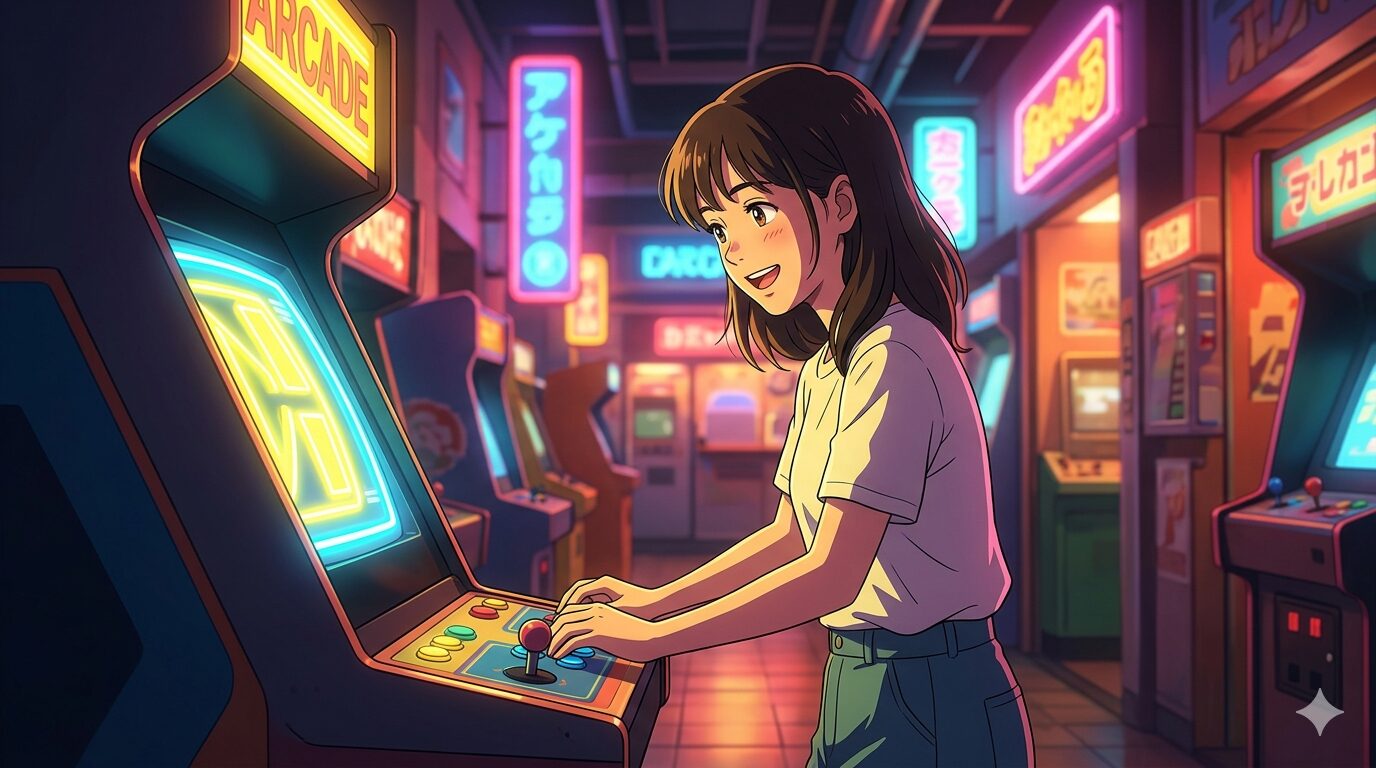
On May 22, 1980, a monumental event took place in the history of Japanese arcade games and global pop culture. Namco (now Bandai Namco Entertainment) announced the release of the arcade game “Pac-Man,” which would soon become a massive worldwide hit. This yellow, round character transcended the boundaries of a mere video game to become one of the most recognized Japanese icons in the world.
The History and Innovation Behind the Birth of Pac-Man
In the late 1970s, arcade centers were dominated by shooting games where players shot down aliens, typified by “Space Invaders.” At the time, arcades were generally perceived as dark entertainment venues primarily for young men. To break this status quo and create an environment where women and couples would want to visit, developer Toru Iwatani envisioned a game with an entirely new concept.
Iwatani focused on the action of “eating,” which he believed would appeal to a broader audience, including women. The legendary story goes that one day, he ordered a pizza for lunch, and upon removing the first slice, the remaining shape inspired the iconic character design of “Pac-Man.”
The innovation of “Pac-Man” went far beyond its character design. The four ghosts chasing the player through the maze (Blinky, Pinky, Inky, and Clyde) were each programmed with different Artificial Intelligence (AI). Rather than simply tailing Pac-Man, they would anticipate his moves, try to ambush him, or wander aimlessly. This gave players the unprecedented sensation of interacting with “living” characters.
Non-Violence, Eating, and Japan’s “Kawaii” Culture
The primary reason “Pac-Man” was embraced worldwide lies in the unique Japanese culture and aesthetic sense at its core. Instead of “killing” enemies, the player “eats” cookies. By consuming a Power Pellet, the dynamic reverses, allowing the player to “eat” (defeat) the ghosts. This non-violent system was incredibly fresh in the Western gaming market of the time.
Even more importantly, “Pac-Man” embodied Japan’s “Kawaii” (cute) culture. The ghosts, despite being enemies, were not terrifying monsters but round, colorful, and endearing figures. Even when defeated, they playfully turned into floating eyes that scurried back to their home base. This character design philosophy—making even enemies lovable—laid the foundation for Japan’s global pop culture dominance, paving the way for franchises like “Pokémon” and “Super Mario.”
The traditional Japanese sensibility found in animism and Yokai culture (where even fearsome spirits possess a charming quality) merged with cutting-edge digital technology to create “Pac-Man.” This game marked a major turning point, establishing Japan not just as an exporter of technology, but as a global powerhouse of unique pop culture.
What is Your Most Memorable Gaming Experience?
Decades after its birth in 1980, “Pac-Man” continues to evolve on modern consoles and smartphones, loved across generations. Its simple controls, deep strategy, and adorable characters have never faded.
How do you feel after reading this article? What was the very first video game you ever played? Furthermore, do you prefer modern games with hyper-realistic 3D graphics, or the simple, intuitive charm of retro games like Pac-Man? Let us know your thoughts and memories in the comments below!
References & Related Articles
- PAC-MAN Official Website
- Bandai Namco Entertainment Official Site
- Explore the “What’s Today’s Special Day” Series
5月22日は何の日?『パックマン』誕生と日本の「カワイイ」カルチャーの世界への飛躍
1980年5月22日、日本のアーケードゲーム史、そして世界のポップカルチャー史において極めて重要な出来事が起こりました。ナムコ(現在のバンダイナムコエンターテインメント)が、世界的な大ヒットとなるアーケードゲーム『パックマン(PAC-MAN)』を発表した日です。この黄色くて丸いキャラクターは、単なるゲームの枠を超え、世界で最も知られる日本発のアイコンの一つとなりました。
『パックマン』誕生の歴史と革新性
1970年代後半のアーケードゲームセンターは、「スペースインベーダー」に代表されるような、宇宙人を撃ち落とすシューティングゲームが主流でした。当時のゲームセンターは暗く、主に男性向けのエンターテインメント施設という印象が強い場所でした。この状況を打破し、女性やカップルにもゲームセンターに足を運んでもらいたいという願いから、開発者の岩谷徹氏は全く新しいコンセプトのゲームを構想しました。
岩谷氏が着目したのは、女性が好む「食べる」という行為でした。ある日、彼が昼食にピザを注文し、一切れを取り出した時に残った形を見て、あの「パックマン」のキャラクターデザインを閃いたというエピソードはあまりにも有名です。
『パックマン』の革新性はキャラクターデザインにとどまりません。迷路の中を追いかけてくる4匹のゴースト(アカベイ、ピンキー、アオスケ、グズタ)には、それぞれ異なるAI(人工知能)がプログラムされていました。単にパックマンを追いかけるだけでなく、先回りしたり、気まぐれに動いたりすることで、プレイヤーに「生きたキャラクターと遊んでいる」ような感覚を与えたのです。
「食べる」という非暴力性と日本の「カワイイ」カルチャー
『パックマン』が世界中で受け入れられた最大の理由は、その根底にある日本独自の文化と美意識にあります。敵を「殺す」のではなく、クッキーを「食べる」、そしてパワーエサを食べれば逆にゴーストを「食べる(撃退する)」ことができるという非暴力的なシステムは、当時の西洋のゲーム市場において極めて新鮮でした。
さらに重要なのが、「カワイイ(Kawaii)」カルチャーの体現です。敵であるはずのゴーストたちは、恐ろしいモンスターではなく、丸みを帯びたカラフルで愛嬌のある姿で描かれています。敵がやられた後も、目玉だけになって巣に戻っていくコミカルな演出がなされました。この「敵であっても愛おしい」というキャラクター造形は、後の『ポケットモンスター』や『スーパーマリオ』など、世界を席巻する日本のゲームやアニメに通じる「カワイイ」カルチャーの原点と言えます。
日本古来の八百万の神の考え方や、妖怪文化(恐ろしいものにもどこか愛嬌を持たせる)という日本の伝統的な感性が、最先端のデジタル技術と融合した結果が『パックマン』だったのです。このゲームは、日本が世界に向けて「テクノロジーだけでなく、独自のポップカルチャーを発信する国」へと変貌する大きな転換点となりました。
あなたの記憶に残るゲーム体験は何ですか?
1980年の誕生から数十年が経過した現在でも、『パックマン』は最新の家庭用ゲーム機やスマートフォンアプリとして進化を続け、世代を超えて愛されています。シンプルな操作性と奥深い戦略性、そして何より愛らしいキャラクターたちは、色褪せることがありません。
この記事を読んで、あなたはどんなことを感じましたか?あなたが初めてプレイしたビデオゲームは何だったでしょうか。また、現代の超リアルな3Dグラフィックのゲームと、パックマンのようなシンプルで直感的なレトロゲーム、あなたはどちらに魅力を感じますか?ぜひ、あなたの思い出や考えをコメントで教えてください。

コメント