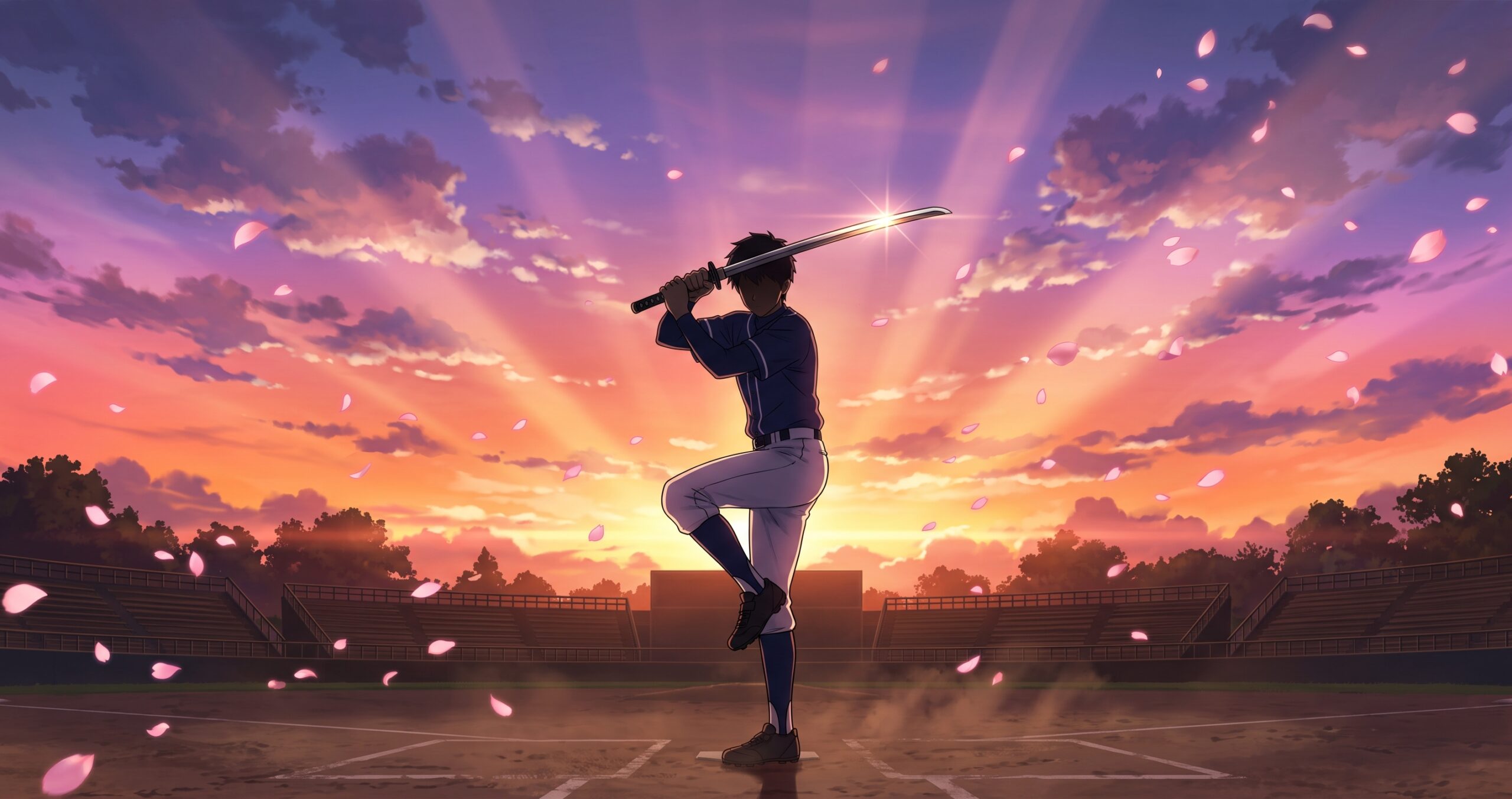
On September 3, 1977, at Korakuen Stadium in Tokyo, Japan, a moment arrived that rewrote world baseball history. Sadaharu Oh, a player for the Yomiuri Giants, hit his 756th career home run, surpassing the previous world record of 755 held by American Major Leaguer Hank Aaron. To commemorate this monumental achievement, September 3 was designated as “Home Run Day” in Japan. This event was not merely a sports record; it captivated the entire nation, sparked a social phenomenon, and remains a legend deeply ingrained in modern Japanese society.
Although baseball originated in the West, it underwent a unique evolution after being introduced to Japan, deeply intertwining with the Japanese spiritual mindset. In this article, we will thoroughly explore the historical background of “Home Run Day,” the grueling path of a single athlete named Sadaharu Oh, and the unique Japanese spirit of “Do” (The Way) that resides within his story.
A Historical Feat: The Road to 756 and the Untold Story
Sadaharu Oh did not display overwhelming talent from the moment he turned professional. In his early years, he struck out so often that he was mockingly called the “Strikeout King.” However, his destiny changed dramatically when he met batting coach Hiroshi Arakawa. From this encounter emerged the “Flamingo Stance” (Ippon-ashi daho), a batting form that would leave a permanent mark on baseball history.
Mastering this one-legged stance required training that defied common sense. Coach Arakawa ordered Oh to practice his swings not with a wooden bat, but with a real Japanese sword (Katana). The training involved slicing a piece of paper suspended from the ceiling completely in half. If the angle of the blade was off even slightly, the paper would not cut. If Oh lost his balance on one leg, it could lead to severe injury. This extreme environment was not just for correcting his physical swing; it was a ritual to transplant the “Bushido” (Way of the Warrior) spirit—the mindset of a samurai risking his life with a sword—into baseball.
It is said that Oh practiced swinging late into the night, wearing down the tatami mats in his room until the floorboards were exposed. This episode of “swinging a katana” held a meaning akin to Zen asceticism, serving to sharpen his mind and overcome fear and pressure, rather than merely improving his physical technique.
Then came the game against the Yakult Swallows on September 3, 1977. With the entire country glued to their television screens, Oh stepped up for his second at-bat in the bottom of the third inning. He launched a ball that drew a beautiful parabola, disappearing into the right-field stands. This was career home run number 756, a new world record. The stadium erupted in deafening cheers, the game was temporarily paused, and the Japanese archipelago boiled over with joy. In recognition of this great achievement, the Japanese government created a new award called the “People’s Honour Award,” making him its very first recipient.
Cultural Connection: From Baseball to “Yakyu-Do”
The story of Sadaharu Oh deeply reflects the Japanese view of sports, and by extension, their view of work and life. When the Western game of baseball came to Japan, the Japanese interpreted it not merely as a game or entertainment, but as “Yakyu” (field ball), a discipline comparable to a “Do” (The Way). Much like Judo, Kendo, Sado (tea ceremony), or Shodo (calligraphy), it embodies the philosophy of refining one’s character and reaching a higher spiritual state through the pursuit of technical mastery.
The story of swinging a real sword resonates strongly with the Japanese because it perfectly embodies the concept of “Shugyo” (ascetic training). More than the resulting “world record,” Japanese society places immense value on the process: the infinite effort accompanied by self-sacrifice, the bond between master and disciple (his relationship with Coach Arakawa), and the unification of mind, technique, and body (Shin-Gi-Tai).
Furthermore, the unique Flamingo Stance symbolizes the balance between stillness and motion. The moment he raises one leg and becomes completely still is akin to “Kai” (the moment just before releasing an arrow in Japanese archery) or the expression of silence in Noh theater. It is about storing energy to the absolute limit and then exploding it in a single instant. Oh’s home runs were not just the result of muscular strength, but the zenith of highly refined Japanese physical expression.
The Door to Thought: What is Your “Flamingo Stance”?
Home Run Day on September 3 asks us: “How far are you willing to push yourself to master a single pursuit?” It was the combination of blood-sweat-and-tears repetition and the extreme concentration of wielding a real sword that made the impossible possible.
In today’s efficiency-driven society, such gritty, unglamorous training might be considered outdated. However, no matter how advanced AI and technology become, the spiritual strength of humans and the “beauty” born when one refines themselves to the absolute limit can never be replaced by machines.
How do you feel after reading this article? In your life, what is the “swing practice” you must undertake with the resolve of wielding a real sword? And what step will you take starting today to establish your own personal “world record”?
Reference Links & Related Articles
- Nippon Professional Baseball (NPB) Official Website – Explore the history and records of Japanese professional baseball.
- OH Sadaharu Baseball Museum – A real museum where you can trace the incredible journey of Sadaharu Oh.
- Category: What’s Today’s Special Day Series – Read our other articles on Japanese anniversaries and the calendar.
9月3日は「ホームラン記念日」:王貞治が打ち立てた不滅の金字塔と日本野球における「道」の精神
1977年9月3日、日本の首都・東京にある後楽園球場で、世界の野球史が塗り替えられる瞬間が訪れました。読売ジャイアンツの王貞治選手が、アメリカ大リーグのハンク・アーロン選手が持っていた通算755本塁打の記録を抜き、通算756号となるホームランを放ったのです。この偉業を称え、日本では9月3日を「ホームラン記念日」として制定しました。単なるスポーツの一記録にとどまらず、日本中の人々を熱狂させ、社会現象にまで発展したこの出来事は、現代の日本社会においても語り継がれる伝説です。
日本において野球は「ベースボール」という外来のスポーツとして始まりましたが、長い歴史の中で独自の進化を遂げ、日本人の精神性と深く結びついていきました。今回は、この「ホームラン記念日」の歴史的背景から、王貞治という一人のアスリートの壮絶な軌跡、そしてそこに宿る日本独特の「道」の精神について詳細に紐解いていきます。
歴史的偉業:756号ホームランへの道のりと知られざるストーリー
王貞治選手は、プロ入り当初から圧倒的な才能を発揮していたわけではありませんでした。入団当初は三振を量産し、「三振王」と揶揄される時期もありました。しかし、彼の運命を大きく変えたのは、荒川博打撃コーチとの出会いでした。ここで生まれたのが、野球史に名を残す「一本足打法(フラミンゴ打法)」です。
この一本足打法の習得は、常軌を逸した修練の連続でした。荒川コーチは王選手に対し、木製のバットではなく「真剣(本物の日本刀)」を使った素振りを命じました。天井から吊るした細い紙を、日本刀で真っ二つに斬る。少しでも刃の角度が狂えば紙は斬れず、また一本足のバランスが崩れれば大怪我につながるという極限状態での訓練です。この特訓は、単なる物理的なスイングの矯正ではなく、武士が命を懸けて刀を振るう「武士道」の精神を野球に移植する儀式でもありました。
深夜まで続く血のにじむような素振りは、王選手が寝泊まりしていた部屋の畳がすり減り、床板が見えるほどだったと伝えられています。この「刀による素振り」のエピソードは、技術の向上以上に、精神を研ぎ澄まし、恐怖やプレッシャーに打ち勝つための「禅」の修行のような意味合いを持っていました。
そして迎えた1977年9月3日のヤクルトスワローズ戦。日本中がテレビの前に釘付けになる中、3回裏の第2打席で、王選手の放った打球は美しい放物線を描き、ライトスタンドへ吸い込まれていきました。これが世界新記録となる通算756号ホームランです。この瞬間、球場は割れんばかりの歓声に包まれ、試合は一時中断、日本列島全体が歓喜に沸き返りました。この偉大な功績により、日本政府は彼のために「国民栄誉賞」という新たな賞を創設し、彼はその第一号受賞者となりました。
日本文化との関連:ベースボールから「野球道」へ
王貞治選手のストーリーは、日本のスポーツ観、ひいては労働観や人生観を深く反映しています。西洋で生まれた「ベースボール」が日本に伝わった際、日本人はそれを単なるゲームや娯楽としてではなく、「野球(Yakyu)」という一つの「道(Do)」として解釈しました。柔道、剣道、茶道、書道などに見られるように、技術の追求を通じて人格を磨き、精神的境地に達するという思想です。
真剣を使った素振りというエピソードが日本人に強く響くのは、それがまさに「修行」の姿そのものだからです。結果としての「世界記録」よりも、そこに至るまでの「自己犠牲を伴う無限の努力」「師弟の絆(荒川コーチとの関係)」「心技体の合一」が、日本社会において極めて高く評価される価値観なのです。
また、一本足打法という独特のフォームは、動と静のバランスを象徴しています。片足を上げて完全に静止する瞬間は、弓道で矢を放つ直前の「会(かい)」や、能楽における静寂の表現に通じるものがあります。極限までエネルギーを溜め込み、一瞬の動作でそれを爆発させる。王選手のホームランは、単なる筋力の結果ではなく、研ぎ澄まされた日本の身体表現の極致でもありました。
思考の扉:あなたの中の「一本足打法」とは?
9月3日のホームラン記念日は、私たちに「一つのことを極めるために、どこまで自分を追い込めるか」を問いかけています。血の滲むような反復練習と、真剣を振るうような極限の集中力が、不可能を可能にしました。
現代の効率化された社会において、このような泥臭いまでの修練は時代遅れと見なされるかもしれません。しかし、AIやテクノロジーがどれほど進化しても、人間の持つ精神力や、極限まで己を研ぎ澄ませた時に生み出される「美しさ」は、決して機械には代替できないものです。
この記事を読んで、あなたはどう感じましたか? あなたの人生において、真剣を振るうような覚悟で取り組むべき「素振り」は何でしょうか。そして、あなただけの「世界記録」を打ち立てるために、今日からどんな一歩を踏み出しますか?
参考リンク・関連記事
- 日本野球機構(NPB)公式ウェブサイト – 日本のプロ野球の歴史と記録を確認できます。
- 王貞治ベースボールミュージアム – 王貞治選手の軌跡を辿ることができる実在の博物館です。
- シリーズ:今日は何の日(What’s Today’s Special Day Series) – その他の日本の記念日や暦についての記事はこちらからご覧ください。


コメント