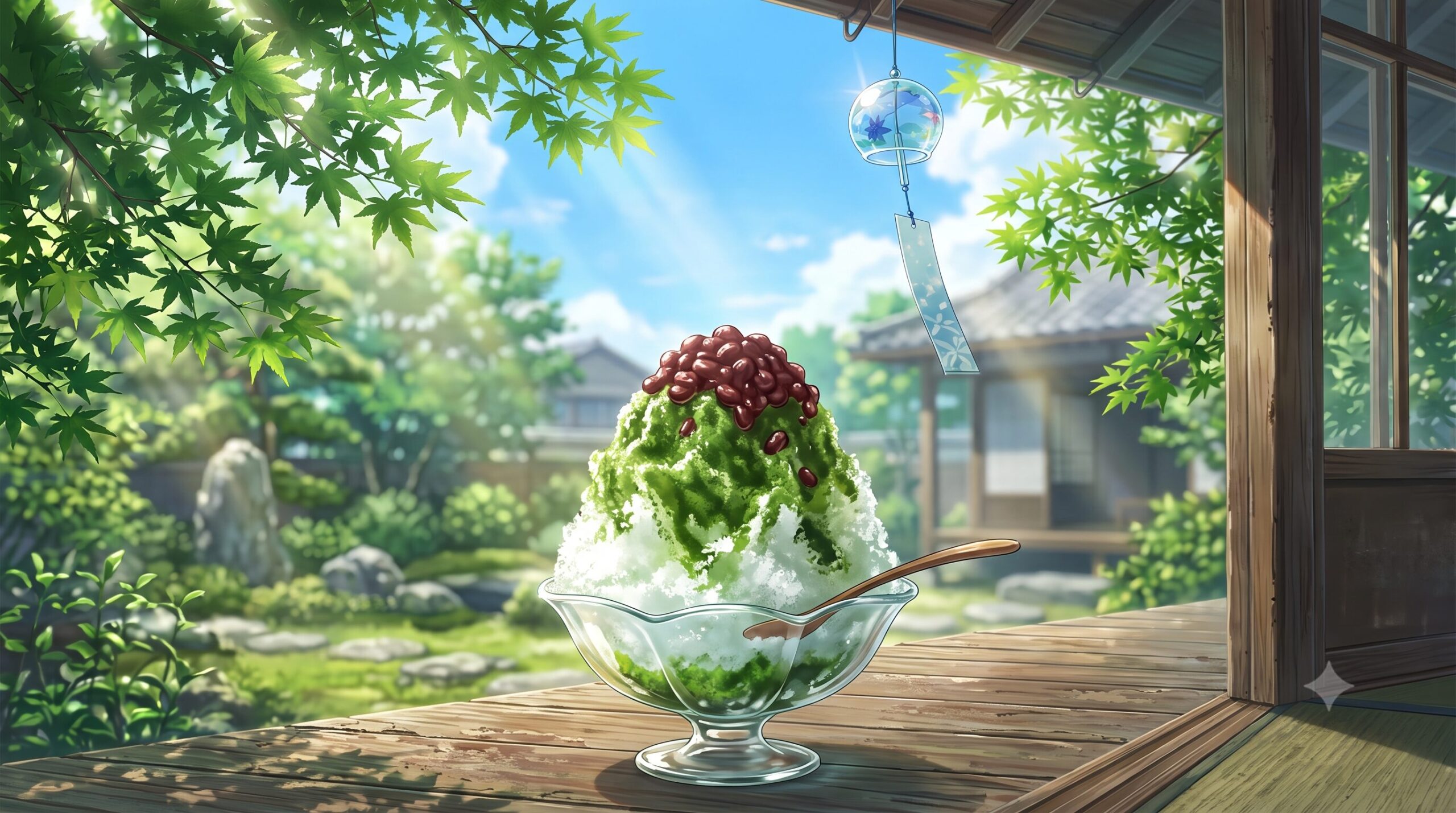
Amidst the sweltering heat of a Japanese summer, accompanied by the endless chorus of cicadas, there is one ultimate treat people seek for a moment of cool relief: Kakigori (Japanese shaved ice). July 25th is officially recognized as “Kakigori Day” in Japan. We will delve deeply into why this specific date was chosen and explore the profound history and charm of Kakigori, which has evolved far beyond a simple frozen dessert into a unique culinary art form.
Why July 25th? The Origins and History of Kakigori Day
There are two distinct reasons why July 25th was designated as Kakigori Day. The first is a clever Japanese wordplay (goroawase). In the past, Kakigori was called Natsugoori (summer ice). The numbers 7 (na), 2 (tsu), and 5 (go) are playfully read as “Na-tsu-go-o-ri.” The second reason is tied to Japan’s meteorological history. On this exact day in 1933, Yamagata City in Yamagata Prefecture recorded a temperature of 40.8°C (105.4°F), which was the highest temperature ever recorded in Japan at the time. Recognizing this as the peak of the unforgiving summer heat, the Japan Kakigori Association established it as the perfect day to enjoy shaved ice.
However, the history of Kakigori stretches back much further than the 20th century—over 1,000 years to the Heian period. In The Pillow Book (Makura no Soshi), the oldest collection of essays in Japan written by court lady Sei Shonagon in the early 11th century, shaved ice is described as an “elegant and beautiful thing.” She wrote about finely shaved ice topped with sweet plant sap (amazura) and served in a new metal bowl. In an era without refrigeration, ice was formed in ponds during the winter, stored in ice houses (himuro) deep in the mountains until summer, and then shaved. Eating ice was the ultimate luxury, permitted only for the Emperor and high-ranking aristocrats.
It wasn’t until the late 19th century (Meiji era), with the advancement of ice-making technology, that Kakigori finally became accessible to the general public. Today, it is a beloved summer tradition, ranging from classic festival street stalls to specialized artisanal cafes serving “evolved Kakigori” made with premium fruits, traditional Wasanbon sugar, and rich matcha.
Understanding Japanese Culture and Respect for Nature Through Kakigori
Kakigori is not merely a dessert. It encapsulates traditional Japanese aesthetics and a profound respect for nature.
First, it reflects the “appreciation of the changing seasons.” Japanese food culture places immense value on shun (the exact moment an ingredient is at its peak). Kakigori is the absolute symbol of summer. You experience the coolness through all five senses: the chill of the bowl, the crisp sound of the ice being shaved, and the fleeting texture that melts instantly in your mouth. This embodies the spirit of Mono no Aware (the pathos of things)—the aesthetic belief that things are beautiful precisely because they are temporary and quickly vanish.
Second, it highlights the “spirit of craftsmanship (Takumi).” Modern premium Kakigori shops in Japan have an extraordinary dedication to the quality of their ice. Many use Tennen-gori (natural ice), which is created by slowly freezing pure spring water in the natural winter cold over several weeks, resulting in ice free of impurities. Artisans then shave this natural ice using specialized machines with blades adjusted to the micro-millimeter. This creates a supremely fluffy, snow-like texture that melts so smoothly it doesn’t cause a “brain freeze.” This uncompromising quest for perfection in both ingredients and technique is the essence of Japanese culture.
A Question for You: How Do You Enjoy the Cool of Summer?
Over a millennium, Kakigori has transformed from an aristocratic luxury to a modern artistic dessert. The varieties are endless, from the traditional “Ujikintoki” topped with rich matcha, sweet red beans, and mochi balls, to fruity masterpieces drenched in fresh peach or strawberry puree.
After reading this article, what flavor of Kakigori do you most want to try? Furthermore, what are the unique, traditional foods or methods in your country for surviving the harsh summer heat? When you next visit Japan, make sure to experience this magical ice that brings a fleeting moment of pure coolness to the sweltering Japanese summer.
External Reference:
Kakigōri – Wikipedia
More Articles in this Category (Internal Link):
Read more in the “What’s Today’s Special Day” Series
7月25日は「かき氷の日」!平安時代から続く日本の涼の美学
日本のうだるような暑い夏。蝉の鳴き声が響き渡る中、ひとときの涼を求めて人々が口にするもの、それが「かき氷(Kakigori)」です。7月25日は、日本における「かき氷の日」。なぜこの日が選ばれたのか、そして、ただの氷菓を超えて日本独自の食文化として発展を遂げたかき氷の深い歴史と魅力について、詳細に紐解いていきます。
なぜ7月25日なのか?かき氷の日の由来と歴史
7月25日が「かき氷の日」として制定された背景には、二つの明確な理由があります。一つ目は、日本語の語呂合わせです。かき氷のかつての呼び名である「夏氷(なつごおり)」を、「な(7)つ(2)ご(5)おり」と読む遊び心から来ています。二つ目は、日本の気象観測史における記録です。1933年のこの日、山形県山形市で当時の日本最高気温である40.8度を記録しました。一年で最も暑さが厳しくなるこの時期こそ、かき氷を食べるのに最もふさわしい日であるとして、日本かき氷協会によって記念日に制定されました。
しかし、かき氷の歴史は昭和の時代よりもはるか昔、1000年以上前の平安時代にまで遡ります。11世紀初頭に清少納言によって書かれた日本最古の随筆『枕草子(The Pillow Book)』には、「あてなるもの(上品で美しいもの)」として、細かく削った氷に甘い樹液(あまづら)をかけ、新しい金属の器に盛りつけた様子が描写されています。冷凍技術のなかった当時、冬の間に池で凍らせた氷を氷室(ひむろ)と呼ばれる洞窟や山中で夏まで保管し、それを削って食べることは、天皇や貴族だけが許された究極の贅沢でした。
江戸時代を経て明治時代(19世紀後半)になり、製氷技術が発達したことで、ようやく庶民の手にもかき氷が届くようになります。現在では、お祭り屋台の定番から、高級フルーツや特製の和三盆糖、抹茶をふんだんに使った「進化系かき氷」の専門店に至るまで、日本中の人々に愛される夏の風物詩となりました。
かき氷から読み解く、日本文化と自然への敬意
かき氷は単なるデザートではありません。ここには、日本の伝統的な美意識と自然への深い敬意が凝縮されています。
第一に、「四季の移ろいを慈しむ心」です。日本の食文化は旬(その食材が最も美味しい時期)を非常に重んじます。かき氷はまさに夏の象徴であり、器の冷たさ、氷が削られるシャリシャリという音、そして口の中で一瞬にして溶けて消える儚い食感を通じて、五感すべてで涼を感じ取ります。永遠に存在しない、すぐに溶けてしまうからこそ美しいという「もののあわれ」の精神がそこにはあります。
第二に、「職人技(匠の精神)」です。現代の日本の高級かき氷店では、氷の質に異常なまでのこだわりを持ちます。「天然氷」と呼ばれる、冬の自然の寒さだけで数週間かけてゆっくりと凍らせた不純物のない氷を使用する店舗も少なくありません。この天然氷を、刃の角度をミクロ単位で調整した専用の機械で削ることで、雪のようにフワフワで、頭が痛くならない極上の食感が生まれます。素材と技術への妥協なき探求心は、日本のあらゆる文化に通じる本質です。
あなたに問いかける、夏の涼の楽しみ方
千年の時を超えて、貴族の嗜みから現代の芸術的なスイーツへと進化した日本のかき氷。抹茶やあずき、白玉を乗せた伝統的な「宇治金時」から、新鮮な桃や苺のピューレをかけたフルーティーなものまで、その種類は無限に広がっています。
この記事を読んで、あなたはどんな味のかき氷を食べてみたいと思いましたか?また、あなたの国には、厳しい夏の暑さを乗り切るための、独自の伝統的な食べ物や工夫はありますか?次に日本を訪れる際は、ぜひ日本のうだるような夏の中で、一瞬の涼をもたらす魔法の氷を体験してみてください。
参考リンク(外部リンク):
Kakigōri – Wikipedia (英語)
その他の記念日記事(内部リンク):
今日は何の日シリーズをもっと読む


コメント